
8 Marketing Funnel Example Models to Copy in 2026
8 Marketing Funnel Example Models to Copy in 2026


Ever feel like you're throwing marketing spaghetti at the wall and hoping something sticks? You're not alone. A marketing funnel example turns that guesswork into a system, so you can see where attention starts, where interest stalls, and where money comes in. The point isn't to admire the diagram. It's to build a path people can follow, then tighten every stage until it stops leaking.
That's why the best funnels look different by business model. A SaaS trial funnel doesn't behave like an HVAC lead gen funnel, and a course launch doesn't work like an Amazon-style shopping funnel. The same broad stages show up again and again, but the tactics, keywords, and handoff points change fast. Salesforce's five-step view, from awareness and discovery through purchase, is useful because it names observable behaviors like free webinar signups and demos instead of vague labels (Salesforce funnel stages).
The numbers also make the case for better design. In B2B, website visitor to lead averages only 2.3%, while strong performers can exceed 10%. The same benchmark set shows MQL-to-SQL often lands at 13–15%, while SQL-to-opportunity can reach about 42%, and opportunity-to-close is typically 22–30% (B2B funnel benchmarks). In plain English, the biggest damage usually happens after awareness, not before it.
1. SaaS Marketing Funnel
A SaaS funnel works best when each step asks for a little more commitment, not all at once. Free trials and freemium plans make that easier because people can test the product before they trust it, but the handoff matters. Top-of-funnel traffic usually starts with blog content, webinars, and comparison pages, then moves into demos, proof, and activation prompts once the user is inside the product.
The quickest gains usually come from matching search intent to the right page. If someone searches for free trial, send them to a page built to start a trial, not a pricing page packed with friction. If they search pricing, send them to a page that helps them decide, not a generic article that forces them to hunt for the answer. Keywordme's workflow fits this kind of setup because you can separate trial terms from pricing terms, set exact, phrase, and broad match by funnel stage, and build negative lists so budget does not drift into irrelevant searches, as outlined in Keywordme for SaaS marketing tools.
Practical rule: treat trial traffic like a different audience from pricing traffic. The first wants reassurance, the second wants a decision.
The work starts after signup. Activation and retention decide whether the funnel pays off, because a trial that never becomes a habit is just expensive curiosity. The 8x8 Jitsi.org case makes that clear. Users who installed the Chrome extension converted better, the team pushed the extension more visibly, and Day 7 retention doubled after the funnel change. In a separate experiment, users on a low-cost one-month trial were 25% more likely to purchase than free-trial users (Amplitude funnel analysis).
For SaaS advertisers, that means the signup number is only one part of the picture. Track trial-to-paid performance by keyword group, then test whether a 7-day or 14-day trial gives you better downstream quality. If your trial length brings in more signups but weaker activation, the offer is wrong, even if the top line looks strong. That is why lead generation for SaaS has to connect media, landing pages, and in-product behavior instead of stopping at the form fill.
2. E-Commerce Sales Funnel
E-commerce funnels are ruthless because shoppers don't need much convincing to leave. They discover a product, compare options, and either buy or bounce, often in the same session. That's why product pages, reviews, urgency, and checkout clarity matter more than polished brand language. If the path from search ad to cart feels messy, the sale is gone.
The strongest e-commerce setups use exact product intent at the keyword level. SKU terms, model numbers, and branded product phrases belong in tightly controlled campaigns, not loose ad groups that absorb irrelevant clicks. Keywordme's bulk upload is useful here because it lets you add those high-intent product keywords fast, then pair them with negative keyword lists that block search terms producing clicks but no sales.
Seasonality is another place where stores lose money if they're sloppy. Winter campaigns shouldn't keep paying for summer traffic, and competitor searches often look tempting until they eat budget without converting. A disciplined search term review catches those leaks early. Phrase match can still work, but only when you surround it with strong negatives so relevance stays high.
Amazon's recommendation engine is a useful benchmark for how much value can come from product intelligence, not just ad spend. It's been reported to drive 35% of revenue (Amazon Ads marketing funnel guide). The lesson isn't that every store needs Amazon-level personalization. It's that a smarter offer path, from discovery to upsell, usually beats a louder ad.
Checkout wins are usually boring wins. Clear shipping, clear pricing, clean trust signals, and no surprise friction.
If you're running an e-commerce account, watch weekly search term reports and kill waste fast. Add competitor brand terms to negatives when they're siphoning budget, and split campaigns by season so the wrong intent doesn't follow you across the calendar. That's how you keep the funnel short without making it brittle.
Keywordme for e-commerce advertisement
3. B2B Lead Generation Funnel
B2B funnels move slowly because the buying committee is larger and the first contact rarely closes the deal. A lead from a director, an ops manager, or a founder can all look promising on paper, but the goal is qualified demand that sales can work. The funnel usually starts with job-title targeting, then moves through whitepapers, webinars, ROI tools, demos, and sales conversations.
Webinars are a practical benchmark for that kind of education-first motion. One source on webinar and outbound funnel benchmarks points to strong attendance in webinar programs, while consultation and service funnels can still produce solid proposal close rates and outbound cold email often sits at low reply rates. That gap explains why webinar-led B2B plays usually outperform pure outbound for complex offers. Prospects get context before they are asked to book time with sales, which makes the next step easier to defend internally.
A clean B2B media structure follows that intent. Build separate ad groups for personas like CFO and IT director, because the same keyword can signal very different priorities to each buyer. Then send each persona to a landing page that reflects those priorities instead of flattening them into one generic pitch. Keywordme helps here because you can control match types, isolate search intent, and add company size or industry exclusions so spend does not drift into low-fit traffic. For teams running paid social alongside search, the same logic applies on LinkedIn, and Keywordme for LinkedIn ads in B2B is useful for keeping persona targeting tight.
Salesforce's funnel stages are useful for the handoff between marketing and sales. Their model separates early intent signals, like signing up for a webinar or trial, from later evaluation signals, like demos and side-by-side comparisons (Salesforce funnel stages). Those are the moments where lead scoring matters. If a prospect watches a webinar and then books a demo, that is not casual engagement, it is a buying signal that deserves faster follow-up and tighter routing.
B2B traffic gets expensive when sales and marketing chase the same lead with different assumptions.
Track keyword-to-deal quality, not just keyword-to-lead volume. A campaign that produces fewer leads but more revenue is the stronger campaign, even if the dashboard looks quieter at first glance. If your CRM can show which search terms feed real opportunities, you can stop optimizing for vanity metrics and start optimizing for pipeline.
4. Local Service Business Funnel
Local service funnels live and die on urgency. Nobody compares five plumbers for fun. They search when something's broken, nearby, or overdue, which means the funnel starts with location relevance, trust, and speed to response. If your ad, page, and phone number don't line up fast, someone else gets the call.
The best local setup is simple. Use service and city keywords, route traffic to a page built for that exact area, and back it with reviews, service descriptions, and a clear contact path. Separate campaigns by service area so you can see which city produces calls. That also makes attribution cleaner when you're running multiple phone numbers or booking flows.
Negative keywords matter more than most local owners think. If you're a paid search manager for an HVAC company, you do not want to pay for adjacent cities you don't serve, or for search terms like DIY and cheap if those clicks never turn into booked jobs. Exact match often makes more sense than broad for core local services, because the intent is already strong and the geography is narrow.
The broader funnel logic is still the same as in B2B and SaaS, just faster. Indeed's funnel explanation shows that awareness can be driven by a two-month public relations campaign plus paid search ads aimed at men ages 25 to 45 (Indeed marketing funnel guide). The point is not the demographic alone. It's that a funnel can blend visibility and direct-response tactics without pretending one channel does everything.
Local services win when the searcher feels understood immediately. The best pages answer location, service, trust, and timing in one glance.
If you're building this in Keywordme, create neighboring-city negatives before launch, not after waste starts. Then split campaigns by service line, for example emergency repairs versus scheduled maintenance, because those are different buying moods. The cleaner the local map, the less time you spend paying for the wrong call.

5. Content Marketing and Lead Magnet Funnel
Content-led funnels are built for trust, not pressure. You publish useful material first, then ask for contact information after the reader has already gotten value. That is why blog posts, guides, videos, podcasts, and templates still work so well. They let the audience self-select before sales ever enters the picture.
This funnel depends on clean intent separation. Informational searches should lead to educational content, not product pages dressed up like guides. Commercial terms belong elsewhere. Keywordme is useful here because it helps you split informational campaigns from commercial campaigns, then keep unrelated terms out with negatives so each content asset gets the right traffic.
The main trade-off is patience. Content funnels can build authority and pipeline, but they move slower than direct response. HubSpot is a good example of scale in this model. Its content library is widely cited as a large publishing engine that drives steady organic demand. That does not mean every brand needs thousands of posts. It means consistent, useful content can compound when the topic map stays disciplined.
Moz is another useful reference point. Its resource library is often used to show how a strong content engine can attract a large stream of organic visitors. The content is not magic. The structure is. People find the answer, trust the brand, then take the next step when the offer fits their problem.
Do not use content ads to sell too early. Use them to earn the right to sell later.
For practitioners, the best move is to track which topics produce high-quality leads, not just clicks. If a guide brings in readers who open nurture emails and engage with follow-up content, that topic belongs in the funnel. If traffic is high but downstream engagement is dead, the content may be attracting the wrong intent.
A practical setup usually starts with one useful asset, such as a checklist, a comparison guide, or a short template, then a simple landing page and a short nurture sequence. The tech stack does not need to be fancy. A CMS, an email platform, analytics, and Keywordme are enough to get the first version working. From there, use Google Ads to bid on intent-rich queries around the topic, then exclude low-value research terms that never move readers toward the lead magnet.
6. E-Learning and Online Course Funnel
A course funnel works only when the buyer trusts the result. People sign up for education when the outcome feels real, the instructor seems credible, and the risk feels controlled. That is why webinars, free tutorials, testimonials, lesson previews, and guarantees show up so often in this space. You are selling progress, not just videos.
The cleanest setup separates free intent from paid intent. A webinar registration is not the same as a course enrollment, so the keyword strategy should treat them differently. Run one campaign for free terms and another for paid terms, then send each one to a different page. Keywordme helps with that setup because you can assign match types by intent and keep competitor course names out of your spend where needed.
Udemy is a strong scale example, with 213K+ courses and reported annual revenue of $600M+ (course platform benchmarks). Skillshare has been reported at 35M+ annual users, while Kajabi-hosted courses are often positioned in the $500-2000+ per enrollment range in benchmark examples. Those figures do not tell you what to charge, but they do show how much the economics can vary by offer type.
The funnel usually starts with value-first education, then shifts into outcome proof. MasterClass works because it sells access to celebrity instructors and high perceived expertise, not just videos. If your course is more practical than premium, make the transformation concrete. Show what students can do after the course, not only what the modules include.
After the webinar, a lighter nurture path usually works better than a hard sell. If someone does not enroll right away, keep teaching with relevant content and test whether the hesitation is price, confidence, or timing. A lot of course marketers lose the sale by pushing too hard after the first call.
7. Affiliate Marketing and Influencer Funnel
Affiliate funnels outsource the first touch without outsourcing the thinking. A creator, blogger, or affiliate sends traffic, and the brand pays only when that traffic converts. The model can scale quickly, but it only works when the landing page, offer, and search intent all match the audience the promoter already trusts.
Amazon Associates is the biggest reference point here, with a huge affiliate base and widely reported scale. ShareASale is also a useful benchmark because it supports a large merchant network and substantial affiliate sales volume. AppSumo gives another signal, since affiliate partnerships are reported to drive a meaningful share of revenue. Those examples explain why affiliate traffic needs its own measurement discipline and its own conversion targets, instead of being lumped in with generic referral traffic.
The practical move is to mirror how that audience searches after the click. If an affiliate's followers keep looking for the same problem, you should be ready to capture that demand in organic search and paid search. Keywordme helps here because you can build campaigns around those queries, then exclude competitor affiliate programs and other low-intent noise that raises cost without improving conversion.
Influencer-driven funnels work best when the creator fits the product. A fashion creator can sell apparel with credibility. A food creator can usually not sell enterprise software with the same trust. That sounds basic, but plenty of brands still chase reach instead of relevance, then wonder why the traffic looks good and the sales do not.
Affiliate traffic is borrowed trust. Your landing page has to cash that trust in fast.
The cleanest setup is to keep affiliate-driven campaigns separate from organic and brand campaigns. That lets you see which source brings better buyers, not just cheaper clicks. If the affiliate audience converts well, you can also bid on adjacent high-intent keywords and build an owned traffic channel around the same demand.
8. Mobile App Download and Retention Funnel
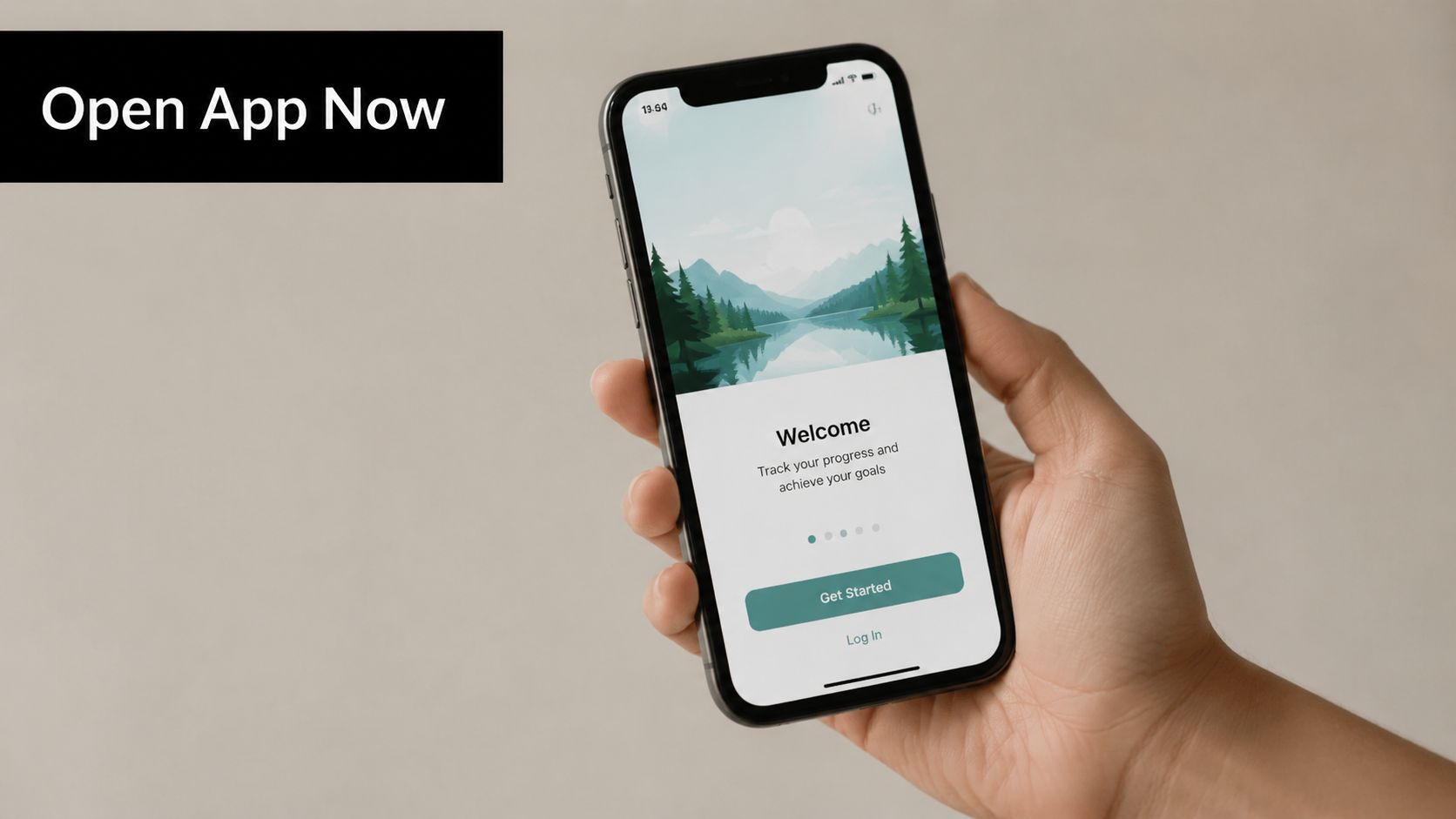
App funnels are unusual in a useful way. The first win is installation, then the work shifts to retention, engagement, and lifetime value. If the app gets installed and never opened again, you have paid for an expensive icon.
The mobile app search strategy should match that split. Put branded download terms in one bucket, category terms in another, and feature or use-case terms in a third. Keywordme helps you track which search terms produce installs and which ones tend to lead to weak post-install behavior, then move poor-fit queries into negative lists before they keep draining budget.
Benchmarks from major app advertisers show how much scale can sit behind this funnel. TikTok has been reported to spend heavily on installs and drive massive download volume. Snapchat's acquisition campaigns are reported to support a very large active user base, Duolingo has been associated with heavy user acquisition spend and hundreds of millions of installs, and Tinder's acquisition strategy is linked to tens of millions of daily active users. The exact budgets do not matter for your plan. The lesson is to separate install quality from raw volume and judge each campaign by what it brings after the first tap.
The strongest app teams do not celebrate install spikes on their own. They look at what happens after the first launch. If one keyword brings more installs but weaker day-1 or day-7 retention, that keyword may be cheap and still wrong. In app marketing, the mistake is optimizing toward the wrong user.
A good app funnel does not stop at install. It starts testing the moment the user opens the app.
For Google App Campaigns, keep branded terms separate from category terms so you can see whether the app name is carrying the load or the category promise is doing the work. Exclude competitor app names if they attract curiosity clicks that never turn into engaged users. Then let retention data decide where the budget goes next.
8 Marketing Funnel Examples Comparison
| Funnel | 🔄 Implementation Complexity | ⚡ Resource Requirements | 📊 Expected Outcomes | 💡 Ideal Use Cases | ⭐ Key Advantages |
|---|---|---|---|---|---|
| SaaS Marketing Funnel | 🔄 Moderate–High: onboarding, analytics & PQL workflows | ⚡ Medium–High: product dev, support, automation | 📊 Scalable MRR growth; improved LTV; conversion from trials. ⭐⭐⭐⭐ | 💡 Product-led SaaS with trial/freemium models | ⭐ High-quality PQLs; shorter sales cycles; data-driven upsells |
| E‑Commerce Sales Funnel | 🔄 Moderate: checkout, inventory & retargeting systems | ⚡ High: ad spend, fulfillment, CRO resources | 📊 Fast revenue attribution; high-volume sales; margin pressure. ⭐⭐⭐ | 💡 Retail, DTC, seasonal product sellers | ⭐ Clear ROI measurement; scalable transactions |
| B2B Lead Generation Funnel | 🔄 High: ABM, lead scoring, CRM & multi-stakeholder flows | ⚡ High: content production, sales team, long nurture | 📊 High LTV deals; predictable pipeline but long cycles. ⭐⭐⭐⭐ | 💡 Enterprise/complex sales requiring decision committees | ⭐ Higher deal value; stronger retention and forecasting |
| Local Service Business Funnel | 🔄 Low–Moderate: location targeting, call tracking | ⚡ Medium: local ads, review management, dispatching | 📊 Immediate high-intent leads; geographically limited scale. ⭐⭐⭐ | 💡 Plumbers, HVAC, electricians, cleaners | ⭐ High intent conversions; easy attribution via calls/bookings |
| Content Marketing & Lead Magnet Funnel | 🔄 Moderate: content ops, SEO & distribution | ⚡ Low–Medium ongoing: writing, design, promotion | 📊 Long-term organic traffic and authority; slow payoff. ⭐⭐⭐ | 💡 Brand building, thought leadership, long-sales-cycle offers | ⭐ Low-cost scaling; compounding SEO value |
| E‑Learning & Online Course Funnel | 🔄 Moderate: course creation, webinar & email stacks | ⚡ High upfront: production and launch marketing | 📊 High margin potential and scalable enrollments; low completion rates. ⭐⭐⭐⭐ | 💡 Educators, coaches, subject-matter experts | ⭐ Passive income potential; community and upsell pathways |
| Affiliate & Influencer Funnel | 🔄 Low–Moderate: tracking, onboarding, compliance | ⚡ Low upfront; variable ongoing commission costs | 📊 Performance-based growth; margin share to partners. ⭐⭐⭐ | 💡 Merchants seeking scalable traffic with limited ad spend | ⭐ Pay-for-performance; access to engaged external audiences |
| Mobile App Download & Retention Funnel | 🔄 High: ASO, deep linking, cohort analytics | ⚡ High: UA spend, analytics, product iteration | 📊 Large install pools possible but low retention; LTV varies. ⭐⭐ | 💡 Consumer apps aiming for scale and in-app monetization | ⭐ Direct device engagement; rich behavioral data for optimization |
Ready to Build Your Own Funnel?
The perfect marketing funnel isn't a diagram you hang on the wall. It's a living system you build, test, and keep trimming until the leaks get smaller. The examples above show the same core truth in different forms. Intent matters, handoffs matter, and matching the offer to the stage matters even more. If your audience is still cold, don't push for a sale. If they're already warm, don't waste their time with top-of-funnel fluff.
The most useful takeaway is also the least glamorous. Pick the funnel that matches your business model, then stop copying templates that don't fit your sale cycle, ACV, or customer behavior. That's the contrarian angle too many marketers miss. The right structure for a webinar-led B2B motion is not the same as the right structure for a local plumbing campaign, and pretending otherwise just creates noise. Sales Funnel Professor's advice to choose one or two funnels that fit your ACV, cycle length, and resources gets at the heart of it, because good funnel design follows the buyer's path, not a generic blueprint (Sales Funnel Professor).
If you want a practical place to start, build one campaign by funnel stage, then make the keyword structure do the heavy lifting. Use separate match types for each stage, block junk with negatives, and watch what converts instead of guessing. That's especially important in Google Ads, where a loose search term can poison an otherwise strong funnel.
Keywordme fits into that process because it helps you organize keywords by intent, apply match types faster, and clean up search terms without the usual copy-paste grind. The tool matters less than the discipline behind it, but that discipline is what separates busy accounts from profitable ones. Start with one funnel, one offer, and one clean measurement path, then improve what the data tells you to improve.
If you're ready to tighten your keyword structure and map campaigns to real funnel stages, visit Keywordme and see how it helps teams organize match types, negatives, and search-term cleanup in one place. It's a straightforward way to make your Google Ads funnel easier to manage and easier to improve.
.svg)