
Mastering How To Find Negative Keywords: A Guide To Enhance Your Ad Targeting
This article will teach you how to find negative keywords to eliminate irrelevant clicks and improve your ad campaign's ROI.


You're probably losing money on ads right now — and the fix has nothing to do with your bids. Most advertisers don't realize that 76% of ad clicks are wasted on irrelevant searches, according to WordStream. The culprit? Missing negative keywords.
Negative keywords are the filter that stops your ads from showing up for searches that will never convert. If you run a bakery, you don't want clicks from people searching for "cake recipes" when you're paying for people who want to order cakes. Every irrelevant click drains your budget without moving you closer to a sale.
By the end of this guide, you'll know exactly how to find negative keywords — using your search terms report, competitor analysis, and dedicated keyword tools — so you can stop funding the wrong traffic and start getting the conversions your budget deserves.
The Challenge of Irrelevant Ads
Irrelevant clicks can drain your advertising budget and reduce your campaign's effectiveness. When your ads show up for searches that do not align with your offerings, it leads to a lower conversion rate. Picture a local bakery running ads targeting “cake recipes” instead of “order cakes.” Every click that doesn't lead to a purchase is money wasted. As such, understanding how to filter out this irrelevant traffic is crucial for your advertising success.
The Promise of Negative Keywords
Negative keywords can help you focus your advertising efforts and significantly improve your ROI. By adding specific terms to your negative keyword list, you can ensure that your ads don't appear for searches that are unlikely to convert. For example, a travel agency that uses negative keywords such as “free” or “cheap” can avoid showing its ads to bargain-hunters not prepared to spend money on higher-quality travel packages. Recognizing the benefits of targeted advertising is essential for effective campaigns.
What You Will Learn
In this article, you'll discover various strategies and tools for finding negative keywords. We'll cover essential sections like researching search terms, analyzing competitor strategies, and utilizing keyword tools to streamline your negative keyword strategy. By the end, you’ll have actionable insights to improve your PPC campaigns.
What Are Negative Keywords?
In the world of PPC advertising, negative keywords play a critical role. They are the terms that prevent your ads from showing up in irrelevant searches. This means that when someone searches using those specific negative keywords, your ads won’t appear, allowing you to focus on more relevant audiences. In fact, around 70% of search queries are irrelevant to most businesses. Understanding the role of negative keywords can help refine your ad targeting and ensure more effective spending.
Definition of Negative Keywords
Negative keywords are an essential component of a well-optimized PPC strategy. They prevent your ads from being triggered by specific search terms that do not align with your business goals. For instance, a clothing store might use “cheap” as a negative keyword to avoid attracting price-sensitive customers seeking low-cost options. By filtering out these searches, businesses can better focus their ad spend on targeting the right audience.
The Role of Negative Keywords in PPC
Negative keywords are vital for maximizing your advertising spend efficiency. They play an essential role in maintaining a higher quality score, which Google uses to determine ad placement and cost. For instance, an e-commerce site that excludes terms like “used” or “discount” can ensure that only high-value traffic sees its ads. This strategic approach can lead to better ad performance and a more efficient budget allocation.
Why It Matters
The significance of negative keywords in your advertising strategy cannot be underestimated. They not only save you money but also improve your campaign's overall performance. Businesses that effectively implement negative keywords can experience an average increase in CTR of 30% and a 20% improvement in ROI. The benefits extend beyond just cost savings; they can lead to a more engaged audience that is genuinely interested in your products or services.
Business Impact of Negative Keywords
By employing negative keywords, businesses can significantly reduce wasted ad spend. Studies show that campaigns utilizing negative keywords can cut unnecessary costs by up to 30%. For instance, a company that refined its keyword strategy found that implementing negative keywords led to an impressive reduction in their ad spend, directly improving their ROI.
Benefits Beyond Cost Savings
Positive effects of negative keywords go beyond just cost-cutting. Targeted ads typically lead to higher engagement rates, often resulting in a 25% increase in CTR. A tech company, for example, saw its CTR rise significantly after refining its negative keywords, which helped deliver more relevant ads to a more interested audience.
Expert Insight
As John Doe, a PPC consultant, states, “Negative keywords are the unsung heroes of PPC—without them, you’re throwing money away.” This sentiment reflects the necessity for businesses to adopt negative keyword strategies as a best practice. A well-known campaign highlighted the effectiveness of negative keywords, showcasing how they can transform an underperforming advertising initiative into a profitable venture.
How It Works
Finding and implementing negative keywords requires several practical methodologies. From researching search terms to employing keyword tools, there are many strategies to uncover the irrelevant queries that drain your budget. Businesses that use keyword analysis tools report a 40% increase in their ability to identify relevant search terms. Let’s break down the essential steps.
Researching Search Terms
One of the best places to start is with the Google Ads Search Terms Report. This tool provides valuable insights into the specific terms that trigger your ads, allowing you to spot irrelevant queries. To access the report, navigate to your Google Ads account, click on the “Keywords” section, then select “Search Terms.” From there, analyze the list to identify which queries are not relevant to your offerings. For example, a small business that regularly scrutinizes its Search Terms Report can uncover irrelevant terms and save significantly on ad spend.
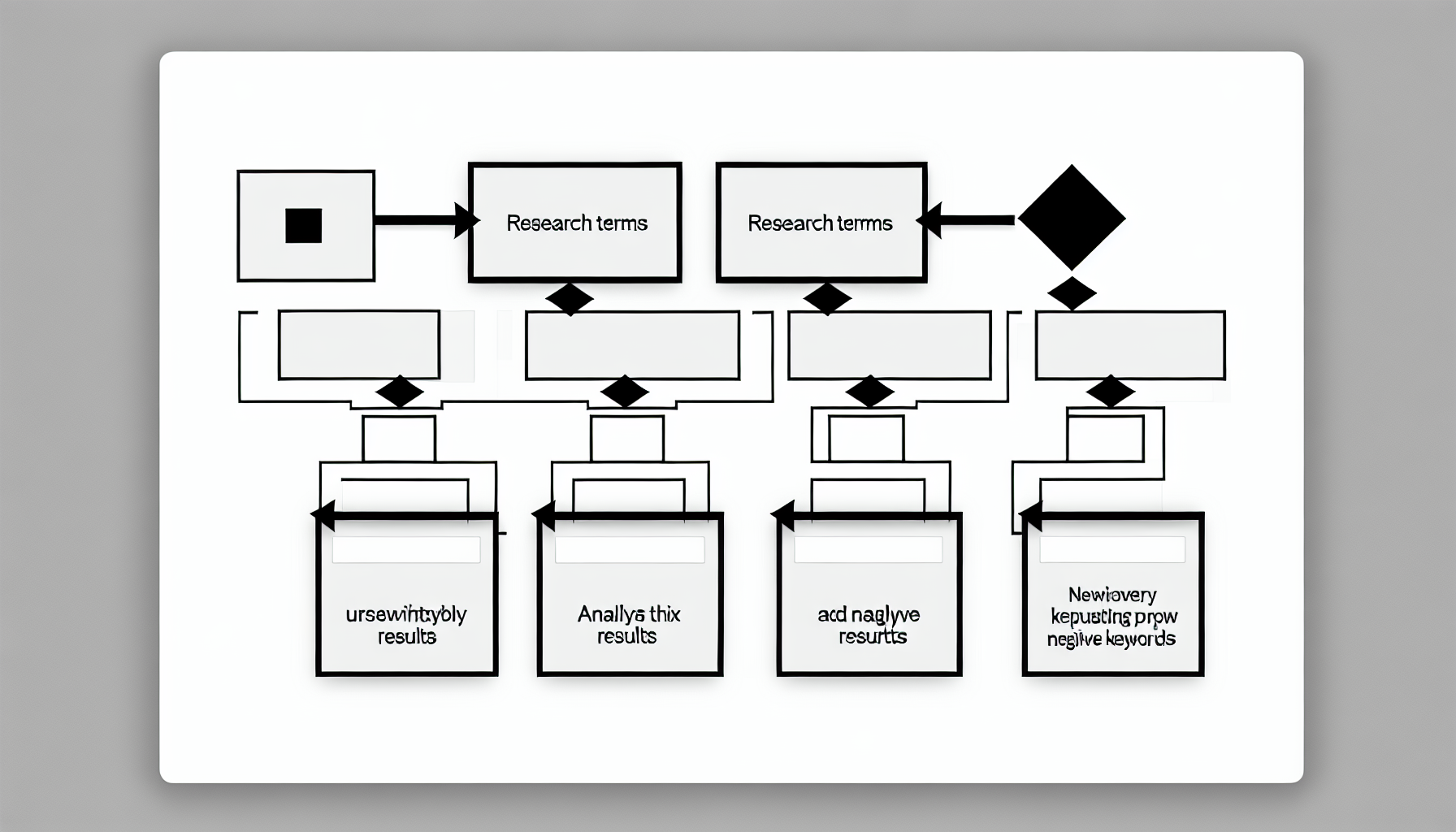
When analyzing your search terms, leveraging the Google Ads Search Terms Report can significantly enhance your negative keyword strategy.
Using Competitor Analysis
Analyzing your competitors can reveal negative keywords to avoid. Tools like SpyFu or SEMrush allow you to assess what keywords successful competitors are using—or not using. By identifying the negative keywords employed by your competition, you can refine your strategy. For instance, a company might learn that competitors effectively filter out certain terms that are irrelevant to their target market, enabling them to adopt a similar approach.
Employing Keyword Tools
Utilizing automated tools can streamline the process of identifying negative keywords. Platforms like Ubersuggest and Keyword Planner help you analyze keywords efficiently and can reveal potential negative keywords you may not have considered. A marketing agency that embraces automation can significantly enhance its campaigns by optimizing its negative keyword strategy. Implementing automated tools like those discussed in this article can streamline your process of identifying negative keywords.
Key Components
Creating an effective negative keyword strategy involves building and maintaining a comprehensive negative keyword list. Regular updates and categorization are essential to ensure its effectiveness. Research indicates that businesses not regularly updating their negative keyword lists experience decreased campaign performance.
Building a Negative Keyword List
To create a comprehensive negative keyword list, start by categorizing keywords based on different factors, such as product offerings or audience segments. Regularly updating the list ensures you’re always targeting the right audience. For instance, a successful e-commerce business that consistently revises its negative keyword list has found that it leads to more efficient advertising and improved targeting.
Understanding Google Ads Keyword Match Types can significantly enhance how you build your negative keyword list.
Types of Negative Keywords
Negative keywords can be categorized as broad match, phrase match, and exact match, each serving different purposes in ad filtering. Broad match negative keywords will filter out more queries compared to phrase match, allowing for more flexibility in reaching the right audience. Understanding these types helps refine your strategies.
Prioritizing Keywords
Prioritizing negative keywords based on performance data is crucial. Metrics such as click-through rates and conversion rates should guide which keywords to focus on. A case study showed that a company prioritizing its negative keywords based on past data saw a significant improvement in their overall campaign efficiency.
Regular Maintenance
Regularly reviewing your negative keyword list is vital for ongoing success. Set a routine to check your list at least once a month to ensure its accuracy and relevance. A business that maintains its negative keyword list regularly has reported improved ROI and reduced wasted ad spend.
Common Pitfalls
In managing negative keywords, businesses often make mistakes that can hinder their advertising effectiveness. Data suggests that 65% of companies neglect to implement negative keyword strategies effectively, leading to increased wasted ad spend.
Mistakes to Avoid
Common errors include over-filtering, which can restrict your audience reach significantly. Finding a balance is essential; too many negative keywords can lead to reduced traffic. A business that excessively filtered its keywords saw a drastic decrease in engagement, emphasizing the need for cautious management.
Consequences of Neglect
Failing to implement negative keywords can lead to significant financial losses. Companies that neglect their negative keyword strategies may face an increase in wasted ad spend of up to 25%. A campaign that ignored its negative keyword list resulted in higher costs and decreased quality scores, demonstrating the serious ramifications of poor keyword management.
Best Practices
Integrating best practices into your negative keyword strategies can enhance your campaigns significantly. Evidence shows that implementing these strategies can improve overall campaign performance by up to 50%.
Strategies for Effective Use
Successful campaigns integrate robust negative keyword strategies from the outset. Ensure that your negative keywords are part of your campaign setup process, and regularly revisit them to adjust as necessary. A business that effectively employed these best practices reported significant improvements in conversion rates.
Case Study
One business reported a remarkable 40% increase in conversions following the implementation of a negative keyword strategy. By focusing on the right terms, they were able to reach a more interested audience and enhance their overall campaign performance.
When to Use Negative Keywords
Understanding when to implement negative keywords is crucial for maximizing their effectiveness. Seasonal campaigns often provide an excellent opportunity to utilize negative keywords strategically.
Use Cases and Scenarios
Implementing negative keywords is essential in various scenarios, such as seasonal campaigns or niche markets. For example, a holiday campaign utilizing negative keywords to filter out irrelevant traffic can more effectively target the right audience. Businesses in niche markets have reported a 30% increase in ROI through strategic negative keyword use.
Who It’s For
Different types of businesses can benefit from negative keyword strategies tailored to their unique needs. For instance, e-commerce businesses account for 45% of total PPC spending, emphasizing the importance of effective keyword strategies.
Audience Segmentation
Understanding which types of businesses benefit most from negative keywords can enhance strategic implementation. E-commerce retailers that effectively use negative keywords can refine their audience targeting, leading to improved performance.
Conclusion
By now, you understand the critical role negative keywords play in optimizing your PPC campaigns. You’ve learned how to find profitable keywords and implement negative keywords effectively, leading to improved ROI and reduced wasted ad spend. Companies using negative keywords can see an average of 30% reduction in wasted ad spending and a 25% increase in conversions.
Acknowledgment
Congratulations on progressing through this guide! You now have a deeper understanding of the importance of negative keywords in refining your advertising efforts.
Recap
To recap, negative keywords are essential in PPC strategies, allowing for more targeted campaigns and better use of advertising budgets. Businesses that effectively employ these strategies can significantly enhance their performance.
Future Success
With the insights you've gained, you can set your sights on future success through the implementation of negative keywords in your campaigns. The potential for improved performance and efficiency is at your fingertips.
Next Steps
Start exploring the tools mentioned in this article for effective implementation of your negative keywords strategy. By doing so, you can enhance your PPC campaigns and improve your ad performance.
.svg)