
7 Effective Strategies On How To Avoid Traffic Loss With Exact Match Keywords
Discover essential strategies on how to avoid traffic loss with exact match keywords to keep your website visible and relevant.


What If Your Traffic Suddenly Vanished?
Imagine waking up one day to discover that your website traffic has plummeted overnight. You check your analytics, and the numbers are shocking—a significant drop in visitors, leads, and sales. This scenario is more common than you might think, and it can happen due to various reasons, such as algorithm updates, poor keyword targeting, or even changes in user behavior. For businesses relying heavily on online traffic, this sudden loss can lead to devastating consequences, including decreased sales and brand visibility.
Understanding why this happens is crucial for preventing it in the future. Search engines are continually evolving, and their algorithms can change how your site ranks overnight. Many businesses find themselves scrambling to adapt, often too late. By the end of this article, you'll know exactly how to avoid traffic loss with exact match keywords and implement strategies that keep your site visible and relevant.
Exact match keywords play a vital role in this equation. They help you target specific search queries effectively, ensuring your content aligns with what users are actively searching for. By focusing on these keywords, you can maintain your site's visibility and relevance in search engine results pages (SERPs). Let’s dive into the top strategies that can help you avoid traffic loss.
1. Understanding User Intent: The Key to Retaining Traffic
Best for: Businesses looking to tailor their content strategy to meet user needs.
Google Search Console is a free tool that helps you analyze your website's performance and understand user intent better.

User intent refers to the reason behind a user's search query. Understanding this can significantly improve your content strategy, leading to higher engagement and retention rates. There are four primary types of user intent: informational, navigational, transactional, and commercial investigation. For instance, a user searching for "buy running shoes" has a clear transactional intent, while someone looking for "best running shoes" is likely in the research phase.
By aligning your content with these intents, you can create more relevant and engaging material. This not only improves user satisfaction but also enhances SEO performance. Businesses that tailor their content to meet specific user intents often see an increase in qualified leads and lower bounce rates. To gain deeper insights into user intent, utilizing effective search query analysis tools can be invaluable.
2. Harnessing Negative Keywords to Sharpen Focus
Best for: Businesses aiming to improve ad targeting and reduce wasted spend.
Google Ads is a powerful platform for managing both positive and negative keywords effectively.

Negative keywords are terms that prevent your ads from being shown for irrelevant searches, thereby improving the quality of your traffic. By excluding specific keywords that do not align with your business goals, you can ensure that your ads reach the right audience. For example, if your business sells premium running shoes, you might want to exclude keywords like "cheap" or "discount" to avoid attracting users looking for lower-priced options.
Identifying potential negative keywords involves analyzing your search term reports and reviewing competitor keywords. Regularly updating your negative keyword list based on performance data can significantly enhance your campaigns, leading to better-targeted traffic and improved ROI. To effectively manage your negative keywords, tools like How To Find Negative Keywords can help streamline the process.
3. The Continuous Cycle of Keyword Strategy Adjustment
Best for: Companies wanting to stay ahead in keyword performance and SEO trends.
Ahrefs is an excellent tool for tracking your keyword performance and making necessary adjustments.

Ongoing keyword analysis is essential for adapting to market changes and user behavior. Search algorithms frequently evolve, which can impact your keyword rankings. By regularly monitoring your keywords, you can pivot your content strategy to maintain relevance and visibility in SERPs.
Using tools like Ahrefs or SEMrush can provide insights into how your keywords are performing, allowing you to make data-driven decisions. For instance, if a keyword that once brought significant traffic is declining, you may need to revise your content strategy to focus on emerging trends or related keywords. Regularly reviewing keyword performance helps ensure your content remains aligned with user searches, keeping your traffic steady.
4. Elevating Your Content Quality Game
Best for: Businesses focused on creating valuable and relevant content for their audience.
HubSpot provides resources and tools to help you enhance your content marketing efforts.

The digital landscape has shifted towards valuing quality content over sheer volume. High-quality content not only ranks better in search engines but also engages users more effectively. Characteristics of high-quality content include relevance, readability, and depth of information.
For example, a well-researched blog post that effectively addresses common user queries can significantly improve user satisfaction and retention. Regularly updating existing content to reflect current trends and data can also boost traffic and engagement. A blog post that was once popular can regain visibility by refreshing it with new information and insights. For more insights on enhancing your content marketing efforts, exploring search engine marketing best practices can be beneficial.
5. Making Paid Advertising Work for You
Best for: Businesses looking to supplement organic traffic with targeted paid campaigns.
Facebook Ads is another platform that can be used to effectively drive targeted traffic.

PPC (pay-per-click) advertising can be an effective way to supplement your organic traffic strategies. Well-structured PPC campaigns can capture immediate attention and drive significant traffic to your website. For instance, a business running targeted ads during peak shopping seasons can see quick results compared to organic strategies alone.
Best practices for setting up effective PPC campaigns include keyword research, ad copy optimization, and precise targeting. Regularly analyzing your campaign data is crucial to understanding what's working and what isn't, allowing you to refine your strategy for better results. For more insights on maximizing the effectiveness of your PPC campaigns, explore PPC campaign optimization.
6. The Competitive Edge: Analyzing Your Rivals
Best for: Companies wanting to learn from competitors to enhance their own strategies.
SimilarWeb offers powerful tools for competitor analysis.
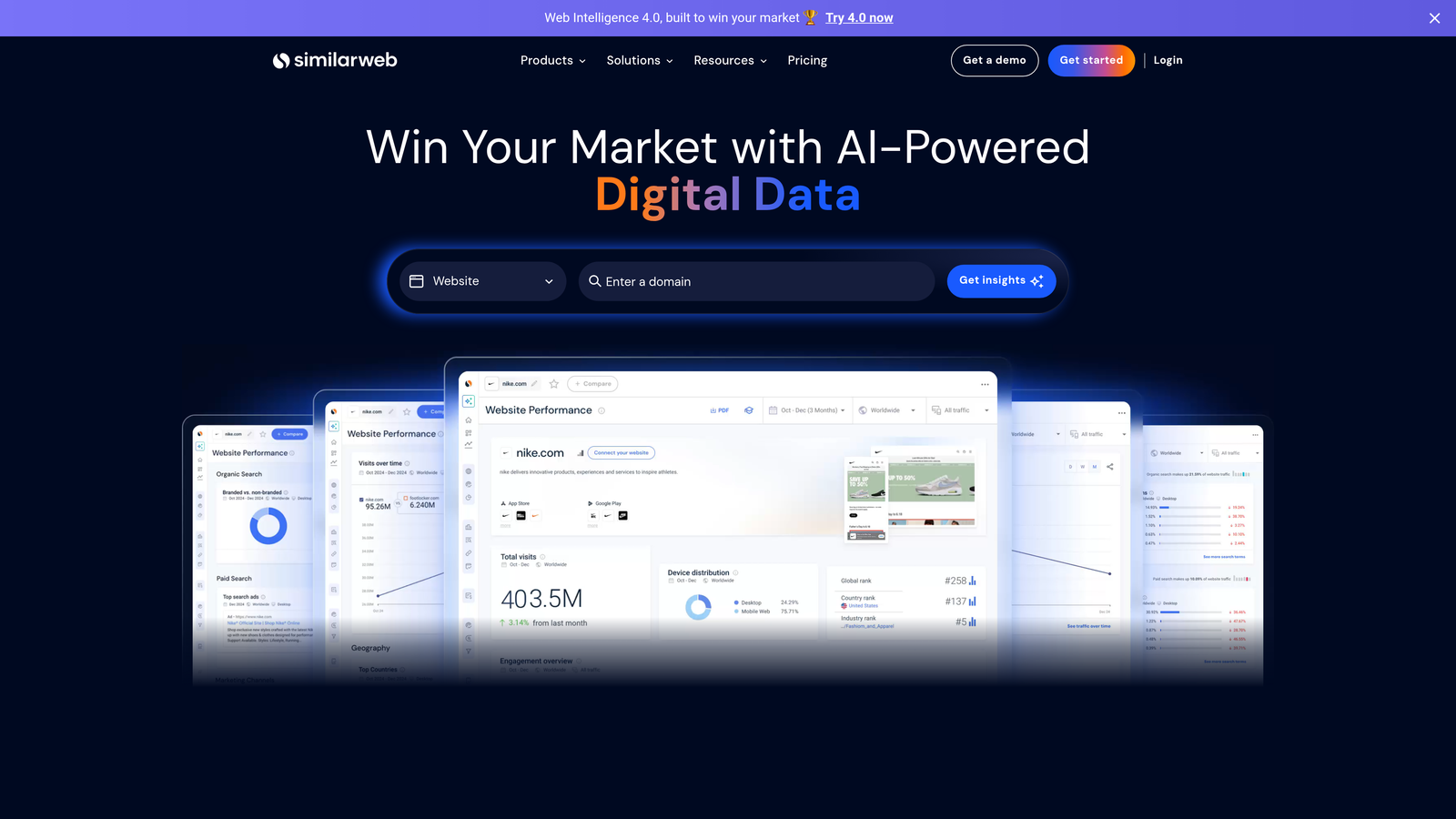
Regularly analyzing your competitors is essential for staying relevant in the market. By understanding what your competitors are doing, you can identify new opportunities and threats, allowing you to adapt your strategies accordingly. For instance, if a competitor launches a successful campaign, analyzing their approach can provide valuable insights for your own efforts.
Tools like SimilarWeb can help you uncover traffic sources and content strategies of your competitors, allowing you to benchmark your performance effectively. Learning from competitor mistakes can also prevent costly missteps in your strategy. For deeper insights into managing PPC campaigns effectively, consider exploring PPC ad campaign management.
7. The Road Ahead: Strategies for Sustained Traffic Success
Best for: Businesses committed to continuous improvement in traffic management.
KeywordMe provides tools and resources for ongoing keyword strategy refinement.

A proactive approach to traffic management is critical for long-term success. Continuously adapting your strategies based on performance data and market trends can enhance your traffic retention. Regularly reviewing your strategies and making necessary adjustments will ensure you stay ahead in the digital landscape.
Companies that embrace an iterative approach to traffic management often achieve better long-term results. Tailoring strategies to fit your specific business context can maximize effectiveness and ensure sustained traffic success. For further insights into refining your keyword strategy, consider exploring how to calculate cost per acquisition.
Putting It All Together
In summary, avoiding traffic loss requires a multifaceted approach. By understanding user intent, leveraging negative keywords, and continuously adjusting your keyword strategies, you can maintain your website traffic effectively. Additionally, focusing on high-quality content and utilizing PPC advertising can further enhance your visibility and engagement.
As you implement these strategies, remember to analyze your competitors and stay informed about market trends. This proactive approach will not only help you retain traffic but also foster long-term growth. Begin by evaluating your current strategies today and consider how you can implement these insights for immediate improvements.
To ensure you're on the right path, regularly revisit your keyword strategies and content quality. Embrace change and keep adapting to provide value to your audience. By doing so, you can effectively navigate the challenges of traffic management and secure your website's future success.
## Making the Right Choice In the ever-evolving landscape of digital marketing, making the right choices can substantially impact your website's traffic retention. As we've explored, understanding user intent is paramount; it allows you to create content that truly resonates with your audience. Additionally, harnessing negative keywords can sharpen your focus, ensuring that your ads reach the most relevant users. Don't forget the necessity of continuously adjusting your keyword strategies to stay ahead in this competitive environment. As you navigate the complexities of SEO and paid advertising, remember that the decisions you make today will shape your future traffic success. Evaluate your content quality—high-quality, engaging content is the cornerstone of retaining visitors. Moreover, analyzing your rivals provides invaluable insights that can inform your approach and give you a competitive edge. Choosing wisely involves not just understanding these strategies but also implementing them effectively. Consider what you can incorporate into your current marketing plan that aligns with these principles. Whether it's refining your keyword strategy, enhancing your content, or leveraging your competitors’ insights, every step you take brings you closer to more sustainable traffic. Ready to take your traffic strategy to the next level? Dive deeper into these techniques, experiment with new ideas, and don’t hesitate to reach out for expert insights or guidance. The road ahead is filled with opportunities, and with the right choices, you can transform your traffic challenges into triumphs. Take action today and watch your online presence flourish!.svg)