
9 Best Keyword Clustering Tools for PPC in 2026
Keyword clustering tools for PPC automate the tedious process of organizing hundreds of search terms into logical ad groups, helping you improve Quality Scores and reduce wasted spend. This guide reviews the 9 best keyword clustering tools for PPC in 2026, from lightweight Chrome extensions that work inside Google Ads to enterprise-grade platforms, so you can find the right solution for your campaign management workflow.


If you've ever tried to organize hundreds of search terms into logical ad groups, you know the pain. Manual clustering in spreadsheets is tedious, error-prone, and eats up hours you could spend optimizing bids or writing better ads. Keyword clustering tools automate this process by grouping related search terms into tightly themed clusters—improving Quality Scores, reducing wasted spend, and making campaign management actually manageable.
Here are the top keyword clustering tools for PPC in 2026, from Chrome extensions that work inside Google Ads to full-scale enterprise platforms.
1. Keywordme
Best for: PPC managers who want to cluster keywords without leaving Google Ads
Keywordme is a Chrome extension that brings keyword clustering directly into the Google Ads interface—specifically inside the Search Terms Report where you're already analyzing performance.

Where This Tool Shines
Most clustering tools require you to export data, process it elsewhere, then manually implement changes back in Google Ads. Keywordme eliminates that workflow entirely. You can cluster search terms, apply match types, and build negative keyword lists with one-click actions—all without leaving the native Google Ads UI.
This in-platform approach is especially valuable for advertisers who manage multiple accounts or need to make quick optimization decisions during client calls. No spreadsheet juggling, no context switching, just seamless workflow integration.
Key Features
In-Platform Clustering: Group related search terms directly within the Search Terms Report interface.
One-Click Actions: Add negatives, apply match types, and create new keyword groups without manual copy-pasting.
Bulk Editing: Process multiple search terms simultaneously instead of one-by-one manual work.
Multi-Account Support: Switch between client accounts with team collaboration features built in.
Negative List Building: Automatically organize junk terms into structured negative keyword lists.
Best For
Solo PPC managers and agencies who want to optimize campaigns faster without adding another dashboard to their workflow. Particularly useful for advertisers who live in the Search Terms Report and need to make quick clustering decisions on the fly.
Pricing
$12/month per user with a 7-day free trial. Flat-rate pricing with no hidden fees or ad spend-based charges.
2. Optmyzr
Best for: Enterprise teams needing rule-based automation across large account portfolios
Optmyzr is a comprehensive PPC management platform that handles keyword clustering alongside bid management, ad testing, and cross-account reporting.

Where This Tool Shines
Optmyzr's strength is its rule-based automation engine. You can build custom clustering logic that automatically groups keywords based on performance thresholds, semantic similarity, or your own criteria. For agencies managing 50+ accounts, this saves massive amounts of time.
The platform also includes automated reporting, Quality Score tracking, and integration with both Google and Microsoft Ads. It's built for teams that need sophisticated automation without hiring a developer.
Key Features
Custom Clustering Rules: Define your own logic for how keywords should be grouped and organized.
Cross-Account Optimization: Apply clustering strategies across multiple client accounts simultaneously.
Automated Alerts: Get notified when new search terms need clustering or when existing groups underperform.
Quality Score Analysis: See how clustering changes impact account-level Quality Scores over time.
Microsoft Ads Support: Manage keyword grouping across both Google and Bing campaigns.
Best For
Enterprise PPC teams and large agencies that need sophisticated automation and custom workflow logic. Best suited for advertisers managing high-complexity accounts with significant monthly budgets.
Pricing
Starts at $249/month with custom enterprise pricing for larger teams. Pricing scales based on ad spend and number of users.
3. SEMrush Keyword Manager
Best for: Marketers running integrated SEO and PPC campaigns who need unified keyword research
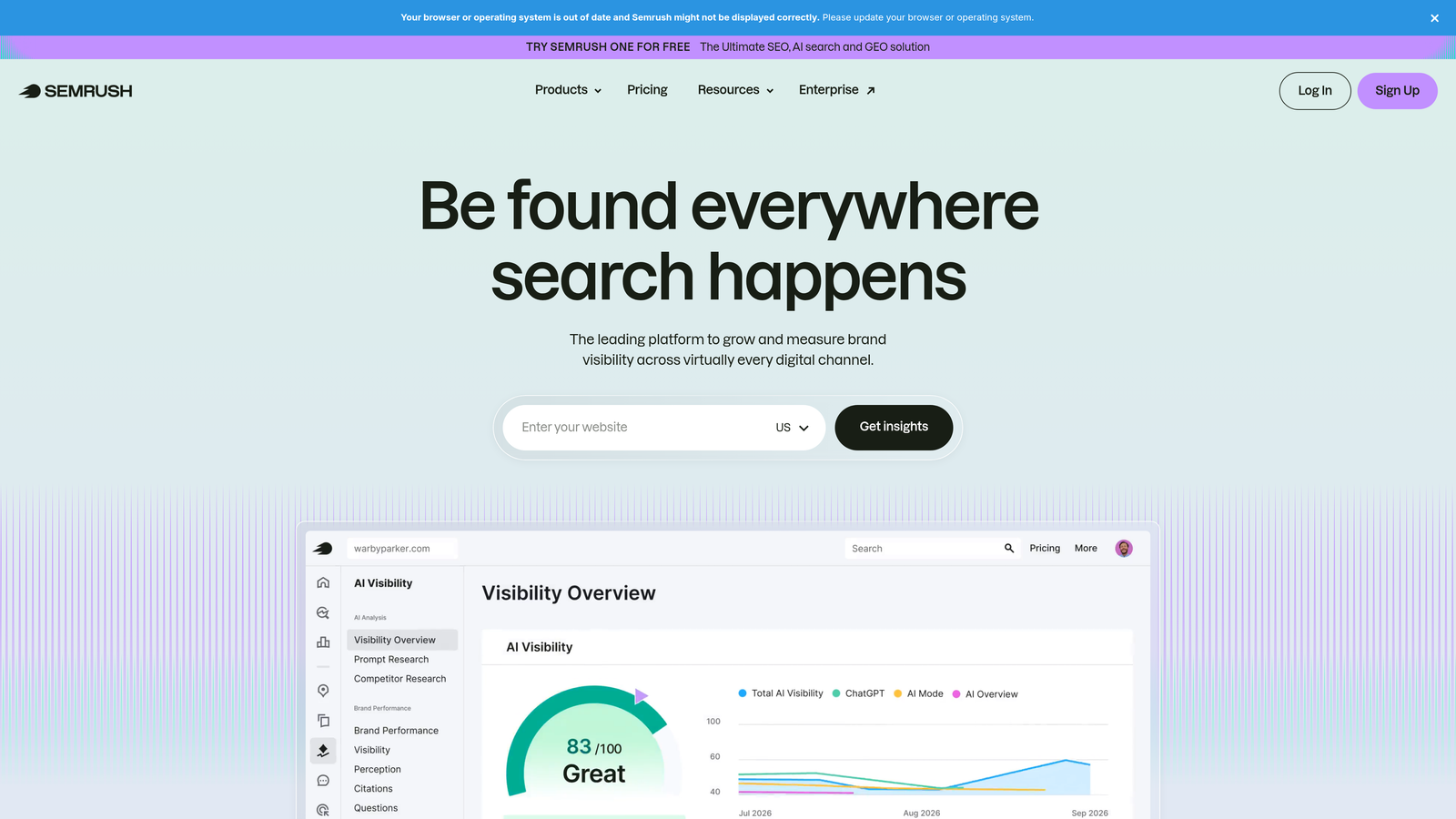
SEMrush is an all-in-one marketing platform that includes keyword clustering as part of its broader keyword research and competitive analysis toolkit.
Where This Tool Shines
SEMrush uses AI to cluster keywords by search intent, which is particularly useful for PPC campaigns where intent matters more than semantic similarity. The platform can identify which keywords are informational versus transactional, helping you build ad groups that match user intent.
Because SEMrush also handles SEO, you can identify keyword opportunities that work for both organic content and paid campaigns. This is valuable for integrated marketing teams that need consistent keyword strategies across channels.
Key Features
Intent-Based Clustering: Group keywords by commercial, informational, navigational, or transactional intent.
Competitive Gap Analysis: See which keyword clusters your competitors are targeting that you're missing.
Keyword Difficulty Scoring: Understand which clusters are worth bidding on based on competition levels.
Google Ads Export: Export clustered keyword lists directly in Google Ads-compatible format.
Combined SEO/PPC Data: Use the same keyword research for both organic and paid strategies.
Best For
Marketing teams that need keyword clustering for both SEO content planning and PPC campaign structure. Especially useful for integrated campaigns where paid and organic strategies need to align.
Pricing
Starts at $139.95/month for the Pro plan, with higher tiers offering more keyword tracking and competitive analysis features.
4. Keyword Insights
Best for: Advertisers who want SERP-based clustering for maximum relevance accuracy
Keyword Insights uses a SERP overlap methodology to cluster keywords—grouping terms based on whether they rank for similar search results rather than just semantic similarity.

Where This Tool Shines
The SERP-based approach is more accurate than semantic clustering alone because it reflects how Google actually groups topics. If two keywords rank for 70% of the same URLs, they belong in the same cluster—even if they don't share obvious word overlap.
This methodology is particularly valuable for PPC because it helps you build ad groups that mirror Google's own understanding of topic relevance. The tool can process up to 100,000 keywords in bulk and provides visual cluster maps that make it easy to identify parent-child keyword relationships.
Key Features
SERP Overlap Analysis: Cluster keywords based on actual search result similarity rather than just text matching.
Intent Classification: Automatically categorize keywords by search intent type.
Bulk Processing: Handle massive keyword lists with up to 100k terms per analysis.
Visual Cluster Maps: See hub-and-spoke relationships between parent and child keywords.
Content Brief Generation: Get topic outlines for landing pages that match your keyword clusters.
Best For
PPC managers who need highly accurate clustering for large keyword lists and want to align ad groups with Google's actual topic understanding. Also useful for teams that need landing page content briefs to match their ad groups.
Pricing
Starts at $58/month with higher tiers for increased processing volume and team collaboration features.
5. WordStream
Best for: Small business advertisers who need guided optimization with automated suggestions
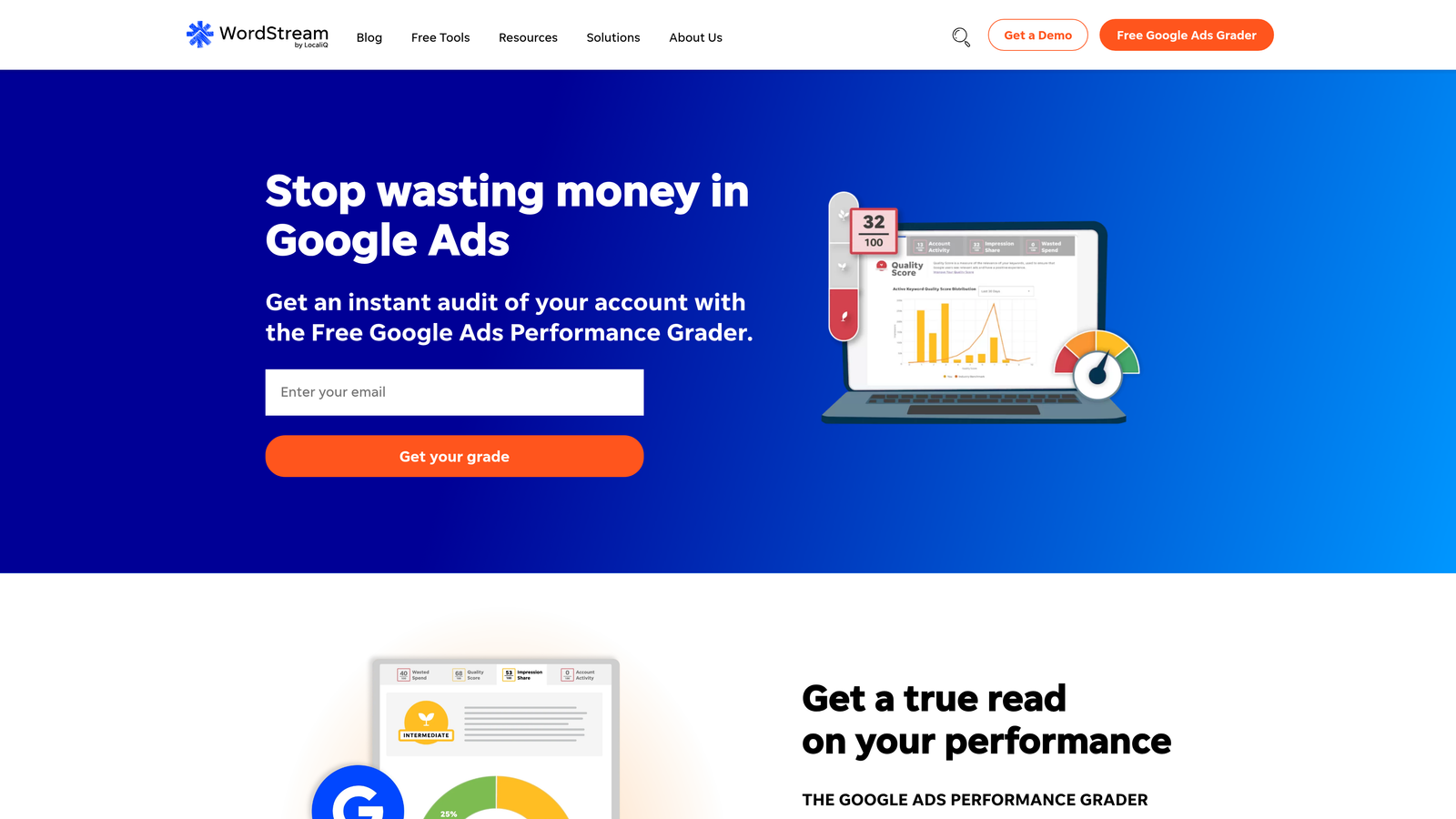
WordStream is a beginner-friendly PPC platform that automates keyword grouping suggestions as part of its broader optimization workflow.
Where This Tool Shines
WordStream's "20-Minute Work Week" feature provides automated recommendations for keyword clustering, ad group restructuring, and negative keyword additions. The platform essentially tells you what to do rather than requiring you to figure it out yourself.
This guided approach is ideal for small business owners or less experienced PPC managers who want expert-level optimization without needing to understand all the underlying complexity. The tool also provides performance grading so you can see how your account stacks up against industry benchmarks.
Key Features
Automated Ad Group Suggestions: Get specific recommendations for how to restructure keyword clusters.
20-Minute Work Week: Consolidated optimization alerts that prioritize high-impact changes.
Performance Grading: See how your keyword organization compares to similar accounts.
Cross-Platform Management: Handle Google, Facebook, and Microsoft Ads from one dashboard.
Beginner-Friendly Interface: Simplified UI designed for non-experts.
Best For
Small business owners and in-house marketers who need PPC management guidance and want automated clustering recommendations without a steep learning curve.
Pricing
Custom pricing based on monthly ad spend. Typically starts around $264/month for smaller accounts with pricing increasing for larger budgets.
6. Adalysis
Best for: PPC auditors who need search term clustering combined with automated negative keyword discovery
Adalysis is a PPC audit and optimization platform that includes search term clustering as part of its daily automated account reviews.

Where This Tool Shines
Adalysis runs daily audits of your accounts and automatically identifies search terms that should be clustered together or added as negatives. The tool is particularly strong at finding patterns in wasted spend—grouping similar junk terms so you can block them efficiently.
The platform also tracks Quality Score changes over time, helping you see whether your clustering improvements are actually moving the needle. For agencies that bill on performance, this historical tracking is valuable for demonstrating optimization impact to clients.
Key Features
Search Term Clustering Analysis: Automatically group related search terms from your Search Terms Report.
Automated Negative Suggestions: Get daily recommendations for which terms to exclude based on performance patterns.
Quality Score Tracking: Monitor how clustering changes affect account-level Quality Scores.
Ad Testing Recommendations: See which ad variations perform best within each keyword cluster.
Daily Automated Audits: Receive regular optimization alerts without manual account reviews.
Best For
PPC managers who want automated audit workflows and need to track optimization impact over time. Particularly useful for agencies that need to demonstrate ROI to clients with historical performance data.
Pricing
Starts at $149/month with pricing tiers based on ad spend volume and number of accounts managed.
7. Keyword Cupid
Best for: Budget-conscious advertisers who need semantic clustering with visual mapping
Keyword Cupid is a lightweight clustering tool that uses SERP overlap to group keywords by topical relevance.

Where This Tool Shines
Keyword Cupid offers a simple, affordable approach to SERP-based clustering without the enterprise price tag. The tool analyzes which keywords rank for similar URLs, then groups them into parent-child relationships that you can visualize in a cluster map.
The visual mapping feature makes it easy to spot natural ad group structures. You can see which keywords are core topics versus supporting long-tail variations, which helps you build tightly themed ad groups without over-complicating your account structure.
Key Features
SERP Overlap Algorithm: Cluster keywords based on which URLs rank for similar terms.
Visual Cluster Maps: See parent-child keyword relationships in an easy-to-understand format.
Parent-Child Identification: Automatically identify which keywords are primary topics versus variations.
CSV Export: Download clustered keyword lists in Google Ads-compatible format.
Bulk Processing: Handle large keyword lists without manual grouping.
Best For
Solo advertisers and small agencies who need accurate SERP-based clustering without paying for enterprise features they won't use. Good fit for budget-conscious PPC managers who want visual cluster mapping.
Pricing
Starts at $9.99/month, making it one of the most affordable SERP-based clustering tools available.
8. SpyFu
Best for: Competitive intelligence and reverse-engineering competitor ad group structures
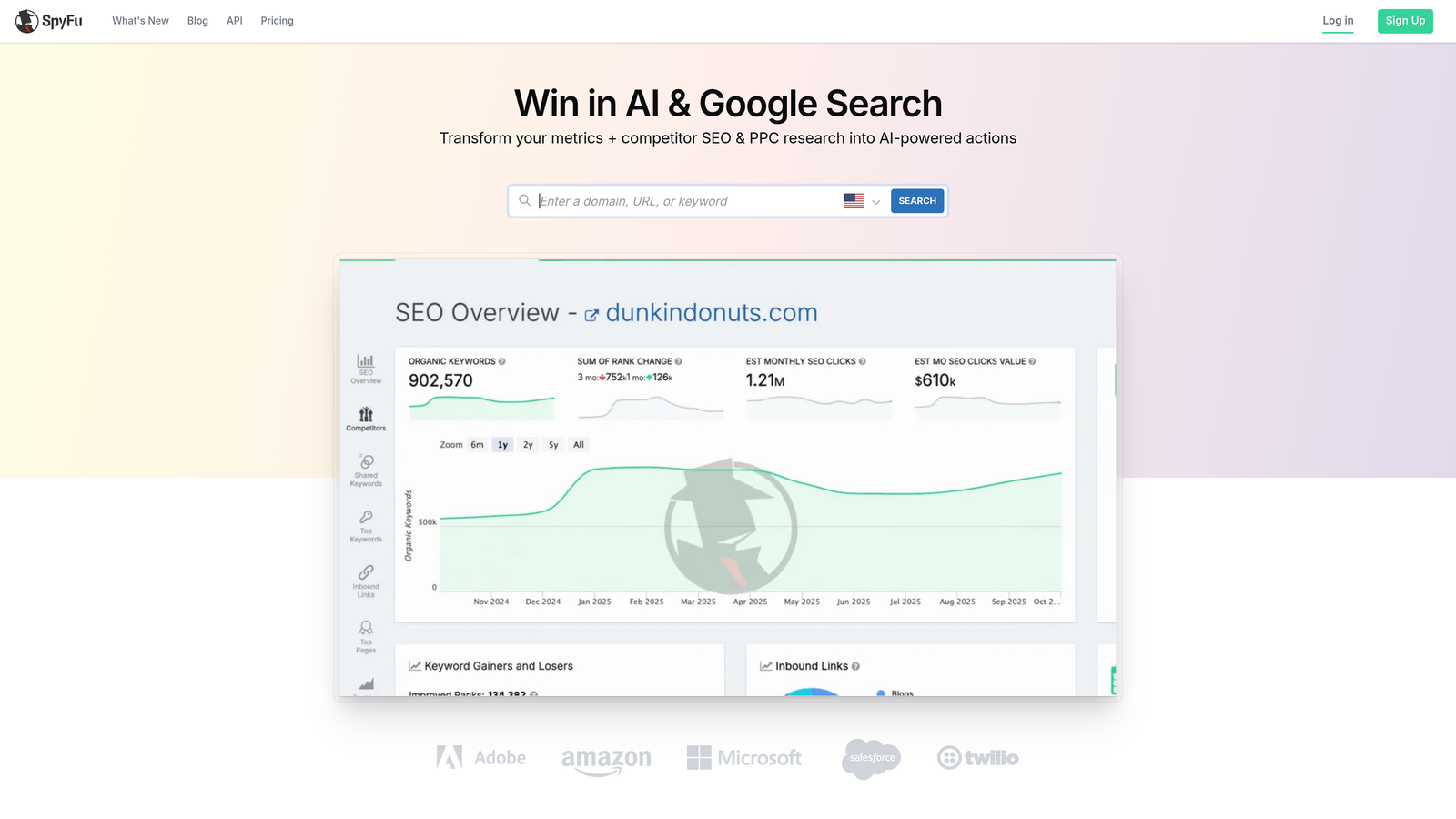
SpyFu is a competitive research tool that reveals how your competitors cluster their keywords and structure their ad groups.
Where This Tool Shines
SpyFu lets you see inside competitor accounts by analyzing their historical ad copy and keyword bidding patterns. You can identify which keyword clusters they're targeting, which ad groups they've structured, and how they've organized campaigns over time.
This competitive intelligence is valuable when entering new markets or trying to understand how established players organize their accounts. You can essentially reverse-engineer their keyword strategy and adapt their clustering approach to your own campaigns.
Key Features
Competitor Ad Group Analysis: See how competitors organize their keyword clusters and ad groups.
Historical Keyword Data: Track changes in competitor keyword strategies over time.
PPC Keyword Grouping Suggestions: Get clustering recommendations based on competitor patterns.
Ad Copy by Cluster: See which ad variations competitors use for specific keyword groups.
Domain Comparison: Compare your keyword organization against multiple competitors simultaneously.
Best For
PPC managers who need competitive intelligence and want to learn from how established advertisers structure their campaigns. Especially useful when launching in competitive verticals where you need to understand the landscape quickly.
Pricing
Starts at $39/month for basic competitor research, with higher tiers offering more historical data and advanced analysis features.
9. Google Ads Keyword Planner
Best for: Advertisers who need basic keyword grouping without additional tool costs
Google Ads Keyword Planner is the native keyword research tool built into Google Ads, offering basic clustering and ad group suggestions at no cost.
Where This Tool Shines
Keyword Planner automatically organizes keyword ideas by theme when you generate new keyword lists. While the clustering isn't as sophisticated as dedicated tools, it provides a solid starting point for building ad groups without requiring any additional software.
The tool also includes search volume forecasts and competition indicators, helping you prioritize which clusters are worth building campaigns around. For advertisers on tight budgets or just starting with PPC, this free option covers the basics.
Key Features
Organized Keyword Ideas: Get keyword suggestions automatically grouped by related themes.
Search Volume Data: See monthly search volume estimates for each keyword cluster.
Competition Indicators: Understand which clusters have high, medium, or low advertiser competition.
Direct Campaign Creation: Build campaigns directly from your clustered keyword lists.
Free Access: No additional cost beyond your Google Ads account.
Best For
New advertisers or small businesses that need basic keyword clustering without paying for specialized tools. Also useful as a starting point before investing in more advanced clustering platforms.
Pricing
Free with any Google Ads account. No subscription fees or usage limits.
Making the Right Choice
The best keyword clustering tool depends on where you spend your time and how complex your accounts are.
If you live in the Google Ads interface and want to optimize without switching tabs, Keywordme's in-platform approach saves the most time. For agencies managing dozens of accounts with custom automation needs, Optmyzr or Adalysis provide enterprise-level workflow control. Budget-conscious advertisers who need SERP-based accuracy should look at Keyword Cupid, while competitive researchers will get the most value from SpyFu's intelligence features.
For integrated marketing teams running both SEO and PPC, SEMrush provides unified keyword research across channels. Small business owners who need guided optimization should consider WordStream's automated recommendations. And if you're just starting with PPC and want to test clustering before investing in tools, Google Ads Keyword Planner covers the basics at no cost.
The common thread across all these tools is that they eliminate manual spreadsheet clustering. Even basic automation saves hours per week and reduces the human error that leads to poorly structured ad groups. The question isn't whether to use a clustering tool—it's which workflow fits your optimization style.
Start your free 7-day trial of Keywordme and see how in-platform clustering changes your optimization workflow. No spreadsheets, no switching tabs, just seamless keyword grouping right where you're already working. Then just $12/month to keep optimizing Google Ads campaigns 10x faster.
.svg)