
9 Best Google Ads Keyword Organization Tools in 2026
Managing Google Ads keywords efficiently requires the right tools to avoid wasted time and budget drain. This guide reviews 9 top Google Ads keyword organization tools in 2026, comparing Chrome extensions and standalone platforms that help marketers structure, group, and optimize keywords—complete with pricing details and ideal use cases for freelancers and agencies.


Managing keywords in Google Ads without the right tools is like organizing a library without shelves—chaotic and time-consuming. Whether you're a solo freelancer juggling multiple client accounts or an agency scaling campaigns, a solid Google Ads keyword organization tool can cut your workflow time dramatically and help you spot wasted spend before it drains budgets.
This guide covers 9 tools that actually help you structure, group, and manage keywords efficiently—from Chrome extensions that work inside Google Ads to standalone platforms with advanced clustering features. We'll break down what each tool does best, who it's ideal for, and what you'll pay.
1. Keywordme
Best for: Agencies and freelancers who want to optimize keywords without leaving Google Ads
Keywordme is a Chrome extension that integrates directly into your Google Ads Search Terms Report, letting you organize keywords with one-click actions instead of spreadsheet exports.

Where This Tool Shines
The biggest advantage here is speed. You're already working in the Search Terms Report—Keywordme just adds buttons that let you remove junk keywords, apply match types, and build negative keyword lists without switching tabs or downloading CSVs.
In most accounts I audit, the Search Terms Report is where the real optimization happens. Being able to act on that data instantly, right where you're already looking, eliminates the friction that causes most advertisers to delay keyword cleanup.
Key Features
In-Interface Actions: Add negatives, apply match types, and create keyword groups without leaving Google Ads.
One-Click Negative Lists: Build and apply negative keyword lists instantly from search terms data.
Keyword Clustering: Automatically group related keywords to streamline ad group structure.
Bulk Editing: Make changes to multiple keywords simultaneously instead of one-by-one clicks.
Multi-Account Support: Switch between client accounts with team collaboration features built in.
Best For
Agencies managing multiple Google Ads accounts and freelancers who bill hourly and need to prove efficiency. Also ideal for in-house PPC managers who want to cut their optimization time without learning a new platform.
Pricing
$12/month per user with a 7-day free trial. Flat-rate pricing means predictable costs regardless of ad spend.
2. Optmyzr
Best for: Enterprise teams managing large accounts with complex automation needs
Optmyzr is a comprehensive PPC management platform that offers rule-based keyword organization alongside account-level optimization tools.

Where This Tool Shines
Optmyzr excels when you're managing accounts with thousands of keywords and need automation that runs while you sleep. The rule-based system lets you set conditions like "pause keywords with less than 5% CTR after 100 clicks" and the platform handles execution.
What usually happens here is that large agencies use Optmyzr as their central command center for all PPC operations, not just keyword organization. The depth of features supports that workflow.
Key Features
Rule-Based Automation: Create custom rules that automatically organize and optimize keywords based on performance thresholds.
Cross-Account Management: Organize keywords across multiple Google Ads accounts from a single dashboard.
Quality Score Tracking: Monitor keyword Quality Scores over time and identify optimization opportunities.
Custom Reporting: Build reports that show keyword organization improvements and performance changes.
Script Integration: Connect with Google Ads scripts for advanced automation workflows.
Best For
Enterprise PPC teams and large agencies managing accounts with $50k+ monthly ad spend. Best suited for users who want deep automation and aren't intimidated by complex interfaces.
Pricing
Starts at $249/month for accounts spending up to $50k. Pricing scales with ad spend, which can get expensive for larger accounts.
3. WordStream
Best for: Beginners who need guided keyword organization with minimal PPC experience
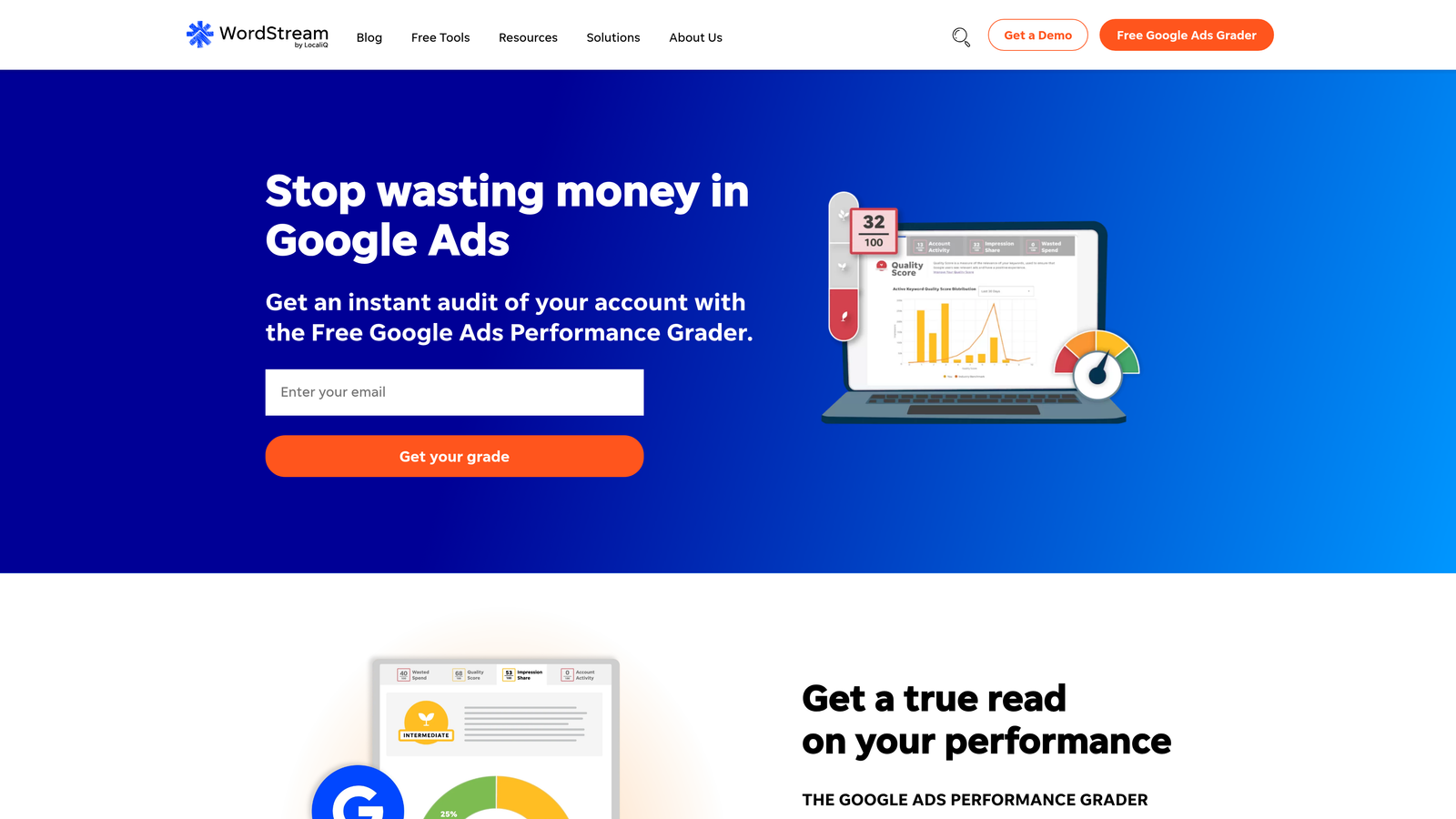
WordStream is a beginner-friendly PPC platform built around the "20-minute work week" concept—quick, guided optimization sessions.
Where This Tool Shines
WordStream holds your hand through keyword organization. The platform shows you exactly which keywords to add, pause, or restructure with color-coded recommendations and simple explanations.
The mistake most agencies make is assuming all clients need enterprise-level tools. For small business owners managing their own Google Ads, WordStream's simplified interface prevents analysis paralysis and keeps optimization moving forward.
Key Features
Guided Keyword Suggestions: Platform recommends specific keywords to add or remove based on account performance.
Performance Alerts: Get notifications when keyword performance drops or opportunities appear.
Cross-Platform Support: Manage Google Ads, Bing Ads, and Facebook campaigns from one interface.
Simple Dashboard: Clean interface designed for users without deep PPC experience.
20-Minute Work Week: Structured optimization workflow that guides you through weekly keyword maintenance.
Best For
Small business owners managing their own PPC campaigns and marketing generalists who handle Google Ads as part of broader responsibilities. Not ideal for experienced PPC specialists who want granular control.
Pricing
Starts at $49/month for small advertisers. Pricing increases based on ad spend and features needed.
4. SEMrush PPC Keyword Tool
Best for: Marketers who want keyword organization integrated with broader SEO and content strategy
SEMrush is a comprehensive marketing platform that includes PPC keyword research, grouping, and organization features alongside its SEO toolkit.

Where This Tool Shines
SEMrush excels when you need to align PPC keyword organization with organic search strategy. The platform shows you which keywords you're already ranking for organically, helping you avoid bidding on terms where you already own position one.
In most accounts I audit, there's significant overlap between paid and organic keywords that nobody's tracking. SEMrush makes that overlap visible and actionable.
Key Features
Cross-Channel Research: Research and group keywords for both PPC and SEO campaigns simultaneously.
Competitive Analysis: See which keywords competitors are bidding on and how they're organizing their account structure.
Semantic Clustering: Automatically group keywords by semantic similarity and search intent.
SEO Integration: Connect PPC keyword organization with organic ranking data and content strategy.
Keyword Difficulty Scores: Understand both paid competition and organic ranking difficulty for each keyword.
Best For
Marketing teams managing both PPC and SEO who want a unified keyword strategy. Also valuable for content marketers who need to align paid campaigns with editorial calendars.
Pricing
Starts at $139.95/month for the Pro plan. Higher tiers unlock more projects and additional features.
5. SpyFu
Best for: Competitive intelligence and organizing keywords based on competitor strategies
SpyFu is a competitive intelligence tool that helps you organize keywords by analyzing what competitors are bidding on and how they structure their campaigns.

Where This Tool Shines
SpyFu shows you years of historical keyword data for any competitor domain. You can see which keywords they've consistently bid on, which ones they dropped, and how their ad copy evolved over time.
What usually happens here is that you discover keyword gaps—high-value terms your competitors are bidding on that you've completely missed. SpyFu helps you organize those discoveries into actionable campaign structures.
Key Features
Competitor Keyword Grouping: See how competitors organize their keyword lists and ad group structures.
Historical Performance Data: Access years of keyword bidding history to identify consistent winners.
Keyword Overlap Analysis: Identify which keywords multiple competitors are bidding on simultaneously.
Ad Copy Organization: View competitor ad copy alongside keyword data to understand messaging strategy.
Download and Export: Export competitor keyword lists for easy import into your own campaigns.
Best For
Competitive industries where understanding rival strategies provides significant advantage. Also valuable for new market entrants who need to reverse-engineer successful keyword structures quickly.
Pricing
Starts at $39/month for the Basic plan. Higher tiers unlock more competitor tracking and historical data access.
6. Adalysis
Best for: Data-driven PPC managers who want automated keyword monitoring and quality score optimization
Adalysis is a PPC management tool built around automated alerts, quality score tracking, and data-driven keyword organization.

Where This Tool Shines
Adalysis excels at proactive keyword monitoring. Instead of waiting until monthly reviews to discover underperforming keywords, the platform sends alerts when specific keywords cross performance thresholds you define.
The Quality Score tracking is particularly valuable. Adalysis shows you exactly which keywords are dragging down your account-level Quality Score and quantifies the potential cost savings from fixing them.
Key Features
Automated Performance Alerts: Get notified immediately when keywords fall below performance thresholds.
Quality Score Optimization: Track Quality Score changes over time and identify improvement opportunities.
N-Gram Analysis: Identify keyword patterns and themes across your account for better organization.
A/B Testing Integration: Test different keyword match types and organization structures systematically.
Audit Reports: Generate detailed keyword audit reports showing organization opportunities.
Best For
PPC specialists who manage accounts full-time and want to catch problems before they become expensive. Best suited for users comfortable with data analysis and statistical testing.
Pricing
Starts at $149/month for accounts spending up to $50k. Pricing scales with ad spend similar to Optmyzr.
7. Google Ads Editor
Best for: Budget-conscious advertisers who need bulk keyword editing without monthly fees
Google Ads Editor is Google's free desktop application for bulk campaign management and offline keyword organization.

Where This Tool Shines
Google Ads Editor handles bulk keyword operations better than the web interface. You can copy entire keyword lists across campaigns, find and replace match types, and reorganize thousands of keywords without the web interface timing out.
The offline capability means you can download your account, experiment with different keyword structures, and only upload changes when you're ready. That safety net prevents expensive mistakes.
Key Features
Bulk Keyword Editing: Make changes to thousands of keywords simultaneously with find/replace and bulk edit tools.
Offline Management: Work on keyword organization without an internet connection.
Copy/Paste Across Campaigns: Duplicate keyword structures between campaigns or accounts instantly.
Advanced Search: Find specific keywords across your entire account using filters and search operators.
Free Forever: No subscription fees or usage limits.
Best For
Advertisers managing their own accounts who don't need advanced automation. Also valuable as a complement to other tools—most PPC managers use Google Ads Editor alongside paid platforms.
Pricing
Completely free with no limitations on account size or usage.
8. Keyword Grouper Pro
Best for: Organizing large keyword lists before uploading them to Google Ads
Keyword Grouper Pro is a specialized desktop tool that clusters keywords using n-gram technology before you build campaigns.
Where This Tool Shines
Keyword Grouper Pro solves a specific problem: you have a spreadsheet with 5,000 keywords and need to organize them into logical ad groups. The tool analyzes keyword patterns and automatically creates clusters based on common phrases.
What usually happens here is that you paste in a messy keyword list and get back a structured hierarchy ready for campaign upload. It's particularly valuable during account buildouts or major restructures.
Key Features
N-Gram Clustering: Automatically group keywords based on common word patterns and phrases.
Bulk List Processing: Handle thousands of keywords in a single operation.
Export-Ready Structures: Output organized keyword lists formatted for Google Ads Editor or direct upload.
Simple Interface: Single-purpose tool without feature bloat or complexity.
One-Time Purchase: Pay once instead of monthly subscription.
Best For
PPC managers building new accounts from scratch or agencies that regularly launch campaigns for new clients. Less valuable for ongoing keyword maintenance.
Pricing
One-time purchase around $97. No monthly fees or recurring costs.
9. Karooya
Best for: Identifying wasted spend and building comprehensive negative keyword lists
Karooya is a negative keyword management tool focused on organizing wasted spend and preventing irrelevant clicks.
Where This Tool Shines
Karooya specializes in negative keyword organization, which most tools treat as an afterthought. The platform analyzes your search terms report and automatically suggests negative keywords based on patterns of wasted spend.
The mistake most agencies make is building negative keyword lists reactively—waiting until you've already wasted budget on irrelevant clicks. Karooya helps you build comprehensive negative lists proactively by analyzing patterns across your account.
Key Features
Automated Negative Suggestions: Platform identifies wasted spend patterns and recommends negative keywords.
Spend Tracking: See exactly how much money you've wasted on irrelevant search terms.
Cross-Campaign Organization: Apply negative keyword lists across multiple campaigns simultaneously.
Free Tier Available: Small accounts can use basic features without paying.
Simple Interface: Focused specifically on negative keyword management without overwhelming features.
Best For
Advertisers running broad match or phrase match campaigns where negative keyword management significantly impacts profitability. Also valuable for accounts with limited budgets where every wasted click hurts.
Pricing
Free for accounts spending under $10k/month. Paid plans start at $49/month for larger accounts.
Making the Right Choice
The best Google Ads keyword organization tool depends on where you're working and what you're optimizing for.
For agencies and freelancers who live in the Google Ads interface, Keywordme delivers the fastest workflow by eliminating context-switching. You're already reviewing search terms—being able to act on them instantly without spreadsheet exports saves hours every week.
Enterprise teams with complex automation needs should evaluate Optmyzr or Adalysis. Both platforms offer rule-based systems that handle optimization while you focus on strategy. The higher price points make sense when you're managing large budgets where small efficiency gains translate to significant cost savings.
Beginners benefit from WordStream's guided approach. The platform tells you exactly what to do instead of overwhelming you with options. That hand-holding prevents the paralysis that causes many new advertisers to abandon optimization entirely.
Budget-conscious advertisers can start with Google Ads Editor, which handles bulk keyword operations for free. Pair it with Karooya's free tier for negative keyword management, and you've got a solid foundation without monthly fees.
Most tools offer free trials. Test 2-3 options before committing to find which workflow fits your account structure and management style. What works for a solo consultant managing five clients won't necessarily work for an agency team managing fifty.
The common thread across successful keyword organization is consistency. The best tool is the one you'll actually use every week, not the one with the most features you'll never touch.
Start your free 7-day trial of Keywordme and see how much faster you can optimize when you're working directly inside Google Ads. No spreadsheets, no switching tabs, just quick, seamless optimization right where you're already working. Then just $12/month to keep that workflow running.
.svg)