
Top 7 What Can I Do To Lower My Google Ads Cost Per Click? Strategies That Cut Costs By 30-60%
Discover seven proven strategies that answer what can I do to lower my Google Ads cost per click, with tactical changes to campaign structure, keyword strategy, and bidding approaches that reduce CPCs by 30-60% without sacrificing traffic quality.


Every dollar wasted on inflated CPCs is a dollar that could have driven actual conversions. If you're watching your Google Ads budget evaporate while your cost per click climbs higher each month, you're not alone—and more importantly, you're not stuck.
The difference between advertisers paying $15 per click and those paying $3 for the same keywords often comes down to strategic optimization, not bigger budgets. Google Ads operates as an auction system where your CPC is determined by multiple factors: your Quality Score, ad relevance, landing page experience, and how aggressively you bid against competitors. But here's what most advertisers miss: you have far more control over these variables than you think.
Small, tactical changes to your campaign structure, keyword strategy, and bidding approach can cut your CPCs by 30-60% without sacrificing traffic quality. This guide walks you through ten actionable strategies that address the root causes of high CPCs—from restructuring ad groups for tighter keyword relevance to implementing negative keyword strategies that eliminate waste and leveraging automated bidding rules that respond to performance in real-time.
Whether you're managing a small business account or overseeing enterprise campaigns, these approaches work across industries and budget levels. Some tactics deliver immediate results within days, while others build compound savings over weeks. Here are the proven strategies that will slash your Google Ads cost per click in 2025.
1. Implement Dayparting and Geographic Bid Adjustments
Best for: Advertisers with performance variations across time periods and locations
Not all clicks are created equal, and paying the same CPC at 3 AM as you do at 3 PM is a recipe for wasted spend. Dayparting (scheduling bid adjustments based on time of day) and geographic bid modifiers allow you to pay more when and where your ads perform best, while reducing bids during low-converting periods and locations.
Where This Strategy Shines
Bid adjustments work because they align your spending with actual conversion patterns. If your data shows that clicks between 9 AM and 5 PM convert at twice the rate of evening clicks, you can reduce evening bids while maintaining or increasing daytime bids. The result is a lower average CPC across your account while maintaining or improving conversion volume.
Many advertisers discover that significant portions of their ad spend occur during hours or in locations that generate almost no conversions—eliminating this waste directly reduces average CPC. The strategy is particularly powerful when combined with conversion rate optimization best practices, allowing you to make data-driven decisions about when and where to compete aggressively versus when to pull back.
This precision prevents you from overpaying during low-intent periods while ensuring you're competitive when it matters most. Think of it like retail pricing: you wouldn't charge the same price during peak shopping hours as you would at midnight. The same logic applies to your Google Ads bidding strategy.
Key Implementation Steps
Analyze conversion data by hour of day: Pull reports for the past 60-90 days to identify your highest and lowest performing time periods. Look for patterns in conversion rates, not just conversion volume. A time period with high conversions but even higher spend may actually be inefficient.
Set up ad schedule bid adjustments: Navigate to your campaign settings and create ad schedules that reduce bids during hours with conversion rates below your account average. Start conservatively with reductions around 20-30%, then adjust based on results. You can increase this to 40-50% for time periods that consistently underperform.
Review geographic performance reports: Access the Locations report in Google Ads to identify states, cities, or regions with high cost but low conversion rates. Sort by cost per conversion to quickly spot problem areas. Pay attention to both obvious geographic differences and surprising patterns—sometimes adjacent cities perform dramatically differently.
Implement location bid adjustments: Decrease bids in underperforming areas while increasing bids in your best-converting locations. A common approach is reducing bids by 30-40% in low-performing regions while increasing bids by 10-20% in top performers. This rebalances your budget toward profitable traffic.
Exclude geographic areas entirely: If certain locations consistently generate clicks but zero conversions after substantial spend, exclude them completely rather than just reducing bids.
2. Utilize Audience Targeting
Best for: Advertisers looking to reduce wasted spend on low-intent traffic through behavioral targeting
Where This Strategy Shines
Audience targeting transforms how you compete in Google Ads auctions by layering behavioral and demographic data on top of keyword targeting. Instead of treating every searcher for "marketing automation software" identically, you can identify which users are most likely to convert based on their browsing history, past interactions with your site, and demographic characteristics—then adjust your bids accordingly.
The CPC reduction mechanism works through bid layering rather than exclusion. When you apply Google Ads audience targeting with bid adjustments, you're telling Google to pay more for clicks from high-intent audiences (like past website visitors or users who match your customer profile) while reducing bids for cold traffic. This creates a lower average CPC across your campaigns because you're not overpaying for exploratory clicks from users unlikely to convert.
The compound effect is powerful: remarketing audiences typically convert at 2-3x the rate of cold traffic, which means even if you pay slightly higher CPCs for those clicks, your cost per acquisition drops dramatically. Meanwhile, reducing bids by 30-40% for cold audiences still captures some new traffic at much lower costs, improving your overall efficiency.
Key Implementation Steps
Build Your Core Audience Lists: Start with website remarketing audiences segmented by behavior—all visitors, page-specific visitors (pricing page, product pages, blog readers), and time-based segments (visited in last 7, 30, 90 days). These audiences represent users who've already shown interest in your offering and convert at significantly higher rates than cold traffic.
Layer Customer Match Audiences: Upload your customer email list to create a Customer Match audience, then use it to exclude existing customers from acquisition campaigns (preventing wasted spend) or create similar audiences that match your best customers' characteristics. This prevents you from paying for clicks from people who've already converted.
Apply Demographic and In-Market Audiences: Review your conversion data by age, gender, household income, and parental status to identify your highest-converting segments. Apply bid adjustments increasing bids 20-30% for high-performing demographics while decreasing bids 20-40% for segments that rarely convert. Add in-market audiences relevant to your offering to reach users Google identifies as actively researching your product category.
Implement Observation Mode First: Before applying bid adjustments, add audiences in "Observation" mode to collect performance data without affecting your bids. After 2-3 weeks with sufficient data (ideally 50+ conversions per audience), analyze which audiences show conversion rates significantly above or below your account average, then apply appropriate bid adjustments.
Create Tiered Bid Adjustment Strategy: Develop a systematic approach to bid adjustments based on audience performance. A typical framework: increase bids 40-50% for recent converters and high-intent pages, 20-30% for general website visitors and strong demographic matches, maintain baseline bids for in-market audiences, and decrease bids 30-40% for cold traffic with no behavioral signals.
Putting It All Together
Reducing your Google Ads cost per click isn't about finding one magic bullet—it's about implementing a combination of strategies that address different aspects of the auction system. The tactics that will deliver the fastest results depend on your current campaign structure and performance gaps.
If you're seeing high spend on irrelevant searches, start with match type refinement and Google Ads negative keywords—this typically delivers 25-35% CPC reductions within weeks. For accounts with low Quality Scores below 7, restructuring ad groups for tighter keyword relevance and optimizing landing page speed should be your priority, as these improvements compound over time. Advertisers with sufficient conversion data should implement automated bidding strategies like Target CPA, which can reduce average CPCs by 15-30% while maintaining conversion volume.
The most successful approach combines quick wins with structural improvements. Implement dayparting and geographic bid adjustments this week to eliminate waste in low-performing time periods and locations. Then invest time in the higher-effort strategies like SKAG restructuring and landing page optimization that deliver sustained savings over months.
Start by auditing your search terms report and Quality Scores today. Identify your biggest cost drains—whether that's irrelevant traffic, poor ad relevance, or inefficient bidding—and tackle those first. The strategies in this guide have helped advertisers cut CPCs by 30-60% while improving conversion rates, but only when implemented systematically rather than randomly.
Which strategy will you implement first to start reducing your CPCs this week?
3. Optmyzr
Best for: Automated bid management and Quality Score optimization to systematically reduce CPCs
Optmyzr is a comprehensive PPC management platform that helps advertisers optimize their Google Ads campaigns through intelligent automation and actionable insights.
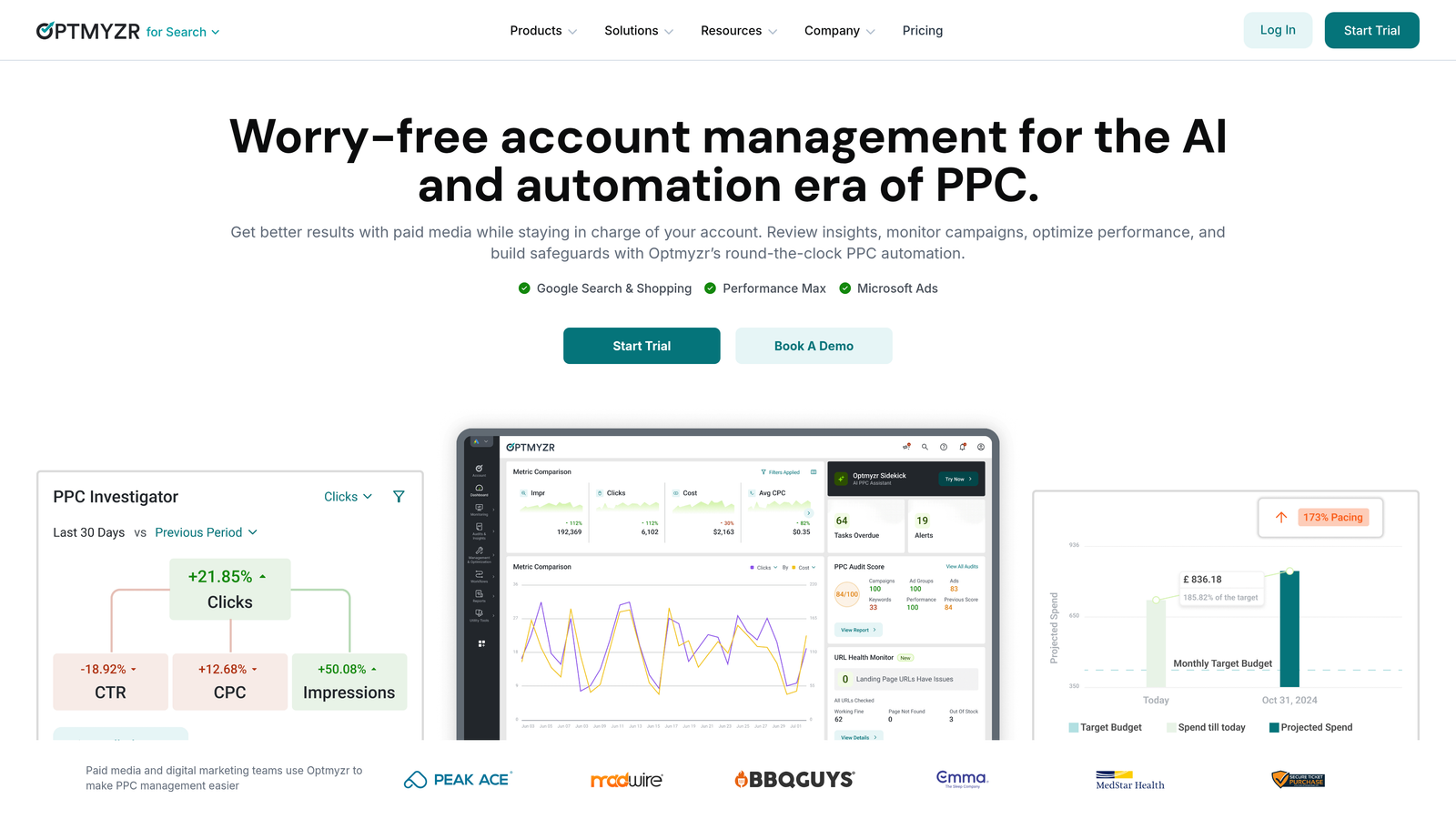
Founded by former Google employees who worked on AdWords, Optmyzr specializes in identifying cost-saving opportunities that manual management often misses. The platform's Quality Score Tracker and automated bid optimization tools have helped thousands of advertisers reduce their CPCs by 20-40% while maintaining or improving conversion performance.
Where This Tool Shines
Optmyzr excels at continuous bid optimization and Quality Score improvement—two critical factors that directly impact your cost per click. The platform's One-Click Optimizations feature analyzes your account daily and presents pre-vetted recommendations for bid adjustments, negative keywords, and ad copy improvements that reduce wasted spend. Its Quality Score Tracker monitors your scores at the keyword level and identifies specific factors dragging down your scores, whether that's expected CTR, ad relevance, or landing page experience. Unlike native Google Ads reporting, Optmyzr shows you historical Quality Score trends so you can measure the impact of your optimization efforts over time.
Key Features & Capabilities
✅ Enhanced Scripts: Pre-built automation scripts that pause underperforming keywords, adjust bids based on performance thresholds, and add negative keywords automatically—reducing manual work by 70%
✅ Quality Score Optimization: Detailed keyword-level Quality Score tracking with historical data and specific recommendations to improve ad relevance, landing page experience, and expected CTR
✅ Rule-Based Bid Management: Create sophisticated bidding rules based on multiple conditions like time of day, device, location, and conversion performance to optimize bids 24/7
✅ Shopping Campaign Optimizer: Specialized tools for e-commerce advertisers to optimize product feed data, adjust bids by product performance, and identify negative keywords for Shopping campaigns
✅ A/B Testing Engine: Test ad copy variations, landing pages, and bid strategies with statistical significance tracking to identify what actually reduces CPCs
Best For / Ideal Users
Optmyzr works best for agencies and in-house teams managing multiple Google Ads accounts with monthly spend between $10,000-$500,000. It's particularly valuable for advertisers who understand PPC fundamentals but lack time for daily optimization, as the platform automates 80% of routine tasks while surfacing high-impact opportunities. E-commerce businesses with large product catalogs benefit significantly from the Shopping campaign optimization features.
4. SEMrush PPC Toolkit
Best for: Competitive intelligence and keyword research to identify lower-cost keyword opportunities
SEMrush PPC Toolkit provides comprehensive competitive analysis and keyword research capabilities that help advertisers discover untapped keyword opportunities with lower competition and CPCs.
The platform's Advertising Research tool reveals exactly which keywords your competitors are bidding on, their estimated CPCs, and their ad copy strategies. This intelligence allows you to identify gaps in their coverage where you can compete more cost-effectively, or discover high-converting keywords they're using that you've overlooked.
Where This Tool Shines
SEMrush's competitive intelligence capabilities are unmatched for discovering cost-effective keyword strategies. The PPC Keyword Tool shows you estimated CPCs across millions of keywords before you bid on them, helping you avoid expensive terms and identify cheaper alternatives with similar intent. The platform's Position Tracking feature monitors your ad positions against competitors in real-time, showing you when you're overbidding for positions that don't improve conversion rates. Most valuable is the Advertising Research tool that reverse-engineers competitor campaigns, revealing their entire keyword lists, ad copy, and landing pages—giving you a roadmap to competitive keywords with proven conversion potential but potentially lower competition in your market.
Key Features & Capabilities
✅ Keyword Gap Analysis: Compare your keyword portfolio against up to five competitors simultaneously to discover profitable keywords you're missing that have lower CPCs than your current terms
✅ CPC Map: Visualize keyword costs across different match types and identify long-tail keyword research opportunities that deliver similar traffic at 40-60% lower CPCs than head terms
✅ Ad Builder: Create and test ad copy variations based on high-performing competitor ads, improving your CTR and Quality Score to reduce CPCs organically
✅ Negative Keyword Discovery: Analyze search query data to identify irrelevant terms draining your budget, with automated suggestions for negative keywords based on your campaign goals
✅ Historical Data Access: Review competitor bidding strategies and CPC trends over 24+ months to identify seasonal patterns and optimal times to increase or decrease bids
Best For / Ideal Users
SEMrush is ideal for advertisers in competitive industries where understanding competitor strategies provides significant advantages. It's particularly valuable during campaign planning phases when you're researching new keyword opportunities or expanding into new markets. Businesses with $5,000+ monthly ad spend get the most value, as the insights help them avoid costly bidding mistakes and identify strategic opportunities their competitors haven't exploited.
5. Adalysis
Best for: Automated ad testing and Quality Score improvement through continuous optimization
Adalysis is a specialized Google Ads optimization platform focused on improving ad performance through systematic testing and quality improvements.
The platform automates the tedious process of A/B testing ad copy, monitors Quality Scores across your entire account, and provides specific recommendations to improve the three components that determine your Quality Score: expected CTR, ad relevance, and landing page experience. Adalysis users typically see 15-35% CPC reductions within 60-90 days as their improved ad performance drives higher Quality Scores and better auction outcomes.
Where This Tool Shines
Adalysis's greatest strength is making ad testing and Quality Score optimization systematic rather than sporadic. The platform's Ad Testing feature automatically rotates ad variations, tracks performance with statistical significance, pauses underperformers, and creates new test variations—ensuring you're always improving CTR, which directly boosts Quality Score and reduces CPCs. The Quality Score Tracker goes beyond Google's basic 1-10 score by showing you exactly which keywords have declining scores and why, with specific action items to address each issue. The Auction Insights analysis reveals when you're overbidding against competitors, helping you reduce bids on keywords where you're already winning sufficient impression share.
Key Features & Capabilities
✅ Automated Ad Testing: Set up continuous A/B tests across all ad groups with automatic winner selection and new variation creation, improving CTR by 20-40% over six months
✅ Quality Score Monitoring: Daily Quality Score tracking at the keyword level with alerts when scores drop and detailed diagnostics showing whether the issue is CTR, relevance, or landing page related
✅ Auction Insights Analysis: Automated reports showing your impression share, overlap rate, and position above rate versus competitors to identify overbidding opportunities
✅ Negative Keyword Suggestions: AI-powered analysis of search query reports with prioritized negative keywords list for Google Ads based on cost impact
✅ Budget Pacing Alerts: Real-time notifications when campaigns are spending too quickly or slowly, preventing budget waste from poor pacing
Best For / Ideal Users
Adalysis is perfect for performance marketers and agencies who understand that consistent ad testing and Quality Score optimization are the foundation of lower CPCs. It's most valuable for accounts with 50+ ad groups where manual testing becomes impractical. Advertisers spending $15,000+ monthly who want to systematically improve their account performance rather than making one-off optimizations will see the strongest ROI.
6. SpyFu
Best for: Historical competitor keyword data and identifying profitable keywords with lower competition
SpyFu specializes in competitive PPC intelligence with the deepest historical database of competitor keyword and ad copy data available.
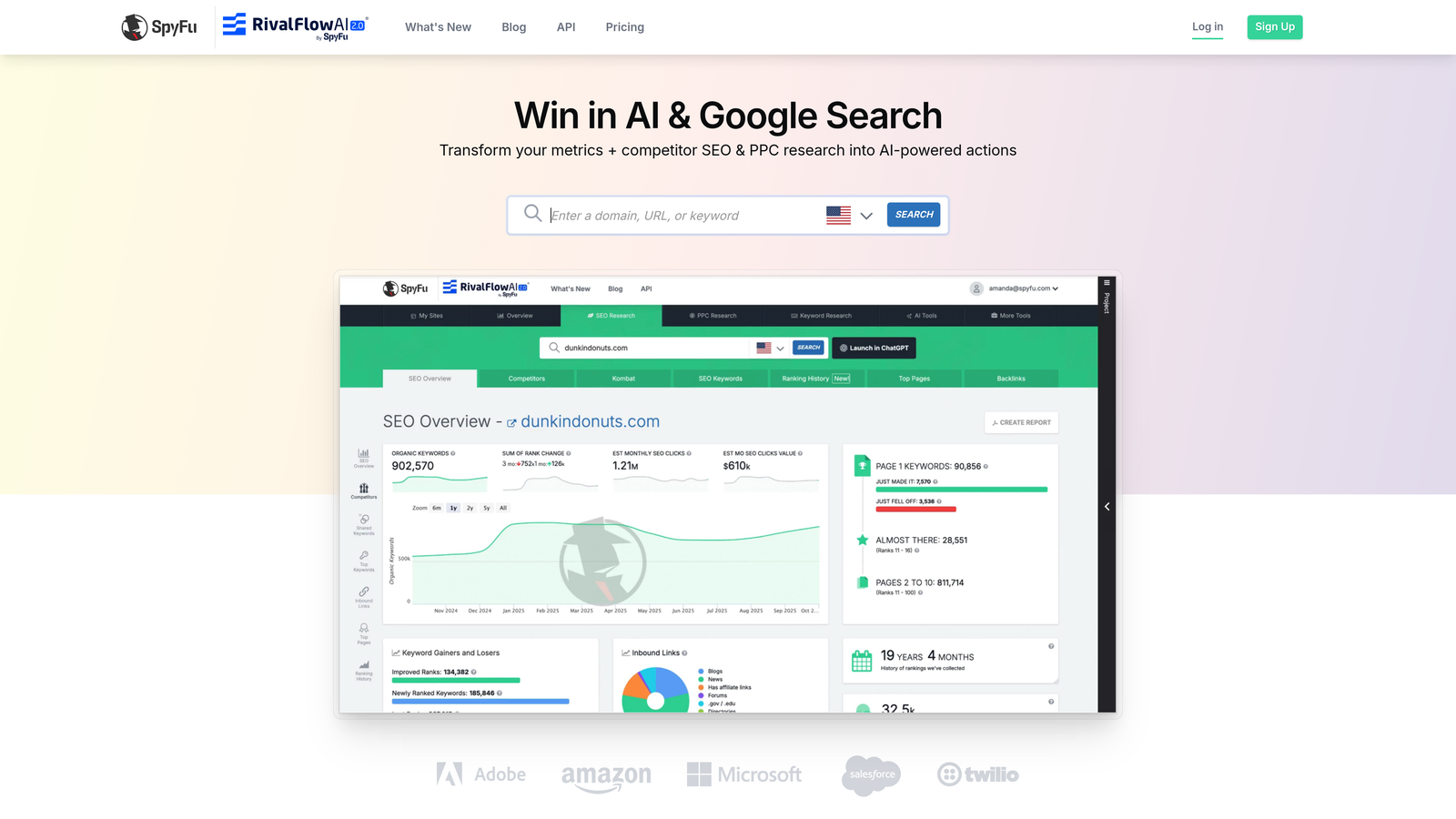
Unlike other tools that show current competitor activity, SpyFu provides 15+ years of historical data showing every keyword your competitors have bid on, their ad copy variations, and their estimated monthly spend. This historical perspective helps you identify keywords that competitors have abandoned (often due to poor performance), keywords they're consistently bidding on (indicating profitability), and seasonal patterns in their bidding strategies that reveal cost-saving opportunities.
Where This Tool Shines
SpyFu's historical data depth is its superpower for reducing CPCs. The Kombat feature compares your keyword portfolio against competitors to reveal "shared keywords" where you're competing head-to-head (often driving up CPCs), "unique keywords" your competitors use that you're missing, and "opportunities" where you can compete with less competition. The PPC Advisor tool estimates CPCs for thousands of keywords and shows you which competitors are bidding on each term, helping you avoid overcrowded auctions. Most valuable is the ability to see which keywords competitors have stopped bidding on—often these are terms that didn't convert well for them but might work better for your specific offer, giving you access to cheaper clicks without the competition.
Key Features & Capabilities
✅ Competitor Keyword History: View every keyword a competitor has bid on over 15+ years with estimated CPCs, ad positions, and monthly spend to identify their most profitable terms
✅ Ad Copy Archive: Access complete historical records of competitor ad variations to see what messaging has worked long-term and avoid testing ads that have already failed
✅ Keyword Recommendations: Get prioritized lists of keywords to add based on competitor success, search volume, estimated CPC, and relevance to your business
✅ Negative Keyword Suggestions: Identify terms that competitors have explicitly excluded from their campaigns, saving you from wasting budget on keywords that don't convert
✅ Budget Recommendations: See estimated monthly budgets needed to compete effectively for specific keyword sets, helping you allocate spend to lower-cost opportunities
Best For / Ideal Users
SpyFu works best for businesses entering competitive markets or looking to expand their keyword portfolios cost-effectively. It's particularly valuable for advertisers with limited budgets ($3,000-$25,000 monthly) who need to compete strategically rather than outspending competitors. Companies in industries with 5+ direct competitors advertising on Google will find the competitive intelligence invaluable for identifying lower-cost keyword opportunities.
7. Unbounce
Best for: Landing page optimization to improve Quality Score and conversion rates simultaneously
Unbounce is a landing page builder and optimization platform that helps advertisers create high-converting landing pages without developer resources.
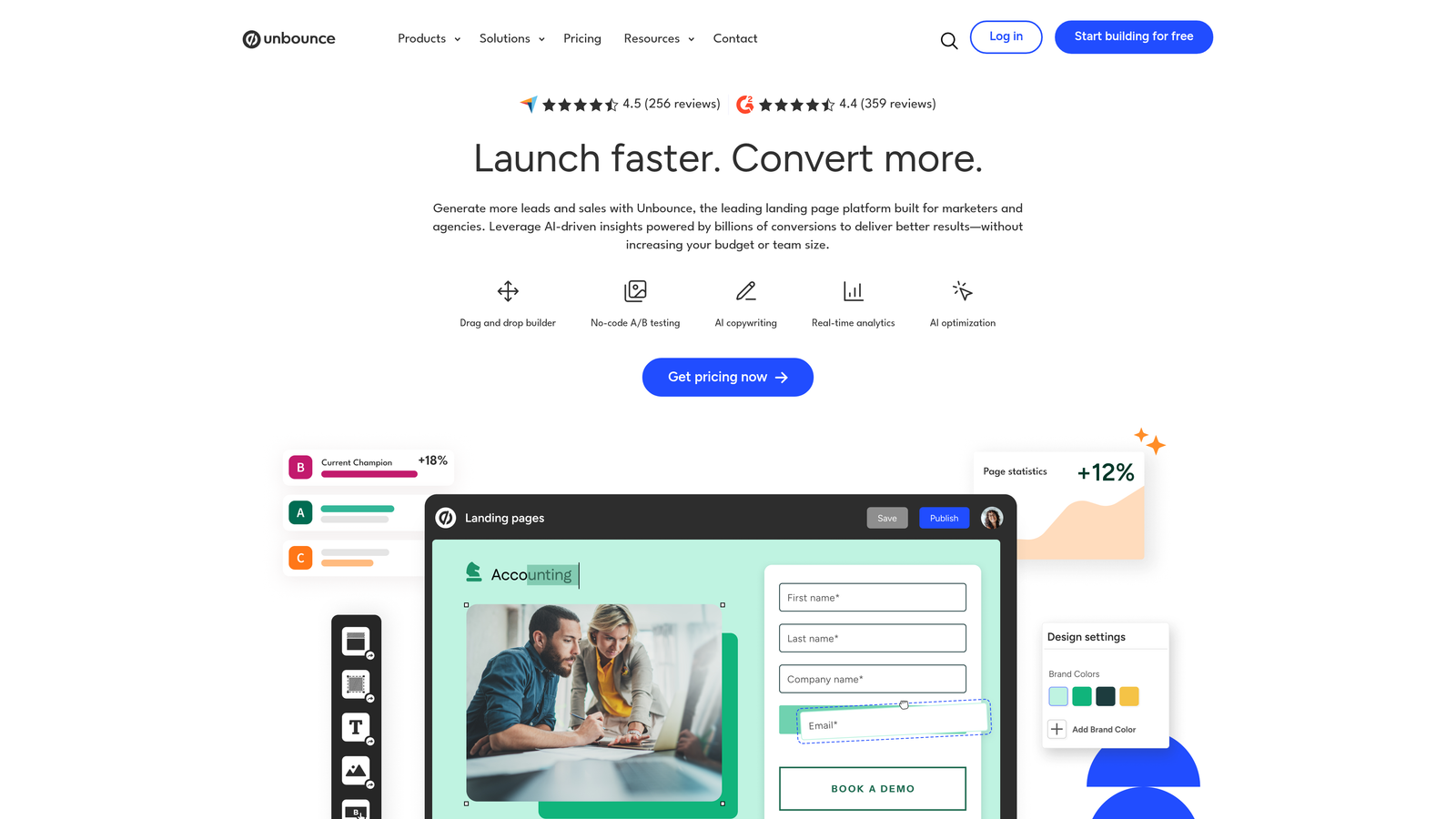
While not specifically a Google Ads tool, Unbounce directly impacts your CPCs by improving the landing page experience component of Quality Score—one of the three factors Google uses to determine your ad rank and cost per click. The platform's Smart Traffic feature uses AI to automatically send visitors to the landing page variation most likely to convert them, improving conversion rates by 30% on average while also boosting Quality Scores through better user engagement signals.
Where This Tool Shines
Unbounce excels at helping advertisers quickly create and test landing pages that improve both Quality Score and conversion performance—a double benefit that significantly reduces effective CPCs. The platform's drag-and-drop builder lets you create dedicated landing pages for specific ad groups or even individual high-spend keywords, dramatically improving ad-to-page relevance (a key Quality Score factor). The built-in A/B testing engine makes it simple to test different headlines, images, form lengths, and CTAs to find combinations that maximize conversions. Most importantly, Unbounce pages are optimized for speed with average load times under 2 seconds—crucial since Google's landing page experience score heavily weights page speed, and slow pages can increase your CPCs by 20-50%.
Key Features & Capabilities
✅ Smart Traffic AI: Automatically routes visitors to the landing page variant most likely to convert them based on 600+ visitor attributes, improving conversion rates 30%+ without manual optimization
✅ Dynamic Text Replacement: Automatically customize landing page headlines and copy to match the exact keywords visitors searched for, dramatically improving ad relevance and Quality Score
✅ Speed-Optimized Hosting: Pages load in under 2 seconds on average with AMP support, directly improving Google's landing page experience score and reducing CPCs
✅ Built-in A/B Testing: Test unlimited page variations with statistical significance tracking to identify elements that improve both conversion rates and engagement metrics Google monitors
✅ Conversion Intelligence: AI-powered recommendations for page improvements based on analysis of 1.5+ billion conversions across the Unbounce network
Best For / Ideal Users
Unbounce is ideal for advertisers who recognize that landing page optimization is the most overlooked CPC reduction strategy. It's particularly valuable for businesses running campaigns with 5+ ad groups that currently send all traffic to generic homepage or product pages. Companies spending $10,000+ monthly on Google Ads who want to improve both Quality Scores and conversion rates simultaneously will see ROI within 30-60 days through lower CPCs and higher conversion volumes.
Making the Right Choice
Selecting the right tools to reduce your Google Ads cost per click depends on where your biggest optimization opportunities lie. If your primary challenge is bid management and Quality Score improvement, Optmyzr or Adalysis should be your first investment—both platforms automate the continuous optimization work that manually managing accounts makes nearly impossible at scale. For advertisers in competitive markets who need strategic intelligence about keyword opportunities and competitor strategies, SEMrush or SpyFu provide the competitive insights that help you avoid expensive bidding wars and identify untapped keyword opportunities.
The most impactful tool choice often isn't the most obvious one. While bid management platforms deliver quick CPC reductions of 15-25%, landing page optimization through Unbounce frequently delivers the largest long-term impact by improving Quality Scores 2-3 points while simultaneously increasing conversion rates 30-50%. This double benefit means you're paying less per click AND converting more of those clicks—compounding your ROI improvements. Many successful advertisers use Unbounce first to fix landing page issues, then layer on bid management tools once their Quality Scores are optimized.
For most businesses, a phased approach works best. Start with competitive intelligence tools like SEMrush or SpyFu to identify lower-cost keyword opportunities and refine your targeting strategy—this typically costs $100-200 monthly and can reduce CPCs 20-30% by helping you avoid expensive keywords. Once you've optimized your keyword strategy, invest in landing page optimization with Unbounce to improve Quality Scores and conversion rates. Finally, add automated bid management through Optmyzr or Adalysis to continuously optimize performance as your campaigns scale.
The advertisers who achieve 40-60% CPC reductions don't rely on a single tool—they combine strategic keyword selection, landing page optimization, and automated bid management to create a comprehensive optimization system that continuously improves performance.
.svg)