
8 Best Simple PPC Optimization Solutions in 2026
This guide rounds up 8 simple PPC optimization solutions designed for solo advertisers and small agencies who need fast search-term cleanup and bid management without enterprise complexity. Each tool is compared by pricing, standout feature, and ideal use case to help you pick the right fit quickly.


If you're managing Google Ads accounts on your own or across a small agency roster, you already know the drill: search terms pile up, wasted spend creeps in, and half your week disappears into spreadsheets trying to sort keywords from the junk. This list skips the enterprise-grade suites built for teams with dedicated PPC analysts and instead focuses on tools that are genuinely simple to set up, priced clearly, and built to solve the search-term-cleanup and bid-management grind you're probably dealing with right now.
Quick Comparison of Simple PPC Optimization Solutions
- Keywordme: best for solo advertisers and small agency teams; starts at $12/month per user; the only tool here that works one-click, directly inside the Google Ads Search Terms Report.
- Google Ads Editor: best for anyone needing free bulk campaign edits; free; the only completely free, first-party Google tool on this list.
- Optmyzr: best for agencies running multiple ad platforms; quote-based; the only tool combining custom automation rules across Google, Microsoft, and Amazon Ads.
- WordStream Advisor by LocalIQ: best for small businesses without PPC training; quote-based; the only one built around a guided weekly checklist workflow.
- Adalysis: best for teams focused on ad testing; plans starting around $99/month; the only tool with dedicated statistical ad copy A/B testing.
- SpyFu: best for competitor research before launch; plans starting around $39/month; the only tool with deep historical competitor ad and keyword data.
- Semrush PPC Toolkit: best for teams wanting PPC and SEO in one place; quote-based; the only option bundling PPC keyword data with a full SEO suite.
- Karooya: best for advertisers laser-focused on negative keywords; quote-based, low-cost; the only tool built entirely around negative keyword and Quality Score pattern discovery.
1. Keywordme
Keywordme is a Chrome extension that drops one-click optimization actions straight into the Google Ads Search Terms Report. Instead of exporting data to a spreadsheet or logging into a separate dashboard, you clean up search terms, build negative keyword lists, and apply match types while you're already looking at the report inside Google Ads.
What sets it apart on this list is that it doesn't ask you to change how you work. Most PPC tools pull you out of Google Ads into their own interface. Keywordme sits on top of the native Search Terms Report, so there's no export/import step and no second login to manage.
- Removes junk search terms with a single click instead of manually flagging and excluding them one by one
- Builds negative keyword lists faster by surfacing irrelevant terms directly in context
- Applies match types instantly to new keyword additions without a separate editing step
- Clusters related keywords and supports bulk editing for accounts with large search term volumes
- Supports multi-account and team access, useful for agencies juggling several client accounts
Setup is quick: install the Chrome extension, connect it to your Google Ads account, and it layers into the Search Terms Report you already use. There's no onboarding call or admin console to configure, which makes it approachable for a solo freelancer as well as a small team.
It's worth being clear about scope. Keywordme is built specifically for search term and keyword-level cleanup, not bid strategy or budget pacing across campaigns. If you need cross-platform automation rules or full budget management, you'll want a broader tool alongside it.
Pricing is flat: $12/month per user, with a 7-day free trial to test the workflow before committing.
Best for: Solo advertisers and small agency teams who want fast search term cleanup without leaving Google Ads.
2. Google Ads Editor
Google Ads Editor is Google's own free desktop application for making bulk changes to campaigns offline before pushing them live. It's been a staple for PPC managers for years because it lets you make sweeping edits, like pausing dozens of ad groups or updating bids across campaigns, without touching the web interface one change at a time.
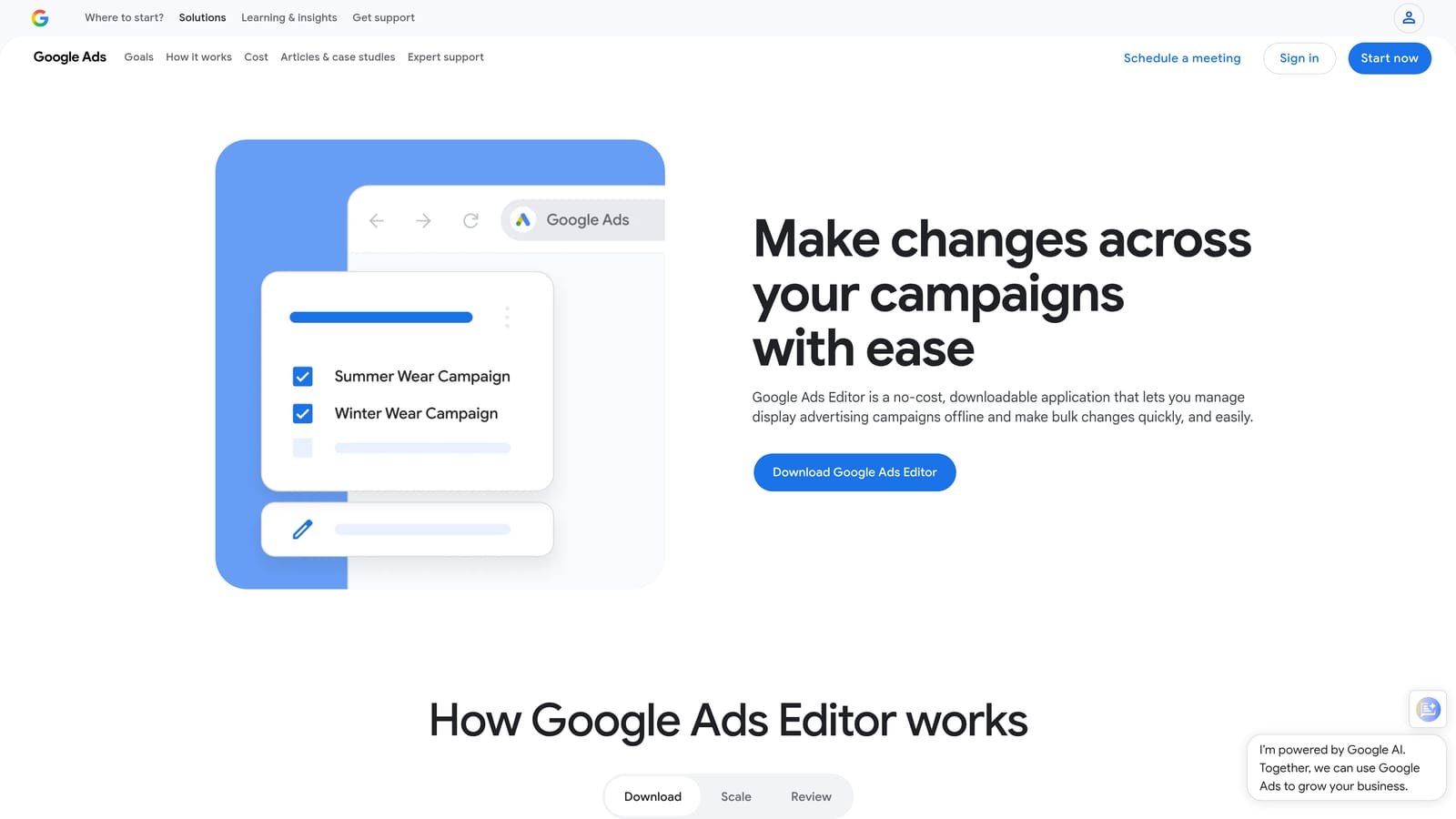
What makes it stand out here is simple: it's free, first-party, and has no subscription tier or trial limitation. Every other tool on this list charges something eventually. Google Ads Editor doesn't.
- Lets you edit campaigns, ad groups, keywords, and ads in bulk before uploading changes
- Works offline, so you can stage large edits without live account access
- Manages multiple accounts from one interface, useful for agencies with several clients
- Costs nothing, with no seat limits or paid tiers
You download it directly from Google, sign in with your Google Ads credentials, and it syncs your account data locally. Most PPC managers or freelancers run it themselves; there's no admin layer needed since it's tied directly to your existing account permissions.
The tradeoff is that it offers zero automated suggestions. Every negative keyword you add, every bid you adjust, is manual. It's a bulk-editing tool, not an optimization engine, so it won't flag junk search terms or recommend fixes on its own.
Pricing: free, with no paid tiers.
Best for: Advertisers who need free, reliable bulk campaign edits before pushing changes live.
3. Optmyzr
Optmyzr is a PPC management platform built around rule-based automation, account audits, and reporting, and it works across Google Ads, Microsoft Advertising, and Amazon Ads rather than just one platform.
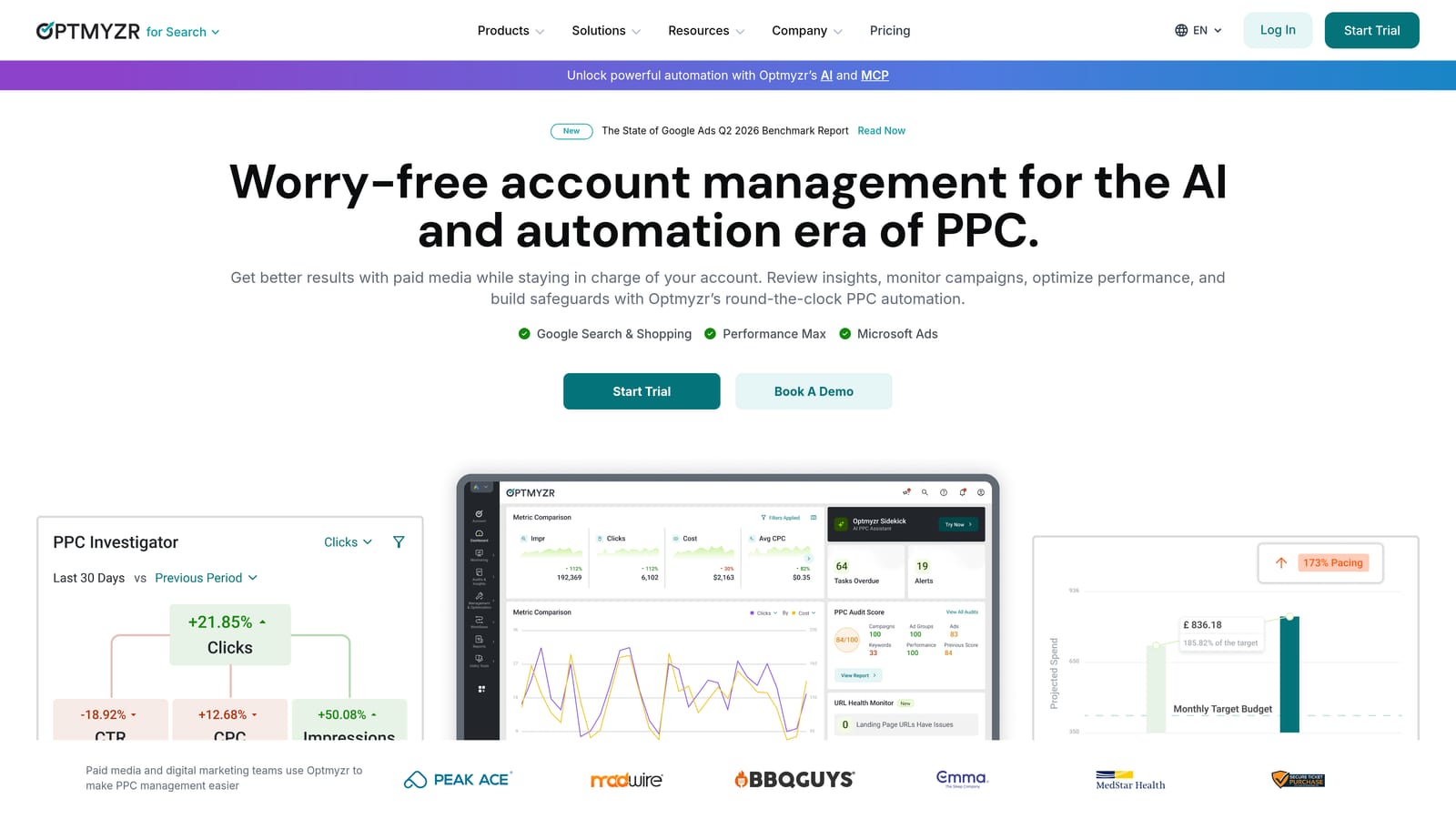
Its main differentiator on this list is breadth: while most tools here are Google Ads-only, Optmyzr lets you set automation rules and pull reporting across three ad platforms from a single account.
- Builds custom automation rules so repetitive bid or budget adjustments run without manual intervention
- Tracks Quality Score and flags account-wide issues through built-in audits
- Monitors budget pacing and sends alerts before campaigns overspend or underspend
- Supports cross-platform management, consolidating Google, Microsoft, and Amazon Ads in one place
Setup involves connecting your ad accounts through Optmyzr's dashboard and configuring the automation rules you want active, which takes more upfront time than a plug-in extension. Agencies typically assign a dedicated PPC manager to configure and maintain the rule sets, since a poorly built rule can apply changes across many campaigns at once.
That complexity is also its main drawback for this keyword's intent. If you're a solo freelancer running a handful of Google Ads accounts, Optmyzr's platform breadth and setup overhead can be more than you need. It's built for scale, not simplicity.
Pricing is quote-based; check the current site for tiers as of 2026, since automation platforms like this typically price by account volume or ad spend under management.
Best for: Agencies managing accounts across multiple ad platforms who need centralized automation.
4. WordStream Advisor by LocalIQ
WordStream Advisor is built around a guided workflow rather than raw automation. Its signature feature, the "20-Minute Work Week," walks advertisers through a checklist of optimization tasks meant to be completed in short weekly sessions.
Who it's designed for
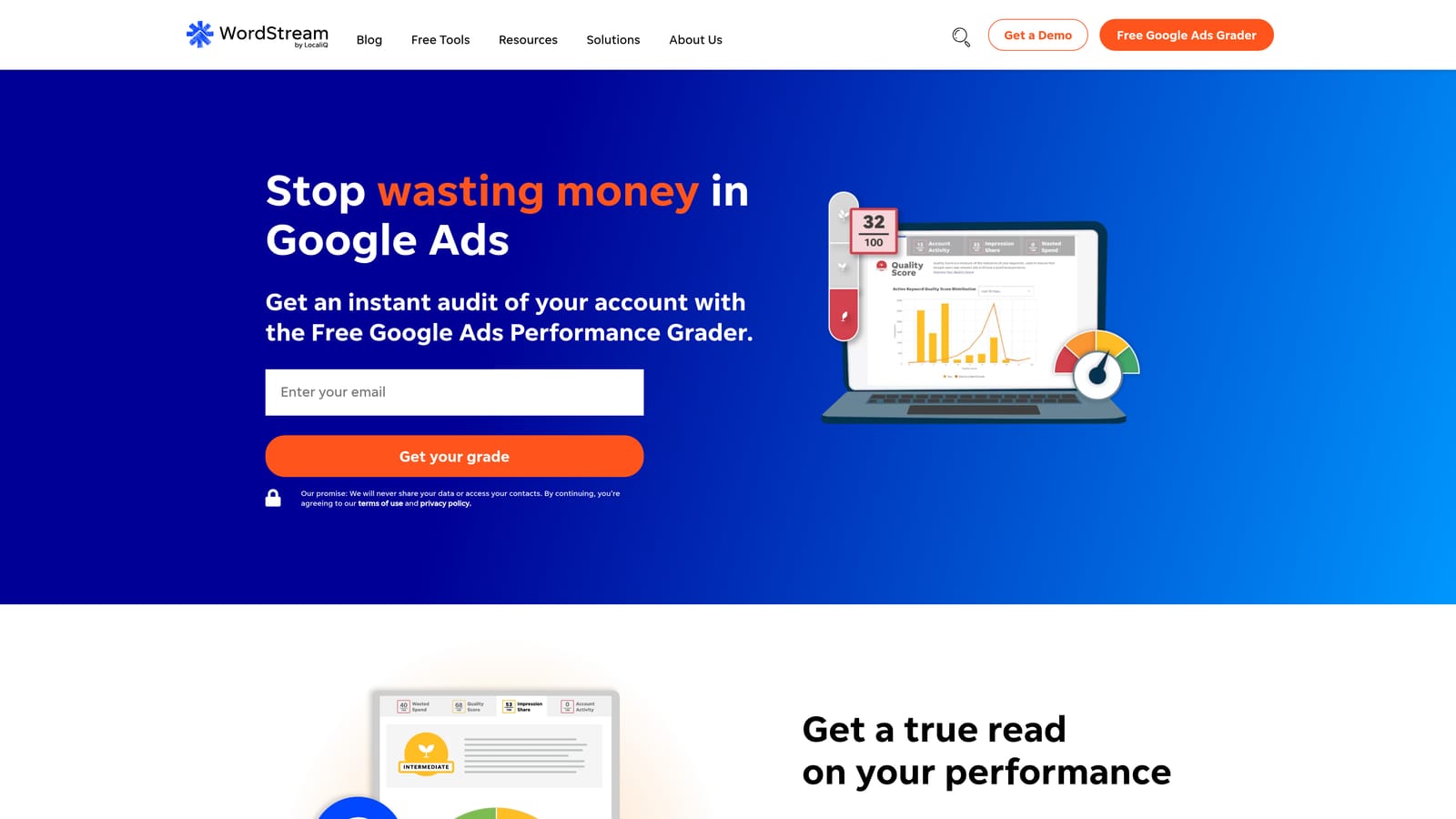
This tool is aimed squarely at small business owners and marketers without formal PPC training who need structure more than granular control. It also offers a free Google Ads Performance Grader that scores your account and highlights obvious issues before you even sign up.
- Guides you through a repeatable weekly checklist instead of leaving optimization open-ended
- Grades your account for free to surface quick wins before committing to a paid plan
- Suggests new keywords and alerts you to account changes worth reviewing
- Monitors overall account health with a simplified scoring view
Where it falls short
Experienced PPC managers often find the guided checklist too rigid. It doesn't offer the same depth of custom rule-building you'd get from Optmyzr, so if you want granular control over automation logic, this isn't the tool.
Setup is sales-assisted, typical for LocalIQ's model, and pricing is quote-based, so you'll need to contact sales for current rates as of 2026.
Best for: Small businesses wanting a guided, template-based approach to weekly account maintenance.
5. Adalysis
Adalysis is an auditing and ad-testing tool that runs continuous checks on your account and prioritizes fixes in a checklist-style dashboard, similar in spirit to WordStream but with a heavier focus on statistical rigor.
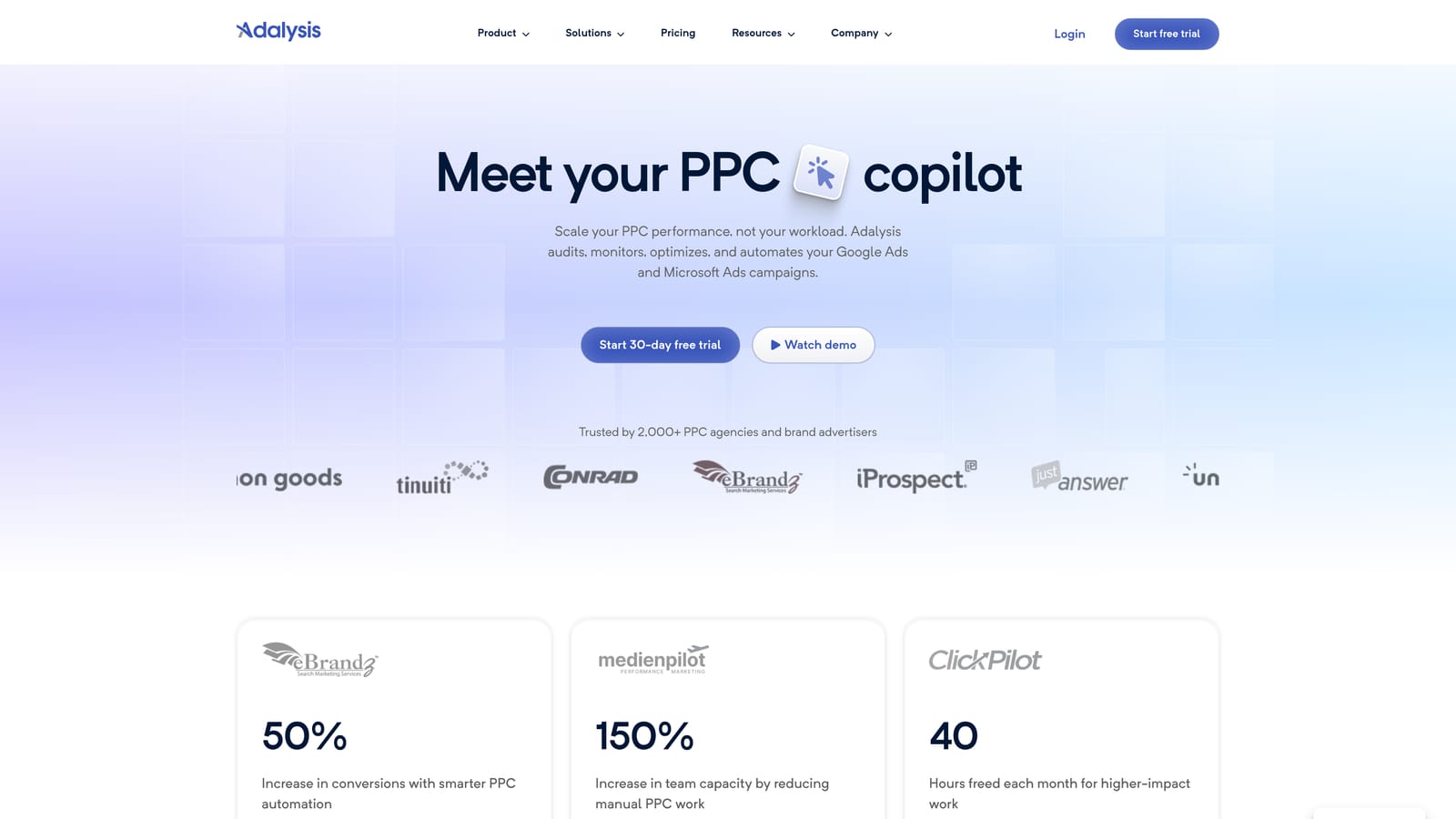
The standout feature here is automated ad copy A/B testing with statistical significance tracking, which none of the other tools on this list offer in the same depth. If testing headlines and descriptions systematically is a priority, Adalysis is built for exactly that.
- Runs ad copy A/B tests and flags when a variant reaches statistical significance
- Audits accounts continuously and flags issues like disapproved ads or Quality Score drops
- Prioritizes a checklist of recommended fixes so you know what to address first
- Alerts you to policy or performance issues as they happen
You connect your Google Ads or Microsoft Advertising account, and Adalysis runs its checks in the background; a PPC manager typically reviews the flagged issues weekly. Setup is straightforward but it does mean logging into a separate dashboard rather than working inside Google Ads directly, which adds a workflow switch that tools like Keywordme avoid.
Plans start around $99/month, though you should verify current pricing on the site as of 2026, since testing-focused platforms often price by account volume.
Best for: Teams that prioritize systematic ad copy testing and recurring account audits.
6. SpyFu
SpyFu takes a different angle from everything else on this list: it's a competitive research tool, not an in-account optimization tool. It shows historical PPC and SEO keyword data, including competitors' past ad copy and estimated ad spend.
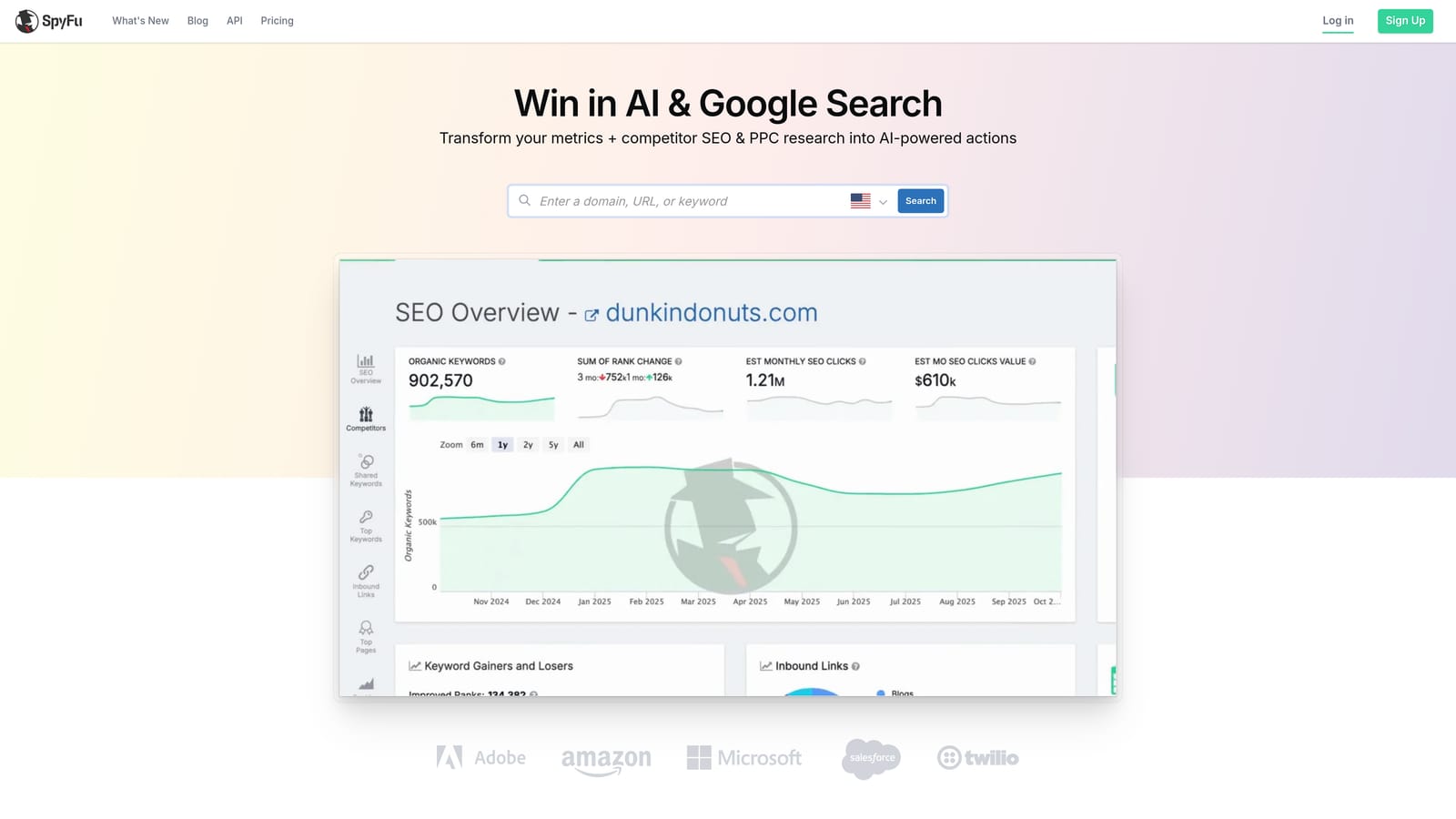
Its standout is depth of history. SpyFu maintains years of historical competitor ad and keyword data, which is valuable if you're building a campaign strategy before you've spent a dollar, not after.
- Shows historical ad copy your competitors have run, so you can see what messaging has stuck
- Estimates competitor ad spend and budgets to help you benchmark your own investment
- Tracks keyword rankings and bid activity over time
- Compares two domains side by side for a quick competitive snapshot
You sign up, enter a competitor domain, and the reports generate immediately; there's no account connection required since it's pulling third-party data rather than your own campaign data. That also means setup is close to zero, but the tradeoff is that nothing here executes changes in your account. You'll export insights and apply them manually in Google Ads or through another tool.
Its real limitation is scope: it's not built for ongoing optimization inside an active campaign. Treat it as a research step, not a management platform.
Paid plans start around $39/month; check current pricing on the site as of 2026.
Best for: Marketers researching competitor keyword strategy before building or optimizing campaigns.
7. Semrush PPC Toolkit
Semrush PPC Toolkit is the PPC-focused module inside the broader Semrush platform, best known for SEO. It offers keyword gap analysis, product listing ad (PLA) research, and basic ad-building tools.
Its distinct advantage is that it combines PPC keyword data with SEO and content research inside one existing subscription, which matters if your team already relies on Semrush for organic search work and doesn't want another separate login.
- Runs keyword gap analysis to show terms competitors bid on that you don't
- Researches product listing ads for ecommerce accounts running Shopping campaigns
- Builds ad copy using templates pulled from competitive research
- Pulls PPC and SEO data into one dashboard, avoiding a separate subscription
Setup means connecting your Google Ads and Google Merchant Center accounts to your Semrush login, which most marketing teams manage themselves without IT involvement.
The catch is that PPC functionality here is secondary to Semrush's SEO suite, and full access to the PPC-specific features often sits behind a higher-tier plan. If PPC is your primary use case, you may end up paying for a lot of SEO tooling you don't need.
Pricing is part of a Semrush subscription; check current tiers on the site as of 2026, since plans and feature gating change periodically.
Best for: Teams that want PPC and SEO insights bundled into one existing subscription.
8. Karooya
Karooya is a narrowly focused PPC tool built around one job: finding negative keywords and improving Quality Score by analyzing search term patterns.
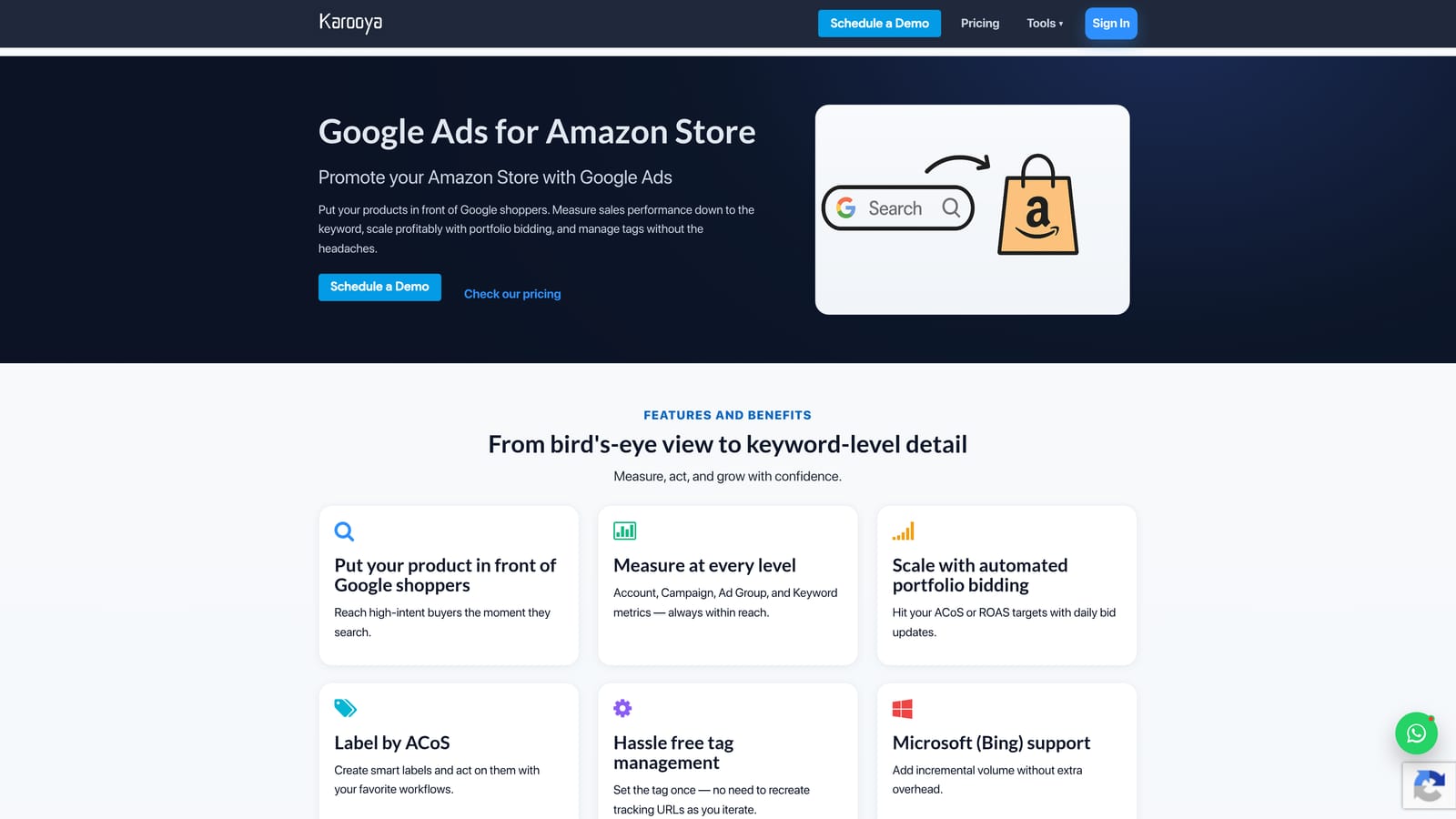
Its standout is focus. Where other tools on this list bundle negative keyword discovery into a broader feature set, Karooya builds its entire product around that single workflow, which can make it faster to learn if that's your main pain point.
- Surfaces negative keyword suggestions based on search term pattern analysis
- Flags patterns across your search terms that indicate wasted spend
- Recommends changes aimed specifically at improving Quality Score
- Keeps plans lightweight and low-cost compared to full campaign management platforms
You connect your Google Ads account and the tool runs its pattern analysis against your existing search term data; a solo advertiser or freelancer can typically manage it without extra help.
The limitation is scope: Karooya doesn't touch bid management or budget pacing, so if you need a tool to manage the full campaign lifecycle, you'll need something else alongside it.
Pricing runs on low-cost monthly plans; verify current rates on the site as of 2026.
Best for: Advertisers focused specifically on trimming wasted spend through negative keyword cleanup.
Matching Each Tool to Your Workflow
If you're a solo advertiser or a small agency team that just wants search term cleanup handled fast, without switching tabs or exporting to spreadsheets, Keywordme is the most direct fit on this list. If your need is purely bulk editing and budget allows zero dollars, Google Ads Editor gets the job done for free, manually.
For agencies running Google, Microsoft, and Amazon Ads at once, Optmyzr's cross-platform automation earns its higher cost and setup time. If your team already leans on Semrush for SEO, its PPC Toolkit saves you a second subscription. And when the task is pure research or a narrow focus on negative keywords, SpyFu and Karooya each solve a specific piece of the puzzle rather than trying to be everything.
Optimize Google Ads campaigns 10x faster, without leaving your account. Keywordme lets you remove junk search terms, build high-intent keyword lists, and apply match types instantly, right inside Google Ads. No spreadsheets, no switching tabs, just quick, seamless optimization. Start your free 7-day trial (then just $12/month) and take your Google Ads game to the next level.
.svg)