
9 Best Search Term Optimization Tools Reviewed for Google Ads in 2026
This review evaluates nine search term optimization tools for Google Ads, helping marketers, freelancers, and agency owners cut wasted spend, refine negative keyword lists, and manage PPC campaigns more efficiently—whether you're running one account or fifty.


TL;DR: If you're spending time manually sifting through your Google Ads Search Terms Report, you're leaving money on the table. The right search term optimization tool can cut wasted spend, surface high-intent keywords, and help you build tighter negative keyword lists without the spreadsheet chaos. This review covers nine tools that actually help with search term analysis and PPC keyword management, ranked by how useful they are for marketers, freelancers, and agency owners managing Google Ads day-to-day. We evaluated each on workflow efficiency, ease of use, feature depth, and pricing. Whether you're managing one account or fifty, there's something here for your stack.
One thing worth noting upfront: search term optimization and keyword research are not the same workflow. Keyword research helps you plan what to bid on. Search term optimization is what you do after your ads run, cleaning up what's actually triggering them. The tools below cover both ends of that spectrum, so you know exactly what you're getting with each one.
1. Keywordme
Best for: Google Ads managers who want fast, in-interface search term optimization without leaving their account.
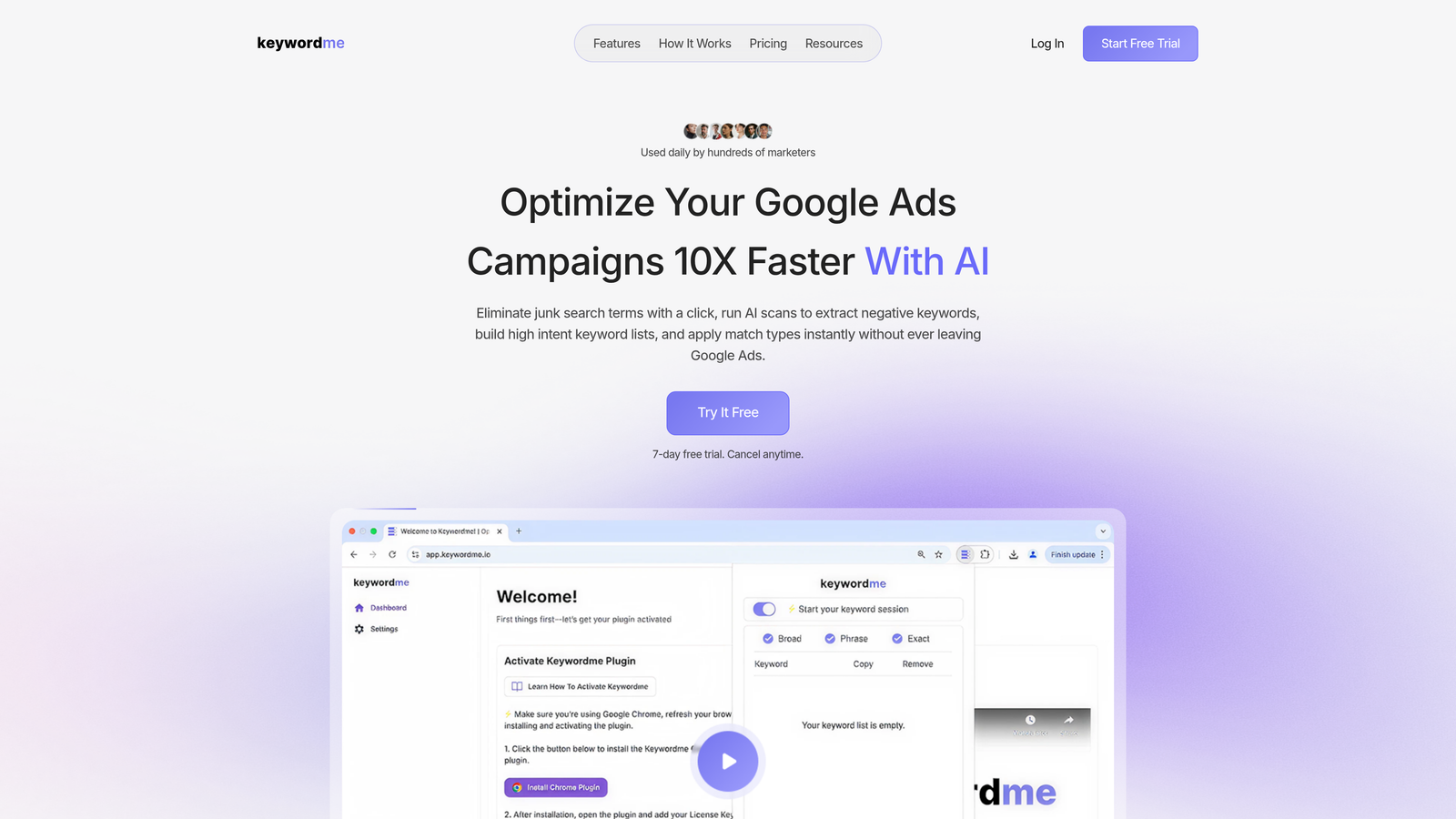
Keywordme is a Chrome extension that plugs directly into Google Ads' Search Terms Report, letting you optimize campaigns without switching tabs or exporting spreadsheets.
Where This Tool Shines
Most search term tools pull you out of Google Ads and into a separate dashboard. Keywordme stays where the work actually happens. You're already in the Search Terms Report reviewing queries, and with Keywordme installed, you can add negatives, apply match types, and build keyword lists with a single click right there in the native UI.
In most accounts I audit, the biggest time drain isn't knowing what to do, it's the friction of doing it. Exporting to a spreadsheet, filtering, copying terms, switching to the negative keywords tab, uploading. Keywordme collapses that entire workflow into a few clicks. For agencies managing multiple accounts, that time saving compounds fast.
Key Features
In-interface optimization: Works natively inside Google Ads' Search Terms Report, no external dashboard required.
One-click negative keyword addition: Flag irrelevant search terms and add them as negatives instantly, with match type selection included.
Keyword clustering: Group related search terms into clusters to identify patterns and build tighter ad groups or keyword lists.
Bulk editing: Apply actions across multiple search terms at once, not one at a time.
Multi-account and team support: Built for agencies managing several clients, with shared workflows across team members.
Best For
Freelancers and agency teams doing regular Google Ads optimization who want to move faster inside the native interface. Especially useful if you're managing five or more accounts and the manual search term review process is eating hours every week. Less suited for advertisers who need deep competitive keyword research, since that's not what it's built for.
Pricing
Flat rate at $12/month per user. A 7-day free trial is available, no credit card gymnastics required. No ad spend tiers, which is a genuine advantage for smaller accounts that get penalized by spend-based pricing on other platforms.
2. Search Atlas
Best for: Advertisers who want AI-powered keyword clustering and search term gap analysis for both PPC and SEO.
Search Atlas is an AI-driven keyword research and content intelligence platform with strong PPC-focused features including clustering and competitive gap analysis.

Where This Tool Shines
Search Atlas sits in the hybrid lane between SEO and PPC. Where it earns its place in a Google Ads workflow is in the keyword discovery and gap analysis phase. If you want to understand which search terms competitors are capturing that you aren't, Search Atlas surfaces those opportunities clearly.
The AI clustering capability is genuinely useful for PPC managers building tightly themed ad groups. Instead of manually sorting hundreds of keyword variations, the platform groups them by intent and theme automatically.
Key Features
AI keyword clustering: Automatically groups keywords by intent and semantic similarity for cleaner ad group structure.
Search term gap analysis: Identifies queries competitors rank or bid on that your account is missing.
SERP data integration: Layers in search result data to help prioritize which terms are worth bidding on.
Keyword list builder and export: Build refined keyword lists and export them directly into your workflow.
Best For
PPC managers who also handle SEO, or teams that want a single platform for both disciplines. Also a strong choice for anyone building out new campaigns from scratch who needs to research and structure keyword lists before launching.
Pricing
Tiered subscription model. Check searchatlas.com for current pricing, as plans are updated regularly.
3. WordStream Advisor
Best for: SMBs and agencies that want guided PPC optimization with built-in search term recommendations.
WordStream Advisor is a long-established PPC management platform known for its structured optimization workflows and automated recommendations.

Where This Tool Shines
WordStream's strength is its guided approach. The Weekly Action Items engine automatically surfaces what needs attention in your account, including search term issues, without you having to go hunting. For less experienced PPC managers or busy SMB owners, that structure is genuinely helpful.
The mistake most agencies make with WordStream is expecting it to replace hands-on account management. It's better thought of as a recommendation layer that flags issues and suggests fixes. You still need to review and approve changes, but the tool tells you where to look.
Key Features
Weekly Action Items engine: Automatically identifies optimization opportunities including search term issues and surfaces them as actionable tasks.
Negative keyword suggestions: Recommends negative keywords based on account performance data.
Cross-channel management: Covers both Google Ads and Microsoft Ads from a single interface.
Industry benchmarking: Compares your account performance against industry averages for context.
Best For
Small to mid-sized businesses and agencies that want structured, guided optimization rather than a blank-canvas tool. Works well for teams that want automation with human review built into the workflow.
Pricing
Subscription-based. Contact WordStream directly for current pricing tiers, as plans vary by account size and feature access.
4. Optmyzr
Best for: Enterprise PPC teams and large agencies that need rule-based automation and custom optimization workflows.
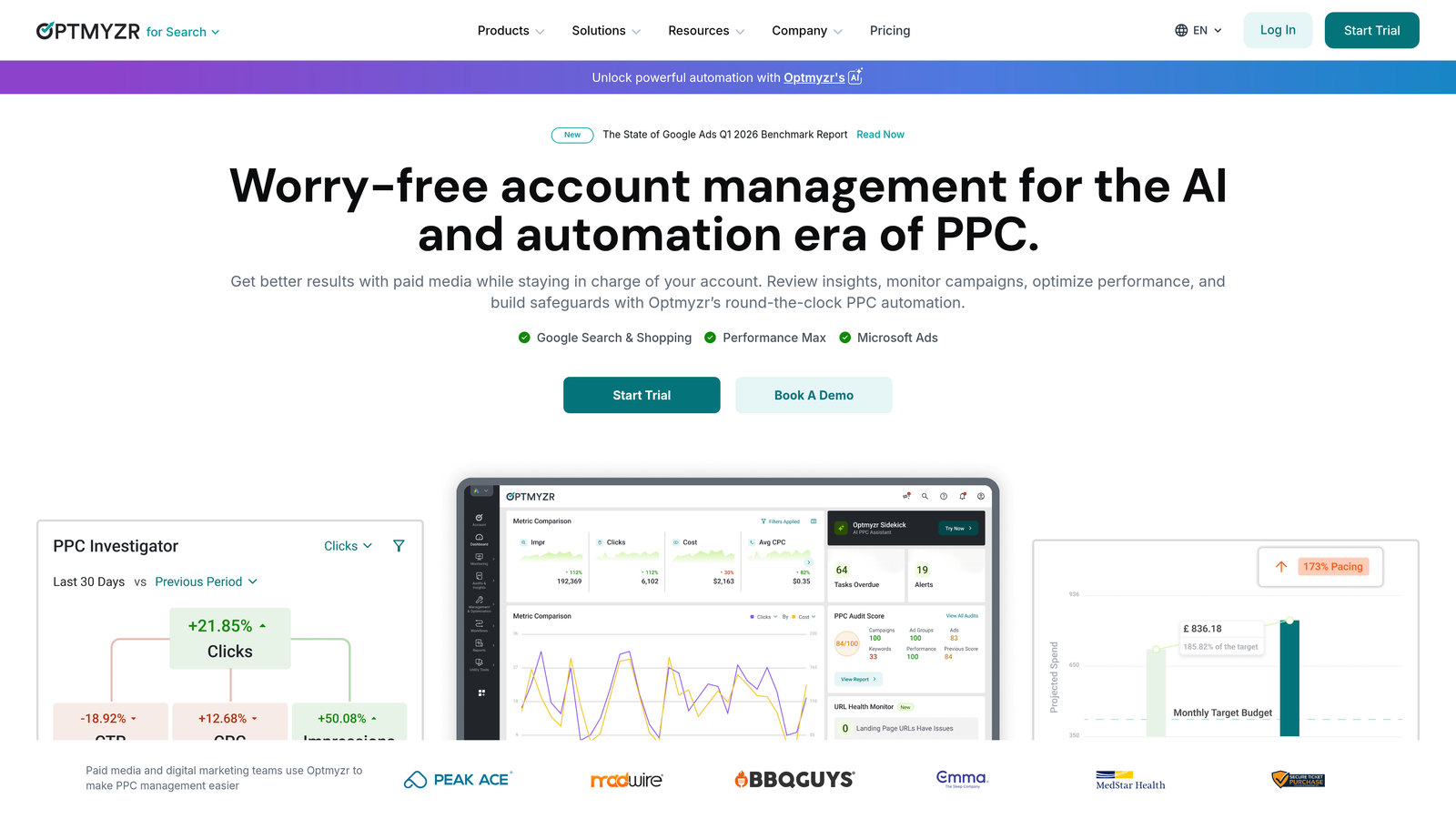
Optmyzr is a sophisticated PPC optimization platform with powerful automation, custom scripting, and one-click workflow capabilities across large account portfolios.
Where This Tool Shines
Optmyzr is built for scale. If you're managing dozens of accounts with significant ad spend, the rule-based automation engine lets you define exactly how search terms should be handled and execute those rules across your entire portfolio. What usually happens here is that agencies set up rules once and let Optmyzr apply consistent logic across all their clients.
The custom PPC scripts feature is particularly strong for teams that want automation without needing a developer. You can build logic that would normally require JavaScript knowledge through a more accessible interface.
Key Features
Rule-based search term automation: Define criteria for flagging, adding, or excluding search terms and apply them at scale.
One-click optimization workflows: Pre-built optimization actions that can be reviewed and applied in bulk.
Custom PPC scripts: Build automation logic without writing code from scratch.
Advanced reporting dashboards: Detailed account health and performance reporting across multiple clients.
Multi-account management: Designed for agencies managing large portfolios with complex structures.
Best For
Agencies managing significant ad spend across many accounts, or in-house enterprise teams that need consistent, automated optimization logic applied at scale. Overkill for freelancers or small accounts.
Pricing
Tiered by number of accounts managed. Check optmyzr.com for current plans, as pricing reflects the enterprise positioning.
5. Google Ads Search Terms Report (Native)
Best for: Any Google Ads advertiser, as the foundational data source every other tool in this list builds upon.
Google Ads' built-in Search Terms Report is the original source of search term data, showing you the exact queries that triggered your ads.
Where This Tool Shines
It's free, it's always current, and it's the most direct view of what's actually happening in your account. Every impression, click, and conversion tied to a specific search query is visible here. No third-party tool has more accurate data than this because they all pull from it.
The honest limitation is that the native report is a data viewer, not an optimization tool. You can filter and sort, but bulk actions are clunky, there's no clustering, and adding negatives at scale requires navigating to a completely different section of the interface. That's exactly the gap that tools like Keywordme are built to close.
Key Features
Exact query data: Shows the precise search terms that triggered your ads, directly from Google's own data.
Filtering and column customization: Sort by impressions, clicks, cost, conversions, and other metrics.
Direct campaign integration: Add keywords or negatives directly from the report, though the workflow is manual.
Free access: Included with any active Google Ads account at no additional cost.
Best For
Every Google Ads advertiser as a starting point. Most advertisers benefit from layering a dedicated tool on top for actual optimization work, but understanding the native report is foundational.
Pricing
Free, included with any Google Ads account.
6. SEMrush PPC Toolkit
Best for: PPC managers who want competitive keyword intelligence and search term gap analysis alongside their SEO research.
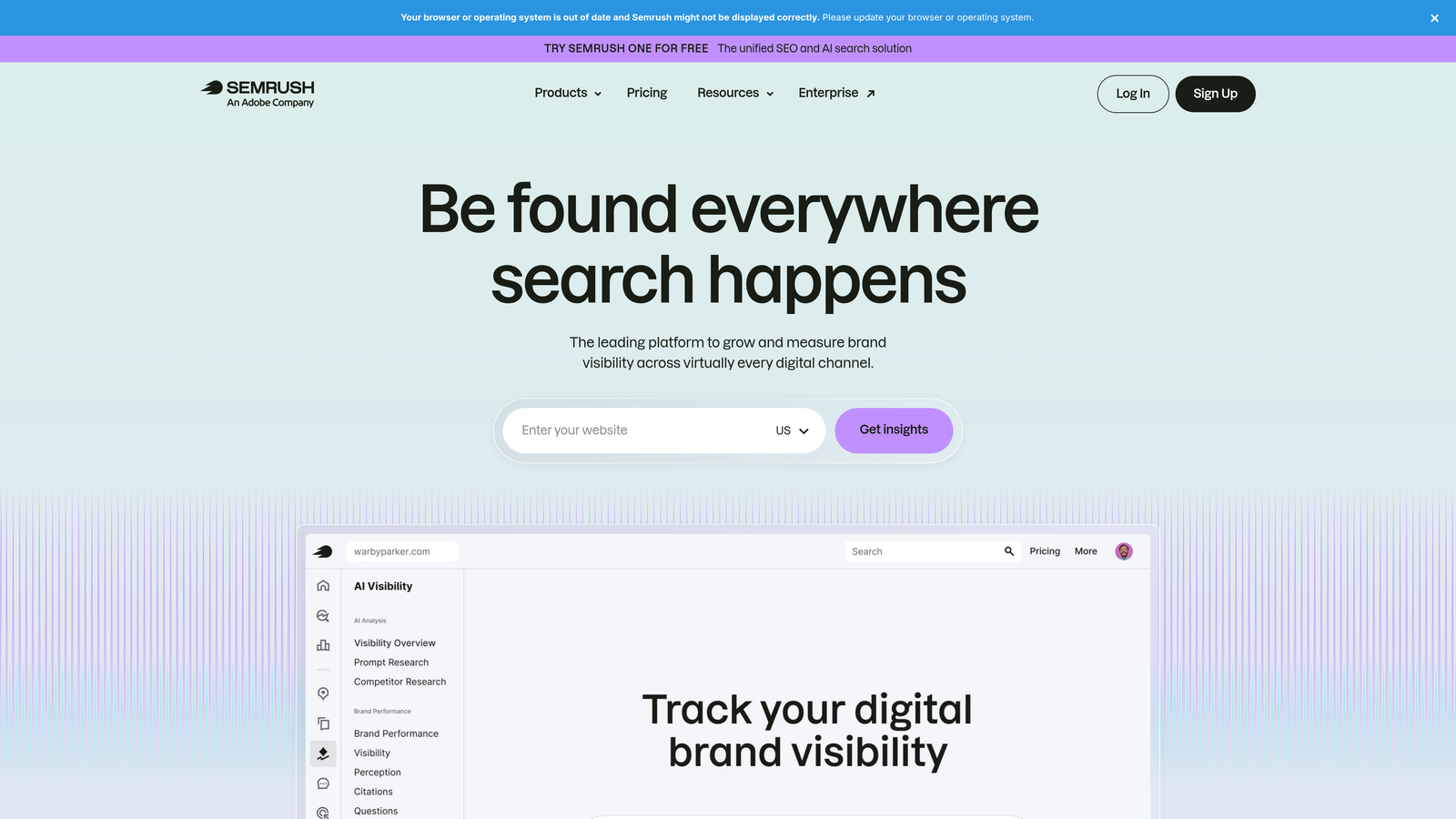
SEMrush's PPC Toolkit is part of the broader SEMrush platform, offering competitive keyword data, gap analysis, and keyword list management tools for paid search.
Where This Tool Shines
SEMrush excels at the competitive intelligence layer. If you want to know which search terms your competitors are bidding on, what their estimated CPCs look like, and where the gaps are in your own keyword coverage, the PPC Toolkit surfaces that data clearly. It's most valuable during campaign planning and periodic competitive reviews.
The Keyword Gap tool in particular is worth highlighting. You can compare your domain against several competitors simultaneously and identify search terms that are driving traffic or conversions for others that you haven't targeted yet.
Key Features
Competitive keyword gap analysis: Identify search terms competitors target that your campaigns are missing.
PPC Keyword tool: Build, organize, and refine keyword lists with CPC and volume data.
CPC and search volume estimates: Inform bidding strategy with market-level data.
Ad copy and landing page analysis: Review competitor ad creative and destination pages alongside keyword data.
Best For
Teams that already use SEMrush for SEO and want to extend that investment into PPC. Also valuable for agencies doing competitive analysis as part of onboarding new clients or entering new markets.
Pricing
Requires a SEMrush subscription. Pro plans start at $139.95/month. Check semrush.com for current pricing, as tiers and features change periodically.
7. SpyFu
Best for: Advertisers who want years of historical competitor PPC keyword data to inform their own search term strategy.
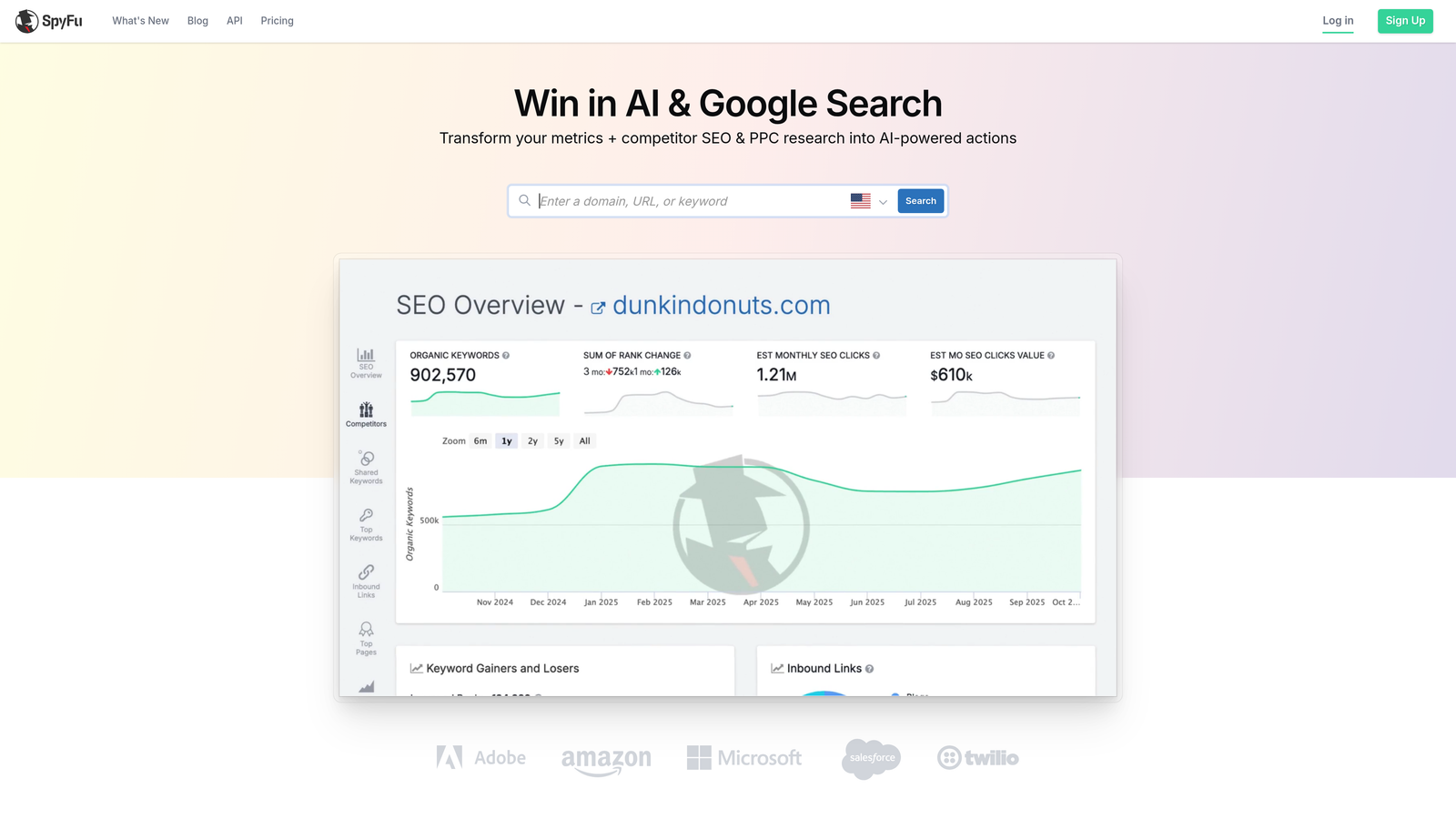
SpyFu is a competitive intelligence platform focused on revealing which keywords and search terms competitors have bid on historically, including long-running PPC data.
Where This Tool Shines
SpyFu's differentiator is the depth of its historical data. You can look at a competitor's PPC history going back years and see which keywords they've consistently bid on versus tested briefly. That persistence signal is useful: if a competitor has been bidding on a term for several years, it's likely converting for them.
It's not a search term management tool in the operational sense. You won't use SpyFu to clean up your Search Terms Report. But for building initial keyword lists, identifying profitable niches, or understanding a new vertical before launching campaigns, it's one of the more practical competitive tools available.
Key Features
Competitor PPC keyword history: Access years of historical data on which keywords competitors have bid on.
Most profitable keywords by domain: Identify which terms competitors have invested in most consistently.
Negative keyword recommendations: Suggestions based on competitor data and query patterns.
Ad copy history: Review how competitor ad creative has evolved over time alongside keyword data.
Best For
PPC managers entering new markets or auditing existing campaigns for missed opportunities. Particularly useful for agencies onboarding new clients in competitive verticals where understanding the competitive landscape quickly matters.
Pricing
Plans start at $39/month. Check spyfu.com for current pricing and feature breakdowns by tier.
8. Adalysis
Best for: Data-driven PPC managers who want automated search term flagging and actionable negative keyword recommendations.
Adalysis is a focused PPC management platform with strong automated analysis features, including irrelevant query detection and one-click negative keyword application.
Where This Tool Shines
Adalysis sits in an interesting spot: it's more hands-on than WordStream's guided approach but more accessible than Optmyzr's enterprise complexity. The automated search term flagging is genuinely useful. The platform identifies queries that look irrelevant based on performance patterns and surfaces them for review, rather than making you manually hunt through hundreds of terms.
What I find valuable about Adalysis is that it gives you recommendations with reasoning. It's not just flagging a term as bad; it's showing you the performance data behind the flag. That makes the review process faster and more defensible, especially when you're reporting to clients.
Key Features
Automated irrelevant query flagging: Identifies search terms likely wasting spend based on performance data.
One-click negative keyword application: Apply suggested negatives directly from the recommendation interface.
Search term performance trend analysis: Track how individual search terms perform over time, not just in snapshots.
Ad testing and quality score monitoring: Broader PPC health tracking alongside search term management.
Best For
Mid-sized accounts and agency managers who want data-driven recommendations rather than raw data to interpret themselves. Good fit for PPC managers who want to move fast on optimizations but still want to understand the reasoning behind each change.
Pricing
Tiered by monthly ad spend managed. Check adalysis.com for current plan details and spend thresholds.
9. NegativeKeyword.io
Best for: Advertisers who want a lightweight, dedicated tool for building and managing negative keyword lists without a full PPC platform.
NegativeKeyword.io is a focused negative keyword management tool designed to help advertisers build, organize, and deploy negative keyword lists across campaigns and accounts.
Where This Tool Shines
Sometimes you don't need a full PPC management platform. You just need to get your negative keyword lists in order across a handful of campaigns. NegativeKeyword.io is built for exactly that job. It doesn't try to do everything, and that focus is actually a feature for the right user.
For freelancers managing a small number of accounts, or for larger teams that want a dedicated negative keyword workflow separate from their main optimization tool, it fills a real gap without the overhead of a full platform subscription.
Key Features
Dedicated negative keyword list builder: Purpose-built interface for creating and organizing negative keyword lists.
Shared and campaign-level list management: Manage negative keywords at both the shared list level and individual campaign level.
Bulk upload and export: Add and export negative keywords in bulk for faster implementation.
Focused, minimal interface: No feature bloat, just the tools you need for negative keyword management.
Best For
Freelancers, in-house advertisers managing a few campaigns, or teams that want a standalone negative keyword workflow to complement an existing optimization tool. Not a replacement for a full search term analysis tool.
Pricing
Check negativekeyword.io for current pricing. The tool is positioned as a lightweight solution, so pricing reflects that.
Which Tool Is Right for Your Workflow?
Here's the honest summary: these tools solve different problems, and the best choice depends on where your biggest time drain actually is.
If you're spending hours every week inside the Search Terms Report manually reviewing queries and adding negatives, Keywordme is the most direct fix. It works inside Google Ads, not alongside it, and that in-interface approach is genuinely different from everything else on this list. At $12/month flat, it's also the easiest decision to justify.
If you need competitive intelligence before building or expanding campaigns, SEMrush PPC Toolkit and SpyFu are both strong. SEMrush gives you broader coverage; SpyFu gives you deeper historical data at a lower price point.
If you're managing enterprise-level ad spend across many accounts and need rule-based automation, Optmyzr is the serious option. If you want guided recommendations without the enterprise complexity, Adalysis is worth a close look.
For pure negative keyword management without a full platform, NegativeKeyword.io handles that job cleanly. And the native Google Ads Search Terms Report is always your starting point, regardless of what else you layer on top.
The tools that tend to deliver the most immediate ROI are the ones that reduce friction in your existing workflow rather than adding a new one. That's the lens worth applying when you're making a final call.
Ready to stop switching tabs and start optimizing faster? Start your free 7-day trial of Keywordme and see how much time you get back in your first week.
.svg)