
9 Best PPC Software for Small Business in 2026
Discover the 9 best PPC software for small business options in 2026, evaluated for ease of use, pricing, and time-saving features. From lightweight Chrome extensions to full-suite platforms, this guide helps small business owners and lean teams find the right tool to maximize ad spend and run profitable Google Ads campaigns without the complexity.


TL;DR: Running Google Ads on a small-business budget means every dollar counts. The right PPC software can be the difference between wasted spend and a profitable campaign. This list covers tools that are genuinely useful for small businesses, freelancers, and lean agency teams. We evaluated each one based on ease of use, pricing, core PPC functionality, and whether it actually saves you time. From a lightweight Chrome extension that works inside Google Ads to full-suite platforms with cross-channel support, there's something here for every setup.
Most small business owners and solo PPC managers don't have hours to spend auditing search terms in spreadsheets or jumping between five different dashboards. What they need is fast, focused optimization that fits into a real workday. The tools below were selected with that in mind.
1. Keywordme
Best for: In-interface Google Ads optimization without leaving your account
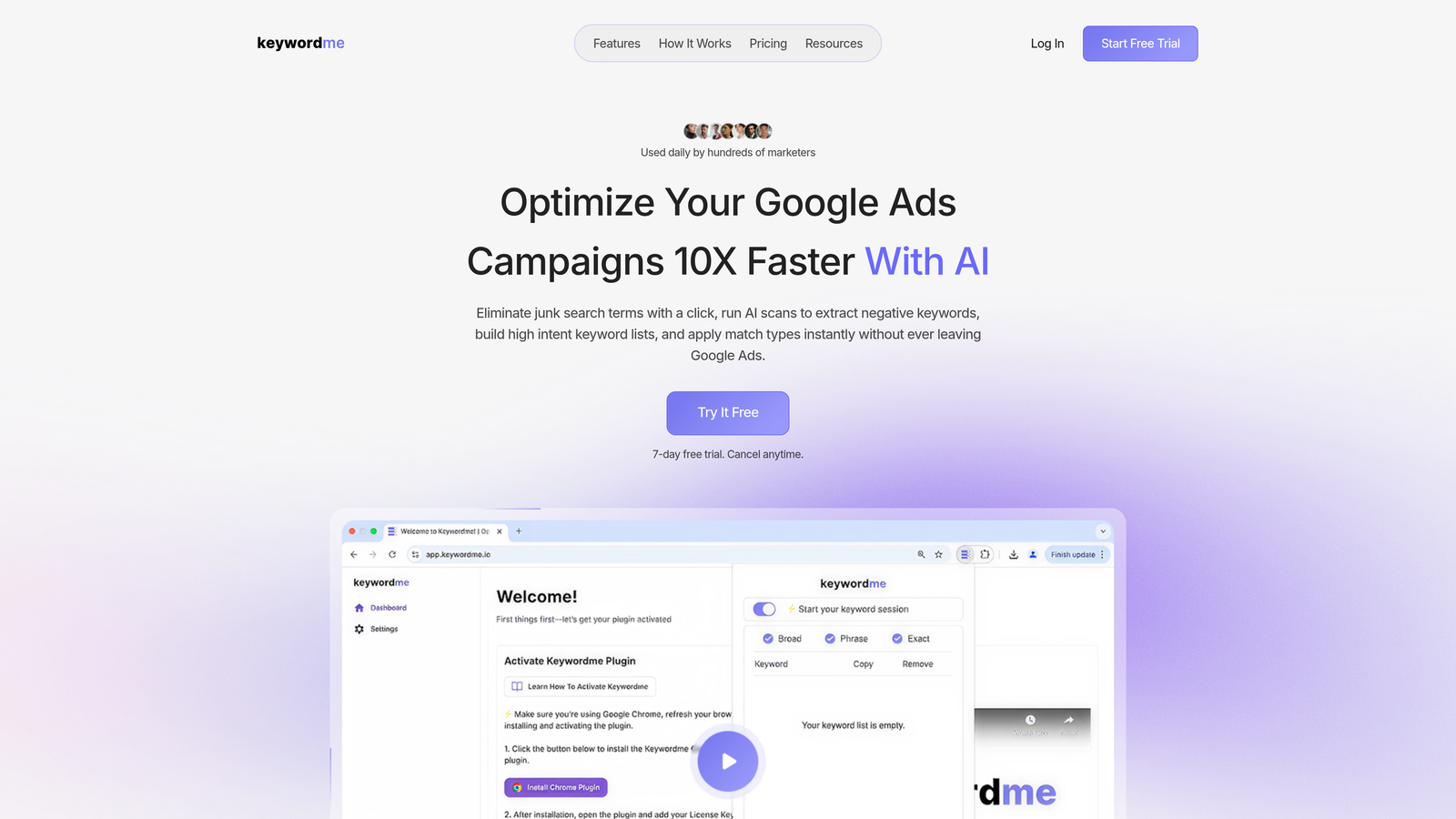
Keywordme is a Chrome extension built to speed up Google Ads optimization directly inside the Search Terms Report.
Where This Tool Shines
Most PPC tools pull you out of Google Ads and into a separate dashboard. Keywordme does the opposite. It lives inside your existing workflow, letting you take action on search terms with a single click instead of exporting to a spreadsheet, filtering, flagging, and reimporting.
In most accounts I audit, search term cleanup is one of the most neglected tasks simply because it's tedious. Keywordme removes that friction entirely. You can remove junk terms, add high-intent queries as keywords, apply match types, and build negative keyword lists without ever switching tabs. For solo advertisers and small teams, that context-switching reduction is genuinely significant.
Key Features
One-Click Junk Term Removal: Identify and exclude irrelevant search terms directly in the Google Ads interface without exporting data.
Instant Match Type Application: Apply broad, phrase, or exact match to keywords in seconds, no spreadsheet formulas required.
Keyword Clustering: Group related search terms into smarter ad groups for better Quality Scores and more relevant ad delivery.
Bulk Editing and Multi-Account Support: Manage multiple accounts or campaigns at once, making it practical for agencies handling several clients.
Negative Keyword List Building: Build and apply negative keyword lists natively without leaving the Google Ads UI.
Best For
Freelancers, in-house PPC managers, and small agency teams who live inside Google Ads and want to cut optimization time without adding another platform to their stack. Particularly useful if search term management is eating up your weekly workflow.
Pricing
Flat rate of $12/month per user with a 7-day free trial. No ad spend tiers or usage-based pricing, which makes it predictable and accessible for small budgets.
2. Google Ads Editor
Best for: Free bulk editing of Google Ads campaigns offline
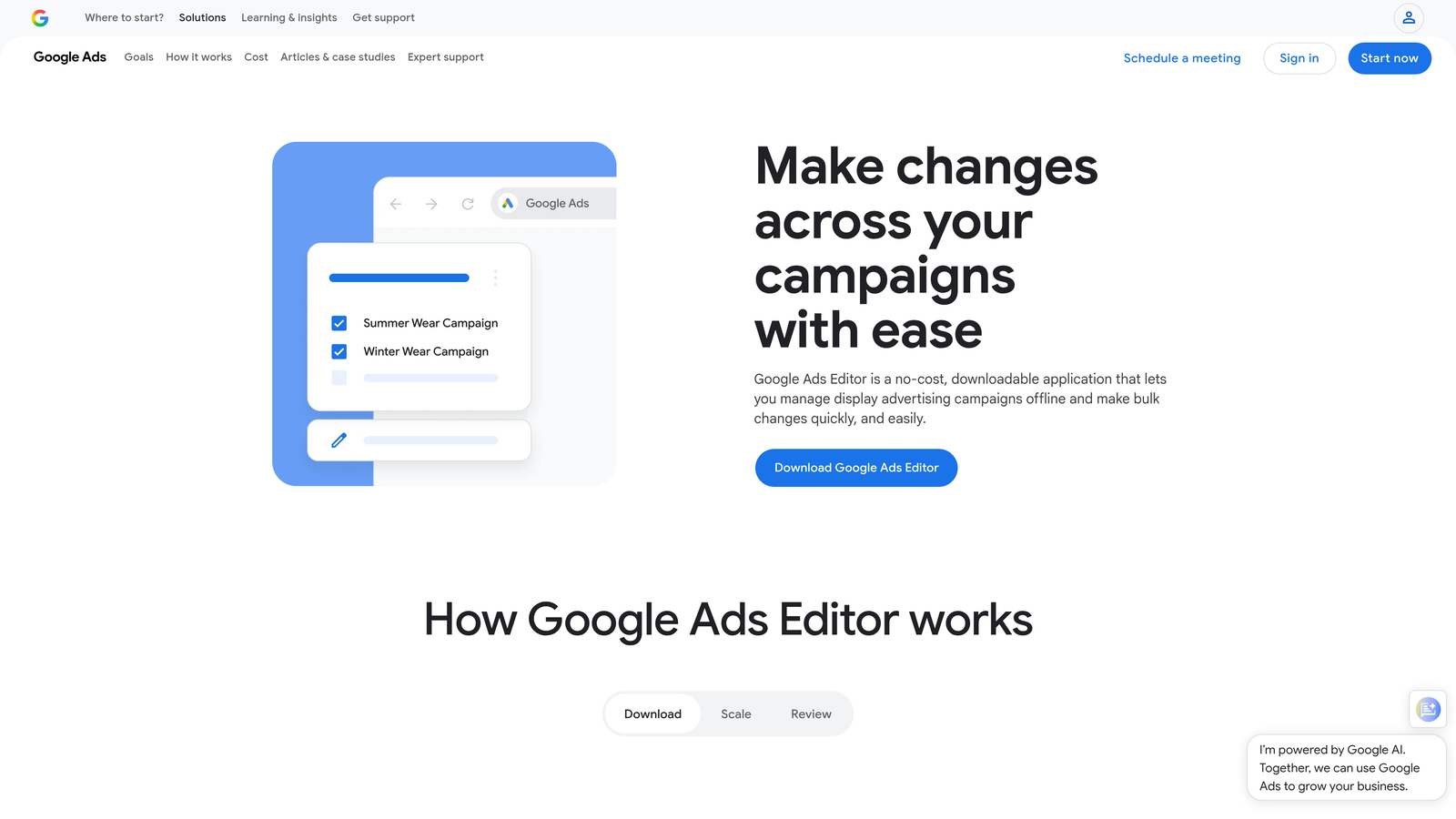
Google Ads Editor is Google's free desktop application for making large-scale campaign changes offline and uploading them in batch.
Where This Tool Shines
If you need to restructure campaigns, do a mass keyword update, or copy ad groups across accounts, Google Ads Editor is still the most reliable way to do it for free. The offline editing capability is underrated: you can work through a full account audit on a flight, then upload everything when you're back online.
The find-and-replace function alone saves hours when you're updating ad copy across dozens of ads. What usually happens here is that people underuse it because the interface feels dated, but once you learn the shortcuts, it's genuinely fast for bulk operations.
Key Features
Bulk Editing: Make changes across campaigns, ad groups, keywords, and ads simultaneously.
Offline Editing with Batch Upload: Work without an internet connection and push all changes at once when ready.
Copy/Paste Between Accounts: Duplicate entire campaign structures across different Google Ads accounts quickly.
Find and Replace: Update text across multiple ads or keywords in a single action.
Free with No Usage Limits: No cost, no tier restrictions, no ad spend minimums.
Best For
Any Google Ads user who needs to make bulk changes regularly. Especially valuable for agencies onboarding new clients or anyone restructuring an account from scratch. The learning curve is low if you already understand Google Ads structure.
Pricing
Completely free. No subscription required. Available for download directly from Google.
3. Optmyzr
Best for: Rule-based PPC automation across Google, Microsoft, and Amazon Ads
Optmyzr is a PPC management platform offering one-click optimizations, custom automation rules, and multi-channel reporting.

Where This Tool Shines
Optmyzr sits in a sweet spot between manual management and full automation. You're not handing the keys to an algorithm, but you're also not doing everything by hand. The rule engine lets you set up logic-based automations that trigger on specific conditions, like pausing keywords below a Quality Score threshold or adjusting bids when ROAS drops.
The pre-built optimization playbooks are genuinely useful for teams that want best-practice workflows without building everything from scratch. Shopping campaign and Performance Max optimization tools are more developed here than in most comparable platforms.
Key Features
Pre-Built Optimization Playbooks: Ready-to-run workflows based on PPC best practices for common optimization tasks.
Custom Rule Engine: Build conditional automations triggered by performance data without writing code.
One-Click Bid and Budget Adjustments: Review and apply suggested changes with a single click.
Cross-Platform Support: Manage Google, Microsoft, Amazon, and Meta Ads from one interface.
Shopping and Performance Max Tools: Dedicated optimization features for product-based campaigns.
Best For
Small agencies and experienced solo advertisers managing multiple campaigns who want automation without giving up control. The pricing makes more sense once you're managing meaningful ad spend.
Pricing
Starts around $249/month, with pricing varying based on ad spend managed. Higher entry cost compared to others on this list, but feature-rich for the price.
4. WordStream (by LocaliQ)
Best for: Beginners and small business owners new to PPC management
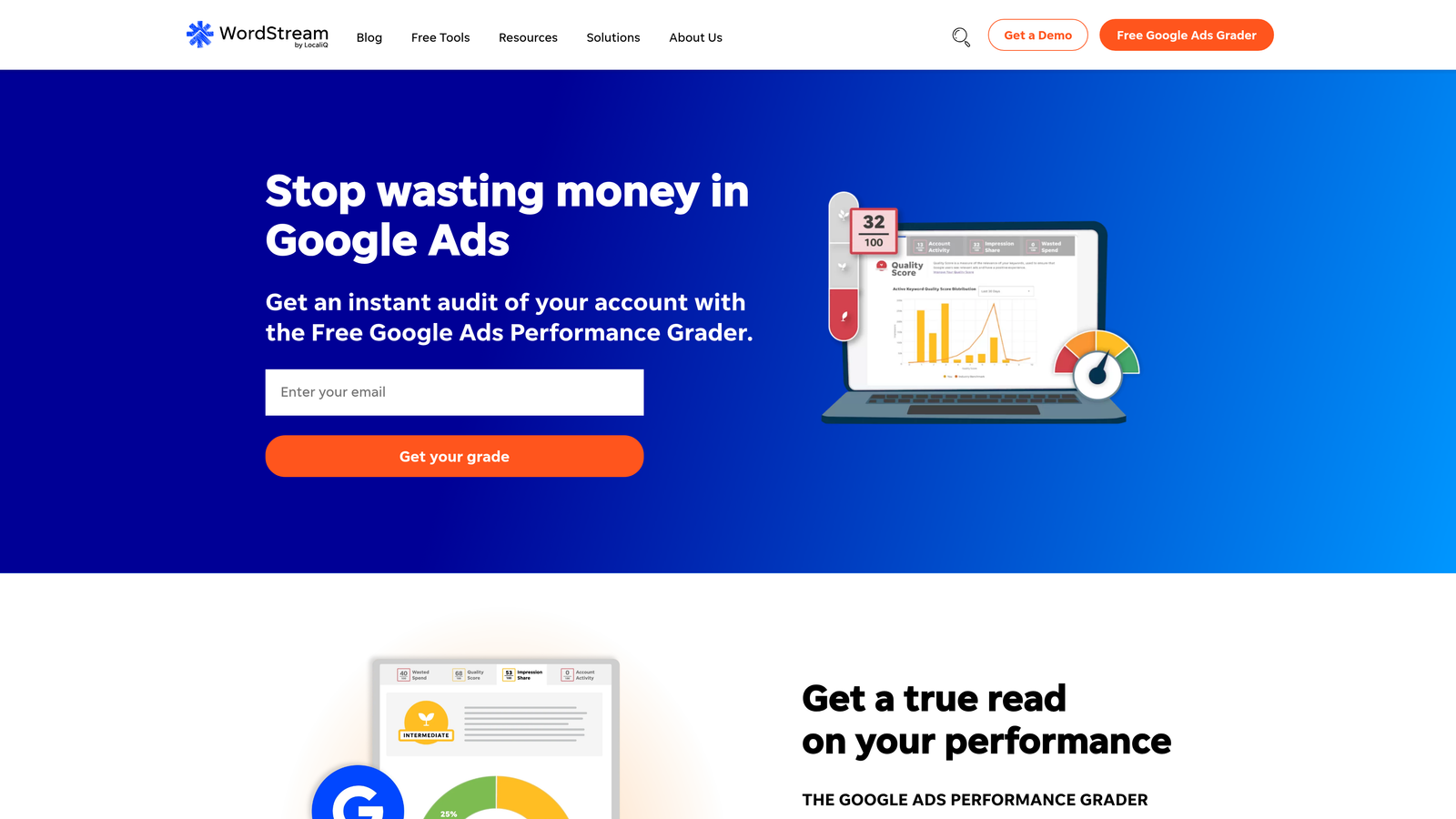
WordStream is a guided PPC management platform designed to make Google and Facebook Ads accessible for people without a dedicated PPC background.
Where This Tool Shines
The "20-Minute Work Week" concept is the core of WordStream's value proposition: it surfaces the most important optimization tasks for your account and guides you through them in a structured workflow. For a small business owner who's also managing operations, sales, and everything else, that kind of prioritization is genuinely helpful.
The free Google Ads Performance Grader is one of the most widely used diagnostic tools in the industry and worth running even if you never sign up for the paid platform. It gives you an honest snapshot of where your account stands against benchmarks.
Key Features
20-Minute Work Week Workflow: Guided weekly optimization tasks prioritized by impact, designed for time-constrained users.
Cross-Platform Ad Management: Manage Google, Facebook, and Bing Ads from a single interface.
Performance Grading and Benchmarking: Free and paid tools to measure your account against industry averages.
Landing Page Optimization Suggestions: Recommendations for improving post-click experience alongside your ads.
Simplified Reporting: Clean, readable reports built for clients and non-technical stakeholders.
Best For
Small business owners running their own ads without a dedicated PPC manager, or marketing generalists who need guidance on where to focus. Less suited to experienced PPC professionals who want granular control.
Pricing
Custom pricing based on business needs. The free Google Ads Performance Grader is available without a subscription and is a good starting point.
5. SEMrush PPC Toolkit
Best for: Competitive PPC research and keyword gap analysis
SEMrush is a broad digital marketing suite with a dedicated PPC toolkit covering competitor ad research, keyword planning, and campaign intelligence.

Where This Tool Shines
The competitive intelligence features are where SEMrush earns its place on a PPC list. You can see what keywords competitors are bidding on, view their historical ad copy, and identify gaps in your own keyword coverage. For a small business entering a competitive market, this kind of research can shortcut months of trial-and-error campaign testing.
The Advertising Research tool is particularly useful: enter a competitor's domain and you'll see their paid keywords, estimated traffic, and ad copy variations over time. That's actionable intelligence you can build campaigns around immediately.
Key Features
Competitor Ad Copy and Keyword Analysis: View any domain's paid keywords, ad copy, and estimated spend.
PPC Keyword Research with CPC Estimates: Build keyword lists with cost-per-click data to inform budget planning.
Ad History and Position Tracking: Monitor how competitors' ads and positions have changed over time.
Keyword Gap Analysis: Identify paid keywords your competitors rank for that you're missing.
Google Ads Integration: Export keyword lists directly into Google Ads for faster campaign setup.
Best For
Small businesses in competitive niches who need to understand the paid search landscape before committing budget. Also useful for agencies doing initial account audits and competitive positioning for new clients.
Pricing
Starts at $139.95/month for the Pro plan. PPC tools are included across all plan tiers. Higher cost, but the platform covers SEO and content alongside PPC.
6. Adalysis
Best for: Automated ad testing and Quality Score monitoring
Adalysis is a PPC optimization platform focused on systematic ad testing, account auditing, and actionable recommendations for Google and Microsoft Ads.

Where This Tool Shines
The mistake most agencies make with ad testing is running tests without statistical rigor, then making decisions on inconclusive data. Adalysis addresses this directly with automated significance tracking that tells you when a test has enough data to be actionable. That alone prevents a lot of bad optimization decisions.
The account audit checklist is another standout. It surfaces issues in a prioritized order, so you're not spending time on low-impact fixes while bigger problems go unnoticed. Quality Score monitoring with historical tracking helps you connect structural changes to performance outcomes over time.
Key Features
Automated Ad Testing with Statistical Significance: Run structured tests and get notified when results are statistically valid.
Quality Score Monitoring: Track Quality Scores historically at keyword, ad group, and campaign levels.
Negative Keyword Conflict Detection: Identify cases where negative keywords are accidentally blocking your own ads.
Account Audit Checklists: Prioritized recommendations for fixing the most impactful issues first.
RSA Optimization Tools: Analyze Responsive Search Ad asset performance and improve combination coverage.
Best For
PPC managers who run regular ad tests and want a systematic approach to optimization. Also valuable for agencies that need to audit new client accounts quickly and document findings in a structured way.
Pricing
Starts at $99/month based on ad spend. Accessible for small businesses managing moderate budgets.
7. Adzooma
Best for: Cross-platform PPC management with a free entry tier
Adzooma is a multi-channel PPC management tool with automated optimization suggestions for Google, Meta, and Microsoft Ads, including a free plan.

Where This Tool Shines
The free plan is the headline feature here. For a small business just getting started with paid advertising or testing a new channel, having access to a unified dashboard and basic optimization suggestions without a monthly commitment is genuinely useful. Most tools at this price point don't offer meaningful functionality at the free tier.
The opportunity engine surfaces optimization suggestions with one-click apply, similar to Google's native recommendations but with broader platform coverage and more context around why each suggestion matters.
Key Features
Unified Multi-Platform Dashboard: Manage Google, Meta, and Microsoft Ads from a single interface.
One-Click Optimization Opportunities: Review and apply suggested improvements across campaigns without manual editing.
Performance Scoring and Benchmarking: See how your accounts compare against performance benchmarks.
Custom Rule-Based Automation: Set up conditional rules to automate routine campaign adjustments.
Free Plan with Core Features: Access basic management and optimization tools without a subscription.
Best For
Small businesses advertising across multiple platforms who want a single management layer without a large upfront investment. The free tier makes it a low-risk starting point for teams evaluating cross-platform tools.
Pricing
Free plan available with core features. Paid plans start at $99/month for advanced automation and reporting capabilities.
8. SpyFu
Best for: Budget-friendly competitor PPC research and keyword intelligence
SpyFu is a competitive research tool specializing in historical PPC and SEO data, with a focus on surfacing what keywords and ads competitors have used over time.
Where This Tool Shines
SpyFu's historical data depth is its biggest differentiator. You can see every keyword a competitor has ever bid on, not just what they're bidding on right now. That historical view is useful for identifying seasonal patterns, testing cycles, and keywords they've abandoned, which can signal poor performance or shifting strategy.
At $39/month, it's the most affordable competitive intelligence tool on this list with meaningful data depth. For a small business trying to understand a competitive landscape without paying enterprise prices, SpyFu delivers solid value.
Key Features
Historical Competitor Ad and Keyword Data: Access years of competitor PPC history, not just current bidding activity.
Competitor Ad Spend and Click Estimates: Get rough estimates of what competitors are investing in paid search.
PPC Keyword Grouping Tools: Organize discovered keywords into campaign-ready groups.
Google Ads Advisor: Receive campaign improvement suggestions based on competitive data.
Exportable Competitor Keyword Lists: Download competitor keyword data for direct use in campaign planning.
Best For
Small businesses and freelancers doing competitive research on a limited budget. Also useful for agencies building initial keyword strategies for new clients in unfamiliar verticals.
Pricing
Starts at $39/month for the Basic plan. One of the most cost-accessible competitive intelligence tools available.
9. Channable
Best for: E-commerce businesses managing product feeds and Shopping campaigns
Channable is a feed management and PPC automation platform built specifically for e-commerce, automating product feed optimization and Shopping campaign creation at scale.
Where This Tool Shines
If you're running Google Shopping campaigns for a product catalog, manually managing bids and feed quality doesn't scale. Channable automates the connection between your product data and your campaigns, using rules tied to inventory levels, pricing, and margins to dynamically adjust ads and bids.
The multi-channel feed distribution is particularly strong. You can push optimized product data to Google Shopping, Bing, Meta, and various marketplaces from a single feed management layer, which saves significant time compared to maintaining separate feeds per channel.
Key Features
Automated Product Feed Optimization: Clean, enrich, and optimize product data for Google Shopping and other channels.
Rule-Based PPC Campaign Generation: Automatically create and update campaigns based on product feed attributes.
Dynamic Ad Creation: Generate ads that update automatically based on inventory and pricing changes.
Multi-Channel Feed Distribution: Push product data to Google, Bing, Meta, and marketplaces from one platform.
Performance-Based Bid Rules: Tie bid adjustments to product-level data like margin, stock level, or sales velocity.
Best For
Small e-commerce businesses and agencies managing Shopping campaigns for retail clients. Particularly valuable when product catalogs are large or change frequently, making manual management impractical.
Pricing
Starts at around €59/month with pricing scaling based on feed size and number of channels. Worth evaluating if Shopping campaigns are a significant part of your PPC spend.
Which Tool Is Right for Your Business?
Here's the honest breakdown: no single tool covers everything, and the right choice depends on where you're spending your time and where your biggest gaps are.
For in-interface Google Ads speed: Keywordme is the clearest choice if search term management and keyword optimization are eating your week. The flat $12/month pricing and in-browser workflow make it an easy add-on to any existing setup.
For free bulk editing: Google Ads Editor should already be in your toolkit. There's no reason not to use it given it costs nothing and handles bulk changes better than the native interface.
For automation and multi-channel management: Optmyzr is the most fully featured option for teams managing significant ad spend across platforms. WordStream is a better fit if you're newer to PPC and want guided recommendations.
For competitive research: SpyFu at $39/month is the budget-friendly starting point. SEMrush gives you more depth and covers SEO alongside PPC if you're willing to invest in a broader platform.
For ad testing and account auditing: Adalysis fills a specific gap that most general platforms don't cover well. If systematic testing is part of your optimization process, it's worth the entry cost.
For cross-platform management with a free tier: Adzooma lets you start without a financial commitment, which makes it a practical option for businesses just expanding beyond Google Ads.
For e-commerce and Shopping campaigns: Channable is purpose-built for this use case and handles the feed management complexity that general PPC tools don't address well.
If you're managing Google Ads and want to start saving time immediately without adding a new platform to your workflow, start your free 7-day trial of Keywordme. It works directly inside Google Ads, takes minutes to set up, and costs $12/month after the trial. For most small business advertisers and freelancers, that's one of the highest-leverage PPC investments you can make.
.svg)