
9 Best PPC Keyword Tools Reviewed for 2026
This comprehensive PPC keyword tools review examines 9 platforms that help advertisers discover high-intent keywords, eliminate wasteful spending, and streamline campaign optimization. Whether you're managing a single account or multiple clients, these tested tools address specific pain points—from keyword discovery and competitive intelligence to automated optimization—helping you move beyond tedious manual work and focus on strategy that drives conversions.


TL;DR: The right PPC keyword tool can mean the difference between burning budget on irrelevant clicks and building campaigns that actually convert. This review covers 9 tools that help you discover high-intent keywords, eliminate wasteful search terms, and optimize your Google Ads performance. We've tested each one and broken down what they're best for—whether you're a solo marketer managing one account or an agency juggling dozens of clients. Let's dig into what actually works.
Most advertisers waste hours each week exporting search terms to spreadsheets, manually sorting through junk keywords, and switching between multiple dashboards just to optimize their campaigns. It's tedious work that pulls you away from strategy and creative.
The tools below solve different parts of this problem. Some help you discover new keyword opportunities. Others streamline the optimization process. A few specialize in competitive intelligence. The best choice depends on your workflow, budget, and whether you're managing one account or fifty.
Here are the top PPC keyword tools worth your time in 2026.
1. Keywordme
Best for: Fast, in-interface optimization without leaving Google Ads
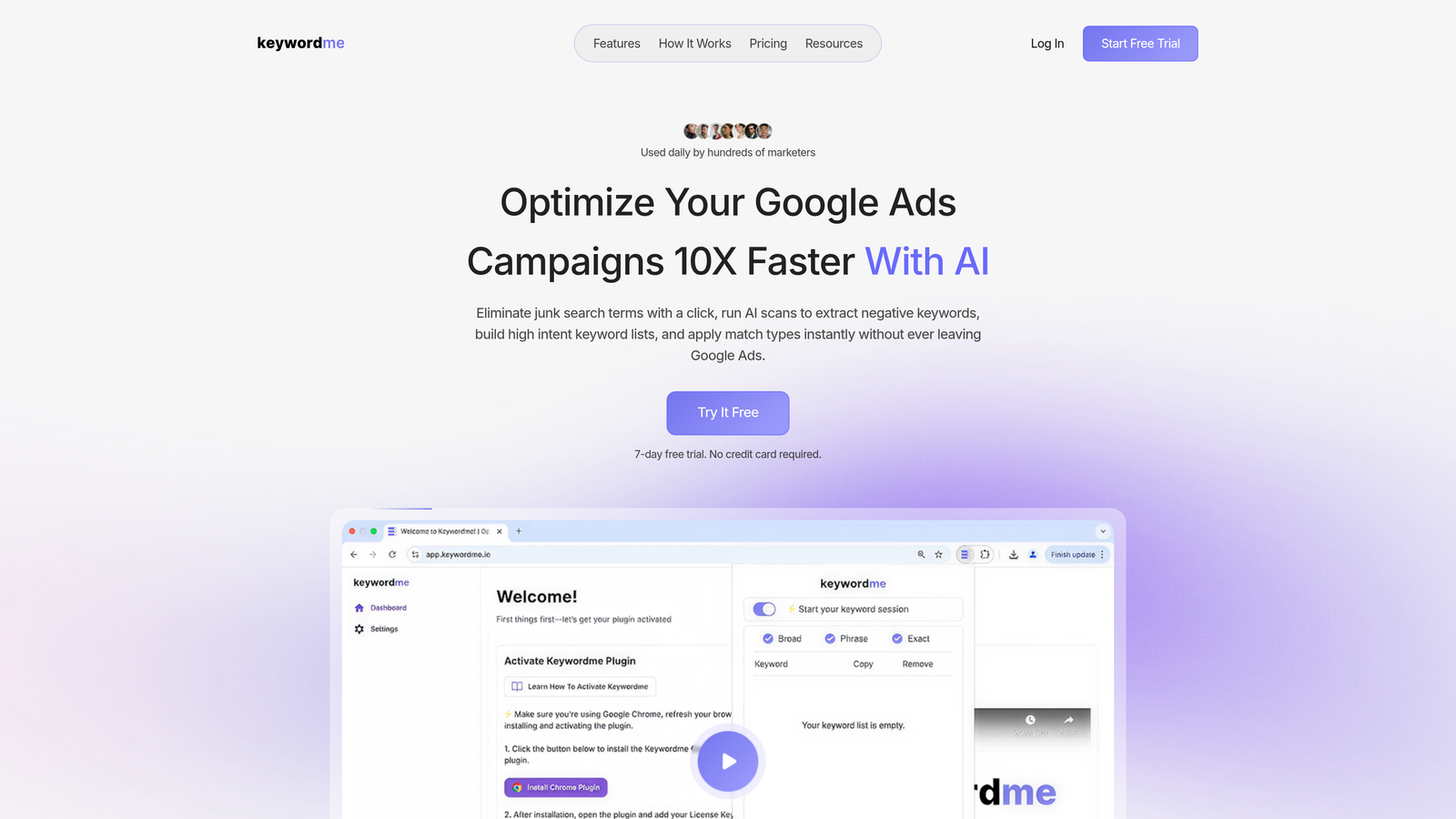
Keywordme is a Chrome extension that integrates directly into your Google Ads Search Terms Report, letting you optimize campaigns without the spreadsheet shuffle.
Where This Tool Shines
Keywordme eliminates the back-and-forth between Google Ads and external tools. You're working inside the native interface, which means zero context switching and no copy-paste errors.
The one-click workflow is what sets it apart. When you spot a junk search term draining budget, you can exclude it, add it to a negative list, and move on—all in seconds. For agencies managing multiple clients, the multi-account support means you can apply the same efficient workflow across every account without rebuilding processes.
Key Features
One-Click Junk Removal: Exclude wasteful search terms directly in the Search Terms Report without exporting data.
Bulk Negative Lists: Build and apply negative keyword lists across campaigns instantly.
Match Type Application: Apply exact, phrase, or broad match modifiers without leaving the interface.
Keyword Clustering: Automatically group related keywords for better campaign organization.
Team Collaboration: Multi-account and team support built for agencies juggling multiple clients.
Best For
Solo advertisers who want to cut optimization time by 80%. Agency teams managing multiple Google Ads accounts who need a consistent, repeatable workflow. Anyone tired of spreadsheet exports and manual data manipulation.
Pricing
$12/month per user with a 7-day free trial. Flat-rate pricing makes it predictable for agencies adding team members.
2. Google Keyword Planner
Best for: Getting first-party search volume data directly from Google
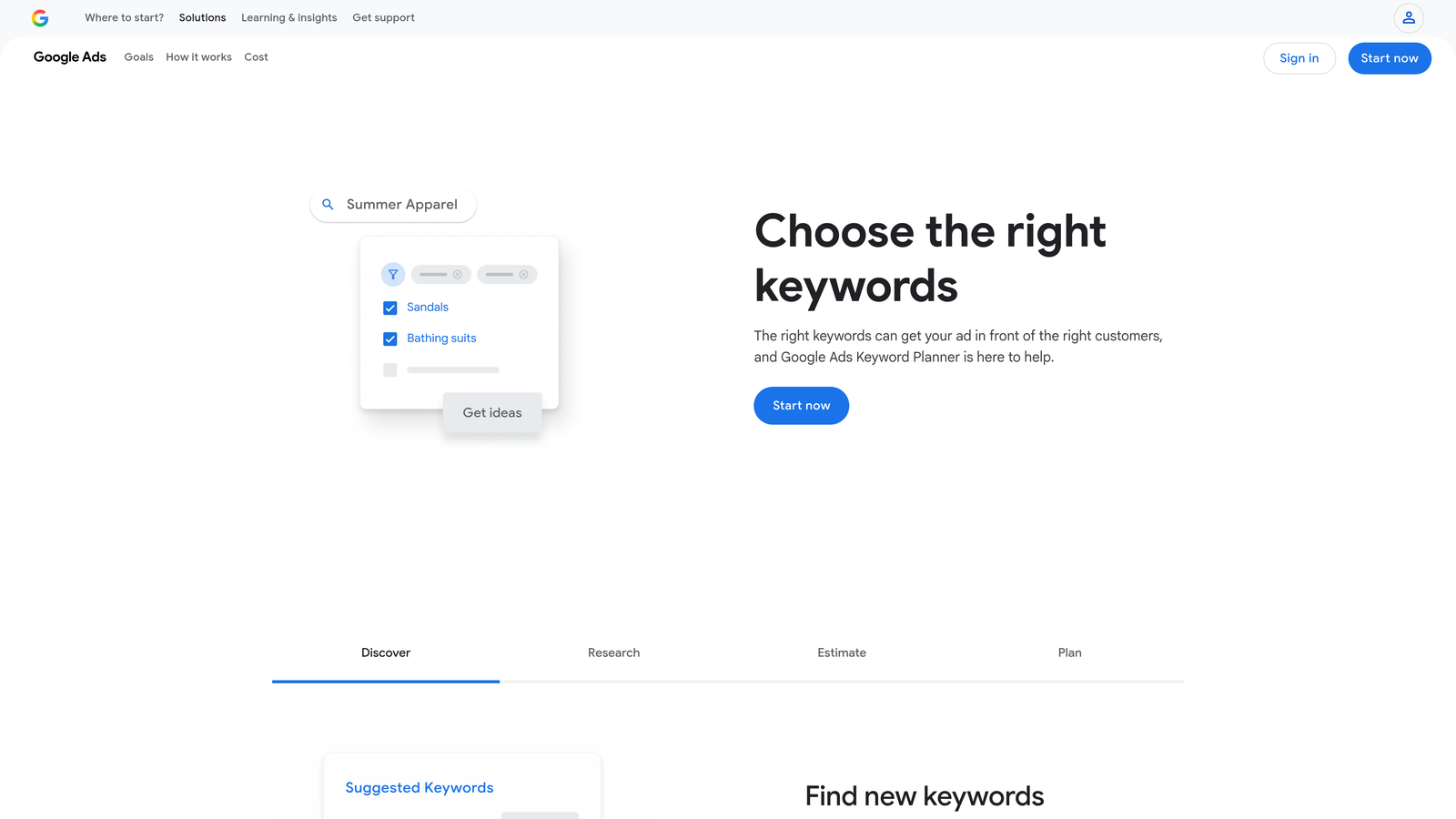
Google Keyword Planner is the free keyword research tool built into Google Ads, offering search volume estimates and keyword suggestions straight from the source.
Where This Tool Shines
Google Keyword Planner gives you data that third-party tools can only estimate. When you're planning a new campaign or expanding into new markets, having Google's own search volume numbers removes guesswork.
The forecasting feature is underrated. You can input a keyword list, set your budget and bids, and get projections for clicks, impressions, and cost. It's not perfect, but it's useful for ballpark planning before you commit real spend.
Key Features
First-Party Data: Search volume and trend data directly from Google's search engine.
Keyword Discovery: Generate suggestions from seed keywords, URLs, or product categories.
Historical Trends: See how search volume fluctuates by month or season.
Bid Estimates: Get suggested bid ranges based on competition levels.
Campaign Forecasting: Project performance metrics before launching campaigns.
Best For
Advertisers on tight budgets who need reliable search volume data without paying for a third-party tool. Anyone planning new campaigns who wants Google's own performance projections.
Pricing
Free with any Google Ads account. You need an active account to access it, but you don't need to be spending money.
3. SEMrush PPC Keyword Tool
Best for: Competitive intelligence and cross-channel keyword strategy
SEMrush is a comprehensive digital marketing platform with deep PPC capabilities, including competitive ad analysis and keyword gap identification.
Where This Tool Shines
SEMrush excels at showing you what's working for competitors. You can see which keywords they're bidding on, what ad copy they're testing, and how their strategy has evolved over time.
The PPC Keyword Tool helps you build campaigns by analyzing competitor keyword lists and identifying gaps in your own coverage. For advertisers managing both SEO and PPC, the cross-channel insights help you decide where to allocate budget between organic and paid efforts.
Key Features
Competitor Keyword Analysis: See which keywords competitors bid on and their estimated ad spend.
Ad Copy History: Track how competitor ads have changed over months or years.
CPC Distribution: Understand cost-per-click ranges by geographic region.
Keyword Gap Analysis: Identify keywords competitors rank for that you're missing.
Position Tracking: Monitor your ad positions alongside organic rankings.
Best For
Agencies and in-house teams managing both SEO and PPC who need a unified platform. Advertisers in competitive industries who want to reverse-engineer successful competitor strategies.
Pricing
Starts at $139.95/month for the Pro plan. Higher-tier plans unlock more competitive data and historical tracking.
4. SpyFu
Best for: Deep historical competitor keyword and ad research
SpyFu specializes in revealing competitors' most profitable keywords and ad strategies, with historical data going back over a decade.

Where This Tool Shines
SpyFu's strength is historical depth. You can see not just what competitors are bidding on now, but what they've tested and abandoned over the years. This helps you avoid strategies that didn't work for others.
The downloadable competitor keyword lists are a time-saver. Instead of manually building keyword lists from scratch, you can export a competitor's entire keyword portfolio and use it as a starting point for your own campaigns.
Key Features
Competitor Keyword Downloads: Export full keyword lists from any competitor's PPC campaigns.
Historical PPC Data: Access years of ad history to spot long-term trends.
Ad Variation Tracking: See every ad variation a competitor has tested.
Keyword Grouping: Get suggestions for organizing keywords into logical campaign structures.
SERP Analysis: Understand ad positioning and competition levels for specific keywords.
Best For
Advertisers entering competitive markets who want to learn from established players. Teams that value historical data for trend analysis and long-term strategy planning.
Pricing
Starts at $39/month for the Basic plan. Mid-tier plans unlock more competitor tracking and historical data.
5. Optmyzr
Best for: Automation rules and optimization recommendations at scale
Optmyzr is a PPC management platform designed for advertisers managing large accounts or multiple clients, with automation features that reduce manual work.

Where This Tool Shines
Optmyzr's one-click optimizations save hours of repetitive work. The platform analyzes your account and surfaces specific recommendations—like pausing underperforming keywords or adjusting bids—that you can apply with a single click.
The custom automation rules let you set up guardrails that prevent budget waste. For example, you can automatically pause keywords that haven't converted after spending a certain amount, or increase bids on high-performers during peak hours.
Key Features
One-Click Optimizations: Apply recommended changes instantly based on performance data.
Search Term Analysis: Get automated recommendations for negative keywords and new additions.
Quality Score Tracking: Monitor quality score changes over time at the keyword level.
Automated Bid Management: Set rules for bid adjustments based on performance thresholds.
MCC-Level Reporting: Manage and report on multiple accounts from a single dashboard.
Best For
Agencies managing multiple client accounts who need consistent optimization processes. Large in-house teams running complex campaigns across many product lines or regions.
Pricing
Starts at $249/month. Pricing scales with the number of accounts and monthly ad spend managed.
6. WordStream
Best for: Guided optimization workflows for small business advertisers
WordStream is a PPC management platform built for small and medium-sized businesses, with simplified workflows and weekly optimization alerts.
Where This Tool Shines
WordStream's 20-Minute Work Week feature is designed for busy business owners who don't have hours to spend on PPC. It surfaces the highest-impact optimizations you can make each week, prioritized by potential ROI.
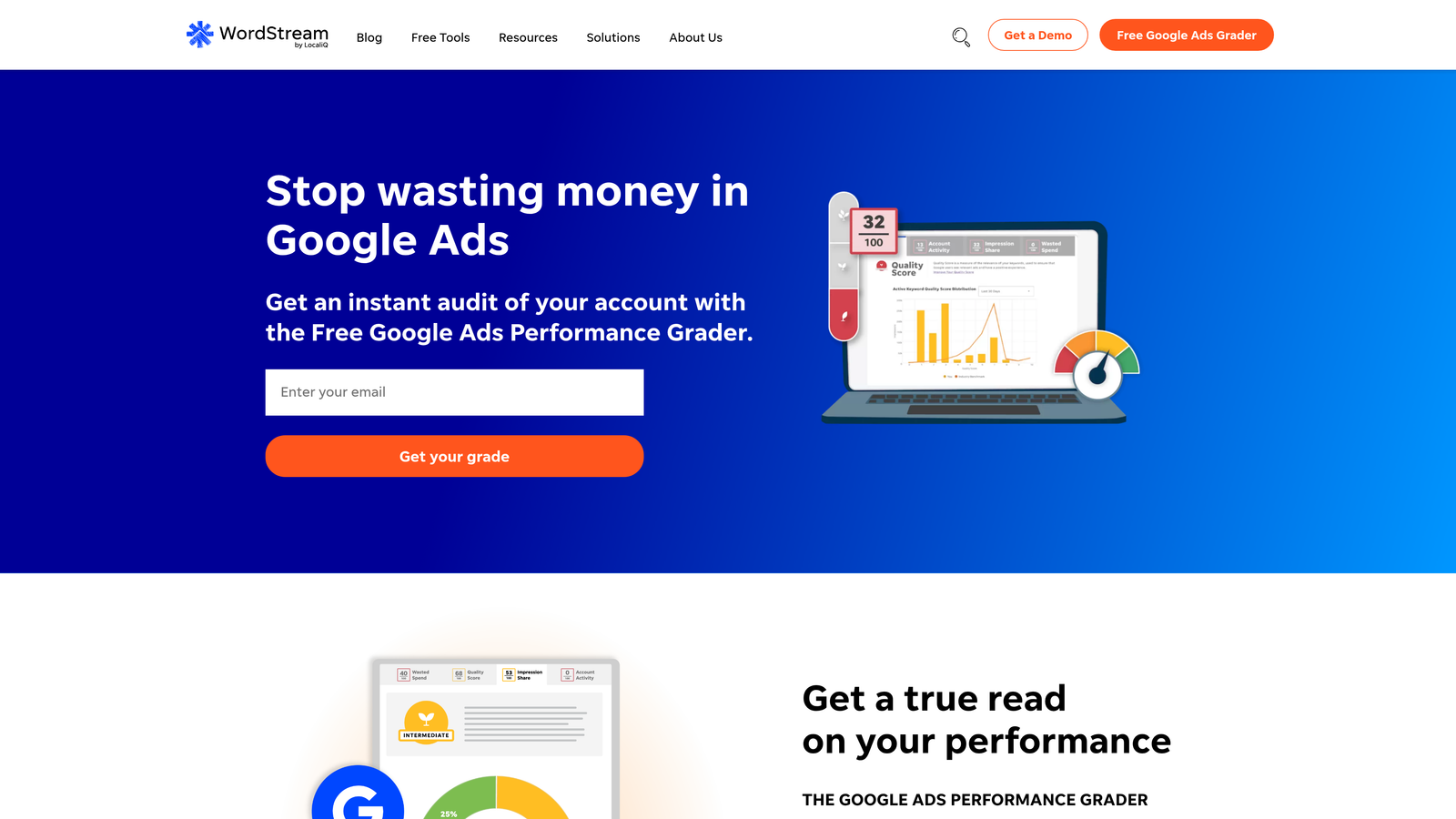
The Free Google Ads Performance Grader is a solid starting point if you're evaluating your current account health. It scans your account and generates a report highlighting wasted spend, poor-performing keywords, and structural issues.
Key Features
20-Minute Work Week: Weekly optimization alerts prioritized by impact.
Free Performance Grader: Instant account audit highlighting improvement opportunities.
Keyword Suggestion Engine: Automated keyword recommendations based on your existing campaigns.
Cross-Platform Management: Manage Google Ads, Microsoft Ads, and Facebook Ads from one dashboard.
Simplified Reporting: Client-ready reports with clear visualizations and explanations.
Best For
Small business owners managing their own PPC without a dedicated marketing team. Agencies serving SMB clients who need simplified reporting and guided optimization.
Pricing
Custom pricing based on monthly ad spend. Contact WordStream for a quote tailored to your account size.
7. Ahrefs Keywords Explorer
Best for: Accurate search volume data with SEO and PPC crossover insights
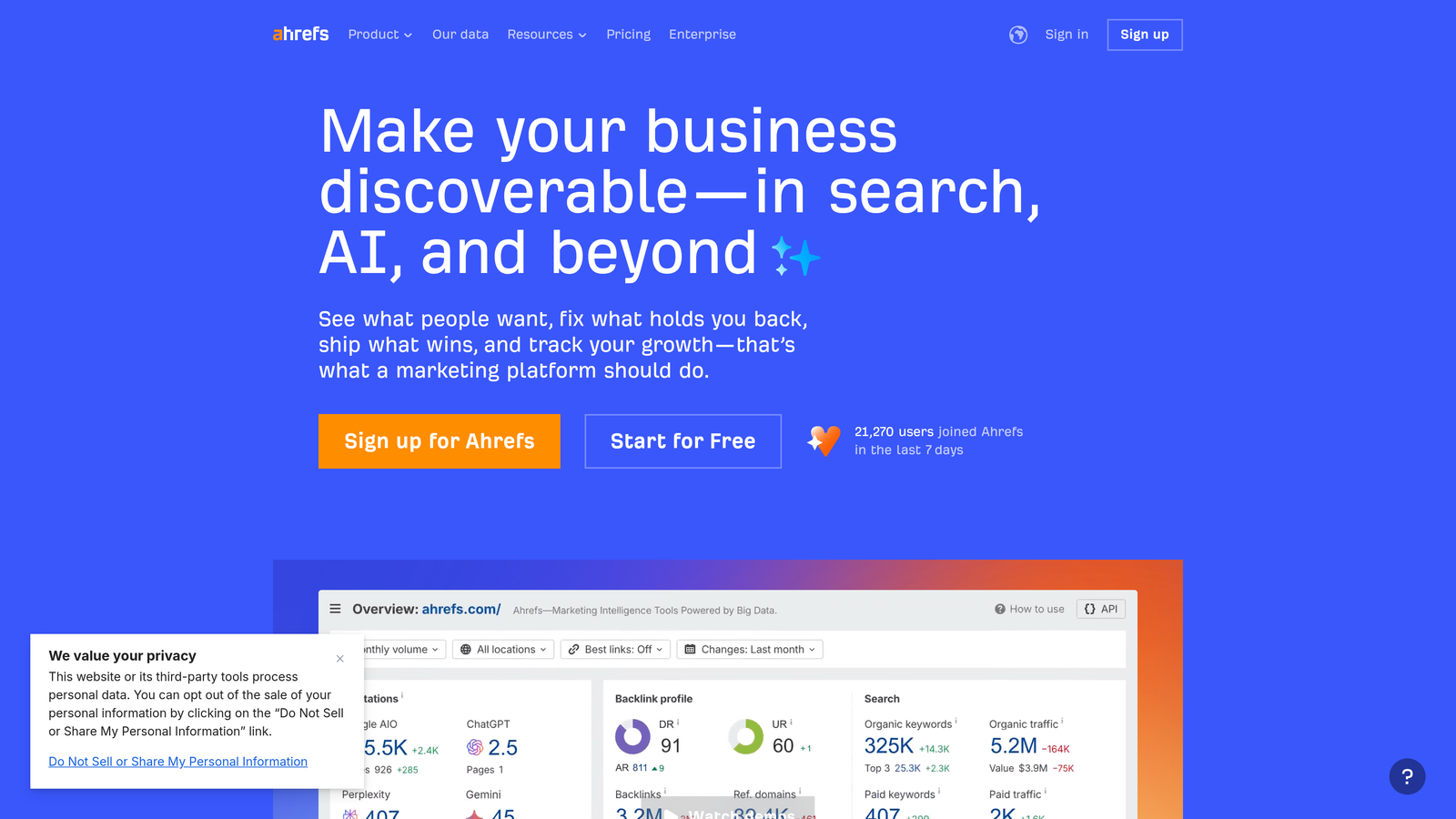
Ahrefs Keywords Explorer is primarily an SEO tool, but its keyword research capabilities are valuable for PPC planning, especially when building campaigns around content strategy.
Where This Tool Shines
Ahrefs provides "clicks" data alongside search volume, which tells you how many searchers actually click on results versus just searching and bouncing. This helps you avoid keywords with high volume but low click-through potential.
The parent topic grouping is useful for campaign structure. Ahrefs shows you the broader topic a keyword belongs to, which helps you organize ad groups around themes rather than isolated keywords.
Key Features
Clicks Data: See actual click volume, not just search volume estimates.
Parent Topic Grouping: Identify broader topics to organize campaigns around.
SERP Overview: View which ads and organic results appear for each keyword.
Keyword Difficulty Scoring: Understand competition levels for both SEO and PPC.
Global Volume Breakdowns: Get search volume data for 170+ countries.
Best For
Content marketers running PPC campaigns to support organic strategies. Advertisers who want more accurate click potential data beyond basic search volume.
Pricing
Starts at $129/month for the Lite plan. Higher tiers unlock more keyword lookups and historical data.
8. PPCexpo Keyword Planner
Best for: Visual keyword clustering and campaign structure planning
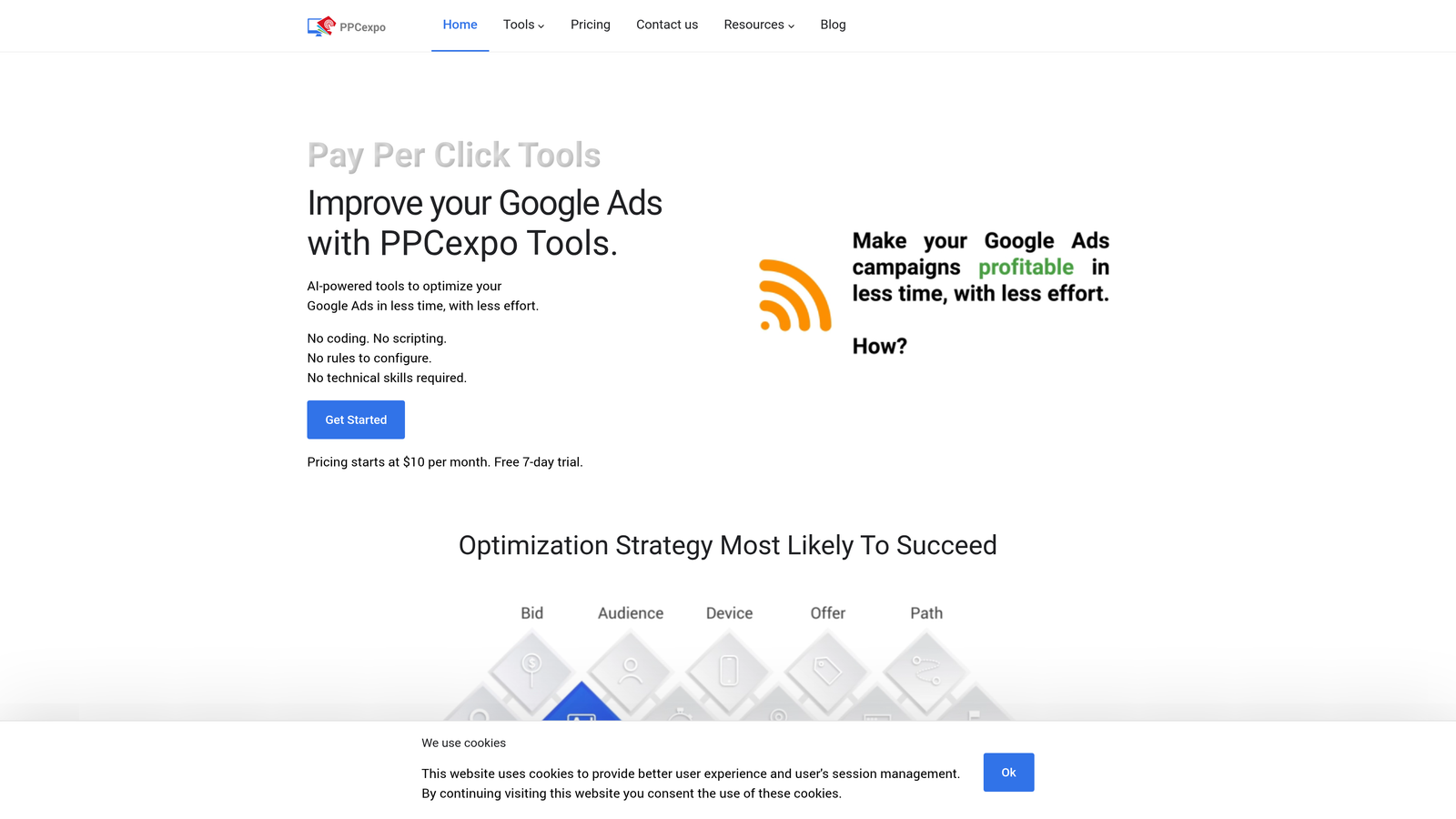
PPCexpo Keyword Planner is a keyword research tool that uses similarity matrices to help you group keywords logically for better campaign organization.
Where This Tool Shines
The keyword similarity matrix is a visual way to understand how keywords relate to each other. Instead of manually sorting keywords into ad groups, PPCexpo's clustering algorithm groups them based on semantic similarity.
The export-ready keyword lists save time when building campaigns. You can generate organized keyword lists with match types and groupings already applied, then import them directly into Google Ads without additional formatting.
Key Features
Similarity Matrix Visualization: See keyword relationships displayed visually for easier grouping.
Automated Keyword Clustering: Group keywords by theme or intent automatically.
Search Volume and CPC Data: Get basic keyword metrics for planning.
Export-Ready Lists: Download formatted keyword lists ready for campaign import.
Chrome Extension: Access keyword research tools directly from your browser.
Best For
Advertisers building new campaigns from scratch who need help organizing large keyword lists. Teams that prefer visual tools over spreadsheet-based workflows.
Pricing
Free tier available with limited features. Paid plans start at $10/month for expanded keyword limits and clustering.
9. Adalysis
Best for: Quality score monitoring and automated wasted spend alerts
Adalysis is a PPC auditing and optimization platform focused on ongoing account monitoring, quality score tracking, and statistically significant ad testing.
Where This Tool Shines
Adalysis's quality score monitoring is granular. It tracks quality score changes at the keyword level over time, so you can spot trends and understand which optimizations actually moved the needle.
The wasted spend alerts are proactive. Instead of reviewing search term reports manually, Adalysis flags keywords and search terms that are draining budget without converting, so you can act before the waste compounds.
Key Features
Quality Score Monitoring: Track quality score changes over time at the keyword level.
Search Query Analysis: Get automated recommendations for negative keywords and new additions.
Ad Testing Significance: Know when ad tests have reached statistical significance.
Wasted Spend Alerts: Automatic notifications when keywords or search terms waste budget.
Custom Optimization Rules: Set up automated rules tailored to your account goals.
Best For
Performance-focused advertisers who want continuous monitoring instead of periodic audits. Teams running extensive ad tests who need statistical confidence in their results.
Pricing
Starts at $149/month. Pricing scales based on monthly ad spend and number of accounts managed.
Making the Right Choice
The best PPC keyword tool depends on where you spend most of your time and what slows you down.
If you're constantly exporting search terms to spreadsheets and manually building negative lists, Keywordme eliminates that entire workflow by letting you optimize directly inside Google Ads. For agencies managing multiple clients, the time savings compound quickly.
If you're planning new campaigns and need reliable search volume data without paying for third-party tools, Google Keyword Planner gives you first-party data straight from the source. It's not fancy, but it's free and accurate.
For competitive intelligence, SEMrush and SpyFu both excel at showing you what's working for competitors. SEMrush is better if you're managing SEO and PPC together. SpyFu is stronger for deep historical analysis and downloadable competitor keyword lists.
If you're running large accounts or multiple clients and need automation at scale, Optmyzr and Adalysis both offer sophisticated rule-based optimization. Optmyzr is more focused on one-click optimizations and MCC-level management. Adalysis specializes in quality score tracking and wasted spend alerts.
For small business owners who don't have hours to spend on PPC each week, WordStream's 20-Minute Work Week prioritizes the highest-impact optimizations. It's designed for non-experts who need guided workflows.
Ahrefs Keywords Explorer is ideal if you're running PPC alongside content marketing and want to understand click potential beyond basic search volume. PPCexpo is best for visual thinkers who want to see keyword relationships displayed graphically.
Most advertisers end up using a combination of tools. Google Keyword Planner for initial research. Keywordme for ongoing optimization. SEMrush or SpyFu for competitive analysis. The key is choosing tools that fit your workflow rather than forcing yourself to adapt to clunky dashboards.
Optimize Google Ads Campaigns 10X Faster. Without Leaving Your Account. Keywordme lets you remove junk search terms, build high-intent keyword lists, and apply match types instantly—right inside Google Ads. No spreadsheets, no switching tabs, just quick, seamless optimization. Start your free 7-day trial (then just $12/month) and take your Google Ads game to the next level.
.svg)