
7 Pay Per Click Example Strategies for 2026
7 Pay Per Click Example Strategies for 2026


Ready to move beyond basic PPC theory and see what’s actually driving results? We're pulling back the curtain on seven real-world campaign types. Each pay per click example in this list isn't just a screenshot; it's a full breakdown of the strategy, the ad copy, the targeting, and the 'why' behind its success. To stop the guesswork, understanding how to implement effective PPC campaign strategies is crucial.
You'll see exactly how different businesses, from local services to global SaaS giants, structure their ads for maximum ROI. We will explore everything from an e-commerce campaign using manual CPC to a local business finding customers with broad match and maximize conversions. This isn't about generic advice; it's about dissecting what makes a campaign profitable. We'll show you how to apply these lessons to your own ads, cutting through the noise and wasted spend.
Plus, you’ll learn how using a tool like Keywordme can simplify this whole process, helping you turn messy search term reports into clean, high-performing keyword lists and negative keyword sets. Let’s dive into the strategies you can steal for your next big win.
1. E-commerce Product Campaign with Exact Match + Manual CPC
Kicking things off, let's look at a classic yet powerful pay per click example: the e-commerce product campaign built on exact match keywords and manual CPC bidding. This strategy is all about precision. You're targeting users who know exactly what they want, often down to the product name or SKU, which means their intent to buy is sky-high. By using exact match, you tell Google Ads to show your ad only when someone searches for that specific term, eliminating guesswork and wasted ad spend on irrelevant queries.
Pairing this with manual CPC bidding gives you ultimate control. Instead of letting an algorithm decide your bid, you set the maximum amount you're willing to pay for each click. This approach is perfect for advertisers who want to manage their budget with surgical accuracy and directly influence ad position for their most valuable keywords.
Strategic Breakdown & Takeaways
For an e-commerce brand like Allbirds, this could mean targeting the exact match keyword [allbirds wool runners] or a direct-to-consumer store selling a specific item like a "GoPro HERO12 Black" targeting the SKU [CHDHX-121-CN]. The goal is to capture the lowest-funnel traffic possible.
Key Insight: The power of this method lies in its directness. You're not trying to attract casual browsers; you're connecting with motivated buyers. This focus almost always results in a higher conversion rate and a better Return on Ad Spend (ROAS).
Actionable Tips:
- Keyword Discovery: Use a tool like Keywordme to analyze your existing search term reports from broad match campaigns. Identify the high-converting queries and add them as new exact match keywords in a dedicated, high-control campaign.
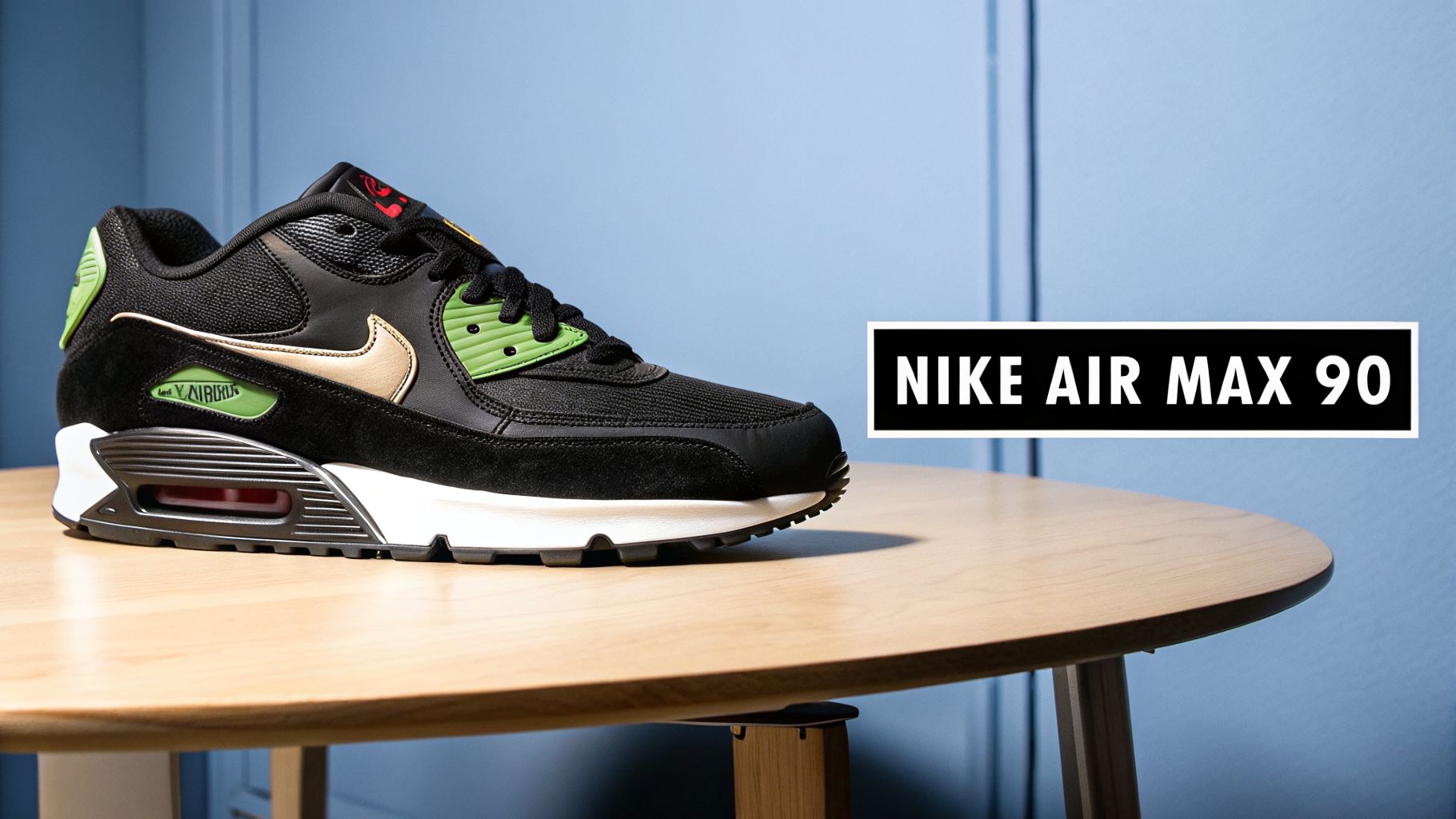
- Granular Ad Groups: Don't lump all your products together. Create separate ad groups for each specific product or product line. An ad group for "Nike Air Max 90" should have ads and keywords just for that shoe, ensuring perfect message match.
- Build a Strong Negative List: Be relentless with your negative keywords. If you sell premium running shoes, you might add
-cheap,-free, and-usedto your negative list to filter out unqualified clicks.
This level of detail is a cornerstone of effective pay per click campaign management. By controlling your keywords and bids so tightly, you create a highly efficient system that turns specific search intent directly into sales.
2. SaaS Free Trial Campaign with Phrase Match + Target CPA
Next up is a pay per click example perfect for the B2B SaaS world: a lead generation campaign built around free trials, using phrase match keywords and Target CPA bidding. This strategy balances reach with relevance, attracting users who are actively searching for solutions like yours but may not know your brand by name. It’s designed to generate a steady stream of qualified trial sign-ups at a predictable cost.

By using phrase match, you capture searches that include your target keyword's meaning, giving you more volume than exact match but more control than broad match. Pairing this with a Target CPA (Cost Per Acquisition) bid strategy lets Google Ads' algorithm automatically adjust bids to hit your desired cost per trial sign-up, optimizing your budget for conversions, not just clicks.
Strategic Breakdown & Takeaways
Think about how companies like Asana or HubSpot grew. They ran campaigns targeting phrase match keywords like "project management software" or "free crm for small business". The goal isn't just to get a click; it's to acquire a trial user who has a high probability of converting to a paid customer, all while keeping acquisition costs in check. This another effective pay per click example that focuses on lead quality.
Key Insight: This method automates bidding for a specific business outcome (a trial sign-up) at a target cost. It's a scalable way to fill your marketing funnel with users who have demonstrated clear problem-aware intent, making them prime candidates for your sales team.
Actionable Tips:
- Set a Realistic CPA: When starting, set your Target CPA about 20% higher than your ideal goal. This gives the algorithm enough budget to learn and gather data quickly. You can gradually lower it as performance stabilizes.
- Segment by User Role: Don't just target
"project management tool". Create separate campaigns for"project management for marketers"and"project management for developers", each with its own specific ad copy and landing page. - Build a Smart Negative List: Use a tool like Keywordme to analyze search terms and proactively add negatives. For a premium tool, you might exclude terms like
-free forever,-open source, and-reviewsto avoid clicks from users who have no intention of ever paying. - A/B Test Landing Pages: Constantly test elements on your trial sign-up page. Pit a 14-day trial against a 30-day trial, test removing form fields, and change the placement of customer logos or social proof to see what drives the most conversions. You can also explore the differences between phrase match vs exact match to see which drives better leads for your business.
3. Local Service Business Campaign with Broad Match + Maximize Conversions
Shifting gears from precision to volume, we find a powerful pay per click example perfect for local service businesses: combining broad match keywords with a Maximize Conversions bidding strategy. This approach is designed to cast a wide net to capture all relevant local search intent, from emergencies like a "burst pipe help near me" to planned projects like "kitchen faucet installation." Instead of hand-picking exact phrases, you let Google’s algorithm find potential customers for you.
This strategy relies on machine learning to understand the context of a search and match it to your business. When paired with Maximize Conversions, Google Ads automatically sets your bids to get you the most leads, calls, or form submissions possible within your daily budget. It's an ideal setup for businesses like plumbers, HVAC technicians, or electricians who need to generate a steady flow of inquiries within a specific geographic service area.
Strategic Breakdown & Takeaways
Imagine a local plumbing company like Mr. Rooter. They could use broad match keywords like plumber, drain cleaning, and water heater repair. Google would then show their ads for related searches such as "emergency plumber for clogged toilet" or "how much to fix a leaky water heater," all without needing to add those long-tail phrases manually. The system focuses entirely on driving the desired action: a phone call or a quote request.
Key Insight: This strategy prioritizes lead volume and trusts Google's AI to find conversion-ready users. For service businesses, where a single lead can turn into a high-value job, maximizing the number of inbound inquiries is often more important than controlling the cost per click for every single keyword.
Actionable Tips:
- Clean Your Search Terms: Broad match will bring in a wide variety of queries. Use a tool like Keywordme to regularly analyze your search term reports. This helps you quickly spot irrelevant searches and build a robust negative keyword list to prevent wasted ad spend.
- Location-Specific Ad Groups: Create ad groups for each city or neighborhood you serve. Tailor the ad copy with local landmarks or phone numbers to increase relevance and trust, which can significantly boost click-through rates.
- Track Every Call: Implement call tracking on your website and in your ads. This is critical for measuring which campaigns and keywords are actually making the phone ring, allowing you to feed accurate conversion data back into the Maximize Conversions algorithm.
4. B2B Enterprise Software Campaign with Exact Match + Manual CPC + Account-Based Marketing
Moving into the high-stakes world of B2B, our next pay per click example focuses on surgical precision for enterprise software. This strategy layers exact match keywords and manual CPC bidding with an Account-Based Marketing (ABM) approach. Instead of casting a wide net, you're targeting specific, high-value companies and the decision-makers within them, making every click count in a long and complex sales cycle.
This method combines the control of exact match keywords with the strategic focus of ABM, allowing you to go after the big fish with confidence. You're not just looking for any lead; you're looking for a specific director at a Fortune 500 company who is actively researching solutions like yours.
Pairing this with manual CPC is critical. It allows you to set aggressive bids specifically for searches originating from your target accounts or for keywords that indicate enterprise-level interest. This ensures maximum visibility in front of the exact people your sales team wants to talk to.
Strategic Breakdown & Takeaways
For a company like Salesforce, this could mean targeting a competitor's term like [hubspot vs salesforce enterprise] but only showing that ad to users at companies on their target account list. Similarly, a data visualization tool like Tableau could target the exact match keyword [business intelligence tools for fortune 500] to connect with high-level data directors.
Key Insight: The power here comes from aligning marketing spend directly with sales objectives. You're using PPC not just for lead generation, but as a tool for strategic account penetration, significantly shortening the sales cycle and increasing deal size.
Actionable Tips:
- Identify High-Value Keywords: Use a tool like Keywordme to discover long-tail, enterprise-specific keywords. Look for terms that include job titles (
for CTOs), company names (Datadog competitors), or enterprise features (SSO integration). Add these as exact match keywords. - Coordinate with Sales: Create dedicated campaigns that target companies on your sales team's named account list. Use audience targeting (like IP-based or list uploads) and allocate a higher budget and bids for these specific campaigns.
- Build an Exclusionary Negative List: Your negative keyword list is your shield. Be aggressive in adding terms like
-free,-smb,-startup, and-cheapto ensure your budget is spent only on enterprise-level prospects. - Layer with LinkedIn Audiences: Create a Google Ads audience from visitors who clicked on your ABM-focused ads. You can then use this list to create a matched audience on LinkedIn for a multi-channel retargeting push, keeping your solution top-of-mind.
5. Remarketing Campaign with Phrase Match + ROAS Bidding
Next up is a powerful strategy for recapturing lost sales: the remarketing campaign. This pay per click example focuses on targeting previous website visitors, particularly those who abandoned their shopping carts. It blends the contextual relevance of phrase match keywords with the automated, profit-focused power of Target Return on Ad Spend (ROAS) bidding. You're essentially getting a second chance to convert a warm audience that has already shown direct interest in your products.
This method combines audience targeting with search intent. When a user who previously abandoned a cart at Zappos later searches for "men's running shoes with free shipping," your ad can appear. By using Target ROAS, you instruct Google's algorithm to bid whatever is necessary to achieve a specific return on your ad spend, making profitability the primary goal of the campaign.
Strategic Breakdown & Takeaways
This approach is highly effective for e-commerce stores looking to recover potentially lost revenue. For instance, Amazon often shows users ads for the exact items they left in their cart, sometimes highlighting a price drop. Wayfair might target a user who viewed a sofa with an ad mentioning flexible financing options. The goal is to address the potential friction point that caused the user to leave in the first place.
Key Insight: Remarketing to cart abandoners is one of the highest ROI activities in PPC. These users are already qualified and familiar with your brand. The right message, delivered at the right time, can easily push them over the finish line.
Actionable Tips:
- Segment Your Audiences: Don't treat all visitors the same. Create separate remarketing campaigns for different user groups like cart abandoners, specific product viewers, and past customers. Each requires a unique message.
- Set a Realistic ROAS Target: When starting, set your Target ROAS 10-15% below your historical average for that audience. This gives the algorithm enough room to bid competitively and gather conversion data during its learning phase before you tighten the goal.
- Refine with Negatives: Use Keywordme to analyze your remarketing campaign's search term report. You can identify irrelevant queries that trigger your ads and add them as negative keywords. For example, if you're Wayfair, you might add
-ikeaor-pottery barnto avoid showing ads to people looking for competitors. - Offer a Compelling Incentive: Your ad copy and landing page should directly address why the user might have left. Offer a small discount, highlight free shipping, or emphasize your return policy to overcome common objections and sweeten the deal.
6. Lead Generation Campaign with Broad Match + Conversion Optimizer
Shifting from direct sales to lead acquisition, another powerful pay per click example is the volume-focused lead generation campaign. This strategy uses the flexibility of broad match keywords combined with the intelligence of Google's Target CPA (Cost Per Acquisition) bidding, often called a Conversion Optimizer. The goal here is casting a wide net to capture a diverse range of search queries related to your service, then letting the algorithm automatically find the users most likely to convert into a lead.
While broad match can pull in some unexpected traffic, pairing it with a smart bidding strategy like Target CPA tells Google to prioritize clicks that align with your conversion goals. It's a trade-off: you give up some manual control for automated efficiency and higher lead volume, making it a go-to for businesses like Home Advisor, insurance aggregators, and local service providers.
Strategic Breakdown & Takeaways
Imagine a solar installation company wanting to generate quote requests. Instead of just targeting [solar panel installation], they could use broad match on a keyword like solar panels for home. This allows Google to show their ads for searches like "how much do residential solar systems cost," "best solar companies near me," or "rebates for home solar energy." The Conversion Optimizer then works to get the most leads possible at or below their target cost-per-lead.
Key Insight: This approach balances reach and relevance. Broad match uncovers new, profitable search patterns you might have missed, while the Conversion Optimizer ensures your ad spend is focused on driving actual conversions, not just clicks.
Actionable Tips:
- Build a Proactive Negative List: Don't wait for bad traffic to appear. Use a tool like Keywordme’s negative keyword builder to preemptively block low-intent terms like
-DIY,-free,-jobs, and-trainingfrom triggering your ads. - Segment by Lead Value: If you offer different services, create separate campaigns for each. A campaign for "emergency roof repair" leads will have a higher CPA target than one for "free roof inspection" leads. This lets you bid more aggressively for more valuable conversions.
- Monitor Search Terms Religiously: In the first two weeks, check your Search Terms Report daily. Any irrelevant or poor-performing query should be immediately added to your negative keyword list to train the algorithm and protect your budget. This is a critical step in any successful pay per click example focused on lead gen.
7. Brand Protection Campaign with Exact Match + Manual CPC + Premium Bidding
Shifting from offense to defense, another critical pay per click example is the brand protection campaign. This strategy is about safeguarding your most valuable asset: your brand name. It involves bidding on your own brand keywords with exact match, using manual CPC to maintain control, and often bidding aggressively to secure the top ad position. The goal is to control the message, capture traffic that is rightfully yours, and fend off competitors, affiliates, or counterfeiters trying to poach your customers.
By pairing exact match with manual CPC, you ensure your ads appear for searches like [your brand name], while premium bidding helps you dominate the top spot. This prevents others from appearing above your organic listing, which could confuse users or divert them to a competitor's site. It’s a defensive play that ensures you are the first and most trusted result when someone looks for you by name.
Strategic Breakdown & Takeaways
Large brands like Apple and Microsoft are masters of this. When you search for "iPhone" or "Windows," their ads are almost always at the top, directing you to the official source. This isn't just about getting a click; it's about owning the narrative and reinforcing trust. Similarly, Amazon often bids on brand+model searches to compete directly with marketplace sellers, ensuring their official listing remains prominent.
Key Insight: This strategy is less about direct ROAS and more about brand integrity and market share preservation. Paying for a click on your own brand name might seem counterintuitive, but it's a small price to pay to prevent a competitor from stealing a customer at the final moment of decision.
Actionable Tips:
- Monitor Brand Terms: Use a tool like Keywordme to continuously monitor search term reports for your brand campaigns. Look for misspellings, product model numbers, and "brand + review" variations that you should add as exact match keywords.
- Segment Your Campaigns: Create separate campaigns for your own brand terms versus competitor brand terms. Bid high and write reassuring copy for your brand (e.g., "Official Site"). For competitor terms, bid lower and focus your copy on your unique selling proposition.
- Build a Defensive Negative List: Be proactive with negative keywords. Add terms like
-jobs,-stock,-news, and-careersto your brand campaign to filter out searches from job seekers or investors, not potential customers. This keeps your campaign focused and efficient.
This defensive pay per click example is a fundamental tactic for any established business. It acts as an insurance policy, guaranteeing that when users search for you, they find you first, building a moat around your hard-earned brand equity.
7-Point PPC Campaign Comparison
| Strategy | 🔄 Implementation (Complexity & Process) | ⚡ Resource Requirements (Budget & Assets) | 📊 Expected Outcomes (Results & Impact) | 💡 Ideal Use Cases | ⭐ Key Advantages |
|---|---|---|---|---|---|
| E-commerce Product Campaign with Exact Match + Manual CPC | Intermediate — manual CPC, weekly monitoring, negative keyword management | Moderate — $2.50–$4 CPC range; product page assets and analytics | High conversion rate, strong ROI, limited scale | E‑commerce product SKUs, high‑margin items, inventory-led promos | ⭐ High relevance & quality score; granular cost control; low wasted spend |
| SaaS Free Trial Campaign with Phrase Match + Target CPA | Intermediate–Advanced — ML learning phase, A/B tests, conversion tracking required | Moderate — Target CPA ≈ $25; landing pages, signup flow, analytics | Predictable trial acquisition at target CPA; improves as ML learns | SaaS free trials, B2B subscriptions, lead‑generation for onboarding funnels | ⭐ Automated bid optimization; balance of reach and relevance; scalable |
| Local Service Business Campaign with Broad Match + Maximize Conversions | Beginner–Intermediate — broad match setup, geotargeting, robust negative list | Moderate–High — budget driven (example $500/day); mobile pages, call tracking | High lead/call volume; variable CPL; effective for seasonal spikes | Local plumbers, HVAC, contractors, emergency services | ⭐ Maximizes lead volume; broad reach with localized targeting; low management |
| B2B Enterprise Software Campaign with Exact Match + Manual CPC + ABM | Advanced — ABM alignment, sales coordination, account lists and high‑touch bidding | High — $15–$50 CPC; executive content (case studies, ROI calc), dedicated team | Low volume but high‑value deals; longer sales cycles; high LTV | Enterprise software vendors, named‑account targeting, high‑ticket B2B sales | ⭐ Precision reach to decision‑makers; strong sales alignment; high deal value |
| Remarketing Campaign with Phrase Match + ROAS Bidding | Intermediate — pixel/audience setup, dynamic creatives, ROAS configuration | Moderate — requires historical conversions (recommended 100/30d), dynamic feed | Higher conversion lift (≈40–60% vs prospecting); profitability‑focused returns | E‑commerce cart abandoners, repeat customers, post‑visit reengagement | ⭐ Higher conversion rates from warm audiences; ROAS‑driven profitability |
| Lead Generation Campaign with Broad Match Modified + Conversion Optimizer | Beginner–Intermediate — +modifier syntax, active negative keyword management, early daily review | Moderate — Target CPA $40–$60; lead form, lead processing systems | Increased lead volume (2–3x vs exact); variable lead quality | Lead gen verticals: home services, insurance, solar, local contractors | ⭐ Scalable volume; automated bid optimization; good entry strategy for agencies |
| Brand Protection Campaign with Exact Match + Manual CPC + Premium Bidding | Intermediate — exact match brand setup, legal review for competitor bids, close monitoring | Moderate — budget allocation ~15–25% of search spend; brand creatives and monitoring tools | High CTR and low CPA on owned terms; defends market share and messaging | Established brands, authorized retailers, competitive brand markets | ⭐ Highest relevance & CTR on brand terms; protects brand equity; measurable ROI |
Turn These Examples into Your Next Winning Campaign
We’ve just walked through a whole gauntlet of pay per click example scenarios, from protecting a brand name to scoring high-value enterprise leads. Seeing them laid out is one thing, but turning those blueprints into your own success story is where the real work begins. If there’s one golden thread tying all these different campaigns together, it’s this: control and relevance.
Success in PPC isn't about finding a single "magic" keyword or a secret bidding strategy. It's about a relentless, ongoing process of matching your message to user intent with pinpoint accuracy. It's about having the courage to cut what isn’t working and double down on what is. The difference between a campaign that breaks even and one that delivers a 5x return on ad spend often comes down to this disciplined approach.
Your Action Plan: From Example to Execution
So, what's next? Don't just file these ideas away. Let's make them actionable.
- Revisit Your Bidding Strategy: Are you using Manual CPC when you should be testing Target CPA for lead generation? Or are you letting a Broad Match campaign run wild without the guardrails of a Maximize Conversions bid strategy? Look at the SaaS and local service examples and question if your bidding aligns with your primary business goal.
- Audit Your Match Types: The power of a good pay per click example often lies in its structure. An e-commerce campaign thrives on the precision of Exact Match, while a lead generation campaign might need the wider net of Phrase Match to discover new customer queries. Your search term report is your best friend here-it tells you exactly what people are typing.
- Get Serious About Negatives: Every successful campaign we reviewed has an implicit, rock-solid negative keyword list. This is non-negotiable. You must be constantly weeding out irrelevant search terms that drain your budget. This isn't a one-time task; it's a weekly, sometimes daily, ritual.
Ultimately, the most profitable PPC accounts are built on a foundation of smart keyword management. It’s the process of finding new opportunities, grouping them logically, applying the right match types, and aggressively building negative lists. This is the engine of optimization. You saw how each pay per click example, whether simple or complex, hinged on getting this part right. Your next winning campaign is waiting inside your search term data, ready to be uncovered.
Ready to stop wrestling with spreadsheets and turn these examples into reality? Keywordme is built specifically to speed up the most critical parts of PPC optimization, helping you build better campaigns by organizing keywords and creating negative lists in a fraction of the time. Give Keywordme a try and see how quickly you can build a campaign that gets results.
.svg)