
Optmyzr vs 8 PPC Optimization Tools: Which One Actually Fits Your Workflow in 2026?
This guide compares Optmyzr vs PPC optimization tools across eight alternatives, helping freelancers, agency owners, and marketing teams identify which platform best fits their daily workflow, budget, and preference for in-interface versus dashboard-based campaign management.


TL;DR: Optmyzr is a powerful PPC management platform, but it's not the right fit for everyone. If you're a solo advertiser, freelancer, or agency owner who wants fast, in-interface optimization without the enterprise price tag, there are better options. This guide breaks down Optmyzr alongside eight other PPC optimization tools, covering what each one does best, who it's built for, and how much it costs. Tools are ordered by fit for the broadest audience of Google Ads users: marketers, freelancers, and agency teams managing campaigns day-to-day.
The core tension in this comparison is simple: some tools work inside Google Ads, and some pull you out into a separate dashboard. That distinction matters more than most people realize when you're doing this work every day. Let's get into it.
1. Keywordme
Best for: Freelancers and agency teams who want fast, in-interface PPC optimization without leaving Google Ads.
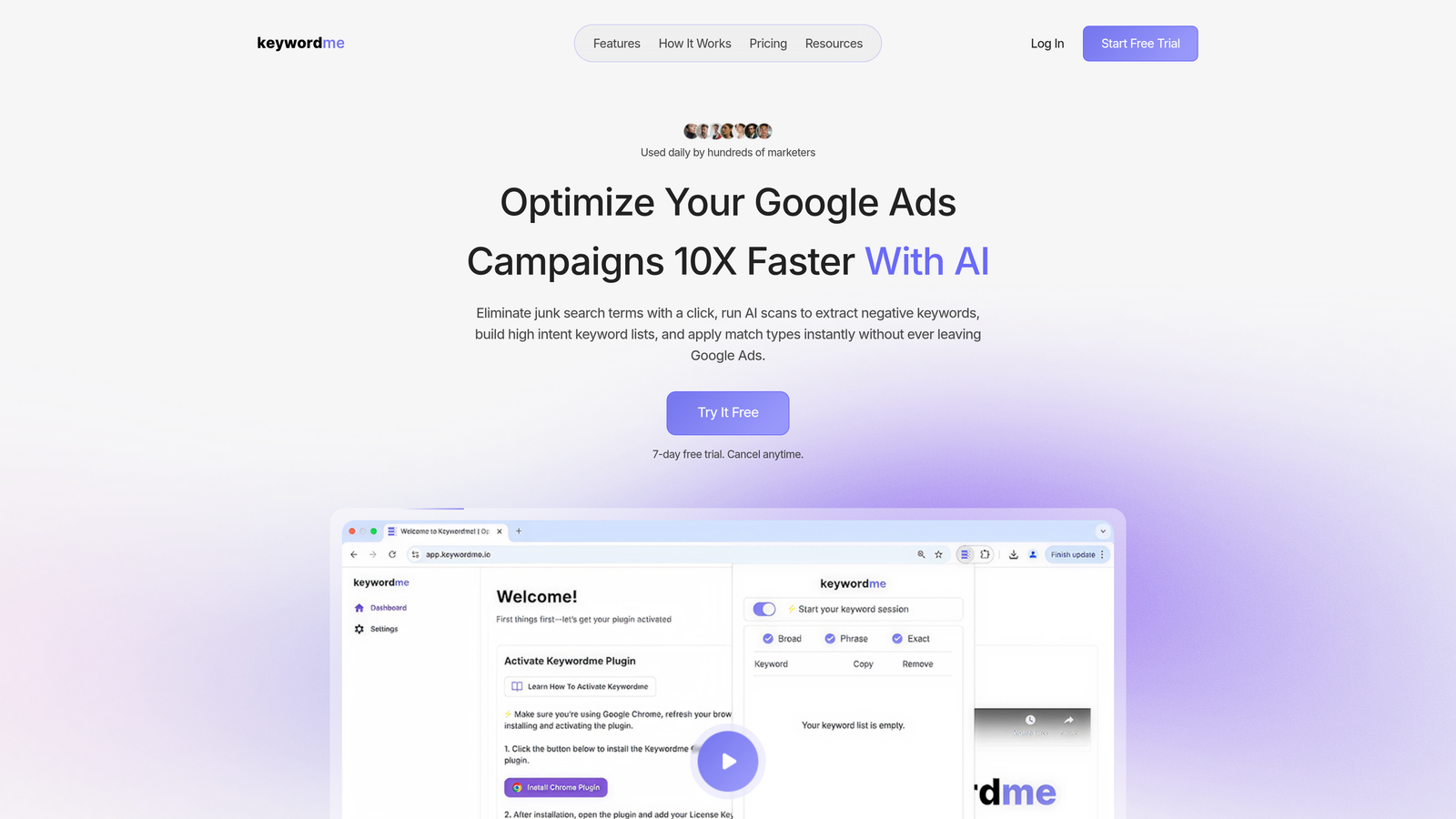
Keywordme is a Chrome extension that plugs directly into Google Ads' Search Terms Report, letting you optimize campaigns without ever opening a separate tool.
Where This Tool Shines
In most accounts I audit, the Search Terms Report is where the real money gets wasted. Irrelevant queries eating budget, match types left unchecked, negative keyword lists that haven't been touched in months. Keywordme turns that cleanup from a 45-minute spreadsheet exercise into a few minutes of clicking.
What makes it genuinely different is the zero-friction workflow. You're already inside Google Ads. You don't context-switch to an external dashboard, copy-paste into a spreadsheet, or log into another platform. The tool lives where the work happens.
Key Features
In-interface optimization: Works natively inside the Google Ads Search Terms Report, no external dashboard required.
One-click junk removal: Remove irrelevant search terms and add negatives instantly, without manual exports.
Keyword clustering: Group search terms by theme and apply match types in bulk, directly from the report.
Multi-account and team support: Agencies can manage multiple client accounts and collaborate across users.
Flat-rate pricing: No percentage-of-spend fees, just a fixed monthly rate per user regardless of account size.
Best For
Freelancers managing a handful of client accounts, in-house marketers who live inside Google Ads daily, and agency teams who want to speed up Search Terms Report reviews without adding another dashboard to their stack. If your current workflow involves exporting to spreadsheets and manually building negative lists, this tool directly replaces that.
Pricing
$12/month per user. A 7-day free trial is available. No spend-based pricing tiers.
2. Optmyzr
Best for: Mid-to-large agencies needing rule-based automation and cross-channel reporting in one platform.
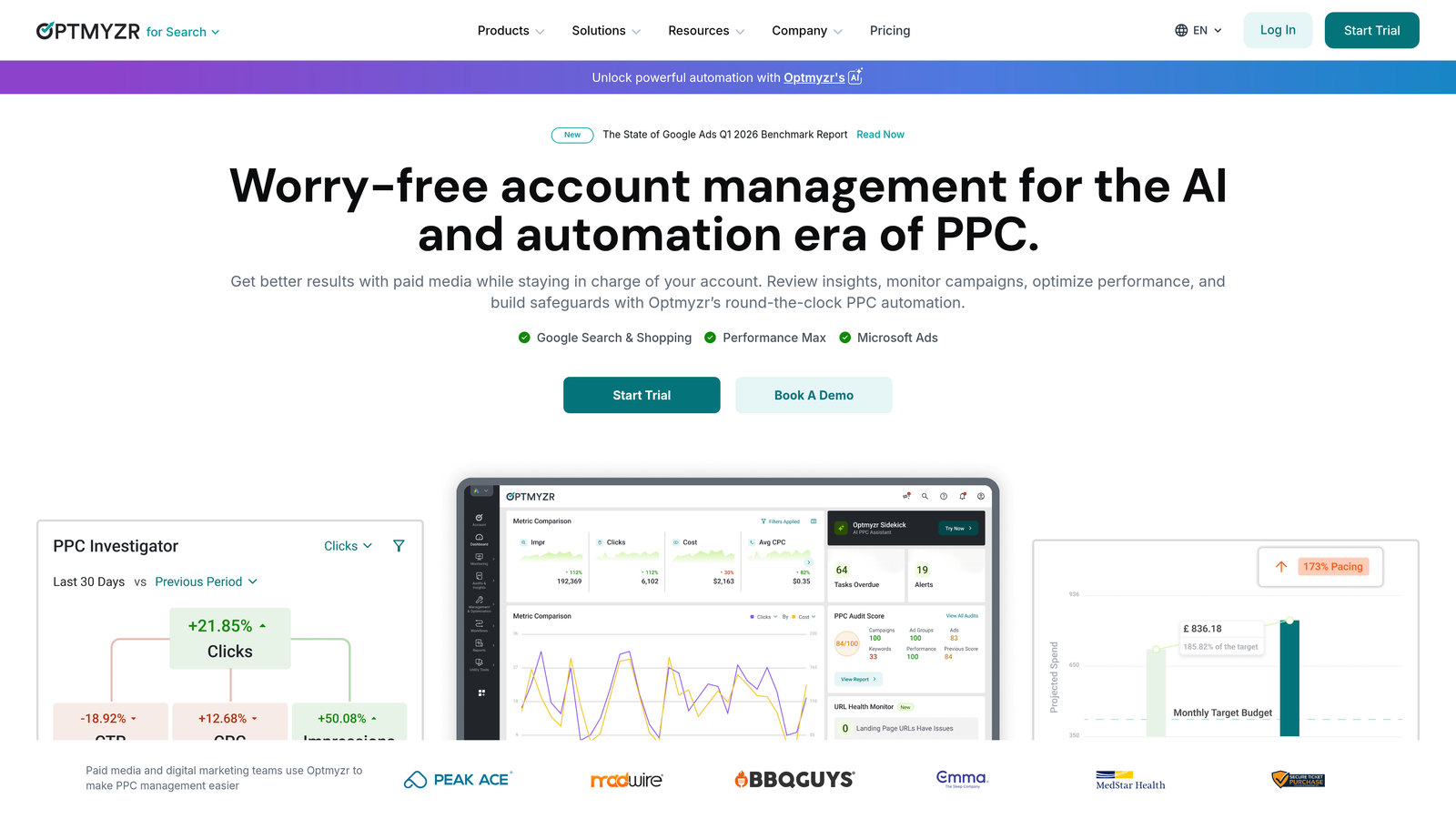
Optmyzr is a web-based PPC management platform built around automation, one-click optimizations, and account-wide reporting for complex Google Ads and Microsoft Ads setups.
Where This Tool Shines
Optmyzr's Rule Engine is genuinely impressive. You can build custom automation workflows that trigger based on performance thresholds, time of day, budget pacing, and more. For agencies managing accounts with a lot of moving parts, that kind of structured automation saves real time.
The mistake most agencies make is buying Optmyzr before their accounts are complex enough to justify it. If you're managing straightforward search campaigns and don't need cross-channel reporting or custom rule logic, you'll end up using maybe 20% of what you're paying for.
Key Features
Rule Engine: Build custom automation workflows based on performance conditions across your account.
One-click optimizations: Surfaces actionable suggestions across campaigns with single-click application.
Shopping campaign management: Includes feed optimization tools for Google Shopping advertisers.
Cross-channel reporting: Unified dashboards covering Google Ads, Microsoft Ads, and other platforms.
PPC audit tools: Account health checks and diagnostic reports to surface structural issues.
Best For
Agencies managing large, multi-channel accounts with significant monthly spend. Teams that need structured automation workflows and consolidated reporting across clients. Not a great fit for solo advertisers or small accounts where the complexity doesn't justify the cost.
Pricing
Not publicly listed in full; typically starts at several hundred dollars per month depending on ad spend tier. Check optmyzr.com for current plans.
3. WordStream Advisor
Best for: SMBs and marketers newer to PPC who want guided, weekly optimization recommendations.
WordStream Advisor (now under LocaliQ) is a guided PPC management tool built around a simplified weekly workflow called the "20-Minute Work Week."

Where This Tool Shines
WordStream's strength has always been making PPC accessible to people who aren't full-time search marketers. The 20-Minute Work Week concept surfaces a prioritized list of recommendations each week, so users know exactly what to do without needing deep platform knowledge.
That said, experienced PPC managers often find it too simplified. What usually happens here is that power users hit the ceiling of what WordStream recommends and want more granular control than the tool allows.
Key Features
Weekly guided recommendations: Prioritized action items surfaced each week in a simple, beginner-friendly interface.
Keyword and ad alerts: Notifications when performance drops or opportunities arise.
Google and Microsoft Ads support: Covers both major paid search platforms.
Performance dashboards: Visual reporting on campaign health and key metrics.
Beginner-friendly UI: Designed for marketers without deep technical PPC knowledge.
Best For
Small business owners managing their own ads, marketing generalists handling PPC as one part of a broader role, and teams that want a structured starting point without a steep learning curve. Less suited for experienced practitioners who want full control.
Pricing
Pricing varies and is primarily offered as a managed service or subscription. Check wordstream.com for current options.
4. Search Ads 360 (SA360)
Best for: Enterprise advertisers running large-scale, cross-engine paid search programs with significant budgets.
Search Ads 360 is Google's own enterprise search management platform, built for organizations running campaigns across multiple search engines at scale.

Where This Tool Shines
SA360's native integration with the Google Marketing Platform is where it earns its place. If you're already running Display & Video 360 or using Google Analytics 4 at an enterprise level, the cross-platform data connections are genuinely powerful. Floodlight-based conversion tracking and advanced automated bidding with custom signals go well beyond what's available in standard Google Ads.
The honest reality is that SA360 is overkill for the majority of advertisers. It's designed for global brands and large agency holding companies, not independent practitioners or regional agencies.
Key Features
Cross-engine management: Manage Google Ads, Microsoft Ads, and other search engines from one platform.
Advanced automated bidding: Custom bidding signals beyond standard Smart Bidding options.
Floodlight conversion tracking: Enterprise-grade attribution integrated across the Google Marketing Platform.
Enterprise reporting: Advanced attribution modeling and cross-channel performance dashboards.
GMP integration: Native connections to Google Analytics, DV360, and Campaign Manager.
Best For
Enterprise advertisers and large agency teams managing complex, multi-engine paid search programs with substantial monthly budgets. Not practical for small teams, solo advertisers, or anyone without a dedicated technical team to manage the setup.
Pricing
Percentage-of-spend model designed for enterprise budgets. Contact Google directly for current pricing.
5. Adalysis
Best for: Performance marketers who want automated ad testing workflows and Quality Score diagnostics.
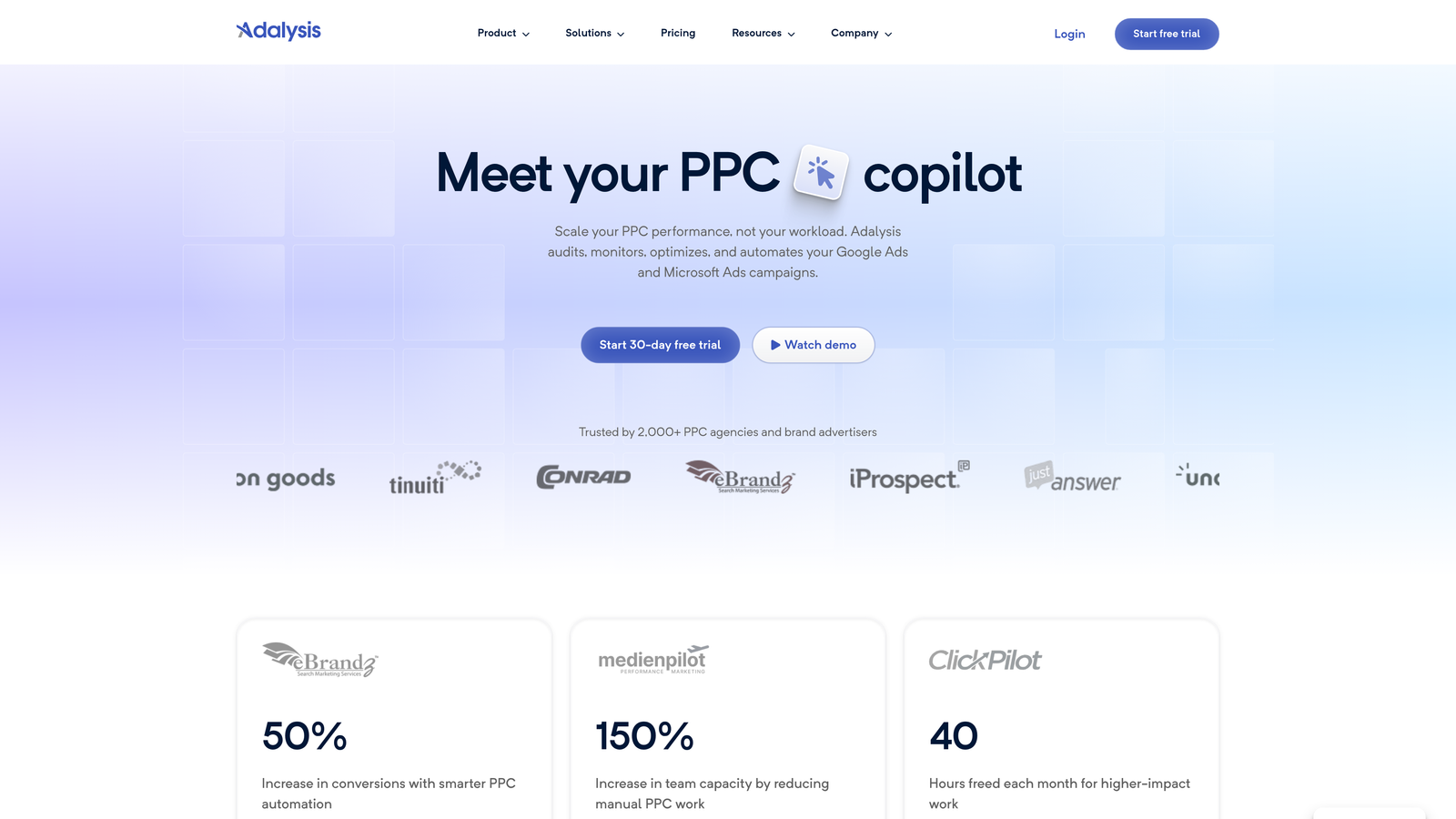
Adalysis is a PPC tool built around ad testing automation, Quality Score monitoring, and ad performance analysis at a granular level.
Where This Tool Shines
If ad copy testing is a core part of your optimization workflow, Adalysis is one of the few tools that treats it as a first-class feature rather than an afterthought. The automated A/B testing workflows handle statistical significance checks and pause/enable decisions based on performance thresholds, which removes a lot of manual tracking work.
In most accounts I audit, ad testing is either nonexistent or done inconsistently in a spreadsheet. Adalysis gives that process real structure.
Key Features
Automated A/B testing: Set up ad tests with automatic winner selection based on performance rules.
Quality Score monitoring: Track QS at keyword and ad group level with improvement recommendations.
Pause/enable rules: Automate ad rotation decisions based on defined performance thresholds.
Ad copy analysis: Identify patterns in what's working across your creative.
Account health alerts: Notifications for performance anomalies and structural issues.
Best For
Performance marketers and PPC specialists who run ongoing ad testing programs and want to improve Quality Score systematically. Works well alongside a broader optimization tool rather than as a standalone solution for full account management.
Pricing
Starts at a few hundred dollars per month depending on account size. Check adalysis.com for current plans.
6. Semrush PPC Toolkit
Best for: Marketers who need competitive PPC intelligence and keyword research built into their existing Semrush workflow.
Semrush's PPC Toolkit combines keyword research, competitor ad intelligence, and PPC keyword list building within the broader Semrush platform.

Where This Tool Shines
The Advertising Research tool inside Semrush is genuinely useful for competitive analysis. You can see what keywords competitors are bidding on, pull historical ad copy, and identify keyword gaps between your campaigns and theirs. For agencies building out new campaigns or entering a new vertical, this kind of intelligence speeds up the research phase considerably.
The important caveat: this is a research and planning tool, not a campaign management tool. You can't manage bids, apply changes, or run optimizations from inside Semrush.
Key Features
Competitor ad research: See which keywords competitors are bidding on and pull their ad copy history.
Keyword gap analysis: Identify PPC keywords your competitors target that you're missing.
PPC keyword list building: Build and export keyword lists with volume and CPC data.
Ad history data: Review competitor ad copy trends over time.
Bundled with Semrush: Included with existing Semrush subscriptions alongside SEO and content tools.
Best For
Marketers and agencies already using Semrush for SEO who want to extend that research capability to PPC. Strong for campaign planning and competitive analysis, but needs to be paired with a separate tool for actual campaign management and optimization.
Pricing
Bundled with Semrush plans; plans start around $139/month as of 2026. Verify current pricing at semrush.com.
7. SpyFu
Best for: Building keyword strategies from deep competitor research and historical PPC data.
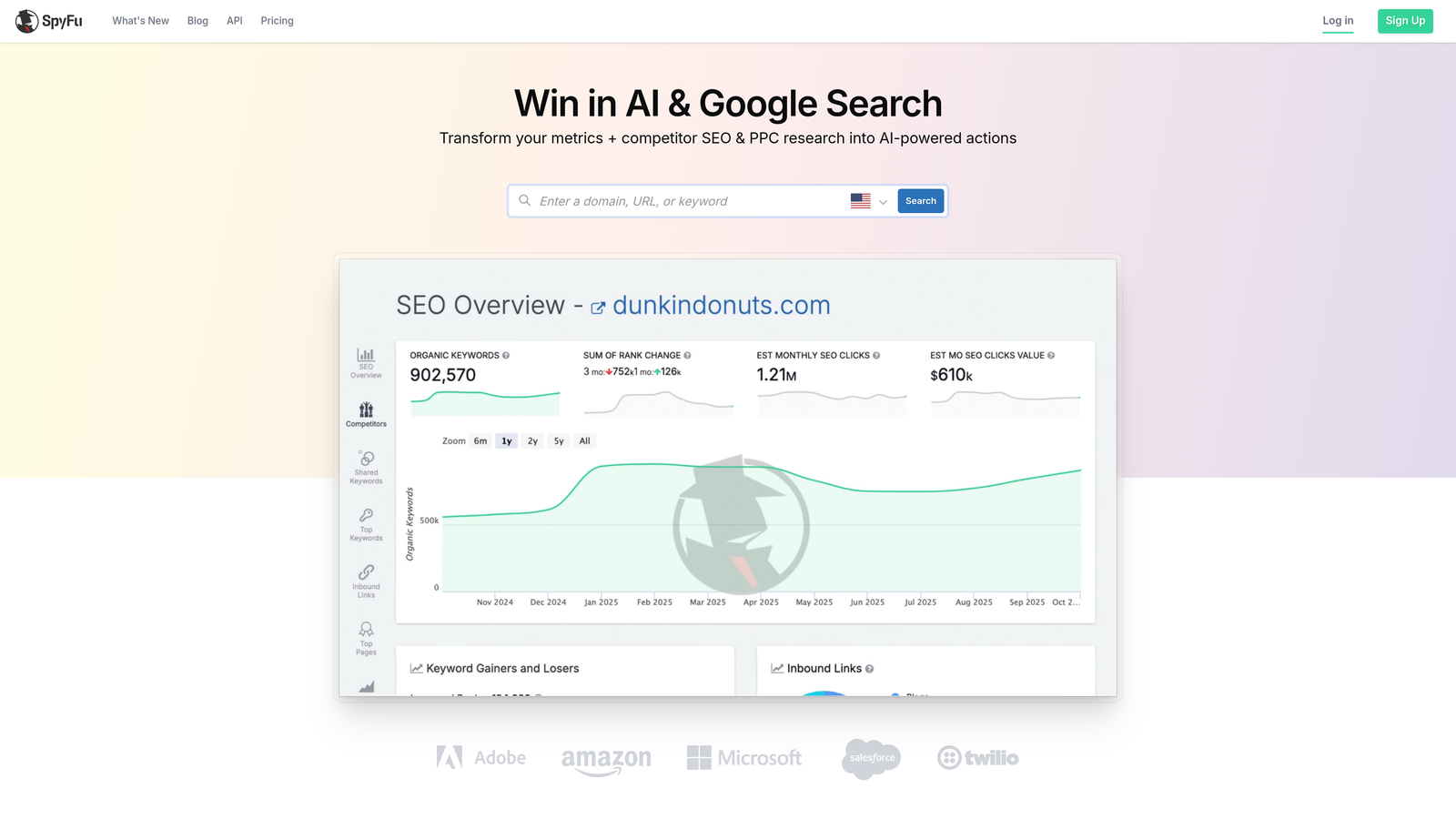
SpyFu is a competitive intelligence tool with one of the deepest historical PPC datasets available, covering competitor keywords, estimated spend, and ad copy going back years.
Where This Tool Shines
SpyFu's historical data depth is what sets it apart from other competitive tools. You can pull up a competitor's domain and see every keyword they've ever bid on, how their estimated spend has changed over time, and which ads they've run across different periods. That kind of longitudinal view is hard to find elsewhere at this price point.
Like Semrush's PPC Toolkit, this is purely a research tool. There's no campaign management functionality, so it's most useful during the strategy and planning phase.
Key Features
Historical competitor keyword data: See every keyword a competitor has ever bid on, not just current campaigns.
Ad copy and landing page history: Pull competitor ads and track how their messaging has evolved.
Estimated competitor spend: Gauge how aggressively competitors are investing in paid search over time.
Keyword overlap analysis: Identify shared and unique keywords between your domain and competitors.
Domain comparison: Benchmark multiple competitors side by side.
Best For
PPC strategists, agency new business teams, and freelancers building keyword strategies for new clients or competitive verticals. Best used at the start of a campaign build or quarterly strategy review, not as a day-to-day optimization tool.
Pricing
Plans start around $39/month. Verify current pricing at spyfu.com.
8. Acquisio
Best for: Agencies managing large portfolios of client accounts who need automated bid management and budget pacing.
Acquisio is an agency-focused PPC platform built around machine-learning bid management and automated budget pacing across multiple client accounts simultaneously.
Where This Tool Shines
Budget pacing is where Acquisio earns its reputation. For agencies running dozens of client accounts with monthly budget caps, manually monitoring spend velocity is a real operational burden. Acquisio automates that process, adjusting bids and pacing in real time to keep accounts on track without constant manual intervention.
The machine-learning bid management is also genuinely useful for accounts where you want automated optimization but need more transparency and control than Google's native Smart Bidding provides.
Key Features
Machine-learning bid management: Automated bidding that learns from account performance data over time.
Budget pacing: Automatically controls spend velocity to hit monthly budget targets across client accounts.
Cross-account reporting: Consolidated dashboards across all client accounts in the portfolio.
Performance anomaly alerts: Notifications when account performance deviates from expected patterns.
White-label reporting: Agency-branded reports for client delivery.
Best For
Agencies managing large numbers of client accounts with significant combined spend, particularly those where budget pacing and automated bid management are operational priorities. Enterprise pricing makes it impractical for smaller agencies or solo practitioners.
Pricing
Enterprise pricing; not publicly listed. Contact Acquisio directly for a quote.
9. Tenscores
Best for: Google Ads practitioners who want to systematically improve Quality Score and reduce CPC over time.
Tenscores is a niche tool focused exclusively on Quality Score improvement, analyzing account structure, ad relevance, and landing page alignment to surface specific, actionable fixes.
Where This Tool Shines
Quality Score is one of those things that most advertisers acknowledge matters but few actually track systematically. Tenscores fills that gap by giving you a dedicated view of QS trends at the keyword and ad group level, along with specific recommendations for what's dragging scores down.
The account structure diagnostics are particularly useful. Tenscores identifies misalignments between keywords, ad copy, and landing pages that aren't always obvious when you're working inside the native interface.
Key Features
Quality Score tracking: Monitor QS at keyword and ad group level with historical trend data.
Ad relevance recommendations: Specific suggestions to improve the ad relevance component of Quality Score.
Landing page alignment analysis: Identify mismatches between keyword intent and landing page content.
Historical QS trends: Track Quality Score changes over time to measure improvement.
Account structure diagnostics: Surface structural issues that are negatively impacting overall account health.
Best For
PPC managers who want to reduce CPC through Quality Score improvement rather than bid adjustments alone. Works best as a supplementary tool alongside a primary optimization workflow, not as a standalone account management solution.
Pricing
Modest monthly subscription. Check tenscores.com for current pricing.
Which Tool Actually Fits Your Workflow?
The right tool depends entirely on where you are in your workflow and what kind of advertiser you are. Here's a quick breakdown.
If you're a freelancer or in-house marketer optimizing campaigns daily: Keywordme is the most practical choice. It works inside Google Ads, costs $12/month, and turns Search Terms Report cleanup from a time sink into a quick routine. No new dashboards, no spreadsheets.
If you're a mid-to-large agency needing deep automation: Optmyzr is the most capable option in this list. The Rule Engine and cross-channel reporting justify the cost if your accounts are complex enough to use them. Just make sure you actually need that depth before committing.
If you're newer to PPC and want guided recommendations: WordStream Advisor gives you a structured starting point without overwhelming you with options. It's designed for exactly that use case.
If competitive research is your priority: SpyFu gives you the most historical data at the lowest price point. Semrush's PPC Toolkit is worth it if you're already on the platform for SEO.
If you're focused on ad testing or Quality Score: Adalysis and Tenscores are both strong in their respective niches, and both work well as supplements to a broader optimization workflow rather than replacements for one.
For most marketers, freelancers, and agency teams doing day-to-day Google Ads work, the biggest lever is optimizing the Search Terms Report faster and more consistently. That's exactly what Keywordme is built for. Start your free 7-day trial and see how much time you get back in the first week alone.
.svg)