
8 Best Negative Keyword Tool Subscriptions for Google Ads in 2026
A negative keyword tool subscription helps Google Ads managers eliminate wasted spend by identifying irrelevant search terms and building precise exclusion lists. This guide compares the 8 best options for 2026, evaluating each tool on Google Ads integration, usability, negative keyword-specific features, and pricing for both solo advertisers and agency teams.


TL;DR: If you're running Google Ads and not actively managing negative keywords, you're almost certainly wasting budget on irrelevant clicks. The right negative keyword tool subscription helps you identify junk search terms fast, build airtight exclusion lists, and keep your campaigns focused on high-intent traffic. This list covers the top tools for negative keyword management in 2026, from lightweight Chrome extensions that work inside Google Ads to full-scale PPC platforms.
Selection criteria for this list: native Google Ads integration, ease of use, negative keyword-specific features, pricing transparency, and value for solo advertisers versus agency teams.
1. Keywordme
Best for: Freelancers and agency teams who want to manage negatives directly inside Google Ads.
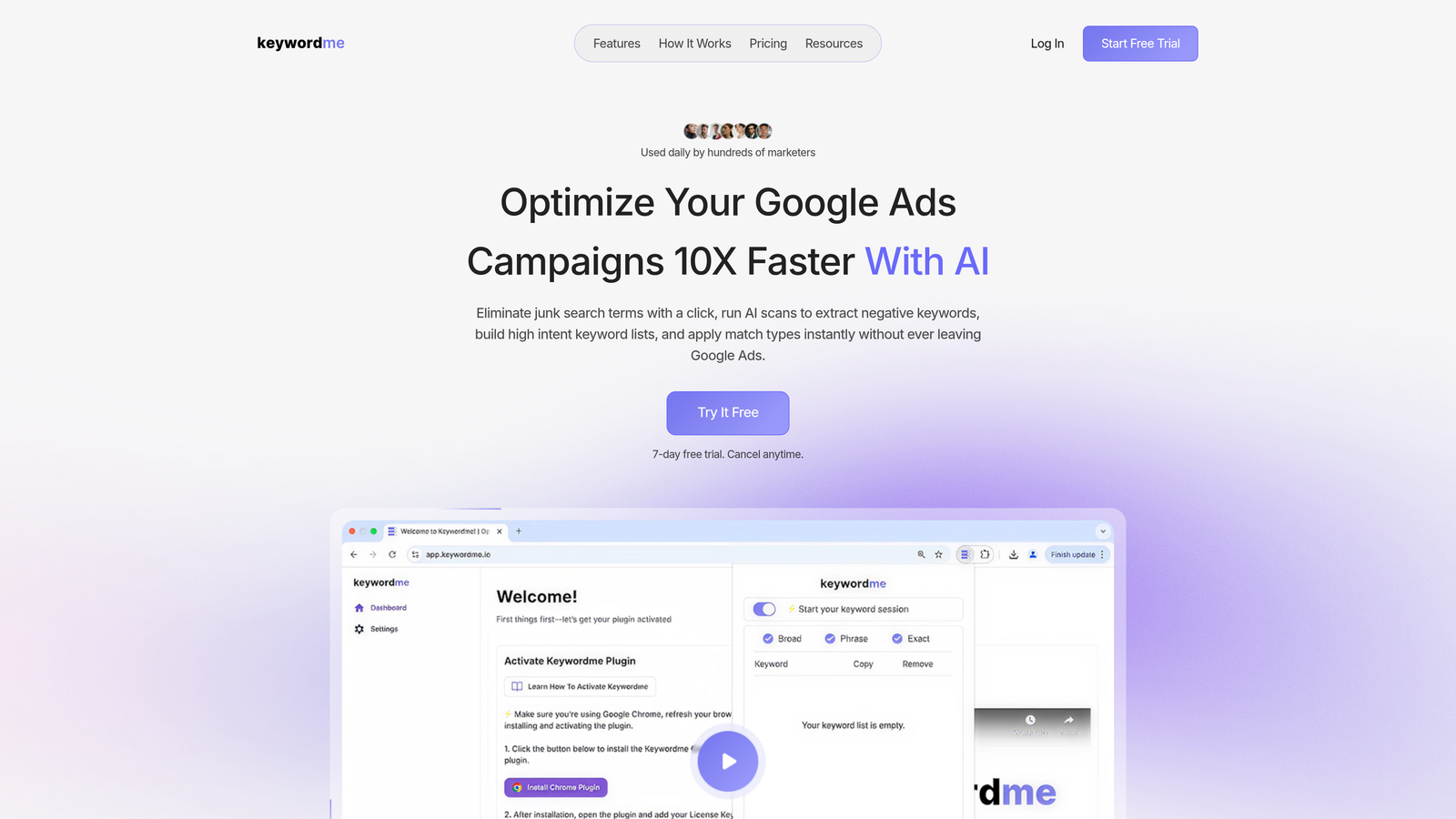
Keywordme is a Chrome extension that plugs directly into Google Ads' Search Terms Report, letting you add negatives, apply match types, and build keyword lists without ever leaving the native interface.
Where This Tool Shines
Most negative keyword workflows involve exporting CSVs, opening a spreadsheet, sorting through hundreds of rows, and then re-importing changes. Keywordme eliminates all of that. You stay inside Google Ads, click to exclude junk terms, and move on. In most accounts I audit, that workflow alone saves a meaningful chunk of time per optimization session.
What makes it genuinely different from other tools on this list is that it doesn't try to be a full PPC platform. It does one thing exceptionally well: making negative keyword management fast and frictionless, right where you're already working.
Key Features
One-Click Negative Additions: Add negative keywords directly from the Search Terms Report without exporting or switching tabs.
Match Type Application: Apply exact, phrase, or broad match types to keywords in bulk without CSV workflows.
Keyword Clustering: Group high-intent terms to build structured keyword lists faster during research sessions.
Bulk Editing: Process multiple search terms at once, which is especially useful after campaigns have been running for a few weeks and the junk has accumulated.
Multi-Account and Team Support: Manage negatives across multiple client accounts with team access, making it a strong fit for agency workflows.
Best For
Freelancers managing a handful of Google Ads accounts, agency teams looking to standardize their optimization workflow, and any advertiser who's tired of the spreadsheet-to-Google-Ads round trip. If your primary pain point is the time it takes to clean up search terms, this is the most direct solution on this list.
Pricing
$12/month per user, with a 7-day free trial available. Flat-rate pricing makes it easy to budget for, especially for agencies billing time to clients.
2. Google Ads Keyword Planner
Best for: Pre-launch negative keyword research at no additional cost.
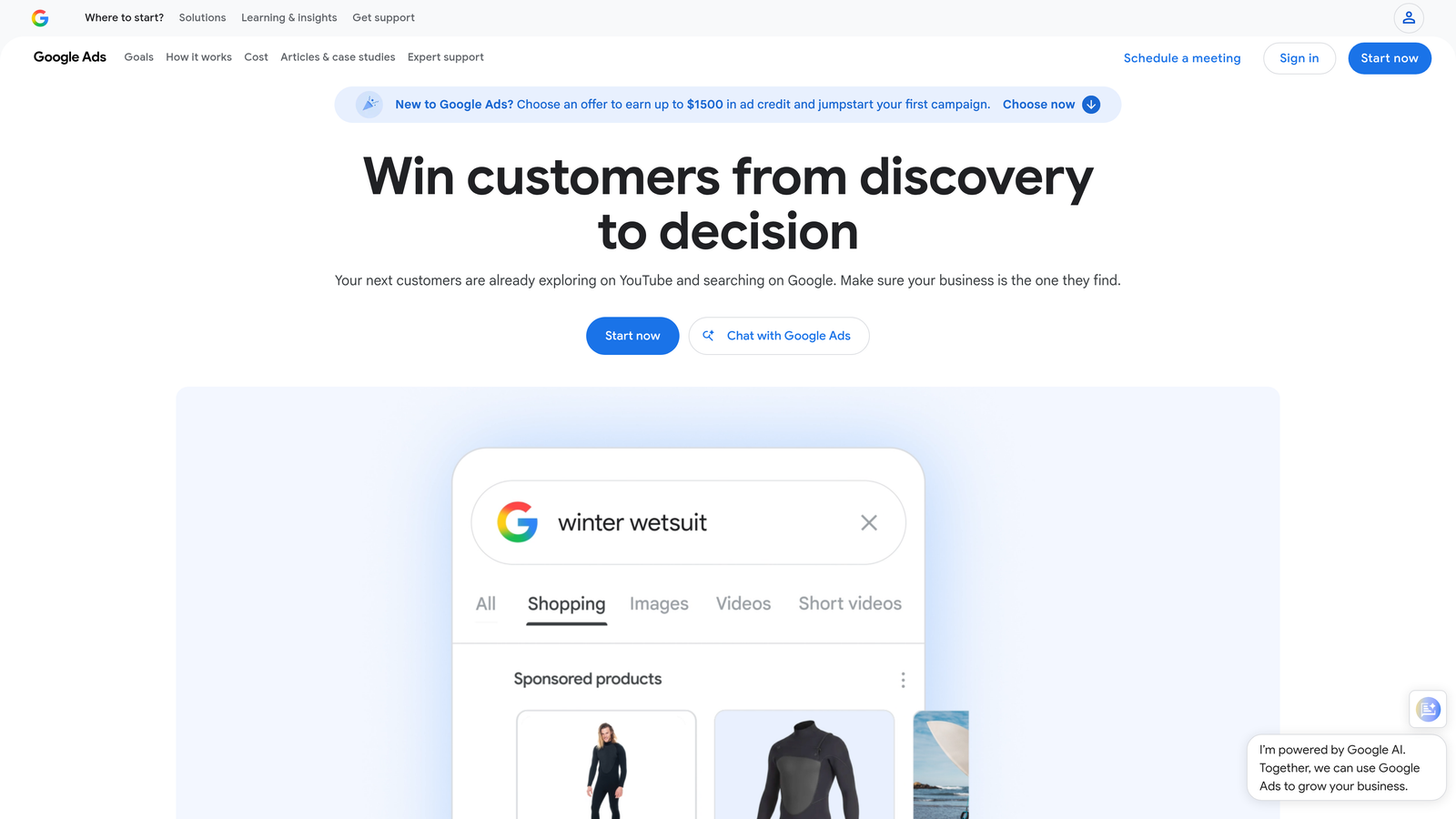
Google Ads Keyword Planner is Google's built-in keyword research tool, accessible directly from your Google Ads account at no additional cost.
Where This Tool Shines
Keyword Planner isn't purpose-built for negative keyword management, but it's genuinely useful for one specific phase of the work: identifying broad term categories to exclude before a campaign goes live. If you're launching a new campaign and want to map out the intent landscape around your core terms, Keyword Planner gives you a solid starting point.
The limitation is that it doesn't help you analyze live search term data or take action on what you find. Think of it as a research tool, not an optimization tool. It's the starting point, not the workflow.
Key Features
Free Access: Available to any Google Ads account holder with no subscription required.
Volume and Competition Data: Understand how often terms are searched and how competitive they are before you bid.
Broad Term Discovery: Surface related keyword clusters, which helps you identify categories to exclude from the start.
No Third-Party Setup: Everything lives inside your existing Google Ads account, so there's no onboarding friction.
Best For
Advertisers who want a free baseline tool for pre-launch negative keyword planning. It's also useful for newer advertisers who are still mapping out the keyword landscape before building their exclusion strategy.
Pricing
Free with any Google Ads account. No subscription required.
3. SEMrush
Best for: Advertisers who want competitor ad intelligence alongside their keyword research.
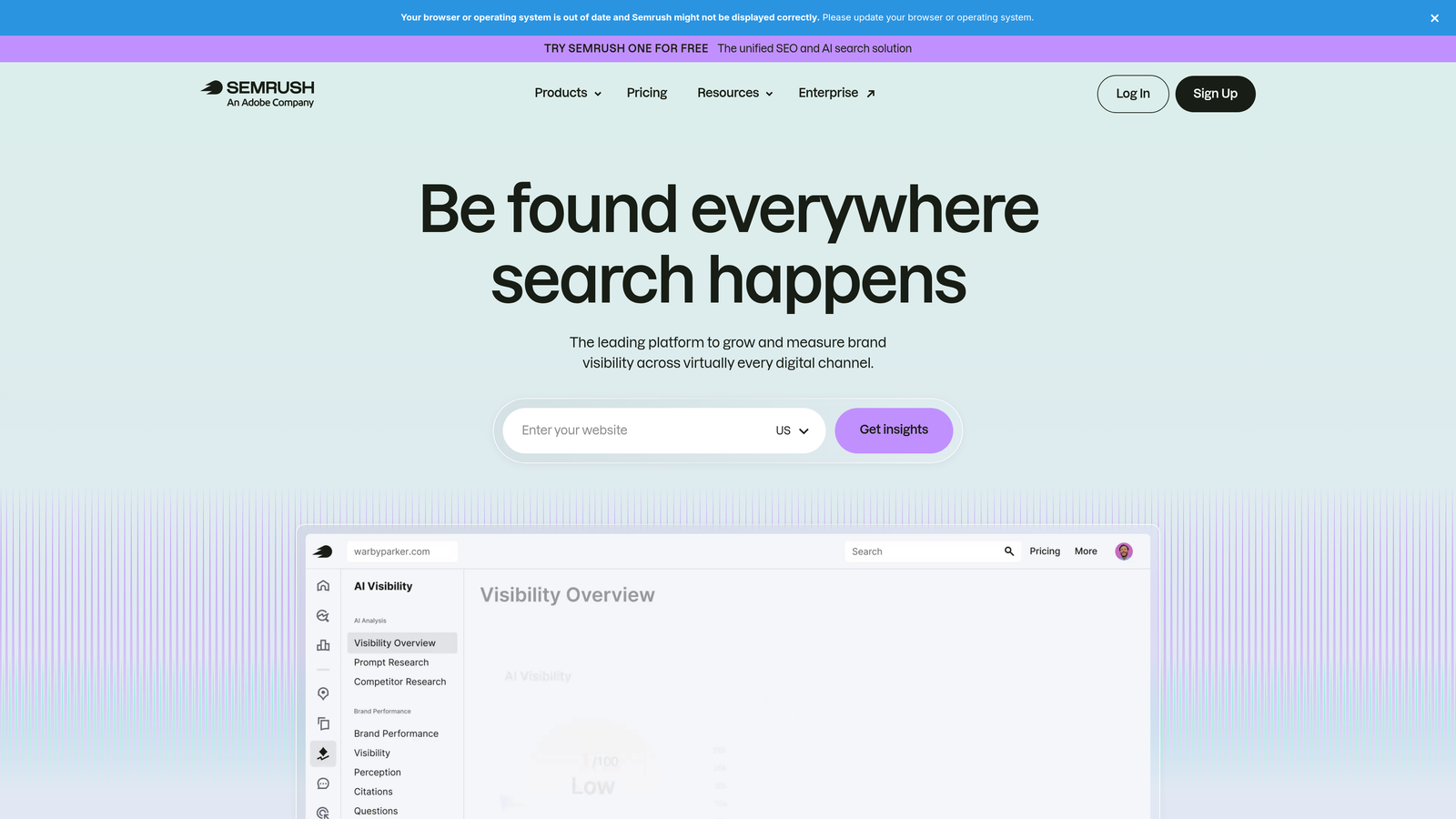
SEMrush is a comprehensive SEO and PPC research platform with keyword gap analysis and competitor ad intelligence useful for building negative keyword strategies.
Where This Tool Shines
SEMrush's strength in the negative keyword context is its competitor intelligence layer. You can see what terms competitors are bidding on, identify intent mismatches, and use the keyword gap tool to flag irrelevant term clusters before they drain your budget. This is especially useful for advertisers entering competitive markets where the search intent landscape is complex.
The caveat: negative keyword management is a secondary use case within a much larger platform. You're paying for a full SEO and PPC suite, and if your only goal is tighter negative keyword lists, there are more cost-effective options on this list.
Key Features
PPC Keyword Research with Intent Filtering: Filter keywords by intent to quickly identify informational queries that shouldn't trigger your ads.
Competitor Ad Keyword Analysis: See which terms your competitors are targeting, which helps you understand what to exclude from your own campaigns.
Keyword Gap Tool: Identify irrelevant term clusters by comparing your keyword strategy against competitors.
Integrated SEO and Paid Search Data: Useful for advertisers who manage both organic and paid search in the same workflow.
Best For
Agencies and in-house teams that already need a full SEO platform and want to leverage that investment for PPC research. Less ideal as a standalone negative keyword tool given the pricing.
Pricing
Paid plans start around $139.95/month. Verify current pricing at semrush.com before subscribing.
4. SpyFu
Best for: Budget-conscious advertisers who want competitor keyword intelligence without a full PPC suite.
SpyFu is a competitor intelligence tool that helps advertisers identify which keywords rivals are bidding on and which ones they've abandoned, useful for negative keyword research.

Where This Tool Shines
SpyFu's historical keyword data is where it earns its place on this list. By looking at which terms competitors have tested and stopped bidding on, you can infer which queries drove poor results and preemptively add similar terms to your negative lists. It's a smarter way to build exclusions than waiting for your own data to accumulate.
Like SEMrush, SpyFu isn't purpose-built for negative keyword management. But at a significantly lower price point, it's a reasonable research companion for advertisers who want competitor context without the full-platform investment.
Key Features
Competitor PPC Keyword History: See which keywords competitors have bid on over time, including terms they've since dropped.
Negative Keyword Suggestions: Surface potential exclusions based on competitor patterns and abandoned keyword strategies.
Keyword Grouping and Filtering: Organize terms into clusters to identify irrelevant intent categories more easily.
Affordable Entry-Level Pricing: Accessible for freelancers and small agencies that can't justify a full enterprise PPC platform.
Best For
Freelancers and small agencies doing competitive research as part of their campaign setup process. Also useful for advertisers in industries where competitor bidding patterns are a reliable signal for intent quality.
Pricing
Plans start around $39/month. Verify current pricing at spyfu.com before subscribing.
5. Optmyzr
Best for: Agencies managing high-volume accounts who need automated negative keyword workflows at scale.
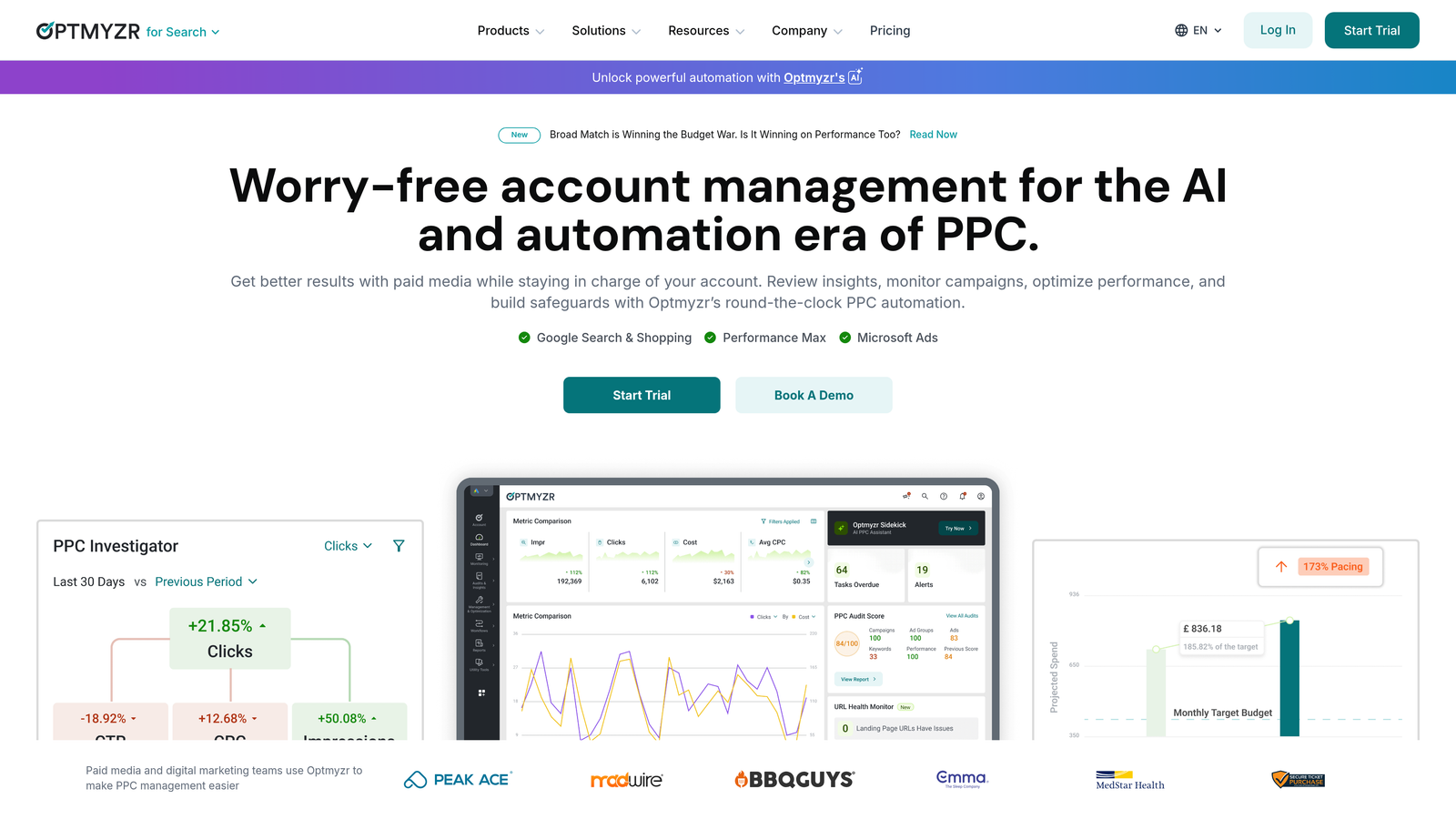
Optmyzr is a PPC management platform built for agencies and high-volume advertisers, with rule-based automation for negative keyword additions and search term analysis.
Where This Tool Shines
The mistake most agencies make is treating negative keyword management as a manual, one-account-at-a-time task. Optmyzr is built to fix that. Its rule-based automation lets you define conditions for negative keyword additions across multiple accounts simultaneously, which is a significant time saver when you're managing dozens of clients.
The reporting layer is also worth noting. When you need to communicate optimization work to clients, Optmyzr's reporting tools make it easy to show the impact of negative keyword changes without building custom reports from scratch.
Key Features
Automated Negative Keyword Recommendations: Rule-based logic surfaces exclusion candidates based on performance thresholds you define.
Cross-Account Search Term Analysis: Analyze search term data across multiple client accounts from a single dashboard.
One-Click Bulk Optimization Workflows: Apply negative keyword changes in bulk without processing each account individually.
Multi-Account Management Dashboard: Central view across all managed accounts, designed for agency-scale operations.
Client Reporting Tools: Generate reports that clearly communicate the impact of optimization work to clients.
Best For
PPC agencies managing multiple accounts with significant monthly ad spend. The automation features justify the cost at scale, but solo advertisers managing one or two accounts will likely find it more platform than they need.
Pricing
Pricing is tiered by ad spend. Verify current plans at optmyzr.com before subscribing.
6. WordStream Advisor
Best for: Small business owners and less technical advertisers who want guided optimization recommendations.
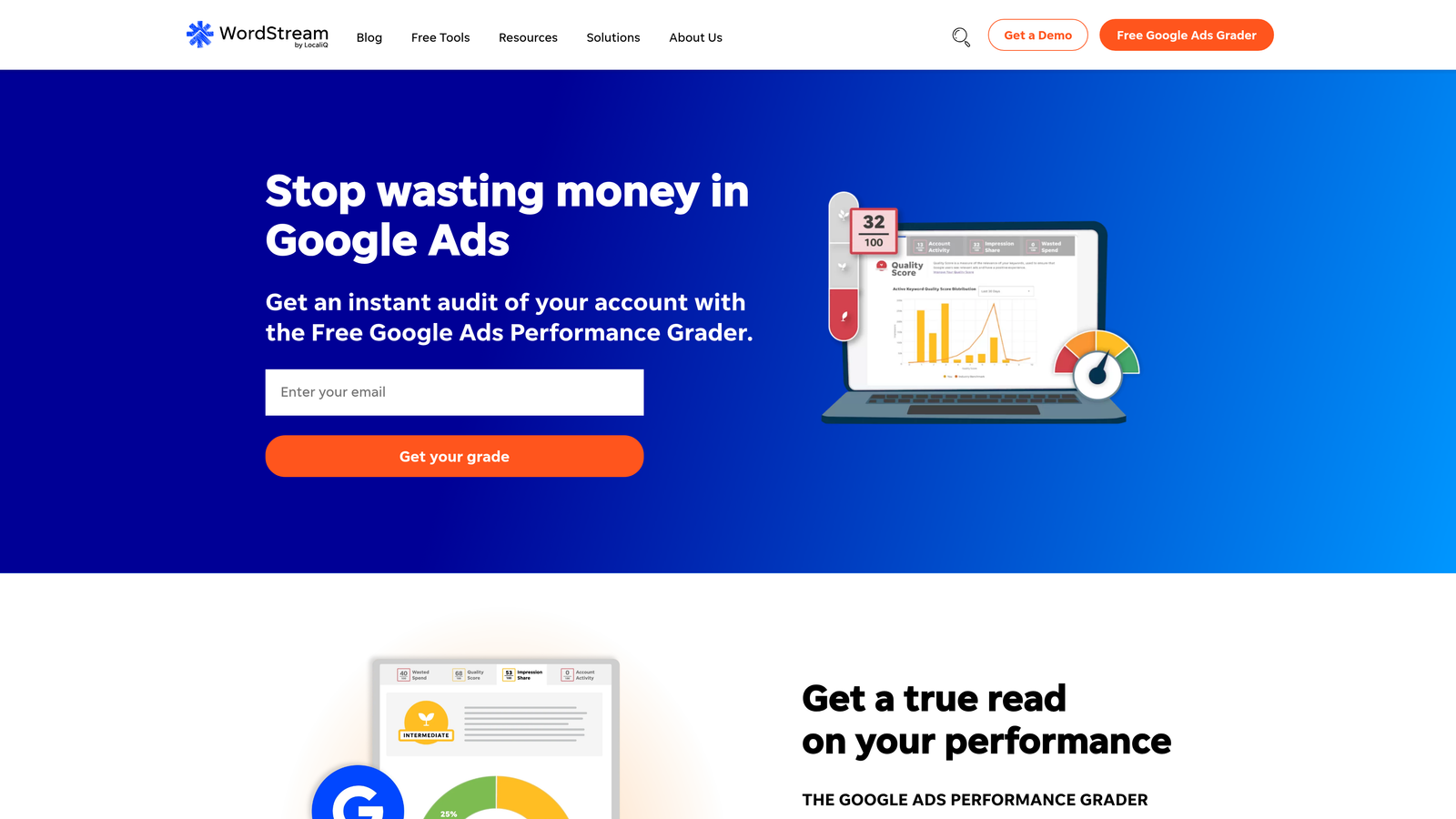
WordStream Advisor is a guided PPC management tool that surfaces weekly optimization recommendations including negative keyword suggestions, designed for small businesses and less technical advertisers.
Where This Tool Shines
WordStream's "Weekly PPC Workout" is the defining feature here. It walks you through a structured optimization session that includes negative keyword prompts alongside other recommendations. For advertisers who don't have a systematic review process, this guided workflow is genuinely helpful.
What usually happens with less experienced advertisers is that negative keyword management gets skipped because it feels overwhelming. WordStream removes that friction by surfacing specific recommendations and walking you through them step by step.
Key Features
Weekly 20-Minute Optimization Workflow: Structured session that surfaces negative keyword prompts alongside other account recommendations.
Automated Search Term Analysis: Identifies problematic search terms and flags them for review without requiring manual data pulls.
Beginner-Friendly Interface: Designed for advertisers who don't have deep PPC expertise but still need to manage their accounts effectively.
Cross-Platform Support: Works with both Google Ads and Microsoft Ads, useful for advertisers running campaigns on both networks.
Best For
Small business owners managing their own Google Ads accounts without dedicated PPC support. Also useful for marketing generalists who handle paid search as one of many responsibilities.
Pricing
Pricing varies by plan. Verify current pricing at wordstream.com before subscribing.
7. Ahrefs
Best for: SEO-focused teams who want to use keyword intent data for pre-campaign negative keyword planning.
Ahrefs is a leading SEO platform with a large keyword database and intent filtering tools useful for identifying irrelevant search intent clusters before campaigns launch.
Where This Tool Shines
Ahrefs earns its spot here for a specific use case: pre-launch negative keyword research. Its keyword database is one of the largest available, and the intent filtering lets you quickly separate informational queries from commercial ones. If you're building a new campaign and want to map out which intent categories to exclude from the start, Ahrefs gives you more depth than most dedicated PPC tools.
That said, Ahrefs is fundamentally an SEO platform. If you're already subscribing for organic search work, the PPC research capabilities are a strong bonus. If you're subscribing purely for negative keyword research, the price-to-value ratio is harder to justify.
Key Features
Massive Keyword Database: One of the largest keyword datasets available, giving you broad coverage when researching intent landscapes.
Intent Filtering: Separate informational, navigational, and commercial queries to identify which terms should be excluded before a campaign goes live.
Pre-Campaign Negative Keyword Planning: Identify irrelevant intent clusters during campaign setup rather than after budget has been wasted.
Exportable Keyword Lists: Export filtered keyword lists for direct use in Google Ads negative keyword management.
Best For
In-house SEO and PPC teams that share a toolset, and agencies that manage both organic and paid search for clients. Overkill as a standalone negative keyword tool for most advertisers.
Pricing
Plans start around $129/month. Verify current pricing at ahrefs.com before subscribing.
8. NegativeKeyword.io
Best for: Advertisers who want a simple, dedicated tool for generating negative keyword lists without a full PPC platform.
NegativeKeyword.io is a purpose-built tool focused exclusively on generating and managing negative keyword lists for Google Ads campaigns.
Where This Tool Shines
Sometimes the right tool is the one that does exactly one thing and does it cleanly. NegativeKeyword.io doesn't try to be a full PPC suite or an SEO platform. You give it your niche or seed terms, and it generates negative keyword suggestions focused on that context. There's no complex onboarding, no dashboard to learn, and no unrelated features cluttering the interface.
For advertisers who already have a primary PPC tool but want a dedicated layer for negative keyword list building, this fills that gap without adding significant cost or complexity.
Key Features
Dedicated Negative Keyword List Builder: The entire tool is built around one workflow, so there's no distraction or feature bloat.
Niche-Based Suggestion Generation: Input your core terms or industry and receive targeted negative keyword suggestions relevant to your context.
Simple, Focused Interface: No learning curve, no onboarding sessions, no features you'll never use.
Lightweight and Fast: Designed to get you from input to output quickly, without the overhead of a full platform.
Best For
Solo advertisers and freelancers who want a fast, no-frills tool for generating negative keyword lists. Also useful as a complement to a primary PPC platform when you want dedicated negative keyword functionality without paying for a full suite.
Pricing
Typically low-cost or freemium. Verify current pricing at negativekeyword.io before subscribing.
Which Negative Keyword Tool Is Right for You
Here's the honest answer: the best negative keyword tool subscription depends on your workflow, not your feature wishlist.
If you're a freelancer or agency team spending real time inside Google Ads' Search Terms Report, Keywordme is the most direct solution on this list. At $12/month, it's priced for individual contributors and small teams, and the in-interface workflow eliminates the friction that makes negative keyword management feel like a chore. You don't need to switch tabs, export files, or rebuild lists from scratch. You click, you exclude, you move on.
If you're running a larger agency and need automation across dozens of accounts, Optmyzr's rule-based workflows are worth the investment. If you're managing both SEO and PPC and already paying for a platform like SEMrush or Ahrefs, lean into the keyword intent data those tools offer for pre-campaign planning. And if you're a small business owner who needs guided recommendations rather than a manual workflow, WordStream's structured approach removes a lot of the guesswork.
For pure negative keyword list generation without any platform overhead, NegativeKeyword.io and Google Ads Keyword Planner both offer lightweight options at low or no cost.
The common thread across every account I've reviewed: advertisers who have a consistent, low-friction process for managing negatives spend less on irrelevant traffic and get more out of every optimization session. The tool that makes that process easiest for your specific workflow is the right one.
If you want to see what a faster negative keyword workflow looks like in practice, Start your free 7-day trial of Keywordme and run through your Search Terms Report without leaving Google Ads. No spreadsheets, no CSV exports, just clean and fast optimization right where you're already working.
.svg)