
9 Best Google Ads Software Tools and What They Cost Per Month in 2026
This guide breaks down the Google Ads software monthly cost of nine tools, from free options like Google Ads Editor to per-user and agency-focused platforms. It shows what each tool does and how its bill changes as you add users, accounts, or ad spend, so freelancers, agencies, and in-house marketers can pick the right fit.


Google Ads software pricing is a mess: flat per-user fees, tiered plans, spend-based bills, and "contact sales" pages. This list is for freelancers, agency owners, and in-house marketers who want to know what each tool does and how its bill behaves. Tools were chosen for how clearly the pricing is published, how well they fit solo work versus agency work, and how the cost changes as you add users, accounts, or spend. They do different jobs, so treat this as a menu, not a ranking of like-for-like products.
Quick Comparison: Monthly Cost and Best Fit
- Keywordme: freelancers and agencies cleaning up search terms; $12/month per user; works inside the native Search Terms Report with no exports.
- Google Ads Editor: advertisers making large structural changes on no budget; free; offline drafts you review before posting.
- Optmyzr: agencies and in-house teams with many accounts; see website; broad rule-based automation across optimization tasks.
- WordStream by LocaliQ: small business owners running their own campaigns; see website; guided, beginner-friendly recommendations.
- Adalysis: teams wanting continuous audits and ad testing; see website; automated ad-testing and account monitoring.
- Swydo: agencies needing polished client reports; see website; white-label reporting built for client delivery.
- Google Ads Scripts: technical advertisers wanting custom automation; free; fully customizable JavaScript automation inside Google Ads.
- Semrush: marketers who need PPC research alongside SEO; see website; competitor ad and keyword intelligence next to SEO data.
- Looker Studio: budget-conscious advertisers building their own reports; free core product; fully customizable dashboards with a native Google Ads connector.
1. Keywordme
Keywordme is our own product, so weigh this section with that in mind. It's a Chrome extension that adds one-click actions to the Search Terms Report inside Google Ads. It's built for people who spend a lot of their week reading search terms (the actual queries people typed) and deciding which become keywords and which become negative keywords (terms you block so ads stop showing for them).
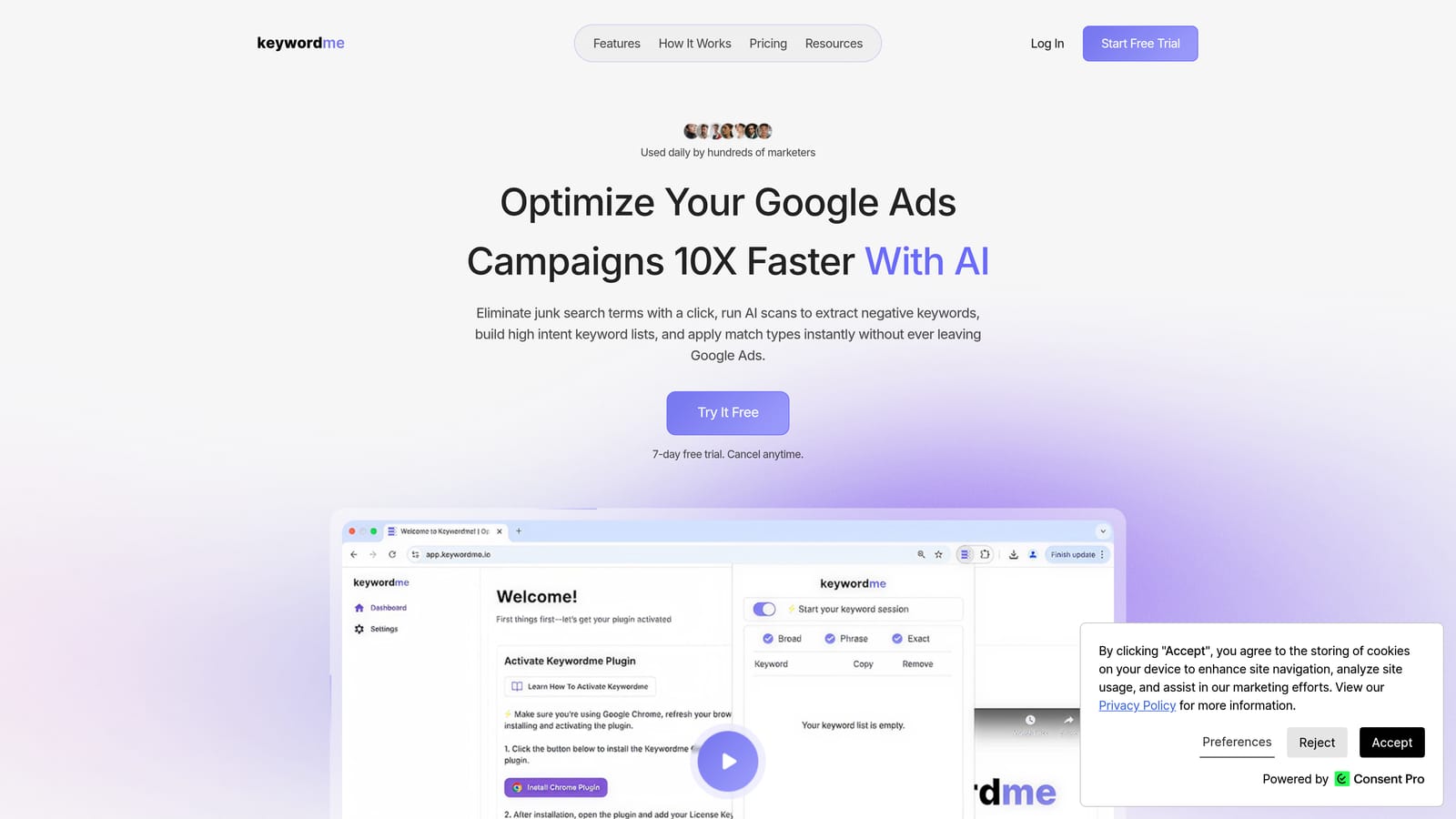
What sets it apart on this list is where it lives. You don't export a report, sort it in a spreadsheet, and upload changes. You work in the native report and click.
- Add a search term as a negative keyword in one click, so junk queries stop costing you.
- Add a search term as a keyword with the match type you choose, instead of retyping it elsewhere.
- Cluster keywords so related terms can be grouped and handled together.
- Edit in bulk when a cleanup touches many terms at once.
- Use multi-account and team support, which matters if several people manage client accounts.
Setup is installing the extension and opening Google Ads in Chrome. Whoever does the search term review day to day runs it, and there is no separate dashboard to learn. You make each change yourself, so you stay in control of what gets added or blocked.
The limits are plain. It focuses on the search term and keyword workflow. It isn't a bidding, reporting, or creative tool, and it needs Chrome. If your pain is client reports or ad copy testing, look further down the list.
Pricing is flat: $12/month per user, with a 7-day free trial. The bill moves only with the number of users, not ad spend or account count.
Best for: Freelancers and agencies who spend lots of time on search term cleanup.
2. Google Ads Editor
Google Ads Editor is Google's free desktop application for managing campaigns in bulk. You download your account data, make changes offline, review them, then post them back. It suits advertisers who restructure often: new ad groups, mass edits to bids or ads, or copying setups between campaigns and accounts.
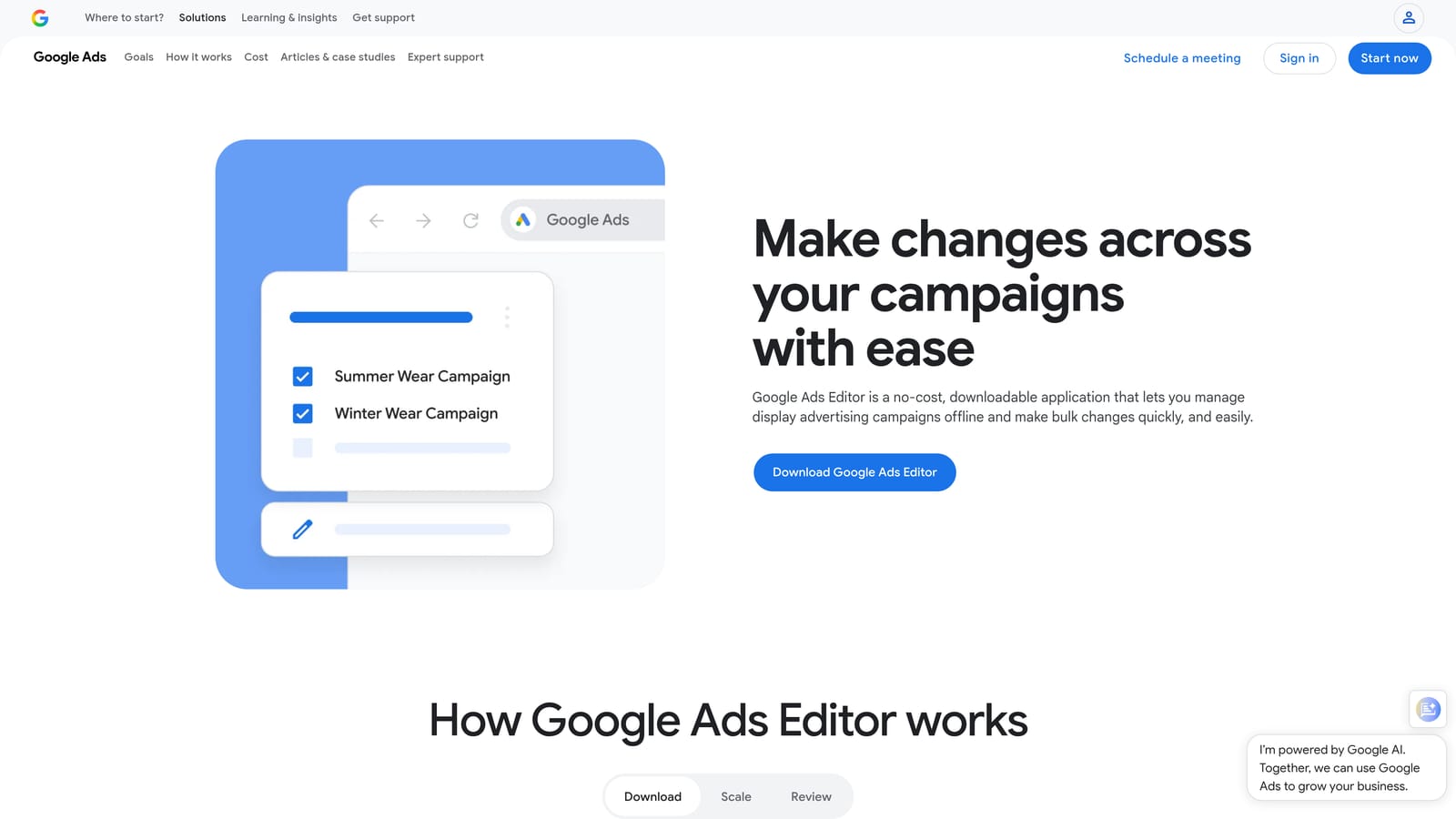
Its edge over every paid tool here is price plus official status. Nothing else on the list gives you offline drafting with a review step at zero cost.
- Make bulk edits across campaigns and accounts instead of clicking through each one.
- Draft changes offline and review them before posting, which catches mistakes before they go live.
- Copy and paste across campaigns to reuse structures quickly.
- Manage multiple accounts from one place.
It works only with Google Ads, and one person on your team typically owns big rebuilds. Setup is a download and a sign-in, though large accounts take a while to sync.
The limitation: it offers no recommendations, no reporting, and no search term analysis workflow. It edits what you tell it to edit; it won't tell you what needs editing. Free also means your time is the cost.
Pricing: free, with no tiers.
Best for: Advertisers doing large structural changes on a zero software budget.
3. Optmyzr
Optmyzr is a PPC management platform built around optimization tools, audits, and rule-based automation. It's aimed at agencies and in-house teams that manage many accounts and want repeatable processes rather than one-off fixes.
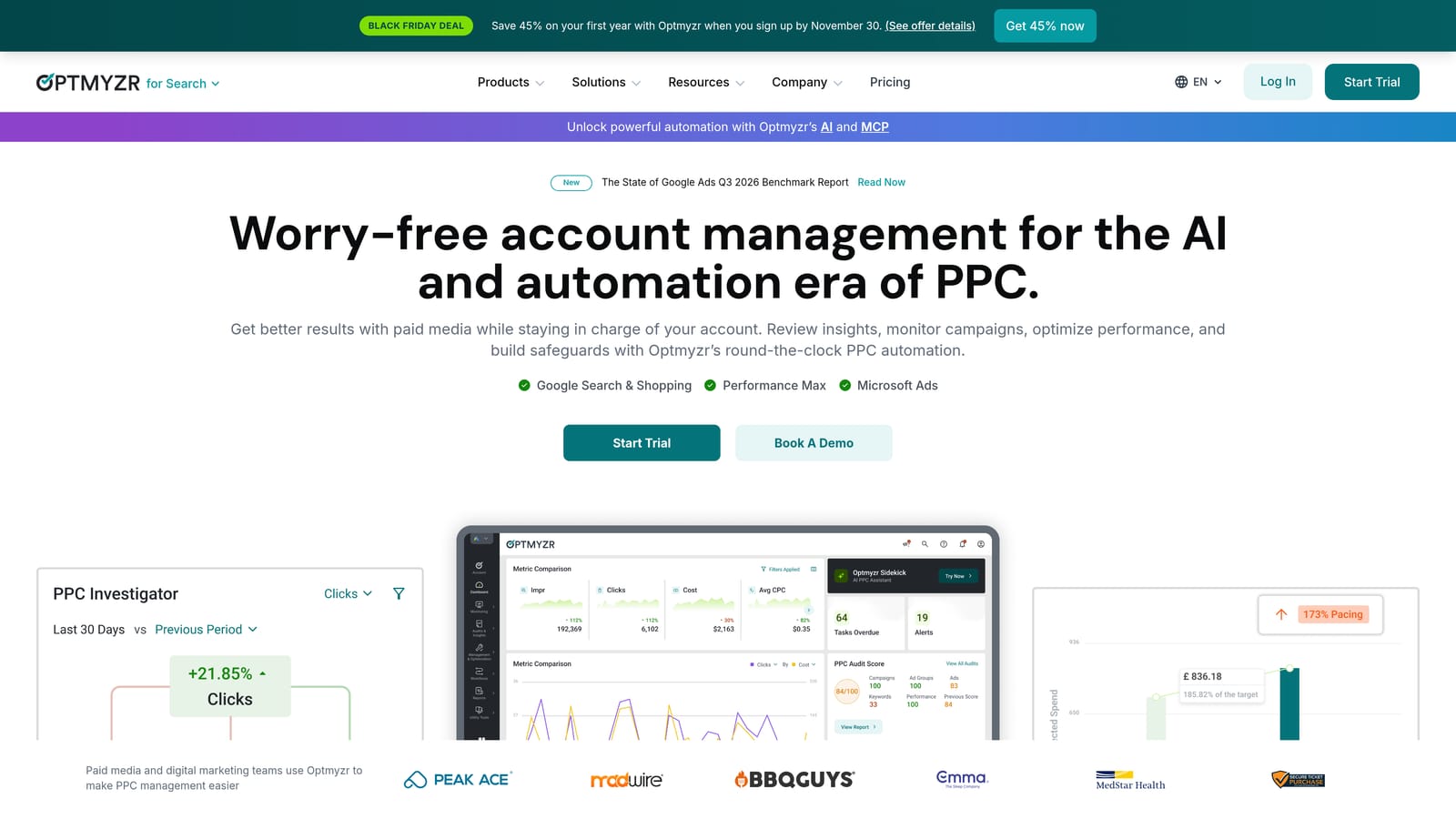
Where it stands apart is breadth. A rules engine across many optimization tasks means you can codify how your team works and apply it across accounts.
- Rule-based automation runs routine checks and adjustments you define, saving repetitive manual work.
- Account audits surface problems across accounts without a manual walkthrough.
- Bulk optimization tools apply changes across many campaigns at once.
- Reporting is built in, so you can show clients what changed.
It connects to Google Ads, Microsoft Advertising, and Meta Ads. Expect real setup effort: connecting accounts, deciding which rules to use, and tuning them. Someone on the team needs to own that.
The limitation is weight. It's heavier and costlier than a small solo account needs, and a freelancer with a handful of campaigns may never use most of it.
Pricing is tiered, and I haven't confirmed current figures, so check the pricing page on its website for the plan that fits your account count and spend as of November 2026.
Best for: Agencies and in-house teams managing many accounts with automation needs.
4. WordStream by LocaliQ
WordStream by LocaliQ offers Google Ads software and services for small businesses, with guided recommendations that walk you through what to improve. It's designed for owners who run their own campaigns and don't have a PPC specialist.
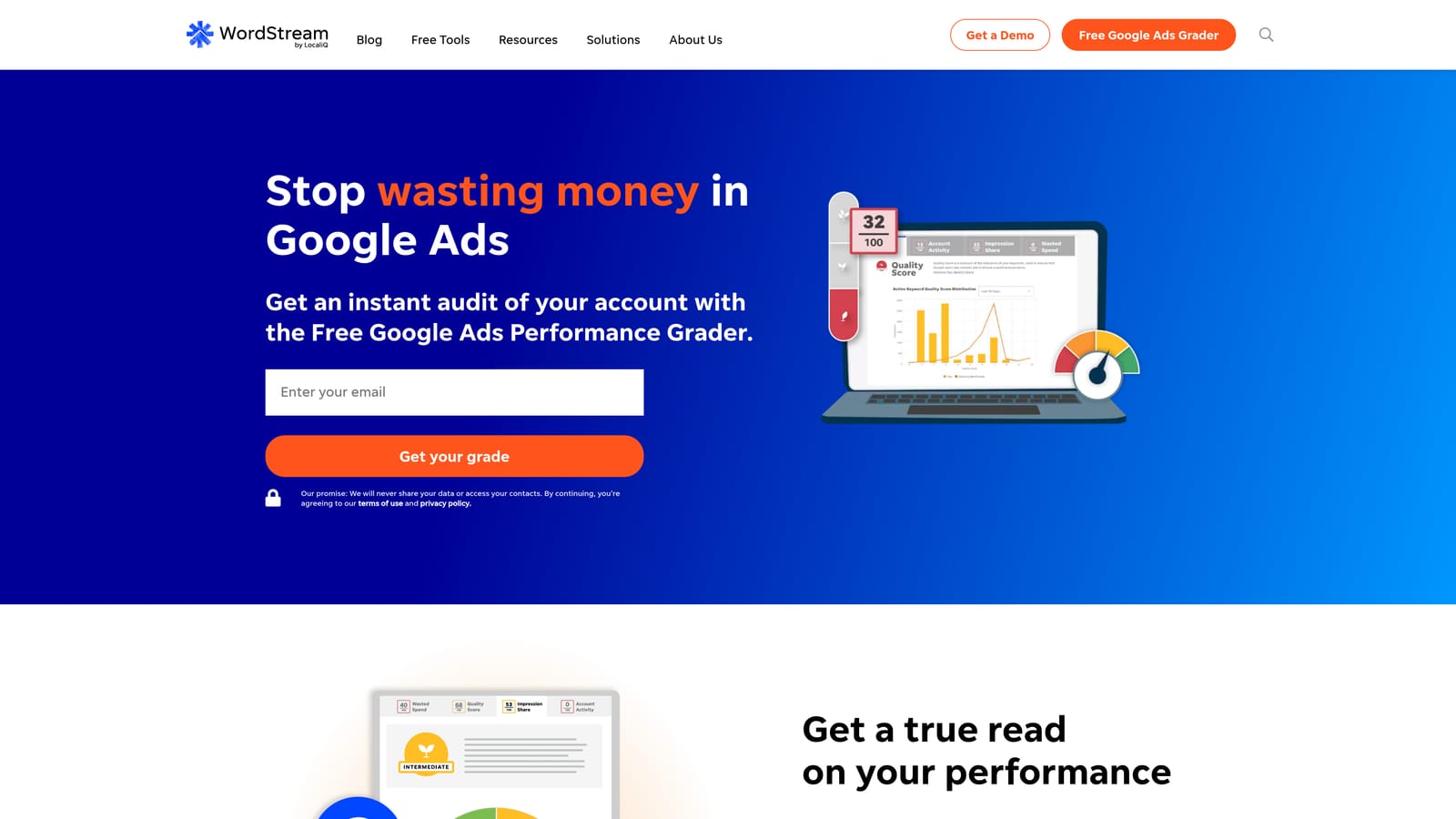
Its distinctive trait is the hand-holding. Where most tools here assume you know what you're looking for, this one tells you where to look.
- Guided optimization recommendations point you to the next change worth making.
- A performance grader gives a quick read on how an account is doing.
- An account management workflow keeps routine tasks in one place.
It connects to Google Ads, Microsoft Advertising, and Meta Ads. Setup is light, and the person running the business usually runs the tool.
The trade-off is control. Experienced practitioners and agencies may find it less granular, and pricing is less transparent for agency use. Because it also offers services, what you pay can depend on what you choose, so confirm exactly what's included.
Pricing: I couldn't confirm current numbers, so see the website for the latest, and ask what moves the price (such as ad spend or service level) before committing.
Best for: Small business owners running their own campaigns.
5. Adalysis
Adalysis is an auditing and testing platform for Google Ads. It watches your accounts, flags problems through automated alerts, and runs ad-testing tools so you know which copy is actually winning.
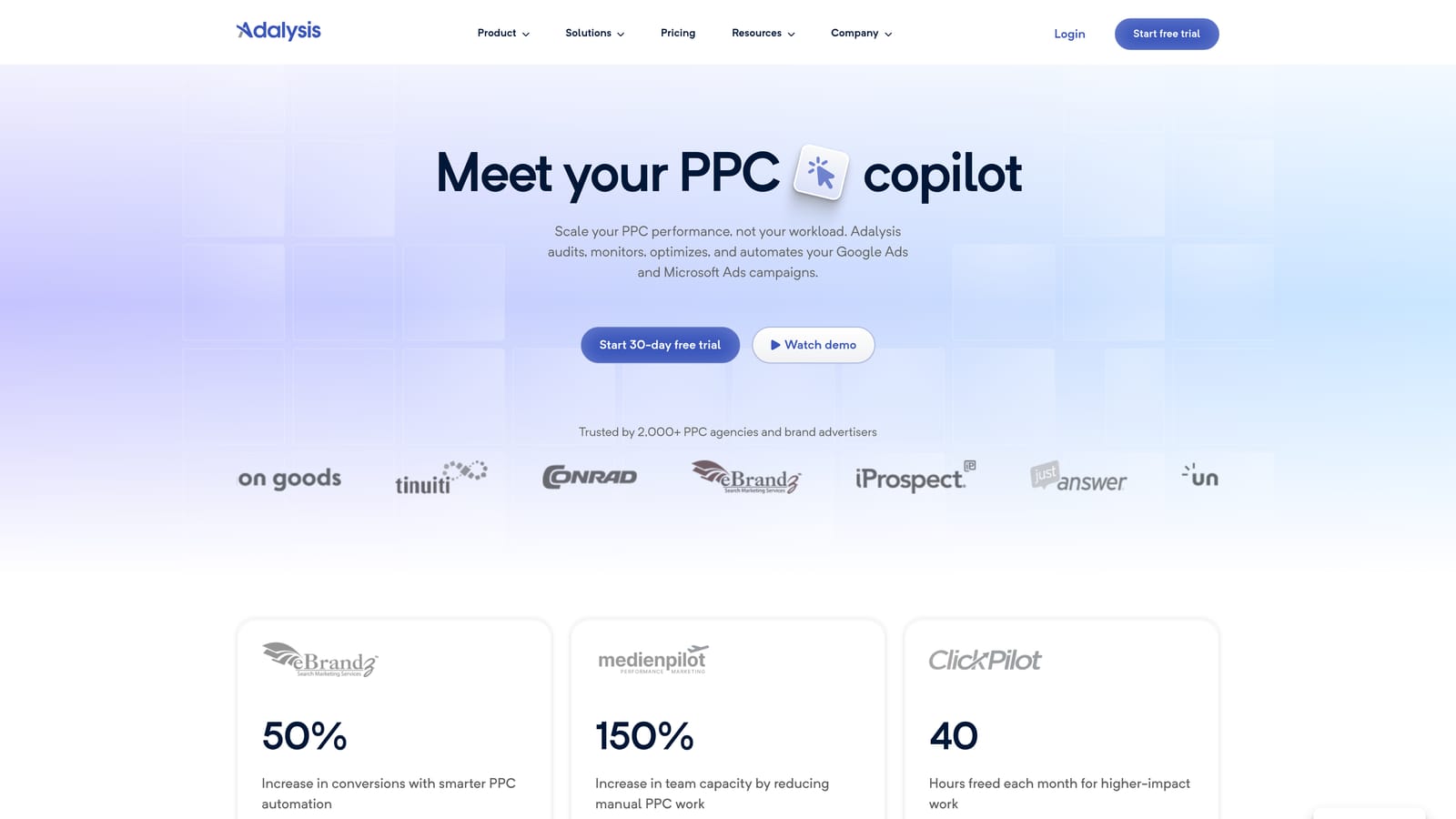
Its standout is continuous monitoring. Instead of auditing once a quarter, you get ongoing checks and a steady view of ad test results.
- Ad copy testing shows which ads outperform, so you stop guessing at what to pause.
- Account audits find issues across campaigns without a manual review.
- Automated alerts tell you when something changes or breaks.
- Quality checks catch hygiene problems before they cost you.
It works with Google Ads and Microsoft Advertising. Setup means connecting accounts and then actually reading the alerts, so someone has to own that routine.
Its limit is speed on hands-on work. It suits ongoing monitoring better than quick manual search term cleanup, so many teams pair it with a more hands-on tool rather than use it alone.
Pricing is tiered. Check the website for current plans as of November 2026, since I haven't confirmed figures here.
Best for: Teams that want continuous audits and ad testing.
6. Swydo
Swydo is a PPC reporting platform that turns ad data into white-label client reports. It's for agencies that need to send something polished to clients every month without rebuilding it each time.
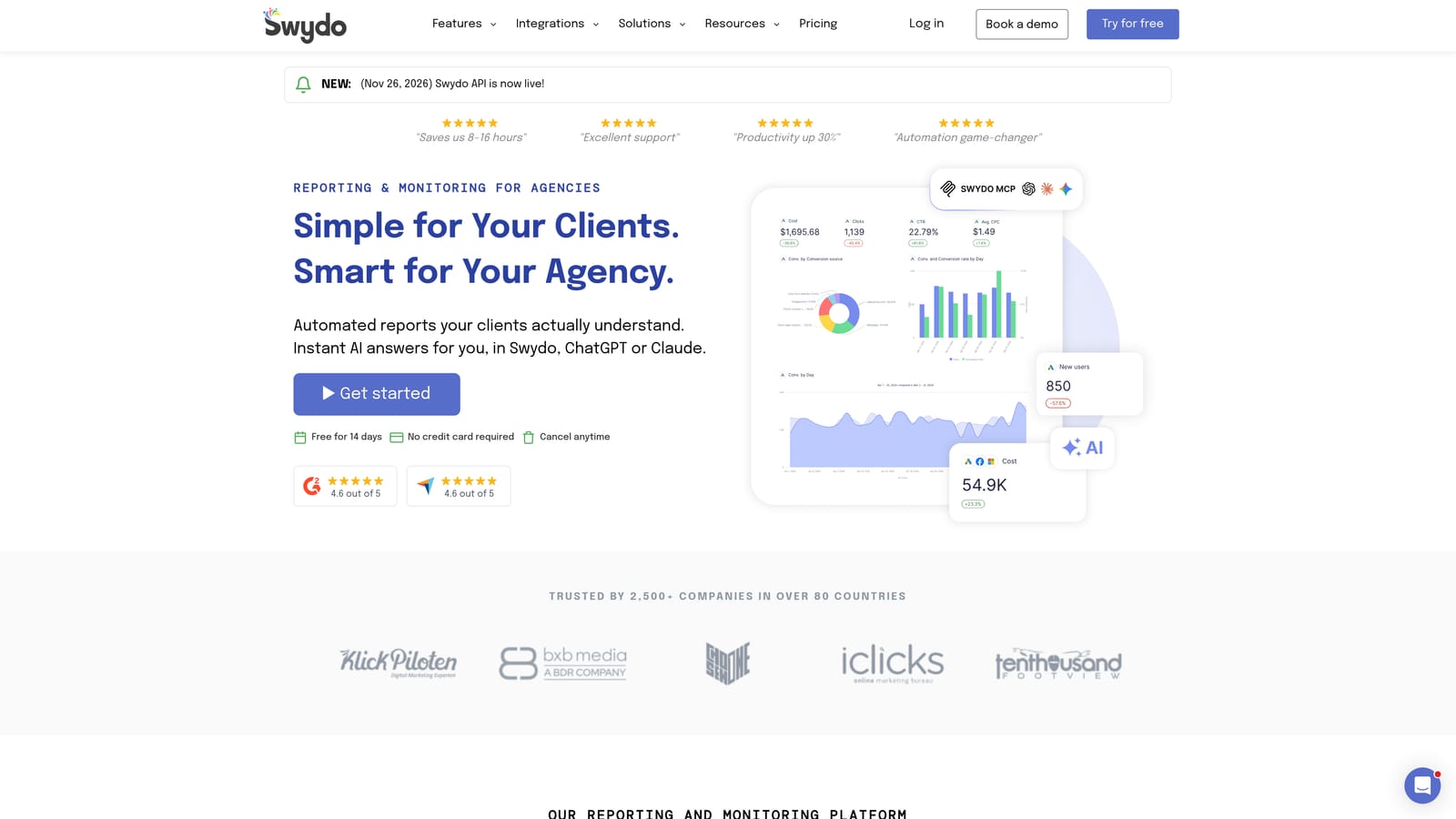
What it does that the others don't is client-ready presentation under your own branding, with templates that cut the monthly reporting grind.
- White-label reports carry your agency's branding, not the vendor's.
- Dashboards give clients a live view between reports.
- Multiple data sources let you combine channels in one report.
- Report templates save setup time across clients.
It connects to Google Ads, Meta Ads, and Google Analytics. Setup is mostly building and tweaking templates, usually handled by an account manager or analyst.
It is reporting only. It does not optimize campaigns, so you'll still need other tools for actual account work. If you don't send client reports, skip it.
Pricing is tiered. Plans often scale with how much you report on, but check the website for current details as of November 2026.
Best for: Agencies that need polished client reporting.
7. Google Ads Scripts
Google Ads Scripts is free JavaScript automation built into Google Ads. You write code that runs on a schedule to check accounts, send alerts, or handle recurring tasks.
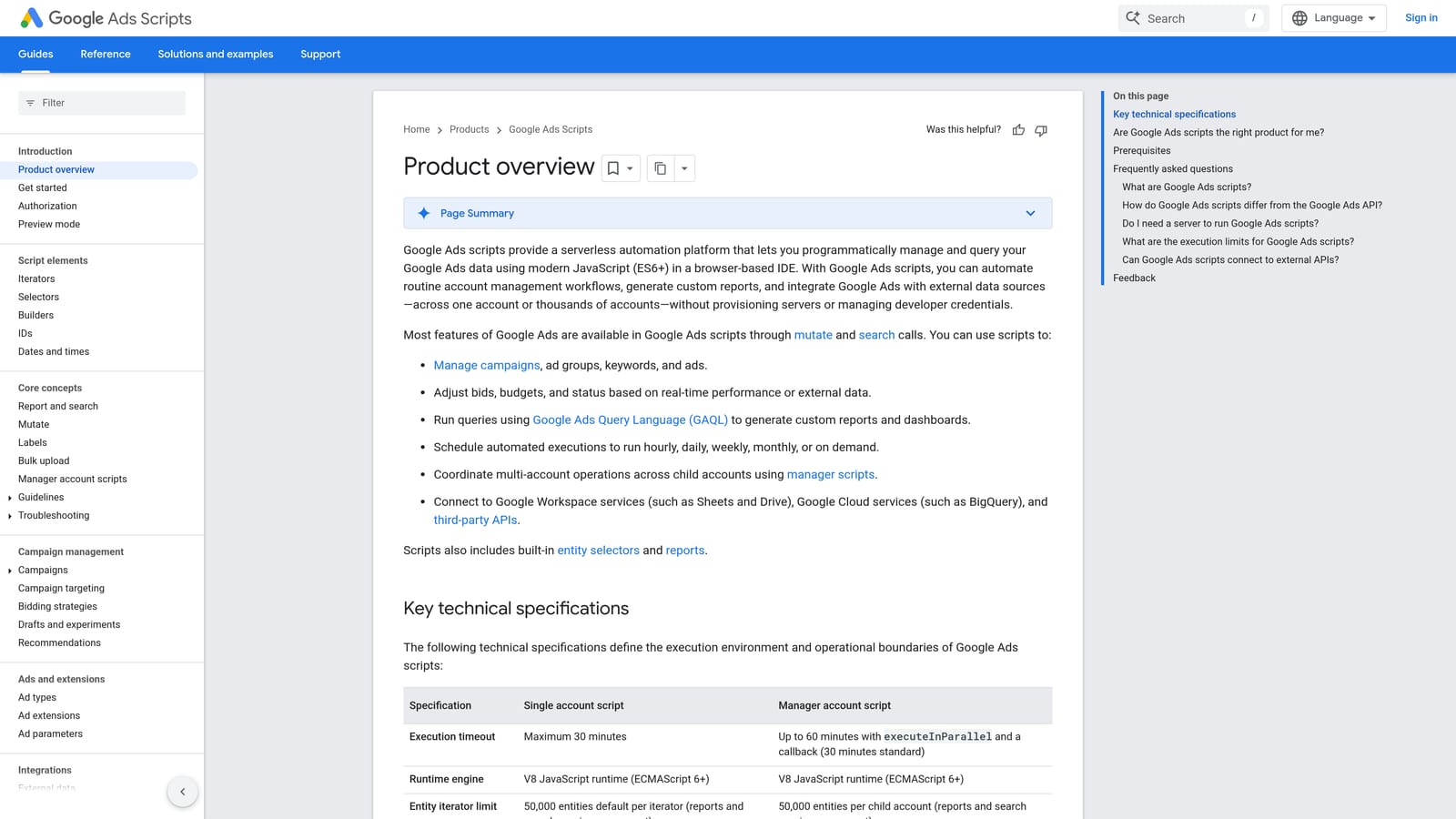
It's the most flexible option here, and free. If you can describe a task precisely, a script can probably do it.
- Custom automation lets you build exactly the check or task you need.
- Scheduled runs handle recurring work without you remembering it.
- Alerts and anomaly checks flag sudden changes such as spend spikes.
It works with Google Ads and can write to Google Sheets, which is handy for logs and simple reports. Setup is the catch: someone has to write or adapt the code and test it.
It requires coding skill and ongoing maintenance. Scripts can break when things change, and there's no support desk when they do. For non-technical teams, free here really means paying in time or developer hours.
Pricing: free.
Best for: Technical advertisers who want custom automation.
8. Semrush
Semrush is a broad marketing suite, and its PPC side covers keyword research and competitor advertising data. It's a research tool, not a place to manage your campaigns.
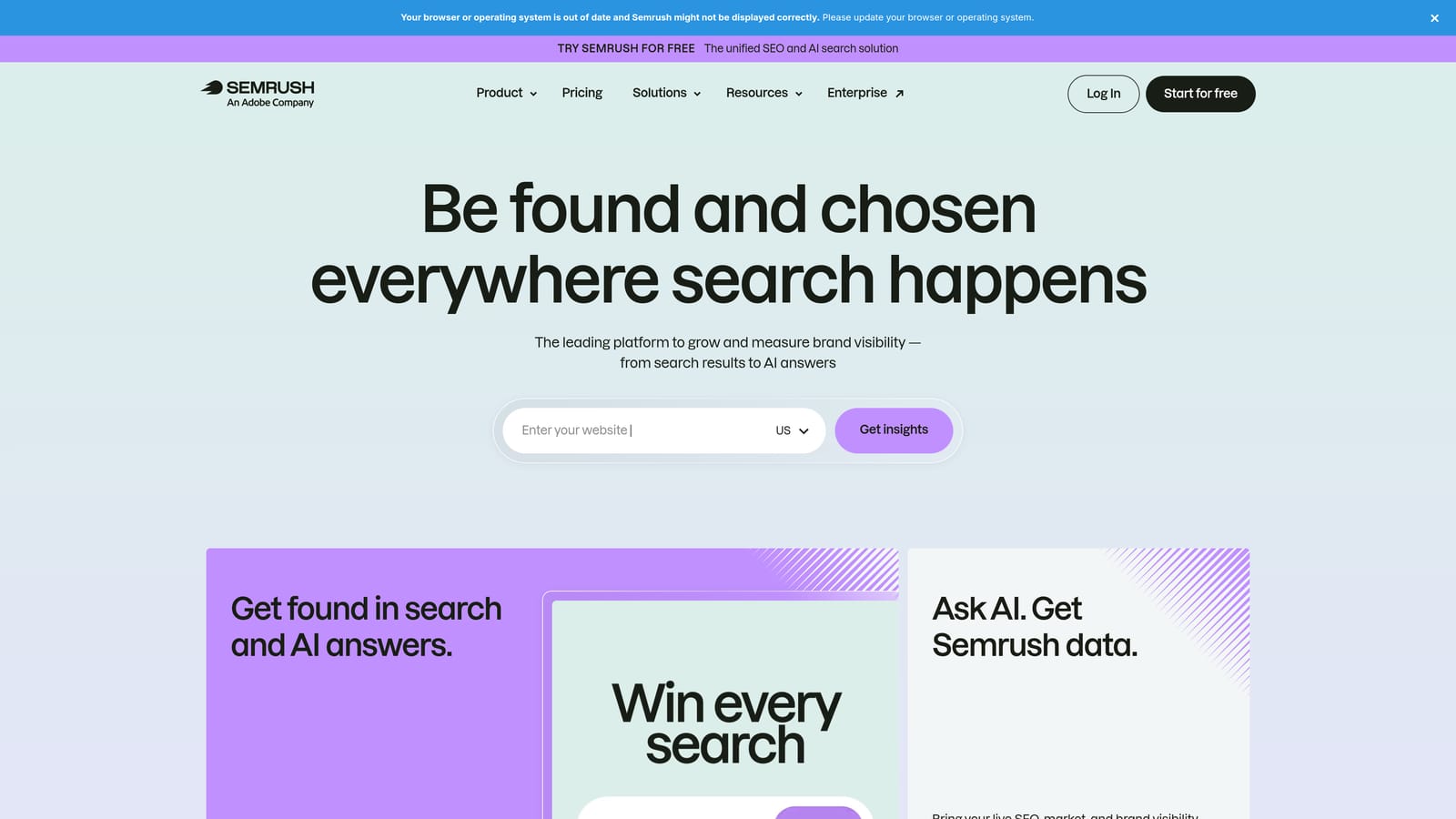
Its edge is seeing what competitors advertise on and how that sits alongside SEO data, which helps if you plan paid and organic together.
- PPC keyword research helps you find terms worth bidding on.
- Competitor ad research shows what rivals are running.
- Keyword planning organizes your targets before you build campaigns.
- The SEO toolkit lets you compare paid and organic opportunities.
It connects to Google Analytics, Google Search Console, and Looker Studio. Setup is light, though the suite is large and takes time to learn.
It does not edit Google Ads accounts, and it costs more than a PPC-only need warrants. If you only run ads and don't do SEO, you'd pay for a lot you won't touch.
Pricing is by monthly subscription tier. See the website for current plans as of November 2026.
Best for: Marketers who need PPC research alongside SEO.
9. Looker Studio
Looker Studio is Google's free dashboard and reporting tool, with a native Google Ads connector. You build your own dashboards and share them with clients or teammates.
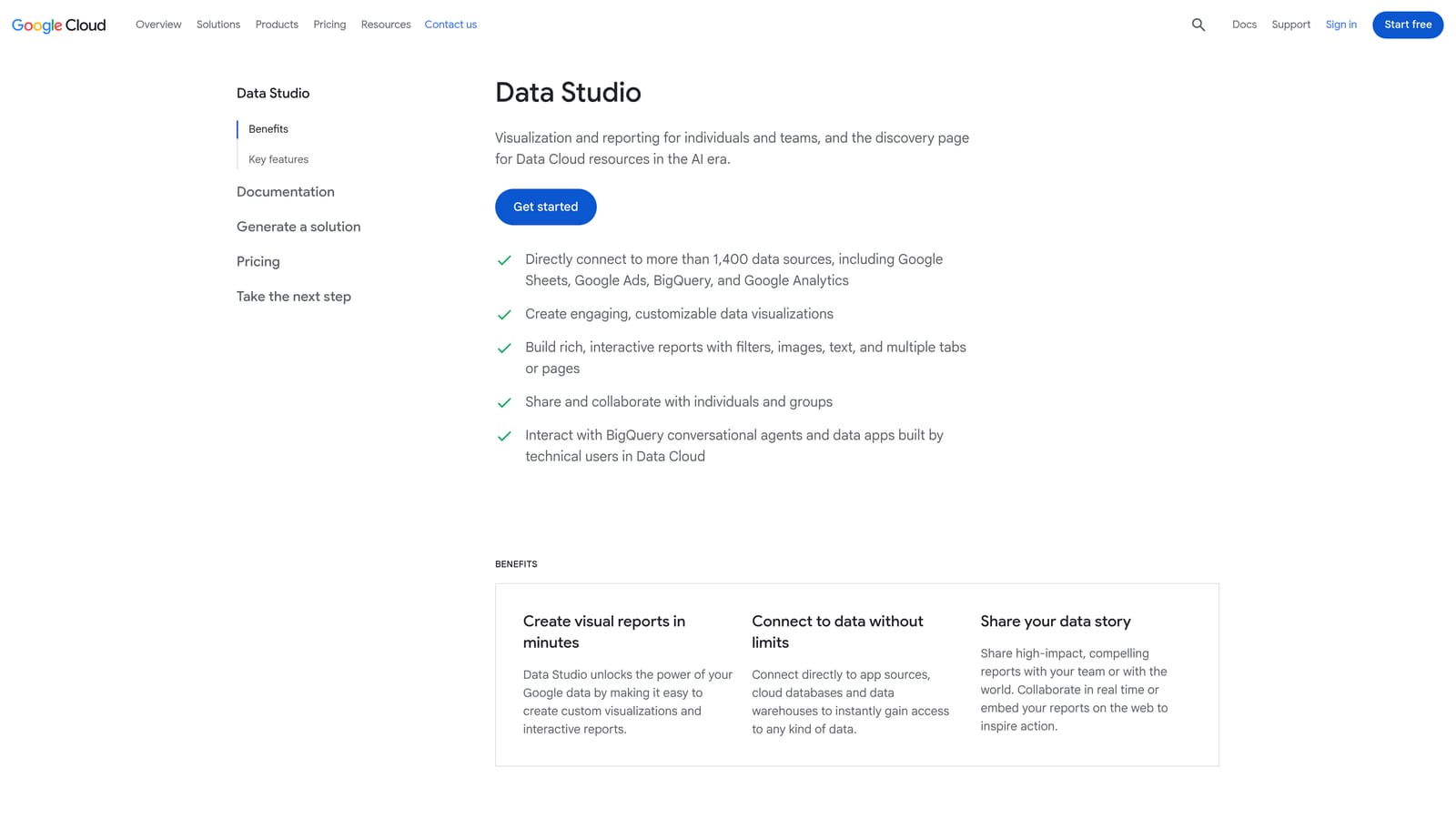
It's the cheapest route to custom reporting, and the layout is entirely yours.
- The native Google Ads connector pulls account data in without exports.
- Custom dashboards show the metrics you care about, not a preset view.
- Shareable reports let clients or colleagues view results with a link.
It also works with Google Analytics and Google Sheets. Setup is manual: you build the charts, and someone has to maintain them.
It takes no optimization actions. It shows data; it won't change your account. And building good reports takes real time, which is where "free" gets expensive for agencies with many clients.
Pricing: the core product is free. See the website for paid options.
Best for: Budget-conscious advertisers building their own reports.
Matching a Tool to Your Situation and Estimating the Real Bill
Most people need a combination, not one pick. A few standouts by situation:
- Solo advertiser: Keywordme for search term cleanup, plus free Google Ads Editor for bulk changes. That stack costs $12/month.
- Agency: Keywordme per team member for search term work, Optmyzr if you want automation across many accounts, and Swydo or Looker Studio for reporting.
- Small business owner: WordStream if you want guidance on what to fix next.
- Reporting-heavy client work: Swydo for polish, Looker Studio if you'd rather build it yourself for free.
To estimate your real monthly cost, start with how each vendor charges. Per-user pricing, like Keywordme's, scales with headcount. Tiered plans scale with accounts. Some plans scale with ad spend, so the bill grows as you do. Then add the hidden costs: free tools like Scripts and Looker Studio cost setup and maintenance time. Software cost is separate from ad spend, so budget it on its own line. Check each vendor's pricing page before you commit, since figures change.
Optimize Google Ads Campaigns 10X Faster. Without Leaving Your Account. Keywordme lets you remove junk search terms, build high-intent keyword lists, and apply match types instantly, right inside Google Ads. No spreadsheets, no switching tabs, just quick, seamless optimization. Start your free 7-day trial (then just $12/month) and take your Google Ads game to the next level.
