
8 Best Google Ads Keyword Tools and What They Cost Per Month in 2026
This guide breaks down the Google Ads keyword tool monthly cost for 8 popular tools, comparing pricing models from free planners to paid suites so PPC marketers can budget accurately before committing.


If you're pricing out Google Ads keyword tools, you already know the feature pages all sound similar. What actually varies, a lot, is how each vendor charges you: flat per-seat rates, tiered SaaS pricing bundled into a bigger suite, or quote-based packages tied to spend or account count. This list covers tools built for keyword research, search-term cleanup, or both, chosen for relevance to Google Ads workflows, pricing transparency, and real use among PPC marketers and agencies. Costs shift often, so treat every price below as a starting point to verify on the vendor's site before you commit.
Quick Comparison of Monthly Costs
- Keywordme: best for advertisers and agencies cleaning up search terms inside Google Ads; starting at $12/month per user; the only tool here that works one-click inside the native Search Terms Report.
- Google Keyword Planner: best for anyone needing free keyword ideas; $0/month; free and first-party with no signup beyond a Google Ads account.
- Semrush Keyword Magic Tool: best for teams sharing keyword data across SEO and PPC; starting around $139.95/month; bundles keyword intent data with a full SEO suite.
- Ahrefs: best for marketers wanting clickstream-based keyword volume; starting around $129/month; uses a data model distinct from Google's own estimates.
- SpyFu: best for small agencies wanting competitor keyword history; starting around $39/month; shows competitors' historic keywords and ad copy.
- Optmyzr: best for agencies managing many accounts; quote-based, historically from roughly $200+/month; pairs keyword cleanup with bid automation.
- WordStream Advisor (LocalIQ): best for SMBs wanting managed support; quote-based; bundles a keyword tool with hands-on account management.
- Ubersuggest: best for freelancers on a tight budget; starting around $12/month; one of the cheapest entry points for basic volume and CPC data.
1. Keywordme
Keywordme is a Chrome extension that adds one-click keyword and search-term optimization directly inside the Google Ads Search Terms Report. It's built for advertisers and agencies who are tired of exporting search-term data to a spreadsheet just to spot junk terms and add negatives.
What sets it apart on this list is where it lives: instead of a separate dashboard, Keywordme operates inside the interface you're already using to manage campaigns. That means no export, no re-upload, no switching tabs to apply what you find.
- Removes junk search terms from the Search Terms Report with a single click
- Builds negative keyword lists faster than manual review
- Applies match types instantly to selected terms
- Clusters related keywords to spot patterns in spend
- Supports multiple accounts and team members, useful for agencies juggling clients
Setup is minimal: install the extension, connect it to your Google Ads account, and it appears inside the Search Terms Report where day-to-day PPC managers already work. There's no separate login to remember or new dashboard to learn.
It's not a full keyword-discovery or competitor-research tool. If you need SERP feature data, backlink analysis, or broad SEO keyword mapping, you'll want a suite like Semrush or Ahrefs alongside it. Keywordme is scoped to the search-term and keyword-optimization workflow inside Google Ads, not keyword discovery from scratch.
Pricing is a flat $12/month per user (verify current pricing on keywordme.com), billed per seat rather than by account count or ad spend, which makes budgeting simple for solo advertisers and predictable for agencies scaling up team seats.
Best for: Agencies and solo advertisers who want faster search-term cleanup without leaving Google Ads.
2. Google Keyword Planner
Google Keyword Planner is Google's free, native keyword research tool, available inside any Google Ads account. It's the obvious starting point for advertisers building a keyword list before they've spent a dollar on paid tools.
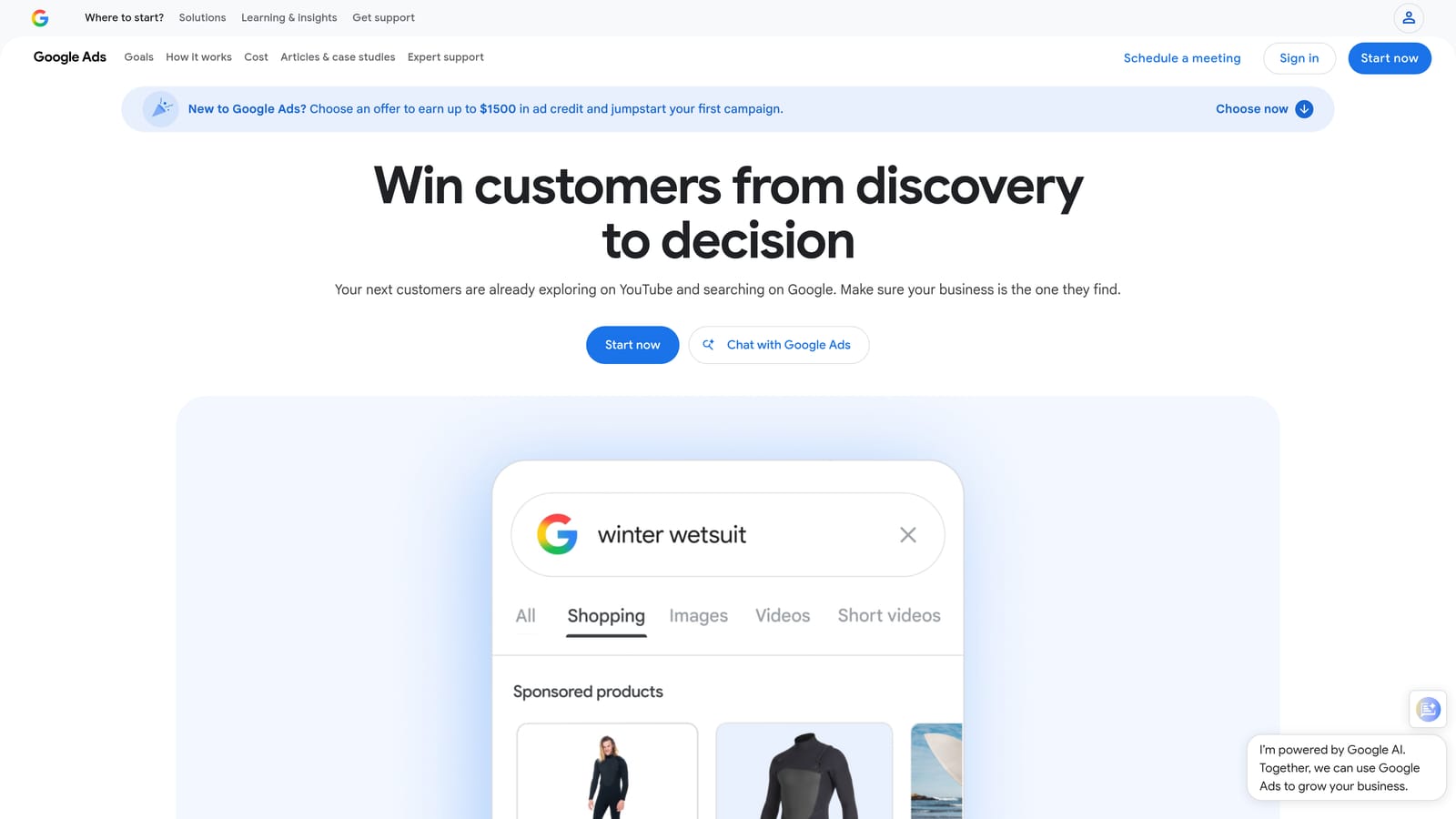
Its edge is simply that it's free and first-party. You're getting Google's own estimates for search volume and bids, pulled straight from the same data that powers the auction, with no separate signup or subscription.
- Generates keyword ideas from a seed term, URL, or product category
- Shows search volume as a range rather than an exact number
- Provides bid estimate ranges to gauge likely CPCs before launch
- Surfaces seasonal trend data to time campaigns around demand spikes
Anyone with access to a Google Ads account can use it, no dedicated software or billing setup required. That said, the volume ranges are broad, and Google has tightened access to exact figures over the years, so don't expect precision.
The tool has no search-term cleanup function, no negative keyword automation, and no competitor visibility. It answers "what keywords exist," not "what's actually triggering my ads and wasting spend," which is where a search-term tool comes in.
Pricing: $0/month, included with any Google Ads account. There's no tier to move up to; the tool is the same for every advertiser.
Best for: Advertisers who need free, first-party keyword ideas before layering on a paid tool.
3. Semrush Keyword Magic Tool
Semrush's Keyword Magic Tool is a keyword research module inside Semrush's larger SEO and competitive research suite. It's aimed at teams that need keyword data serving both organic and paid search, not just Google Ads.
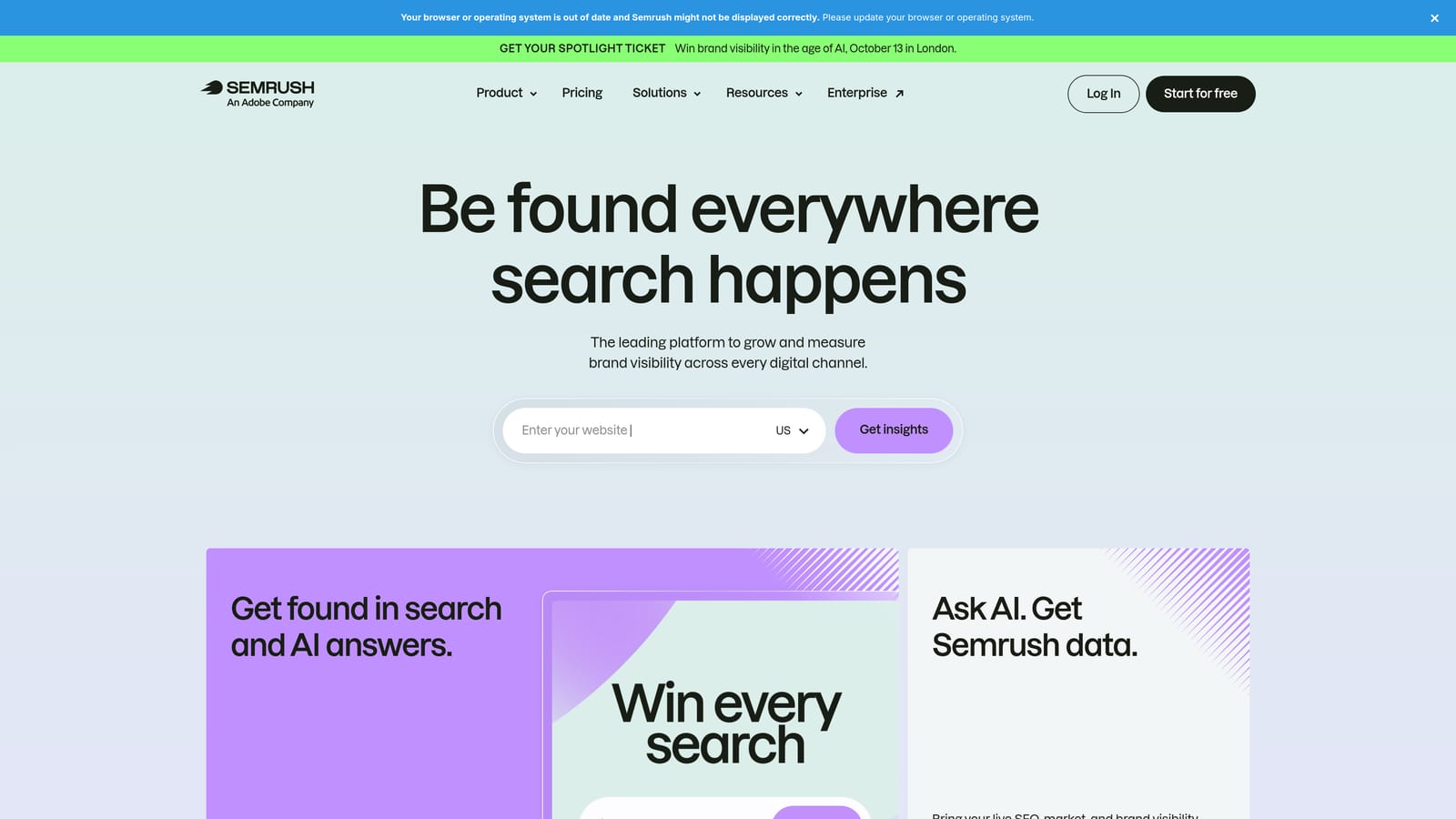
Setup involves creating a Semrush account and, if you want PPC-specific views, connecting your Google Ads account for export. Day-to-day, this tends to sit with a marketing generalist or SEO lead rather than a dedicated PPC manager, since the tool covers far more than ads.
- Pulls keyword ideas from a large database with intent labels attached
- Scores keyword difficulty to flag competitive terms
- Shows SERP feature visibility so you know what you're competing against organically
- Exports PPC-ready keyword lists for use in Google Ads
The real value here is having one subscription cover SEO content planning and PPC keyword research together. If your team already pays for Semrush for SEO, the PPC keyword data comes along for free in a sense.
If you only need Google Ads keyword and search-term work, though, this is expensive overkill. You're paying for a full suite (SEO tracking, backlink analysis, content tools) to get a keyword module you could get cheaper elsewhere.
Pricing starts around $139.95/month for the Pro plan as of this writing (verify current pricing on semrush.com), billed monthly or annually, with higher tiers unlocking more searches and users.
Best for: Teams that need keyword research shared across SEO and PPC, not just Google Ads cleanup.
4. Ahrefs
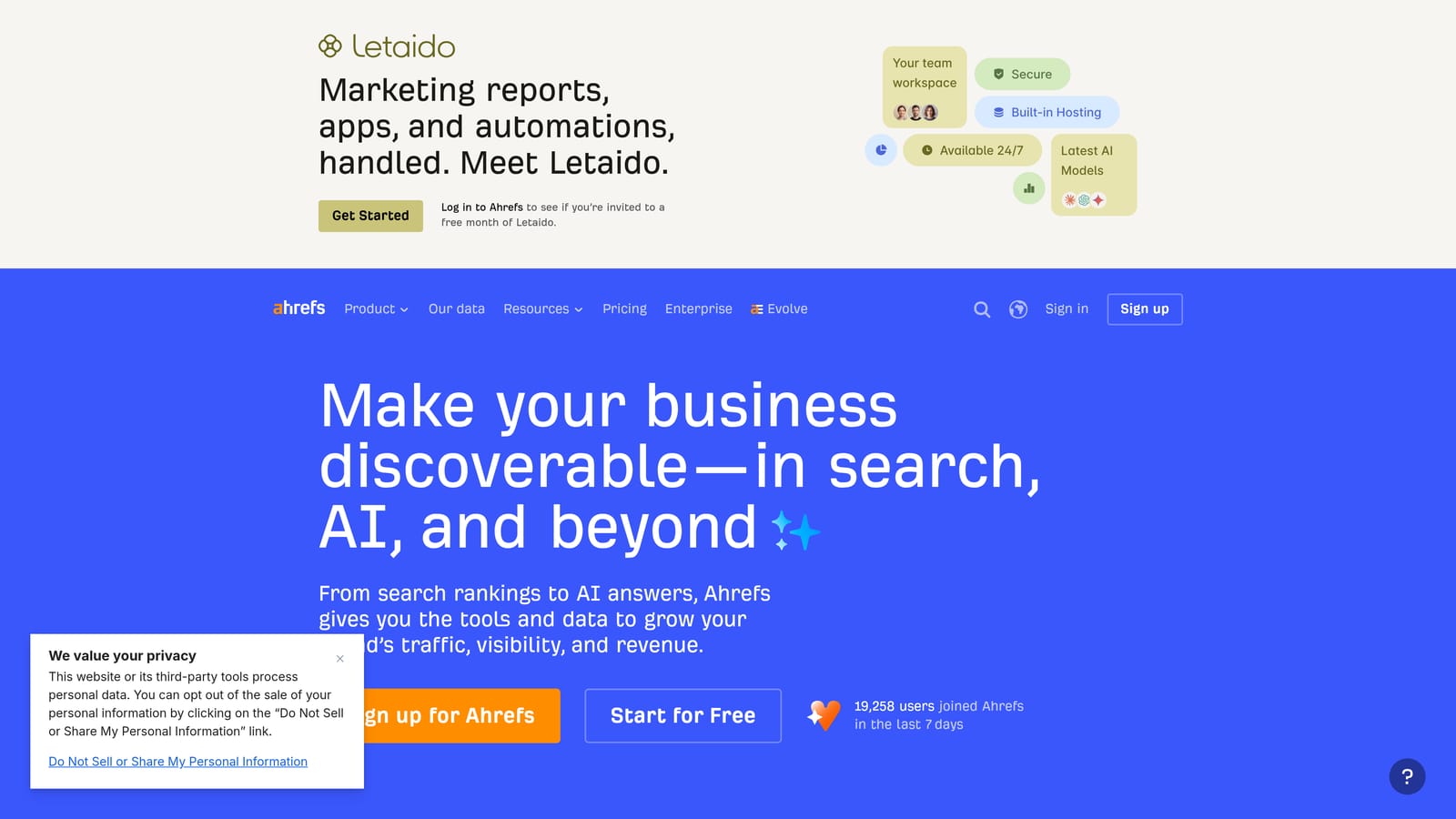
Ahrefs is best known as an SEO and backlink platform, but its Keywords Explorer module also supports PPC keyword research with volume and CPC data.
What makes it different
Ahrefs built its own clickstream-based data model for estimating keyword volume, rather than relying solely on Google's own reported figures. That gives you a second data point to sanity-check Keyword Planner's ranges, and it covers multiple search engines, not just Google.
- Keywords Explorer surfaces volume estimates built on clickstream data
- Covers keyword data across several search engines, useful if you run ads beyond Google
- Runs competitor keyword gap analysis to find terms rivals rank or bid on that you don't
- Includes CPC estimates alongside volume for early budget planning
Who it fits and who it doesn't
Ahrefs suits marketers who want keyword data spanning SEO and paid search research, typically an SEO specialist or a marketing manager overseeing both channels. It doesn't have any in-platform Google Ads actions: no applying match types, no clearing junk search terms, no negative keyword lists built from your account's own data. Pricing starts around $129/month for the Lite or Starter plan as of this writing (verify current pricing on ahrefs.com), scaling up by workspace and usage limits on higher tiers.
Best for: Marketers who want cross-channel keyword data beyond just Google Ads.
5. SpyFu
SpyFu's main draw is watching what competitors have done historically, not just what keywords exist. SpyFu shows competitors' historic keywords, ad copy, and rankings alongside its own keyword suggestions.
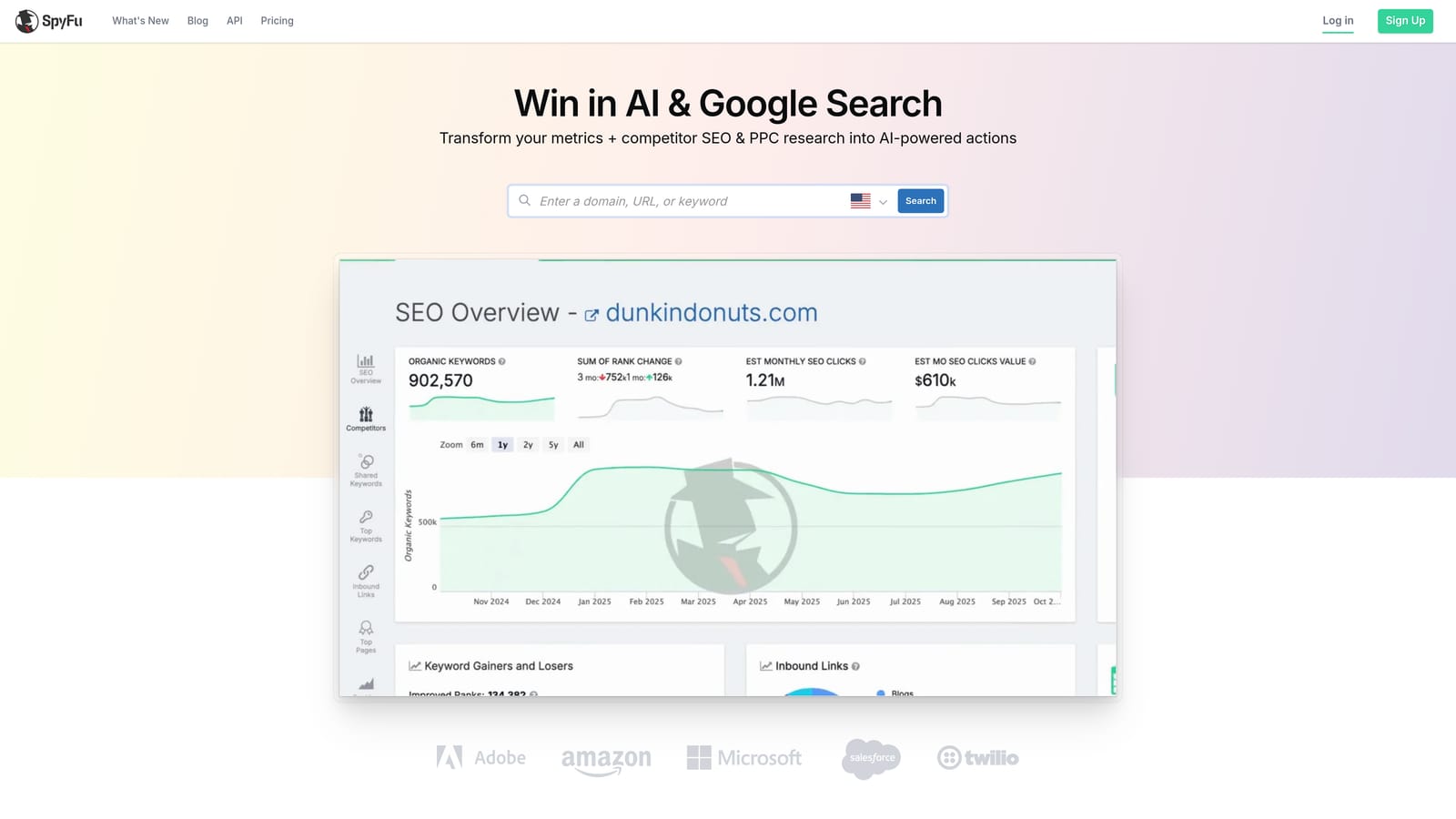
Compared to the larger suites on this list, SpyFu is priced lower and scoped narrower, built specifically around competitive intelligence rather than broad SEO or content tooling. That focus is its standout feature: you're paying mainly for "what is this competitor doing" rather than a general keyword database.
- Tracks competitor PPC keyword history over time
- Archives historical ad copy so you can see how competitors' messaging shifted
- Suggests keywords with CPC data attached
- Compares two domains side by side for shared and unique keyword overlap
Setup is simple, a single login with domain search, and it's typically run by whoever handles competitive research, often a solo PPC manager rather than a dedicated analyst.
The trade-off is data depth. SpyFu's database and refresh rate lag behind Semrush or Ahrefs, and it's not built as an ongoing search-term optimization tool. It tells you what to consider, not what to clean up in your live account.
Pricing starts around $39/month as of this writing (verify current pricing on spyfu.com), with tiers scaling by the number of domains tracked and export limits.
Best for: Solo advertisers or small agencies wanting an affordable look at competitor keyword strategy.
6. Optmyzr
Search-term cleanup is just one piece of what Optmyzr does. It's a PPC management platform that layers keyword and search-term optimization on top of bid automation and account management, aimed squarely at agencies rather than single-account advertisers.
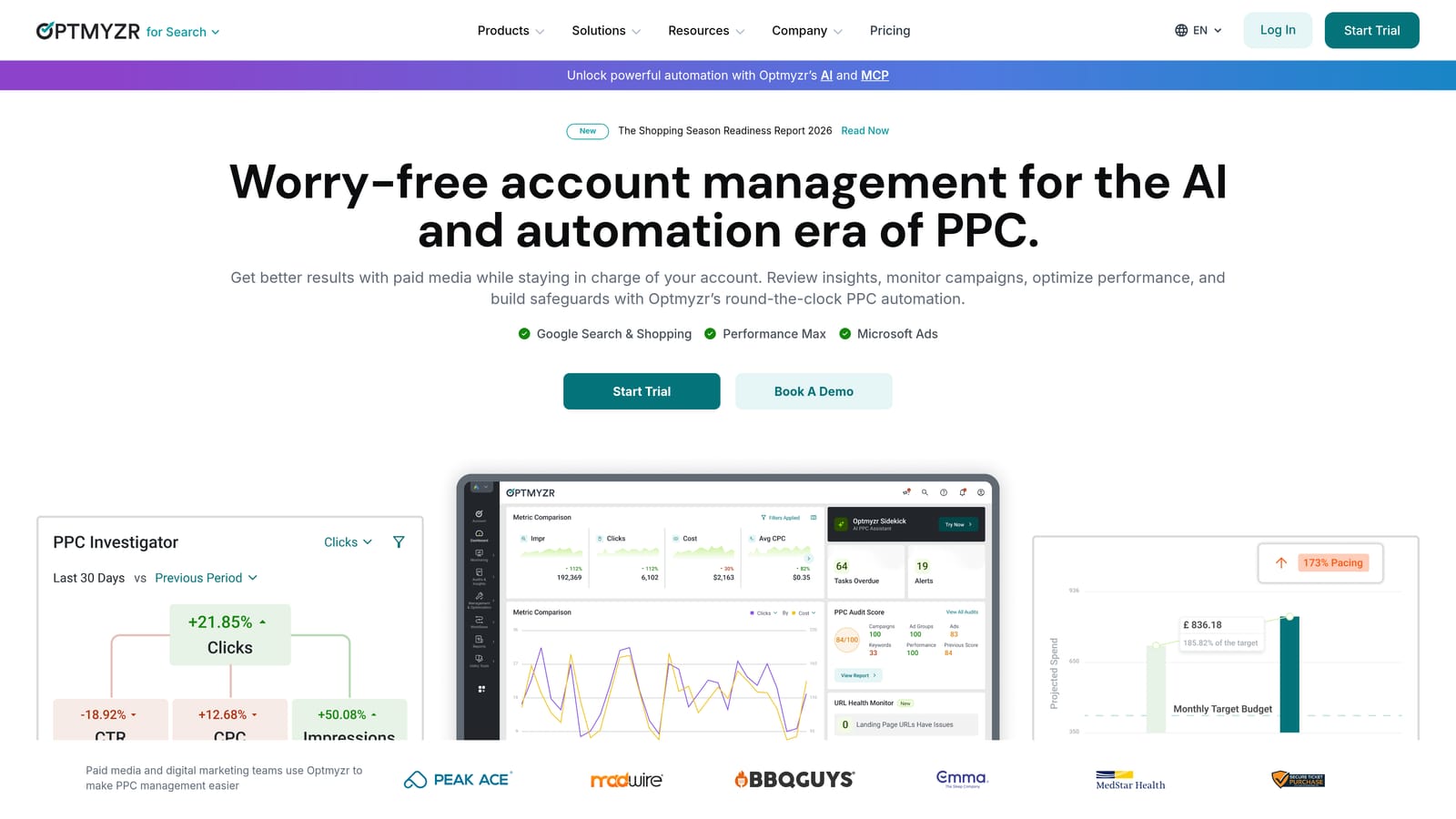
The limitation is worth stating up front: cost scales with the number of connected accounts, so for an advertiser managing one or two campaigns, this is a lot more tool (and spend) than necessary.
- Audits search terms and suggests negative keywords automatically
- Applies rule-based automation to bids and budgets across accounts
- Runs scripts and manages accounts across Google Ads, Microsoft Ads, and Meta Ads from one place
- Generates custom client-facing reports
This tends to sit with an agency's PPC operations lead, since setup involves connecting every managed client account and configuring automation rules, more implementation work than a single-purpose keyword tool.
If your team needs bid automation and cross-platform management alongside keyword cleanup, this consolidates several tools into one. If you just need search-term cleanup, you're paying for automation capabilities you may not use.
Pricing is quote-based, historically starting from roughly $200+/month depending on account count (verify current pricing on optmyzr.com), with cost climbing as you add managed accounts.
Best for: Agencies managing many ad accounts that need automation beyond keyword cleanup.
7. WordStream Advisor (LocalIQ)
WordStream Advisor, now under LocalIQ, bundles a keyword tool with hands-on account management services rather than selling standalone software access.
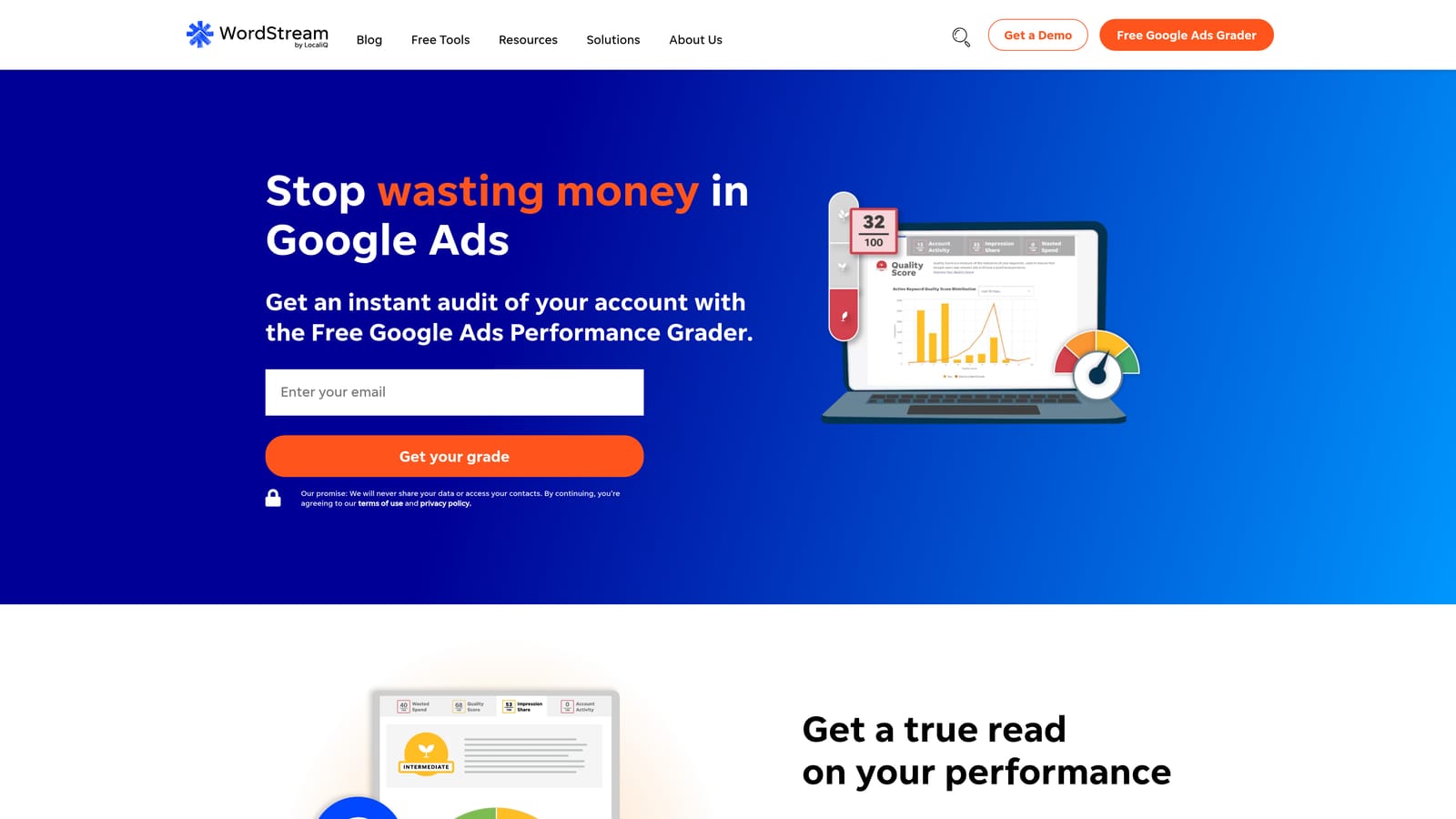
That bundling is both its standout feature and its main quirk for cost comparison: you're not just buying a tool, you're buying a package that includes people managing your account, which is why pricing isn't published as a flat monthly rate.
- Free Keyword Tool for basic keyword ideas, usable without a full subscription
- "20-Minute Work Week" suggestions to speed up routine optimization tasks
- Account management and reporting handled by LocalIQ's team
- Alerts that flag account performance issues before they become expensive
This setup suits small businesses that want support rather than DIY software, since a LocalIQ account manager is often involved in the day-to-day rather than an in-house PPC specialist running everything solo.
The real limitation for cost-conscious shoppers is transparency: pricing isn't published or flat, so it's hard to compare directly against self-serve tools priced per seat or per tier. You'll need a quote tied to your ad spend and management needs.
Pricing is quote-based; contact WordStream/LocalIQ directly for a package price tied to your spend and management level.
Best for: SMBs that want a keyword tool packaged with managed PPC support rather than DIY software.
8. Ubersuggest
Ubersuggest is a budget keyword and SEO research tool aimed at freelancers and small businesses who don't need an enterprise-grade suite.
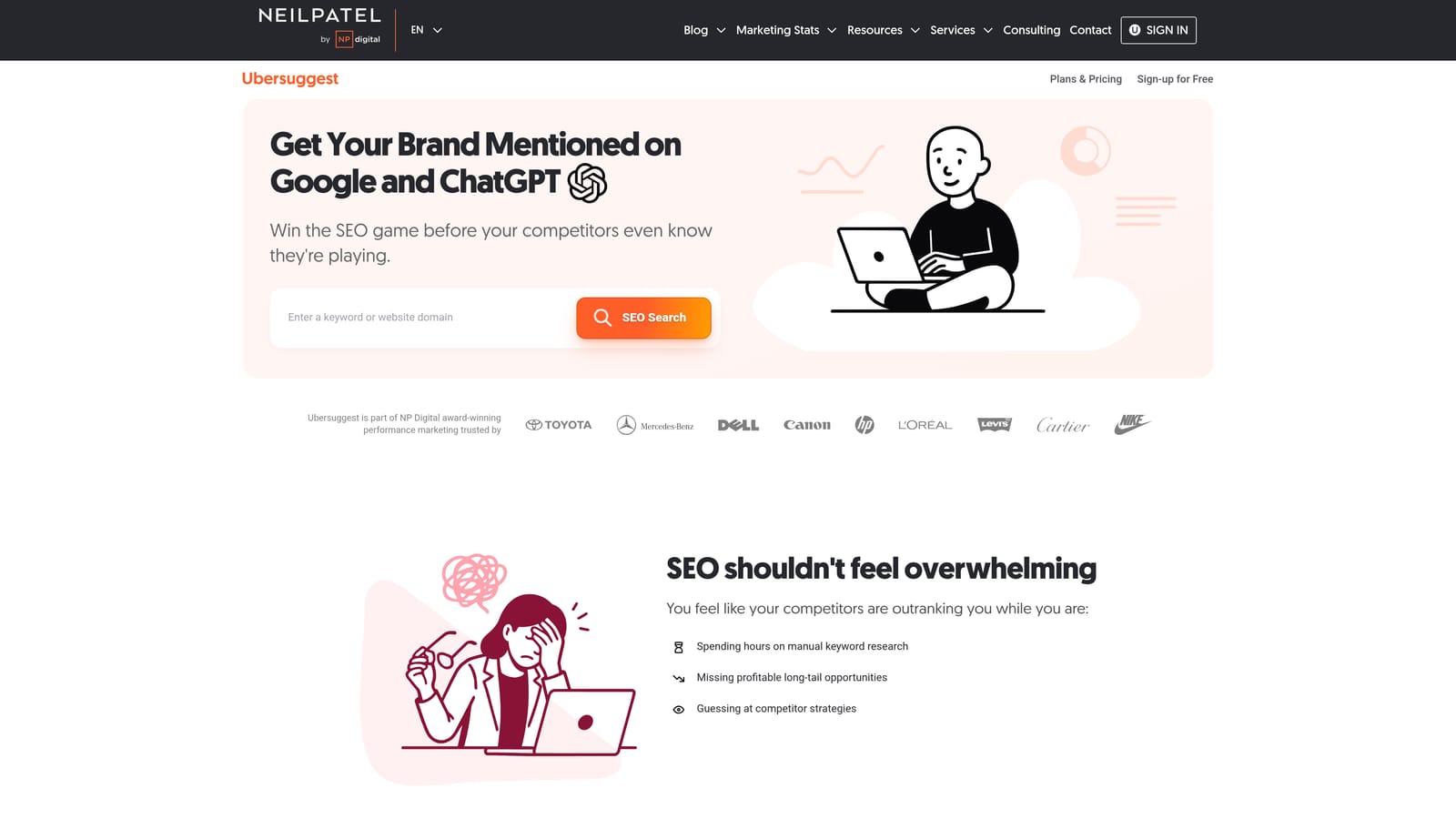
Its standout feature on this list is simply price: it's one of the cheapest ways to get keyword volume and CPC estimates without relying solely on Google's own free tool.
- Shows keyword volume and CPC estimates for quick budget checks
- Suggests content ideas tied to target keywords
- Gives a basic competitor domain overview
- Includes a Chrome extension for pulling on-page keyword data while browsing
Setup is a quick account signup, and it's typically run directly by the freelancer or solo marketer doing the keyword research themselves, no dedicated analyst needed.
The limitations show up once you try to scale. There's no team or multi-account support, and nothing built specifically for Google Ads search-term workflows, so it doesn't grow well into an agency setup managing several clients.
Pricing starts around $12/month for the Individual plan as of this writing (verify current pricing on neilpatel.com), with tiered plans for higher usage; Ubersuggest has previously offered a lifetime-access option as well, though availability varies.
Best for: Freelancers or solo marketers wanting a low-cost first keyword tool.
Matching the Tool to Your Budget and Workflow
If cost is the only factor, Google Keyword Planner and Ubersuggest sit at the bottom of the range, free and around $12/month respectively, and both work fine for a solo advertiser doing early keyword discovery. Neither one touches ongoing search-term cleanup, though, which is where wasted spend usually hides.
Agencies managing several client accounts have a different calculus. Optmyzr's quote-based pricing and account-scaling model make sense once you're running bid automation and reporting across a portfolio, but it's a heavier lift than most solo shops need. For agencies that just need faster, cleaner search-term management inside the accounts they already manage, Keywordme's flat $12/month per user keeps the cost predictable no matter how many seats you add.
If your team needs keyword research feeding both SEO and paid search, Semrush or Ahrefs justify their higher monthly cost by covering more ground than a single-purpose PPC tool ever will.
For the specific job of clearing junk search terms and applying match types without leaving Google Ads, start your free 7-day trial and see it work directly in your Search Terms Report, then it's just $12/month per user if you keep it.
.svg)