
9 Best Google Ads Automation Tools Reviewed for 2026
This roundup of google ads automation tool reviews covers 9 platforms tested for real-world PPC use, helping marketers, freelancers, and agency teams identify whether they need faster manual workflow tools, AI-driven bid automation, or full-scale campaign management solutions before committing to a platform.


If you've ever spent an afternoon wading through a search terms report, exporting CSVs, and manually flagging irrelevant queries, you already know why Google Ads automation tools exist. The problem isn't a lack of options. It's figuring out which tools actually save time versus which ones just add another dashboard to manage.
TL;DR: The best Google Ads automation tools in 2026 range from in-interface workflow accelerators like Keywordme to full-scale AI bidding platforms like Smart Bidding and Optmyzr. The right pick depends on whether you need faster manual control, automated bidding, or end-to-end campaign management. This list covers 9 tools reviewed for real-world PPC use by marketers, freelancers, and agency teams.
One thing most comparison articles get wrong: they lump bid automation tools, workflow accelerators, enterprise platforms, and research tools into the same list without helping you understand which category you actually need. Before diving in, here's a quick map. Some tools automate decisions (bidding, budget pacing). Others accelerate human decisions (keyword review, ad testing, competitive research). Both matter, but they solve different problems. Keep that distinction in mind as you read through.
1. Keywordme
Best for: PPC managers and agency teams who want to speed up keyword management without leaving Google Ads.
Keywordme is a Chrome extension that supercharges your Google Ads keyword workflow directly inside the Search Terms Report, with no exports, no spreadsheets, and no tab-switching required.

Where This Tool Shines
In most accounts I audit, the search terms review is the task that takes longest and gets skipped most often. Keywordme fixes that by making every action a single click: remove a junk term, add a negative keyword, apply a match type, or slot a query into a new keyword group. All of it happens inside the native Google Ads UI.
What usually happens with most tools is you end up doing half the work in Google Ads and half in a spreadsheet. Keywordme eliminates that entirely. It's especially useful for agencies running multiple client accounts, where the time saved per account compounds fast across a full portfolio.
Key Features
One-click negative keyword management: Remove junk search terms and add negatives instantly without exporting or switching tabs.
Match type application: Apply exact, phrase, or broad match directly from the search terms view in a single action.
Keyword clustering: Group related search terms into structured keyword lists faster than manual sorting allows.
Bulk editing: Handle multiple terms at once, which makes a real difference when reviewing high-traffic accounts with hundreds of weekly search queries.
Multi-account and team support: Designed for agencies managing multiple clients, with collaboration features that keep teams aligned without duplicating work.
Best For
Freelancers managing a handful of accounts, agency teams doing weekly search term reviews at scale, and any PPC manager who wants to cut the time spent on keyword hygiene without giving up control of the process. Not a fit for advertisers looking for automated bidding or cross-channel campaign management.
Pricing
$12/month per user, flat rate. A 7-day free trial is available with no commitment required.
2. Google Ads Smart Bidding
Best for: Advertisers with solid conversion tracking who want Google's machine learning to handle bid decisions in real time.
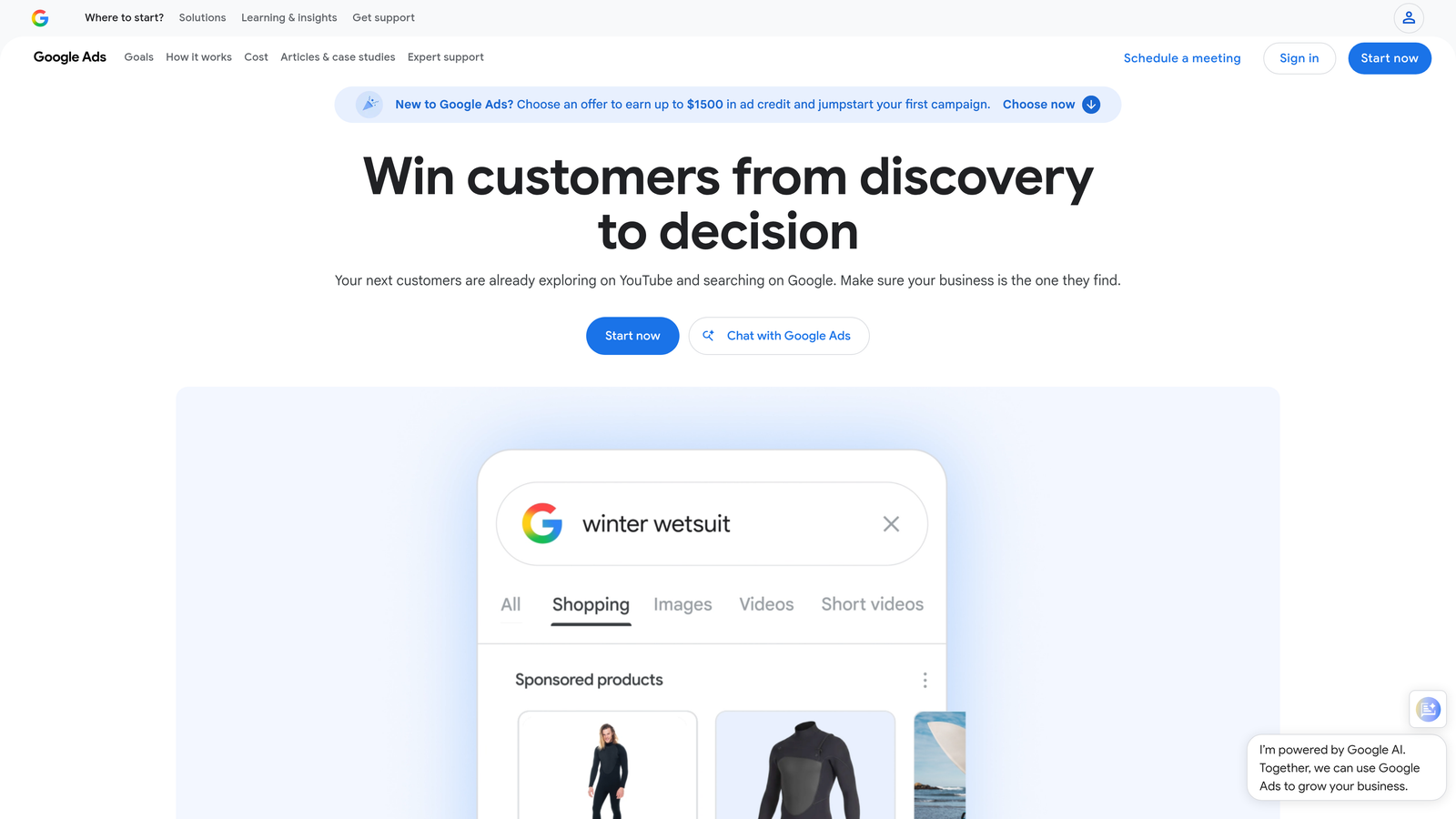
Google Ads Smart Bidding is Google's native machine learning bid automation, built directly into the Google Ads platform at no extra cost.
Where This Tool Shines
The core advantage of Smart Bidding is access to signals that no third-party tool can replicate: device, location, time of day, audience list membership, search query context, browser, and operating system, all factored into each individual auction in real time. That's a level of bid precision that manual bidding simply can't match at scale.
The caveat worth knowing: Smart Bidding needs conversion data to function well. Low-volume accounts, or campaigns that haven't yet built up meaningful conversion history, often see erratic results during the learning period. The mistake most agencies make is switching to Target CPA too early, before the account has enough signal to learn from.
Key Features
Auction-time bid adjustments: Bids are set individually for every single auction based on real-time contextual signals.
Multiple strategy options: Target CPA, Target ROAS, Maximize Conversions, and Maximize Conversion Value cover most advertiser goals.
Native integration: Works directly with Google's conversion tracking and audience data, no third-party setup required.
No additional cost: Fully included in Google Ads, making it the most accessible automation option on this list.
Best For
Accounts with consistent conversion volume and well-configured conversion tracking. Particularly strong for e-commerce advertisers using Target ROAS and lead generation accounts with stable CPA targets. Less effective for brand-new campaigns or low-budget accounts still building conversion history.
Pricing
Free. Included with Google Ads. Requires active, properly configured conversion tracking to perform well.
3. Optmyzr
Best for: PPC agencies and experienced advertisers who want rule-based automation with human oversight built in.
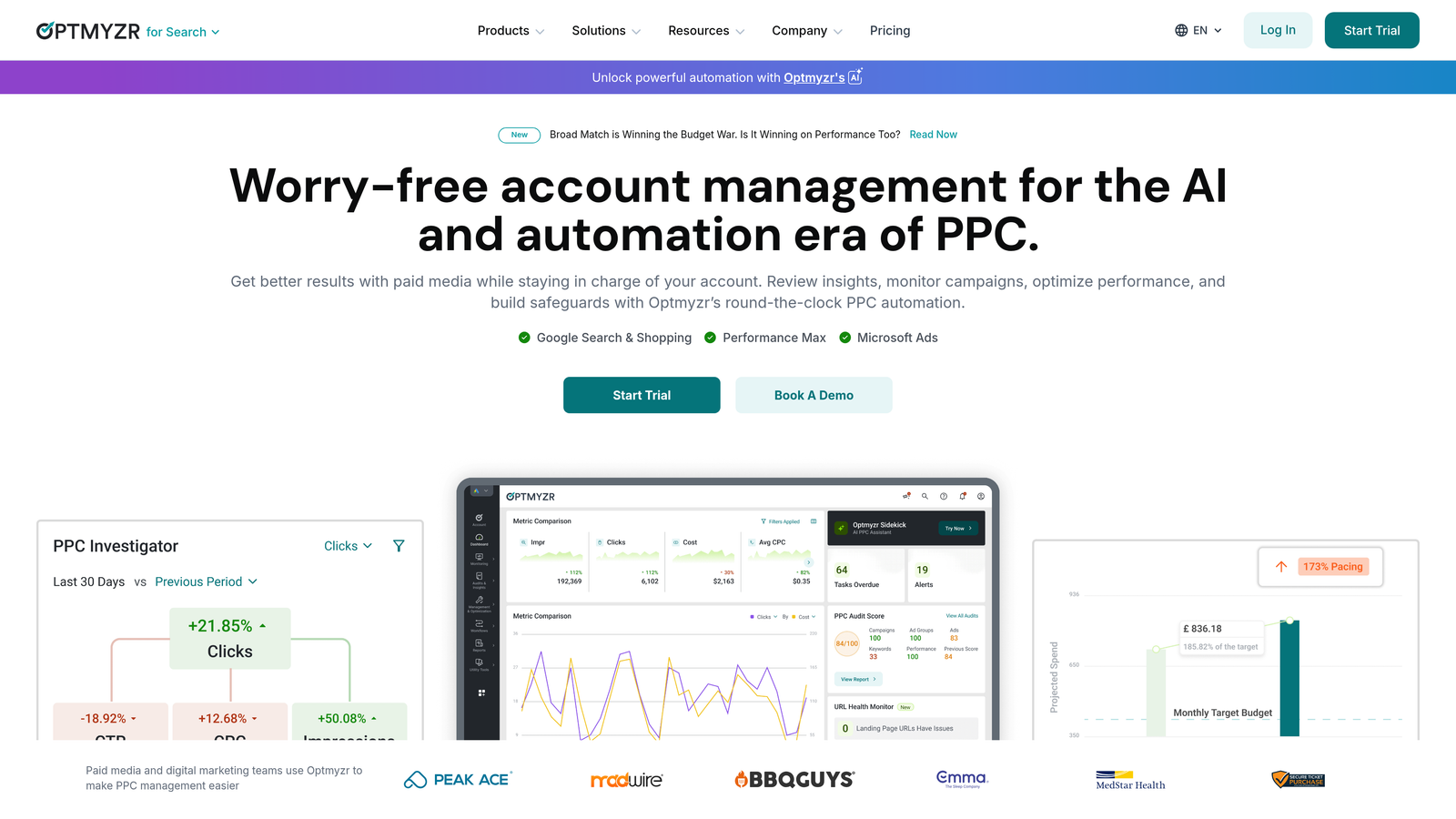
Optmyzr is a rule-based PPC automation and reporting platform built by former Google AdWords team members, designed for practitioners who want automation with control.
Where This Tool Shines
The thing that separates Optmyzr from pure AI bidding tools is its emphasis on transparency. Before you apply any suggested optimization, Optmyzr shows you a predicted impact score. You see what the change is expected to do before it happens, which matters a lot when you're managing client accounts and need to justify every move.
The rule-based automation layer is genuinely powerful for agencies. You can build conditional automations that fire based on performance thresholds, time of day, budget pacing, and more, without writing a single line of script code. For teams that need to manage many accounts consistently, that's a real operational advantage.
Key Features
One-click optimizations with impact scores: See predicted results before applying any change, which keeps human oversight in the loop.
Rule-based automations: Build conditional workflows without needing to code custom scripts.
Agency workflow tools: Client dashboards, approval workflows, and bulk change management designed for multi-client operations.
Shopping feed management and PPC reporting: Covers more of the campaign lifecycle than most single-purpose tools.
Best For
PPC agencies managing multiple client accounts who need automation they can explain and justify. Also strong for in-house teams at mid-size companies who want to systematize their optimization process without fully handing decisions over to an AI.
Pricing
Starts around $208/month for smaller accounts, tiered by ad spend managed. Verify current pricing at optmyzr.com.
4. WordStream Advisor
Best for: SMB advertisers and those newer to PPC who want guided optimization recommendations without deep manual analysis.
WordStream Advisor (now part of LocaliQ) is a guided PPC management platform designed to surface prioritized optimization tasks for busy advertisers who don't have hours to spend in the interface each week.

Where This Tool Shines
WordStream's signature feature is the 20-Minute Work Week: a weekly prioritized list of optimization recommendations that tells you exactly what to do and in what order. For a small business owner or a marketer who manages Google Ads as one of many responsibilities, this kind of guided workflow is genuinely useful.
The honest caveat: experienced PPC practitioners often find WordStream too prescriptive. It's built around surfacing recommendations rather than giving you granular control over complex account structures. It's a strong entry-level tool, but most agency teams will outgrow it.
Key Features
20-Minute Work Week: A weekly prioritized task list that turns account management into a structured, time-boxed routine.
Keyword suggestions and quality score tracking: Surfaces opportunities and flags underperforming keywords.
Performance benchmarking: Compares your account metrics against industry averages, which helps contextualize performance for clients or stakeholders.
Ad Grader: A quick account health check that identifies obvious areas for improvement.
Best For
SMB advertisers, marketing generalists managing PPC as part of a broader role, and those newer to Google Ads who benefit from guided recommendations. Less suited to experienced PPC specialists or agencies managing complex, high-spend accounts.
Pricing
Contact WordStream for current pricing. Often bundled with managed services offerings through LocaliQ.
5. Adalysis
Best for: Advertisers running large ad sets who want systematic, statistically rigorous ad testing rather than manual guesswork.
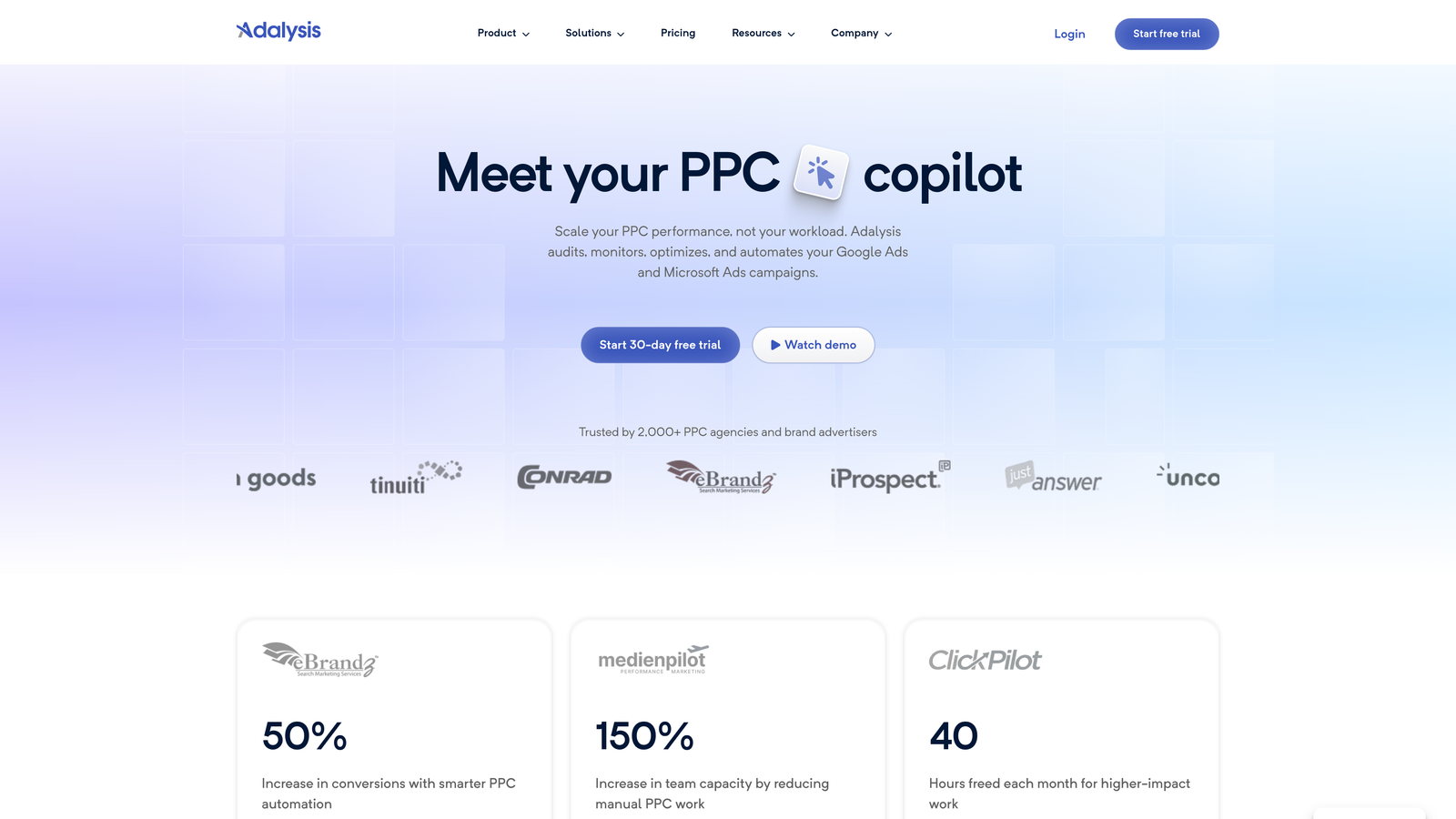
Adalysis is a specialized Google Ads tool focused on ad testing automation and quality score monitoring, built for accounts where ad copy decisions need to be data-driven at scale.
Where This Tool Shines
Most accounts I audit have ad testing that's either non-existent or done by feel. Someone pauses an ad because it "looks like" it's underperforming, without ever checking whether the difference is statistically significant. Adalysis automates that judgment: it monitors your A/B tests and alerts you when a test has reached statistical significance, so you're making decisions based on real data rather than noise.
The quality score monitoring is also genuinely useful. Adalysis tracks historical quality score changes at the keyword level, which makes it much easier to diagnose why performance shifted and when it started.
Key Features
Automated A/B ad testing: Monitors tests and alerts you when results reach statistical significance, removing guesswork from ad copy decisions.
Quality score monitoring: Tracks quality score history at the keyword level for performance diagnosis.
Search term analysis: Surfaces patterns in search query data to inform keyword and negative keyword decisions.
Account health alerts: Flags issues like disapproved ads, low-performing ad groups, and missing ad variations.
Best For
Accounts with large ad sets running multiple variations who need a systematic testing framework. Also strong for agencies that want to demonstrate rigorous ad testing methodology to clients. Less necessary for small accounts with only a handful of ads running.
Pricing
Starts around $99/month depending on account size. Verify current pricing at adalysis.com.
6. Acquisio
Best for: Agencies and mid-to-large advertisers running high-volume campaigns who need aggressive, frequent bid and budget adjustments.
Acquisio is an AI-powered bid and budget management platform built for high-volume campaign environments where manual bid management isn't operationally feasible.
Where This Tool Shines
Acquisio's differentiator is the frequency of its bid adjustments. While Smart Bidding operates at auction time, Acquisio layers additional machine learning on top of campaign-level management, updating bids multiple times per day based on performance signals. For agencies managing large campaign portfolios with tight budget constraints, the automated budget pacing and cross-campaign reallocation features can prevent budget waste without requiring constant manual oversight.
It's worth noting that Acquisio is positioned squarely at the agency and enterprise tier. If you're managing a single account with modest spend, the complexity and cost won't be justified.
Key Features
High-frequency ML bid adjustments: Bids updated multiple times per day using machine learning models.
Automated budget pacing: Keeps spend on track throughout the month without manual daily checks.
Cross-campaign budget reallocation: Shifts budget toward better-performing campaigns automatically based on performance data.
Agency reporting dashboards: Client-facing reporting built for multi-account management at scale.
Best For
Agencies managing high-volume accounts with significant monthly ad spend, and mid-to-large advertisers who need more aggressive bid management than Smart Bidding alone provides. Not the right fit for small accounts or solo advertisers.
Pricing
Enterprise and agency pricing. Contact Acquisio directly for a quote at acquisio.com.
7. Skai (formerly Kenshoo)
Best for: Enterprise brands coordinating paid search, social, and retail media spend across multiple channels in a single platform.
Skai is an enterprise omnichannel advertising platform covering Google Ads, Microsoft Ads, Meta, Amazon, and retail media in a unified interface.

Where This Tool Shines
Skai's value proposition only makes sense if you're managing paid media across multiple channels simultaneously. The platform's strength is unified budget management and cross-channel reporting: you can see how your Google Ads spend interacts with your Meta and Amazon campaigns, and optimize budget allocation across all of them from one place.
For a single-channel Google Ads advertiser, Skai is significant overkill. But for an enterprise brand running coordinated campaigns across paid search, social, and retail media, having everything in one platform with consistent attribution and reporting is a genuine operational advantage.
Key Features
Unified cross-channel management: Google, Microsoft, Meta, Amazon, and retail media managed from a single interface.
AI-driven bid optimization: Automated bidding across channels with cross-channel attribution factored in.
Audience management: Coordinate audience targeting and suppression across platforms.
Cross-channel attribution: Reporting that accounts for how channels interact rather than measuring each in isolation.
Best For
Enterprise brands and large agencies running significant spend across multiple paid media channels who need unified management and attribution. Not appropriate for Google Ads-only advertisers or accounts below enterprise budget thresholds.
Pricing
Enterprise pricing. Contact Skai directly for a custom quote at skai.io.
8. Search Ads 360 (SA360)
Best for: Large advertisers and agencies running campaigns across both Google Ads and Microsoft Ads who need cross-engine management and advanced attribution.
Search Ads 360 is Google's own enterprise search management platform, part of the Google Marketing Platform, designed for advertisers running significant spend across multiple search engines simultaneously.
Where This Tool Shines
SA360's core advantage is its native integration with the rest of Google's marketing stack. Floodlight conversion tracking, deep Google Analytics 4 integration, Campaign Manager 360 attribution, and custom bidding algorithms all connect seamlessly in a way that no third-party tool can fully replicate. For large advertisers who need advanced attribution and cross-engine campaign management, that integration depth is hard to match.
The honest reality: SA360 is an enterprise investment. The percentage-of-spend pricing model means costs scale with your budget, and the platform's complexity requires dedicated resources to manage effectively. It's not a tool you adopt casually.
Key Features
Cross-engine campaign management: Manage Google Ads and Microsoft Ads campaigns from a single unified interface.
Floodlight conversion tracking: Advanced attribution that integrates with Campaign Manager 360 for full-funnel measurement.
Custom bidding algorithms: Build custom bid strategies beyond what native Smart Bidding offers.
Deep Google Marketing Platform integration: Native connections with GA4, Display and Video 360, and Campaign Manager 360.
Best For
Large advertisers and enterprise agencies running significant ad spend across both Google and Microsoft Ads who need advanced attribution and are already invested in the Google Marketing Platform ecosystem. Not suitable for small accounts, single-engine advertisers, or those without dedicated platform management resources.
Pricing
Percentage of ad spend model. Enterprise-level investment. Contact Google directly for current pricing details.
9. Semrush PPC Toolkit
Best for: PPC managers who want competitive intelligence and keyword research data to inform campaign planning before and during campaign setup.
Semrush PPC Toolkit is the paid search research and competitive intelligence suite within the broader Semrush platform, focused on the research and planning phase of campaign management.
Where This Tool Shines
Semrush doesn't manage or automate your campaigns. What it does is give you a detailed view of what your competitors are doing: which keywords they're bidding on, what their ad copy looks like, and where their estimated spend is concentrated. For campaign planning and competitive gap analysis, that intelligence is genuinely valuable.
The PPC Keyword Tool is particularly useful for building and organizing keyword lists before you launch, and the CPC data within Keyword Magic Tool helps you forecast budget requirements with more accuracy than Google's own estimates alone.
Key Features
Advertising Research: View competitor ad copy, keywords, and estimated spend to identify gaps and opportunities in your own strategy.
Keyword Magic Tool with CPC data: Research keywords with competition metrics and cost-per-click estimates for budget forecasting.
PPC Keyword Tool: Build, organize, and export structured keyword lists for campaign setup.
Product Listing Ads (PLA) research: Competitive intelligence for Shopping campaigns, including competitor product feed insights.
Best For
PPC managers building new campaigns who want competitive context before launch, and account managers doing ongoing competitive monitoring. Best used alongside an in-campaign management tool rather than as a standalone solution. If you're already a Semrush subscriber for SEO, the PPC Toolkit adds meaningful value at no extra cost.
Pricing
Included in Semrush plans starting around $139.95/month. Verify current pricing at semrush.com.
Which Tool Is Right for Your Workflow?
No single tool on this list does everything, and most serious PPC practitioners end up stacking two or three depending on their workflow. Here's a quick way to think about it by use case.
If your biggest time drain is search term review and keyword management, Keywordme is the most direct solution. It doesn't replace bid automation, but it eliminates the manual labor that slows down every account review. At $12/month, it's the lowest-friction starting point on this list.
If you want Google to handle bid decisions automatically and you have solid conversion tracking in place, Smart Bidding should already be running. It's free and its auction-time signals are unmatched. The question isn't whether to use it, but which strategy to use and when.
If you're an agency managing multiple clients and need rule-based automation with human oversight, Optmyzr is the strongest mid-market option. If you need rigorous ad testing methodology, add Adalysis to the stack. For competitive research and campaign planning, Semrush PPC Toolkit fills the pre-launch intelligence gap that most automation tools ignore.
Enterprise teams running cross-engine campaigns at scale should evaluate SA360 if they're already in the Google Marketing Platform ecosystem, or Skai if they need omnichannel management beyond search. Acquisio fits high-volume agency operations where aggressive bid management is a priority.
The bottom line: match the tool to the problem you're actually trying to solve. If you're spending hours each week manually reviewing search terms and building negative keyword lists, that's a workflow problem, not a bidding problem, and a workflow tool will fix it faster than any AI bidding platform.
If you want to start with the fastest win, Start your free 7-day trial of Keywordme and see how much time you reclaim from your next search terms review. Then $12/month is an easy call.
.svg)