
9 Best Google Ads Automation Software Tools Compared
This google ads automation software comparison covers 9 tested tools—from Chrome extensions to full-stack bid management platforms—helping marketers, freelancers, and agency owners identify the right solution based on their workflow needs, budget, and account complexity.


TL;DR: Google Ads automation software ranges from in-interface Chrome extensions to full-stack bid management platforms. The right pick depends on whether you need workflow speed, smart bidding, reporting, or all three. This list covers 9 tools tested and used by marketers, freelancers, and agency owners, ranked by practical value, not vendor hype.
If you're managing Google Ads manually in 2026, you're leaving time and money on the table. Between search term reviews, negative keyword lists, match type decisions, and bid adjustments, the repetitive tasks pile up fast. Google Ads automation software exists to handle the grunt work, but not all tools solve the same problems. Some focus on bid automation, others on keyword management, and a few try to do everything.
This comparison breaks down 9 of the best options so you can find the right fit for your workflow, budget, and account complexity. Let's get into it.
1. Keywordme
Best for: Freelancers and agencies who want faster keyword and search term workflows inside Google Ads
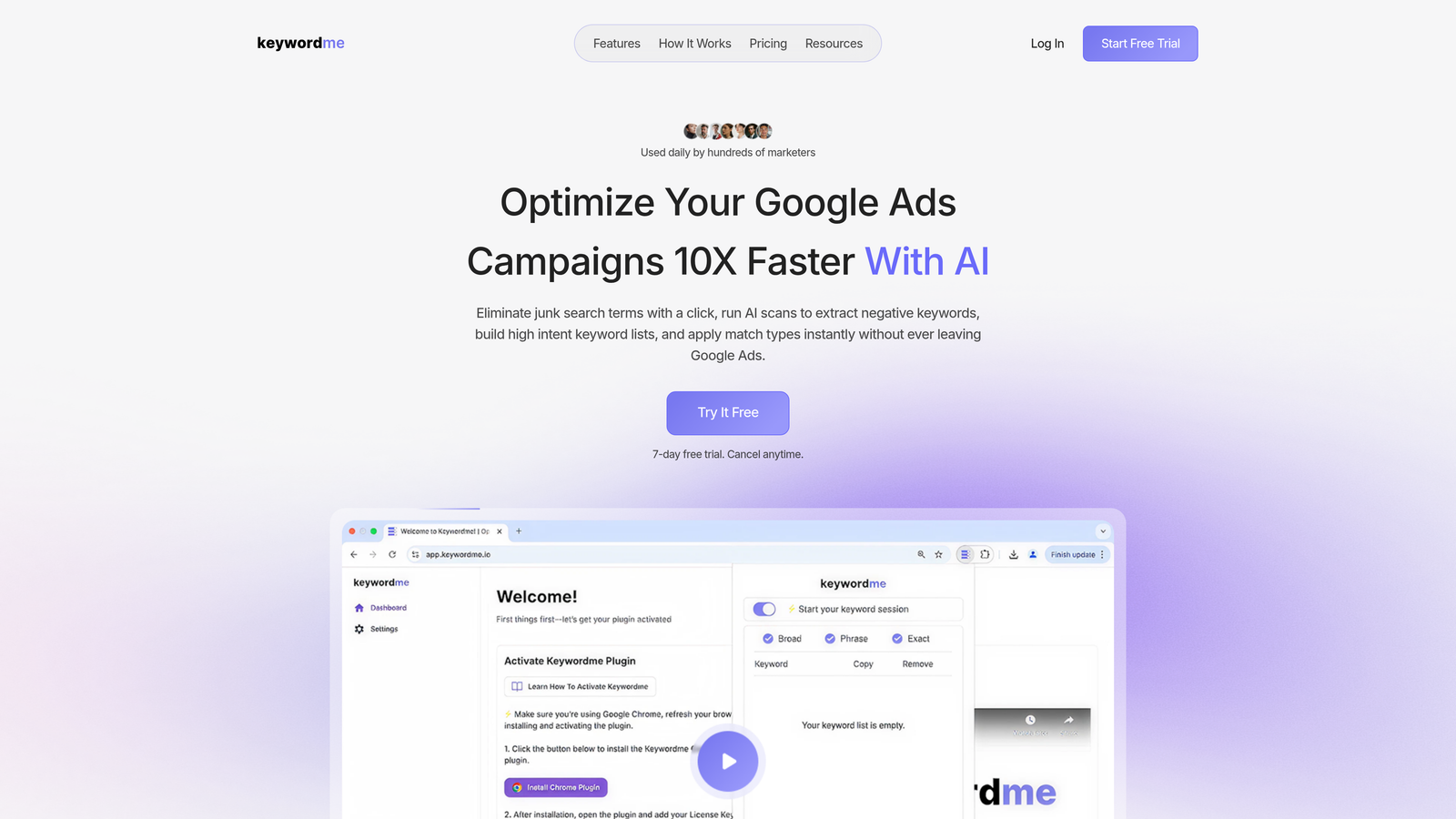
Keywordme is a Chrome extension that plugs directly into the Google Ads Search Terms Report, turning manual keyword tasks into one-click actions.
Where This Tool Shines
The biggest thing Keywordme gets right is staying inside the interface. Most PPC tools pull you out of Google Ads into a separate dashboard, which adds friction and context-switching. Keywordme sits right where you're already working, so removing junk search terms, adding negatives, and applying match types feels like a natural part of the workflow rather than a separate task.
In most accounts I audit, search term review is one of the most time-consuming recurring tasks. Keywordme compresses that into a fraction of the time. The keyword clustering and bulk editing features are especially useful for agencies managing multiple clients, where volume is high and speed matters.
Key Features
One-Click Search Term Management: Remove junk terms and add negatives directly inside the Google Ads Search Terms Report without switching tabs.
Match Type Application: Apply exact, phrase, or broad match types instantly from within the native interface.
Keyword Clustering: Group related search terms into keyword clusters to build tighter ad groups and cleaner account structure.
Bulk Editing: Handle large volumes of search terms across campaigns without manual row-by-row work.
Multi-Account and Team Support: Manage multiple client accounts and collaborate with team members, making it practical for agency environments.
Best For
Solo advertisers and freelancers who spend too much time in the Search Terms Report will see an immediate impact. Agencies managing high search term volumes across multiple accounts will find the multi-account and team features especially valuable. Less suited for advertisers whose primary bottleneck is bid strategy rather than keyword management.
Pricing
Flat-rate pricing at $12/month per user. A 7-day free trial is available, which is enough time to run it through a real account and judge for yourself.
2. Google Ads Smart Bidding
Best for: Advertisers who want automated bid optimization without paying for a third-party platform
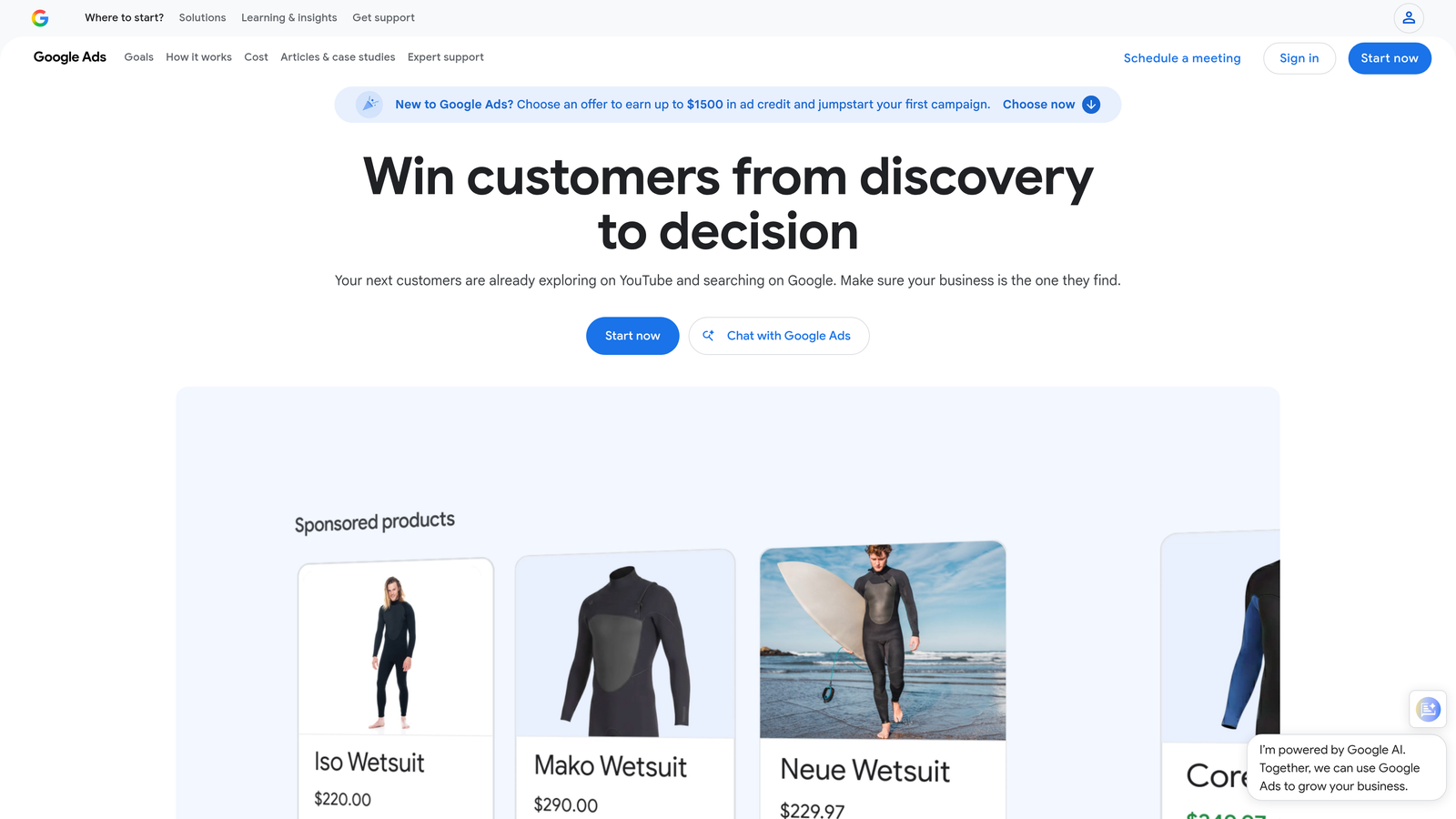
Google Ads Smart Bidding is Google's native machine learning bidding system that adjusts bids in real time at every auction.
Where This Tool Shines
Smart Bidding has access to signals no third-party tool can match: device, location, time of day, audience lists, search query context, and more. When you have enough conversion data feeding it, it genuinely outperforms manual bidding for most account types. The fact that it's free and built into the platform makes it a no-brainer starting point for bid automation.
The honest caveat: Smart Bidding needs conversion volume to work well. New accounts or campaigns with thin conversion history often see erratic results early on. The mistake most agencies make is setting a Target CPA on a campaign with 3 conversions in the last 30 days and wondering why it's not working.
Key Features
Target CPA: Automatically sets bids to get as many conversions as possible at your target cost per acquisition.
Target ROAS: Optimizes for conversion value relative to your target return on ad spend.
Maximize Conversions and Maximize Conversion Value: Spend-based strategies that push volume within your budget.
Portfolio Bid Strategies: Apply a single bid strategy across multiple campaigns for unified optimization.
Performance Planner Integration: Forecast how bid strategy changes might affect results before implementing them.
Best For
Any advertiser with consistent conversion tracking and sufficient volume. Ideal as a foundation layer that other automation tools build on top of. Not a replacement for keyword or search term management.
Pricing
Free. Included with all Google Ads accounts at no additional cost.
3. Optmyzr
Best for: PPC managers and agencies who want rule-based automation with transparent, explainable recommendations
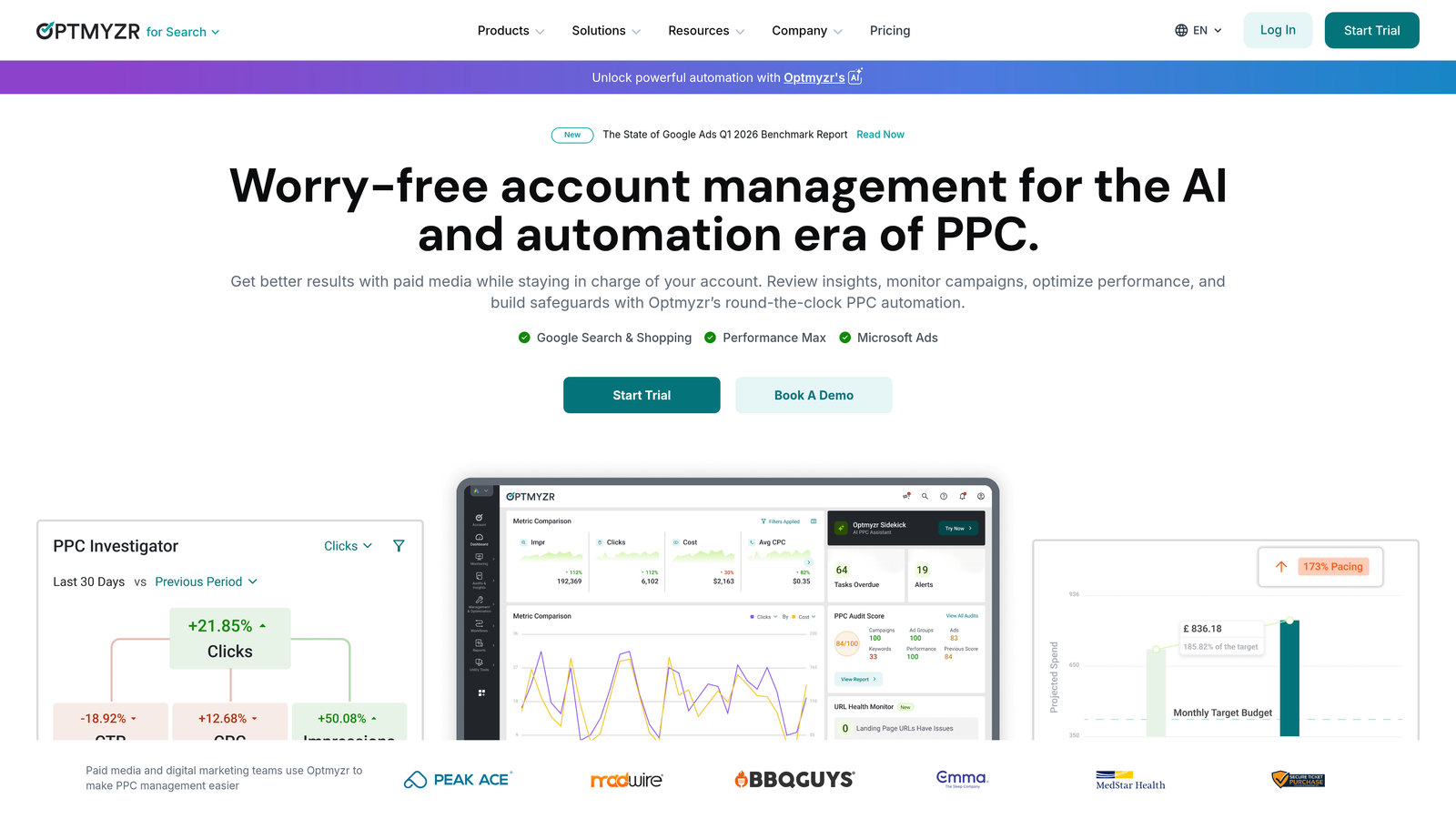
Optmyzr is a PPC management platform that combines one-click optimizations, rule-based automation, and multi-account reporting in a single dashboard.
Where This Tool Shines
What sets Optmyzr apart from most automation platforms is explainability. Every recommendation comes with the reasoning behind it, so you're not blindly accepting suggestions from a black box. For experienced PPC managers, that transparency is essential. You want to understand why a bid change is being recommended, not just click approve.
The Account Scorecard feature is genuinely useful for agencies doing regular account reviews. It gives you a structured health check across multiple accounts without having to manually dig through each one.
Key Features
One-Click Optimizations: Apply bid, budget, and keyword changes with a single click, each with visible reasoning.
Rule-Based Automation Engine: Build custom automation rules for bids, budgets, and keywords based on your own logic.
Account Scorecard: Monitor ongoing account health across multiple clients from a single view.
Custom Scripts and Workflows: Create advanced automation workflows without needing to write scripts from scratch.
Multi-Account Dashboard: Manage and report across multiple Google Ads accounts in one place.
Best For
In-house PPC teams and agencies managing mid-to-large accounts who want automation with oversight rather than fully autonomous AI decisions. Strong fit for teams that run regular optimization cycles.
Pricing
Tiered pricing based on ad spend under management. Check optmyzr.com for current plans.
4. WordStream Advisor
Best for: Small businesses and less technical advertisers who want guided, simplified PPC management
WordStream Advisor is a guided PPC management tool that walks advertisers through a structured weekly optimization workflow across Google and Microsoft Ads.

Where This Tool Shines
WordStream's core value proposition is accessibility. The platform is built around a "20-minute work week" concept, where it surfaces the most important action items and guides you through them step by step. For small business owners who are running their own ads without deep PPC expertise, that structure reduces the overwhelm significantly.
It's worth being honest about the fit here: experienced PPC managers often find WordStream too simplified. The tool prioritizes ease of use over granular control, which is exactly right for its target audience but limiting for power users.
Key Features
Weekly Guided Workflow: Surfaces prioritized action items and walks you through optimizations in a structured session.
Cross-Platform Management: Manage Google Ads and Microsoft Ads from one interface.
Performance Benchmarking: Compare your account performance against industry averages.
Keyword and Negative Keyword Tools: Simplified keyword research and negative keyword management built in.
Ad Creation Assistance: Guided ad writing and testing workflows for less experienced advertisers.
Best For
Small business owners, local advertisers, and marketers who are newer to PPC and want a structured system rather than a blank canvas. Not the right fit for agencies or experienced managers who need granular control.
Pricing
Subscription-based. Check wordstream.com for current pricing tiers.
5. Adalysis
Best for: Data-driven advertisers focused on ad testing automation and account health diagnostics
Adalysis is a Google Ads optimization platform built specifically around ad testing, quality score monitoring, and systematic account auditing.

Where This Tool Shines
Most PPC tools treat ad testing as an afterthought. Adalysis builds its entire workflow around it. The platform automates A/B test tracking with statistical significance monitoring, which means you're not pausing ads based on gut feel or premature data. It tells you when a test has reached significance and what to do next.
The quality score monitoring is another standout feature. Tracking quality score changes over time across large accounts is tedious to do manually. Adalysis surfaces deteriorating quality scores before they become expensive problems.
Key Features
Automated A/B Ad Testing: Tracks test performance and flags when statistical significance is reached.
Auto-Pause Rules: Automatically pauses underperforming ads based on configurable data thresholds.
Quality Score Monitoring: Tracks quality score changes over time and provides improvement recommendations.
Search Term and Keyword Analysis: Identifies wasted spend patterns and keyword opportunities.
Account Audit Dashboards: Structured health checks that surface issues across campaigns systematically.
Best For
Performance-focused advertisers and agencies who run systematic ad testing programs and want data-driven pause decisions rather than manual review. Particularly useful for accounts running large numbers of ad variations simultaneously.
Pricing
Tiered by account spend. Check adalysis.com for current pricing.
6. Search Ads 360 (SA360)
Best for: Enterprise advertisers and large agencies running cross-engine campaigns at significant scale
Search Ads 360 is Google's enterprise search management platform within Google Marketing Platform, enabling unified bid management, advanced attribution, and cross-engine campaign control.

Where This Tool Shines
SA360 is built for scale and complexity. If you're managing substantial spend across both Google Ads and Microsoft Ads, with advanced attribution requirements and integration into a broader Google Marketing Platform stack, SA360 handles things that no SMB tool can touch. The Floodlight conversion tracking system provides attribution depth that standard Google Ads conversion tracking doesn't offer.
The honest caveat: this is not a tool for most advertisers. The complexity and cost are justified only at enterprise scale. For agencies not operating at that level, the overhead outweighs the benefits.
Key Features
Cross-Engine Bid Management: Unified bidding across Google Ads and Microsoft Ads from a single platform.
Floodlight Conversion Tracking: Advanced attribution and conversion tracking across the full Google Marketing Platform.
Enterprise Reporting: Custom columns, cross-account reporting, and data integration at scale.
Automated Rules at Scale: Apply bid strategies and automation rules across large, complex account structures.
GMP Integration: Native connection to Display and Video 360 and Campaign Manager for unified campaign management.
Best For
Large enterprise advertisers and holding company agencies managing significant cross-engine spend who need advanced attribution and GMP ecosystem integration. Not practical for small to mid-market accounts.
Pricing
Enterprise pricing based on ad spend. Contact Google directly for current rates.
7. Acquisio
Best for: Performance agencies that need AI-driven micro-bidding and automated budget pacing across client accounts
Acquisio is an AI-driven bid and budget management platform built specifically for agencies, using machine learning to make rapid, high-frequency bid adjustments.
Where This Tool Shines
Acquisio's differentiation is the frequency of its bid adjustments. Where manual rules or standard Smart Bidding makes changes periodically, Acquisio's micro-bidding system adjusts bids at a much higher frequency, which can be particularly effective for campaigns with volatile traffic patterns or time-sensitive performance windows.
The budget pacing and reallocation features are also well-suited to agencies managing multiple clients under monthly spend targets. Automatically redistributing budget toward higher-performing campaigns reduces the manual oversight required.
Key Features
AI Micro-Bidding: High-frequency bid adjustments powered by machine learning to respond to real-time performance signals.
Automated Budget Pacing: Keeps campaigns on track to hit monthly targets without overspending or underspending.
Budget Reallocation: Automatically shifts budget toward better-performing campaigns within defined parameters.
Multi-Account Dashboard: Manage and monitor multiple client accounts from a centralized view.
White-Label Reporting: Client-ready reporting with agency branding options.
Best For
Performance-focused agencies managing multiple client accounts where bid precision and budget pacing are primary concerns. Less relevant for advertisers whose main issues are keyword management or ad testing.
Pricing
Agency-tier pricing. Check acquisio.com for current plans.
8. Skai (formerly Kenshoo)
Best for: Enterprise brands running integrated paid media strategies across search, social, and retail media
Skai is an enterprise omnichannel advertising platform that connects Google Ads automation with paid social, retail media, and app advertising in a unified environment.
Where This Tool Shines
Skai is the right tool when Google Ads is one channel among many and you need unified budget allocation and reporting across all of them. The retail media integration, covering Amazon, Walmart, and Instacart alongside Google and Meta, is genuinely differentiated in the enterprise space. For brands running integrated paid media strategies, managing everything in a single platform with shared attribution is a meaningful operational advantage.
What usually happens here is that Skai gets evaluated by brands who've outgrown point solutions and need a single source of truth across channels. It's not a Google Ads optimization tool in isolation.
Key Features
Omnichannel Automation: Unified campaign management and automation across Google, Meta, Amazon, and other channels.
AI Budget Allocation: Automatically redistributes budget across channels based on performance signals.
Retail Media Integration: Native support for Amazon Ads, Walmart Connect, and Instacart Ads alongside search and social.
Advanced Audience Targeting: Intent-based and audience-driven targeting tools across platforms.
Enterprise Attribution and Reporting: Cross-channel reporting with advanced attribution modeling.
Best For
Enterprise brands and large agencies running multi-channel paid media strategies where Google Ads is one component of a broader integrated program. Significant overkill for single-channel advertisers.
Pricing
Enterprise pricing. Contact Skai directly at skai.io for current rates.
9. PPC Samurai
Best for: Agencies managing high search term volumes who need automated negative keyword management at scale
PPC Samurai is an agency-focused Google Ads tool built around automated search term analysis and negative keyword management across large, multi-client account sets.
Where This Tool Shines
PPC Samurai solves a specific and painful agency problem: managing search term reports across dozens of accounts is brutally time-consuming. The platform automates the categorization of search terms and generates bulk negative keyword suggestions, which compresses what would otherwise take hours into a much faster process. The N-gram analysis feature is particularly useful for identifying patterns of wasteful search terms that aren't obvious at the individual query level.
It's a focused tool, not a full PPC management suite. That focus is actually a strength if search term management is your primary bottleneck.
Key Features
Automated Search Term Categorization: Sorts and categorizes search terms across large accounts automatically.
Bulk Negative Keyword Suggestions: Generates and implements negative keyword recommendations at scale.
N-gram Analysis: Identifies recurring patterns in search terms to surface systemic waste across campaigns.
Multi-Account Management: Built for agencies managing multiple client accounts simultaneously.
Campaign Structure Analysis: Reviews account structure and surfaces improvement recommendations.
Best For
Agencies managing high-volume accounts where search term review and negative keyword management are significant time drains. A strong complement to broader PPC management platforms rather than a standalone solution for everything.
Pricing
Agency subscription pricing. Check ppcsamurai.com for current plans.
Which Google Ads Automation Tool Is Right for You
Here's the honest summary: the best Google Ads automation software depends entirely on where your workflow is breaking down. Buying the most feature-rich platform and hoping it fixes everything is how agencies end up paying for tools they barely use.
Freelancers and solo advertisers should start with two things: Keywordme for search term and keyword workflow speed, and Google's native Smart Bidding for bid automation. Both are low-cost or free, and together they cover the two biggest time sinks in most accounts.
Agencies managing multiple clients will get the most from combining Keywordme with either Optmyzr or PPC Samurai, depending on whether rule-based optimization or search term automation is the bigger bottleneck. Acquisio is worth evaluating if bid pacing and micro-adjustments are the primary concern.
Enterprise teams with significant cross-engine spend and complex attribution requirements should evaluate SA360 or Skai. These tools are justified at scale but impractical for most mid-market accounts.
Data-driven advertisers running systematic ad testing programs should look at Adalysis. It fills a gap that most other platforms ignore.
Most of these tools offer free trials, so there's no reason to commit blind. If keyword management and search term review are eating your time right now, that's the most common bottleneck in accounts I see, and it's the fastest win to fix. Start your free 7-day trial with Keywordme and see how much faster your workflow gets inside the actual Google Ads interface, no spreadsheets or tab switching required.
.svg)