
9 Best Tools for Keyword Performance Tracking in 2026
Tracking keyword performance becomes meaningless when you're stuck organizing data instead of acting on it. The best tools for keyword performance tracking in 2026 integrate directly into your existing workflow—whether Google Ads, SEO dashboards, or client reports—and deliver fresh, actionable insights for both paid and organic campaigns without forcing you to juggle multiple platforms or spreadsheets.


If you're running PPC campaigns or tracking organic rankings, you already know that keyword performance data is only useful if you can actually do something with it. The problem? Most tracking tools dump reports on your desk but leave you hunting through spreadsheets, switching between platforms, and manually updating campaigns. You end up spending more time organizing data than optimizing based on it.
The best keyword performance tracking tools in 2026 solve this by meeting you where you already work—whether that's inside Google Ads, your SEO dashboard, or a client reporting interface. Some focus exclusively on paid search metrics like CPC and quality scores. Others track organic rankings and SERP features. A few do both. The right choice depends on your workflow, budget, and how quickly you need to act on insights.
We've tested these tools based on data freshness, integration depth, and actionability. Here are the top options for tracking keyword performance this year.
1. Keywordme
Best for: PPC managers who need to optimize Google Ads campaigns without leaving the platform.
Keywordme is a Chrome extension that integrates directly into Google Ads' Search Terms Report, turning keyword optimization into a series of quick clicks instead of a spreadsheet export process.

Where This Tool Shines
Most keyword tracking tools make you leave Google Ads, download CSV files, analyze data in spreadsheets, then return to implement changes. Keywordme eliminates that entire workflow by letting you act on search term data instantly—right where you're already working.
The extension overlays directly onto your Search Terms Report with one-click actions for removing junk keywords, adding negatives, applying match types, and creating new keyword groups. If you manage multiple campaigns or client accounts, you can batch these actions across ad groups without opening separate tabs.
Key Features
In-Platform Search Term Analysis: View and filter search terms with enhanced data visualization without leaving Google Ads.
One-Click Negative Keyword Addition: Remove irrelevant search terms instantly and add them to negative keyword lists.
Bulk Match Type Application: Apply exact, phrase, or broad match modifiers to multiple keywords simultaneously.
Keyword Clustering: Automatically group related keywords for better campaign organization and bid management.
Multi-Account Support: Switch between client accounts or manage team workflows with shared access controls.
Best For
This tool works best for PPC managers, freelancers, and agency teams who spend significant time in Google Ads and want to cut their optimization time by working directly in the native interface. If your workflow involves frequent search term cleanup and keyword expansion, this eliminates the export-analyze-import loop entirely.
Pricing
Flat rate of $12 per month per user with a 7-day free trial. No per-keyword pricing or feature tiers—you get full access regardless of campaign size.
2. SEMrush
Best for: Teams tracking both SEO and PPC performance across multiple competitors and channels.
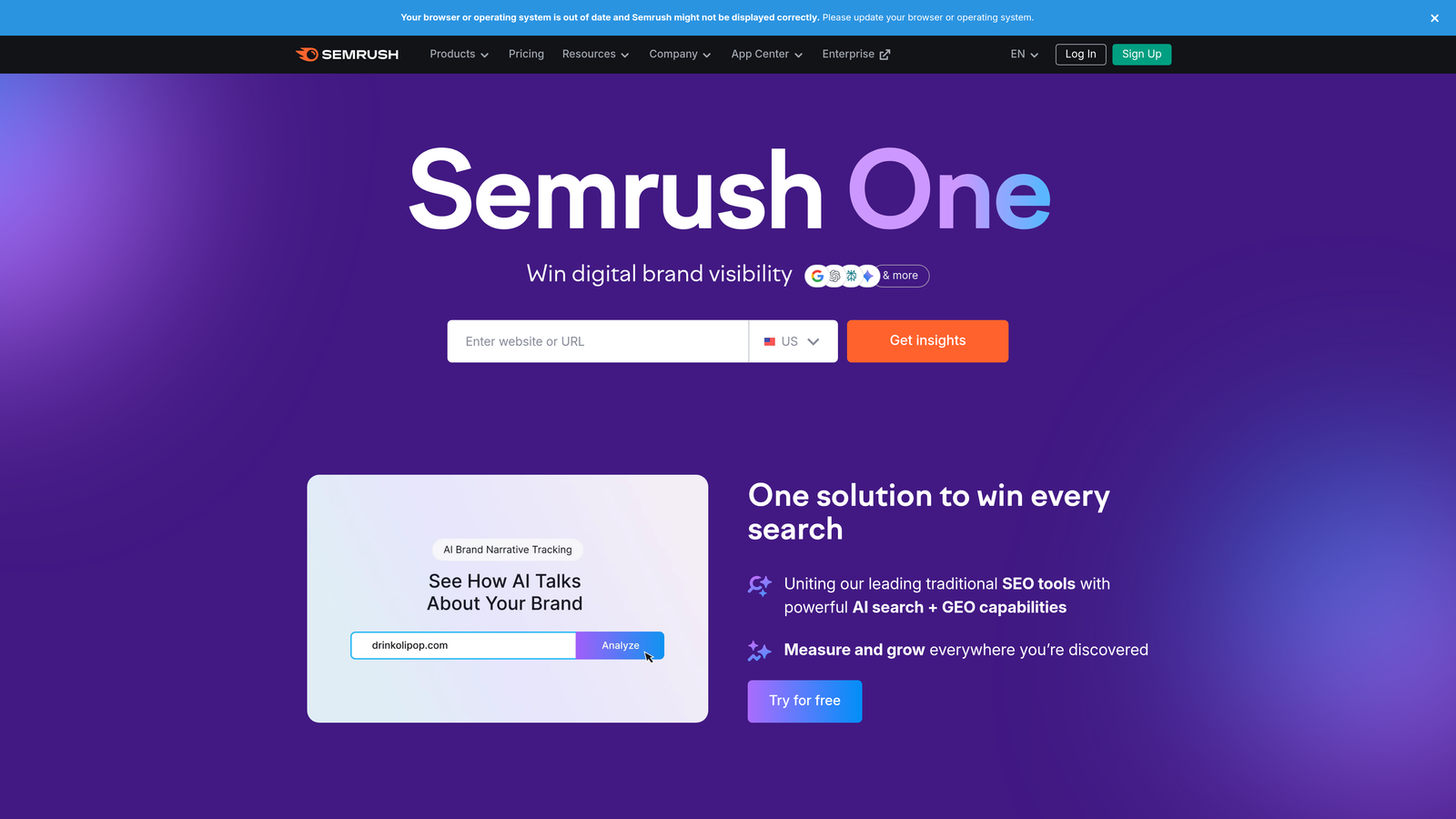
SEMrush is an all-in-one marketing platform that combines position tracking, keyword gap analysis, and competitor benchmarking for both organic and paid campaigns.
Where This Tool Shines
SEMrush excels at showing you not just where your keywords rank, but how you stack up against competitors. The Position Tracking tool monitors rankings daily across different devices and locations, while the Keyword Gap feature reveals which terms your competitors rank for that you don't.
The platform's strength lies in its breadth. You can track organic rankings, audit PPC ad copy, analyze backlinks, and generate client reports—all from a single dashboard. For agencies managing comprehensive digital marketing strategies, this consolidation saves hours of platform-hopping.
Key Features
Daily Position Tracking: Monitor keyword rankings with updates every 24 hours across desktop, mobile, and local search.
Competitor Keyword Overlap: Identify which keywords you and your competitors are both targeting and compare performance.
SERP Feature Tracking: See when your keywords trigger featured snippets, local packs, or other SERP elements.
PPC Keyword Research: Access historical ad data and keyword suggestions specifically for paid campaigns.
Customizable Dashboards: Build white-label reports that pull data from multiple tools into client-ready visualizations.
Best For
Marketing teams and agencies that need a single platform for SEO and PPC tracking across multiple clients. The learning curve is steeper than specialized tools, but the depth of data justifies it for comprehensive strategies.
Pricing
Starts at $139.95 per month for the Pro plan, which includes 500 tracked keywords and basic features. Higher tiers unlock more keywords and advanced functionality.
3. Ahrefs
Best for: SEO-focused teams prioritizing accurate organic rank tracking and backlink analysis.
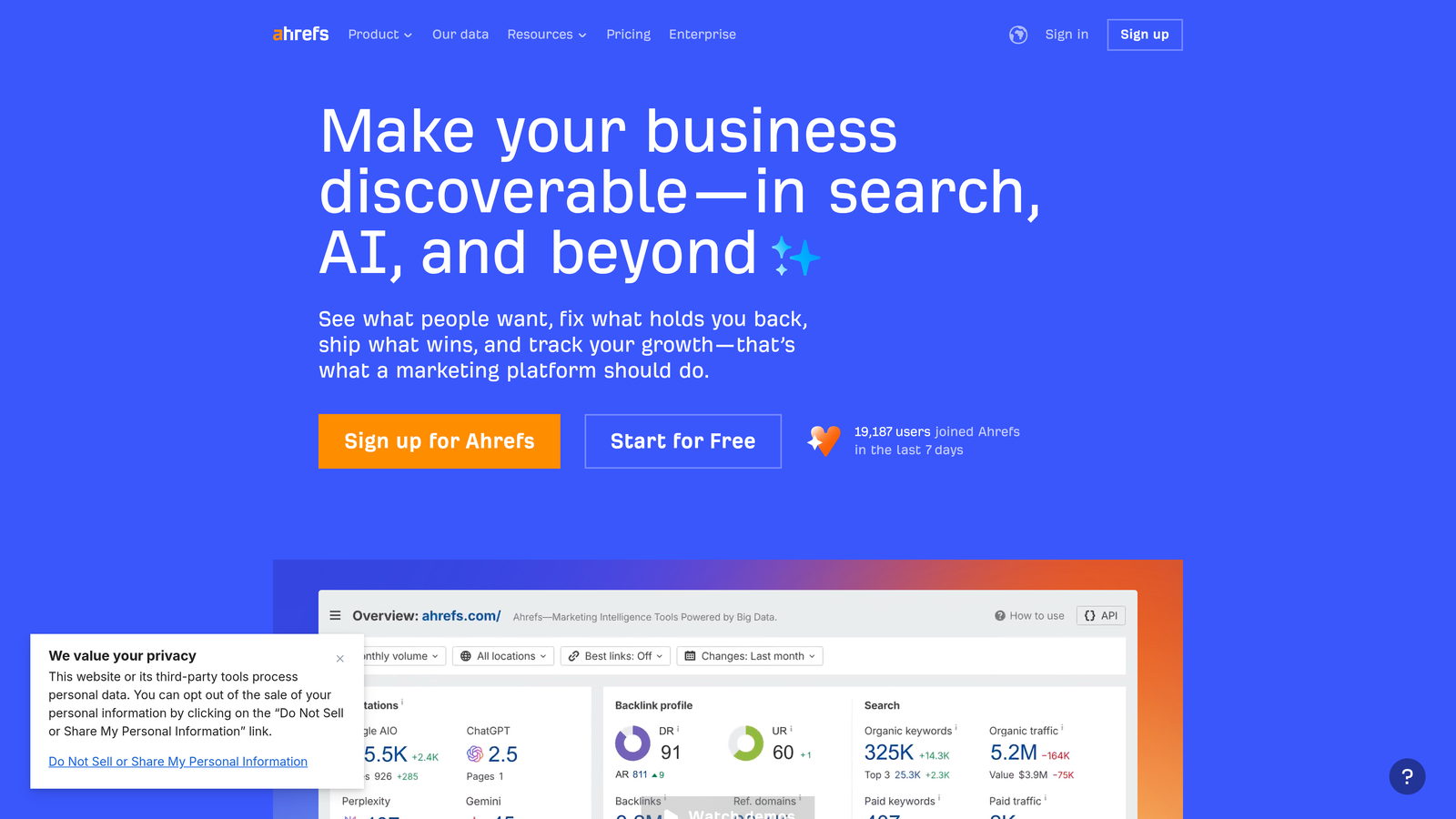
Ahrefs is an SEO toolset built around one of the web's largest backlink databases, with robust rank tracking and keyword research capabilities.
Where This Tool Shines
Ahrefs' Rank Tracker updates daily and includes historical data going back months or years, making it easy to spot long-term trends or sudden drops. The tool automatically detects SERP feature changes—if your keyword starts triggering a featured snippet or loses one, you'll get an alert.
The platform's keyword difficulty scoring is particularly reliable. It factors in actual backlink profiles of ranking pages, not just domain authority estimates, giving you a realistic sense of how hard it will be to rank for specific terms.
Key Features
Daily Rank Updates: Fresh ranking data every 24 hours with historical tracking for trend analysis.
SERP Feature Alerts: Get notified when keywords gain or lose featured snippets, local packs, or other elements.
Keyword Difficulty Scoring: Evaluate ranking feasibility based on backlink profiles of top-ranking pages.
Content Gap Analysis: Find keywords your competitors rank for that you're missing entirely.
Share of Voice Metrics: Measure your visibility compared to competitors across tracked keyword sets.
Best For
SEO professionals and content teams focused primarily on organic search performance. If backlink analysis and content strategy are core to your workflow, Ahrefs integrates rank tracking seamlessly with those functions.
Pricing
Starts at $129 per month for the Lite plan, which includes 750 tracked keywords. Plans scale up based on keyword volume and team size.
4. Google Ads Keyword Planner
Best for: PPC advertisers needing free search volume data and bid estimates for Google Ads campaigns.
Google Ads Keyword Planner is a free native tool within Google Ads for keyword research, search volume estimates, and bid forecasting.

Where This Tool Shines
Keyword Planner provides data directly from Google's search engine, making it the most accurate source for search volume trends and competition levels. Unlike third-party tools that estimate these metrics, you're getting the actual numbers Google uses to power its ad auction.
The bid forecasting feature is particularly useful for budget planning. Enter a list of keywords and target locations, and Keyword Planner estimates how much you'll need to spend to achieve specific impression or click volumes.
Key Features
Search Volume and Trend Data: View monthly search volumes and historical trends for any keyword.
Keyword Suggestions: Generate related keyword ideas based on seed terms or your website content.
Competition Level Indicators: See how many advertisers are bidding on each keyword (low, medium, high).
Bid Estimate Forecasting: Predict costs and performance based on different bid strategies.
Direct Campaign Integration: Add keywords directly to ad groups without leaving the tool.
Best For
Solo advertisers and small businesses running Google Ads on tight budgets. It won't track organic rankings or provide competitor insights, but for PPC-specific keyword research, it's hard to beat free access to Google's own data.
Pricing
Completely free with a Google Ads account. You don't need to run active campaigns to access the tool, though search volume ranges are more precise if you have ad spend history.
5. SpyFu
Best for: Competitive intelligence and uncovering competitor PPC and SEO keyword strategies.
SpyFu specializes in revealing which keywords your competitors are buying in Google Ads and ranking for organically, complete with historical data going back over a decade.

Where This Tool Shines
SpyFu's competitive intelligence goes deeper than most tools. You can see not just which keywords a competitor ranks for today, but which ones they've bought ads for in the past, how their ad copy has evolved, and when they started or stopped targeting specific terms.
The keyword overlap feature is particularly useful for identifying gaps in your own strategy. Enter your domain and a competitor's, and SpyFu shows you keywords they're targeting that you're not—often revealing profitable opportunities you've overlooked.
Key Features
Competitor Ad History: View every ad a competitor has run, including copy variations and landing pages.
Organic and Paid Keyword Overlap: Compare your keyword portfolio against competitors to find gaps and opportunities.
Domain Comparison Tools: Analyze multiple competitors side-by-side to identify market leaders and emerging players.
Keyword Grouping Suggestions: Get recommendations for organizing keywords into themed ad groups.
Unlimited Keyword Exports: Download full keyword lists without hitting export limits.
Best For
PPC managers and SEO strategists who prioritize competitive analysis. If your strategy revolves around understanding what competitors are doing and finding ways to outmaneuver them, SpyFu provides the historical context other tools miss.
Pricing
Starts at $39 per month for the Basic plan, which includes 5,000 top keywords per domain and 6 months of historical data. Higher tiers unlock deeper history and more domains.
6. Moz Pro
Best for: SEO teams using Domain Authority as a competitive benchmark and needing site auditing alongside rank tracking.
Moz Pro is an SEO platform that combines keyword tracking, site auditing, and the proprietary Domain Authority metric for competitive analysis.

Where This Tool Shines
Moz's Rank Tracker updates weekly and splits data between mobile and desktop rankings, which is critical since Google now uses mobile-first indexing. The tool automatically detects SERP features like featured snippets and local packs, showing you when your rankings include these enhanced elements.
The platform's keyword difficulty and opportunity scores help prioritize which terms to target. Difficulty estimates how hard it will be to rank, while opportunity shows how much traffic you could gain—making it easier to focus on high-impact keywords rather than vanity metrics.
Key Features
Weekly Rank Tracking: Monitor keyword positions with separate mobile and desktop data.
Keyword Difficulty and Opportunity Scores: Evaluate ranking feasibility and potential traffic impact for each keyword.
SERP Analysis with Feature Tracking: See which SERP features appear for your keywords and whether you're capturing them.
Page Optimization Recommendations: Get on-page SEO suggestions for improving rankings on specific keywords.
Custom Reporting: Build branded reports that combine rank tracking data with site audit findings.
Best For
SEO teams that use Domain Authority as a core metric for evaluating link-building opportunities and competitive positioning. Moz's ecosystem works best if you're already invested in their methodology.
Pricing
Starts at $99 per month for the Standard plan, which includes 300 tracked keywords and basic features. Higher tiers add more keywords and advanced tools like API access.
7. Serpstat
Best for: Budget-conscious teams needing comprehensive SEO tracking with keyword clustering capabilities.
Serpstat is an affordable SEO platform offering daily rank tracking, keyword research, site auditing, and keyword clustering tools.
Where This Tool Shines
Serpstat's keyword clustering feature automatically groups related keywords based on search intent and SERP similarity. This is particularly useful for content planning—you can identify which keywords can be targeted with a single page versus which need separate content pieces.
The platform also excels at uncovering "search questions"—queries phrased as questions that often indicate high intent. For content marketers, this feature surfaces exactly what users are asking about your topics, making it easier to create content that answers real questions.
Key Features
Daily Rank Tracking: Fresh ranking data every 24 hours across multiple search engines and locations.
Keyword Clustering and Grouping: Automatically organize keywords by semantic similarity and search intent.
Competitor Analysis: Compare your keyword portfolio against competitors to identify gaps.
Search Questions and Related Keywords: Discover question-based queries and semantically related terms.
API Access: Build custom integrations and automate data pulls for advanced workflows.
Best For
Small to mid-sized SEO teams that need robust features without enterprise pricing. If you're currently using spreadsheets to manually cluster keywords, Serpstat's automation alone can save hours per week.
Pricing
Starts at $69 per month for the Individual plan, which includes 1,500 tracked keywords. This makes it one of the most affordable options for daily rank tracking with advanced features.
8. AccuRanker
Best for: Agencies and enterprise teams needing real-time rank data with on-demand refresh capabilities.
AccuRanker is a dedicated rank tracking tool known for its high-frequency updates and on-demand data refresh feature.
Where This Tool Shines
Most rank trackers update once per day, but AccuRanker lets you refresh rankings on demand whenever you need current data. This is critical for agencies running time-sensitive campaigns or needing to show clients immediate results after optimization work.
The platform's share of voice reporting is particularly useful for competitive analysis. Instead of just tracking individual keyword positions, you can see what percentage of total search visibility you own compared to competitors across entire keyword sets.
Key Features
On-Demand Rank Refresh: Update rankings instantly whenever you need current data, not just on a fixed schedule.
SERP Feature Monitoring: Track when keywords trigger featured snippets, local packs, or other enhanced results.
Share of Voice Reporting: Measure your total search visibility compared to competitors across keyword groups.
Competitor Tracking: Monitor up to 10 competitors per keyword and see how their rankings change over time.
White-Label Reporting: Create fully branded reports with custom domains for client delivery.
Best For
SEO agencies managing multiple client accounts and needing to demonstrate results quickly. The on-demand refresh feature is particularly valuable when you need to show ranking improvements immediately after implementing changes.
Pricing
Starts at $129 per month for 1,000 tracked keywords. Pricing scales based on keyword volume, with discounts for annual billing.
9. Whatagraph
Best for: Marketing teams focused on client reporting and aggregating keyword data from multiple sources.
Whatagraph is a marketing reporting platform that pulls keyword performance data from multiple tools into visual, client-ready reports.
Where This Tool Shines
Whatagraph doesn't track keywords itself—it aggregates data from other platforms like Google Ads, Google Search Console, SEMrush, and Ahrefs into unified dashboards. This is particularly valuable for agencies managing clients across different tool ecosystems.
The platform's automated report scheduling means you can set up a report template once, connect your data sources, and have updated reports delivered to clients automatically every week or month. This eliminates the manual work of logging into multiple platforms, exporting data, and building reports from scratch.
Key Features
Multi-Source Data Integration: Pull keyword performance data from Google Ads, Search Console, SEMrush, Ahrefs, and more into a single view.
Automated Report Scheduling: Set up report templates that update and send automatically on your chosen schedule.
Custom Visualization Templates: Build branded dashboards with drag-and-drop widgets for different metrics.
White-Label Branding: Remove Whatagraph branding and add your agency's logo and colors.
Cross-Channel Performance Views: Compare keyword performance across paid, organic, and social channels in one dashboard.
Best For
Agencies and consultants who manage clients using different tools and need to consolidate reporting. If you're spending hours each week manually building client reports, Whatagraph's automation can reclaim that time.
Pricing
Starts at $249 per month for the Professional plan, which includes 10 data sources and unlimited reports. Higher tiers add more integrations and team features.
Making the Right Choice
The best keyword tracking tool depends on where you spend most of your time and what you need to do with the data. For PPC managers working primarily inside Google Ads, Keywordme offers the fastest path from insight to action by eliminating the export-analyze-import workflow entirely. If you need comprehensive SEO tracking with competitor analysis, SEMrush and Ahrefs remain the gold standards—though they come with steeper learning curves and higher price tags.
Budget-conscious teams should look at Serpstat for daily rank tracking with advanced features like keyword clustering, or stick with Google's free Keyword Planner if you're focused exclusively on PPC. Agencies needing real-time data will appreciate AccuRanker's on-demand refresh capability, while those prioritizing client reporting should consider Whatagraph for automated multi-source dashboards.
The common thread across all these tools? They're most valuable when they integrate seamlessly into your existing workflow. A powerful platform you rarely use because it's too complicated is less effective than a simpler tool you check daily and act on immediately. Start with where you're already working—whether that's Google Ads, an SEO dashboard, or client reporting software—and choose the tool that meets you there.
Optimize Google Ads Campaigns 10X Faster—Without Leaving Your Account. Keywordme lets you remove junk search terms, build high-intent keyword groups, and apply match types instantly—right inside Google Ads. No spreadsheets, no switching tabs, just quick, seamless optimization. Manage one campaign or hundreds and save hours while making smarter decisions. Start your free 7-day trial (then just $12/month) and take your Google Ads game to the next level.
.svg)