
9 Best Negative Keyword Software Tools for Google Ads in 2026
The best negative keyword software tools help PPC managers eliminate wasted ad spend by quickly identifying and blocking irrelevant search terms at scale. This roundup ranks 9 top tools for 2026 based on how effectively they help advertisers find, add, and manage negative keywords across single campaigns or large agency accounts.


TL;DR: The best negative keyword software helps you stop burning budget on irrelevant searches, clean up your search terms report fast, and build smarter keyword lists without living in spreadsheets. This list covers 9 tools ranked by how well they actually help PPC managers find, add, and manage negative keywords at scale.
If you've ever stared at a bloated search terms report wondering why Google matched your ad to something completely off-topic, you already know why negative keyword management matters. The right software makes this process fast, systematic, and repeatable, whether you're managing one campaign or fifty client accounts. We've rounded up the best tools available in 2026, starting with the one built specifically for this workflow.
1. Keywordme
Best for: PPC managers and agencies who want to optimize directly inside Google Ads without switching tools.
Keywordme is a Chrome extension that plugs directly into Google Ads' Search Terms Report, letting you add negatives, remove junk terms, apply match types, and build keyword lists with one click—without ever leaving the Google Ads interface.

Where This Tool Shines
Most negative keyword tools require you to export data, work in a separate dashboard, and re-import your changes. Keywordme eliminates that entire loop. You're already in the Search Terms Report looking at what triggered your ads—so why not act on it right there? That's exactly what this extension enables.
In most accounts I audit, the biggest delay in negative keyword management isn't identifying the junk terms, it's the friction of acting on them. Keywordme removes that friction entirely. For agencies managing multiple clients, the multi-account and team support makes it especially practical at scale.
Key Features
One-Click Negative Addition: Add negative keywords directly inside the Search Terms Report without exporting or switching tabs.
Bulk Editing with Match Type Control: Select multiple junk terms and apply exact, phrase, or broad match negatives in a single action.
Keyword Clustering: Group high-intent search terms into new keyword lists without manual copy-pasting.
Multi-Account and Team Support: Designed for agency workflows where multiple users manage multiple client accounts simultaneously.
Native Search Terms Report Integration: Works where you're already working—no separate dashboard required.
Best For
Keywordme is the right fit for solo advertisers and agency teams who spend meaningful time in the Search Terms Report and want to cut that time down significantly. If your current process involves any spreadsheet exports, this tool is worth trying immediately.
Pricing
$12/month per user. A 7-day free trial is available with no commitment required.
2. Google Ads Native Negative Keywords
Best for: Advertisers just starting out who need basic negative keyword control at no additional cost.
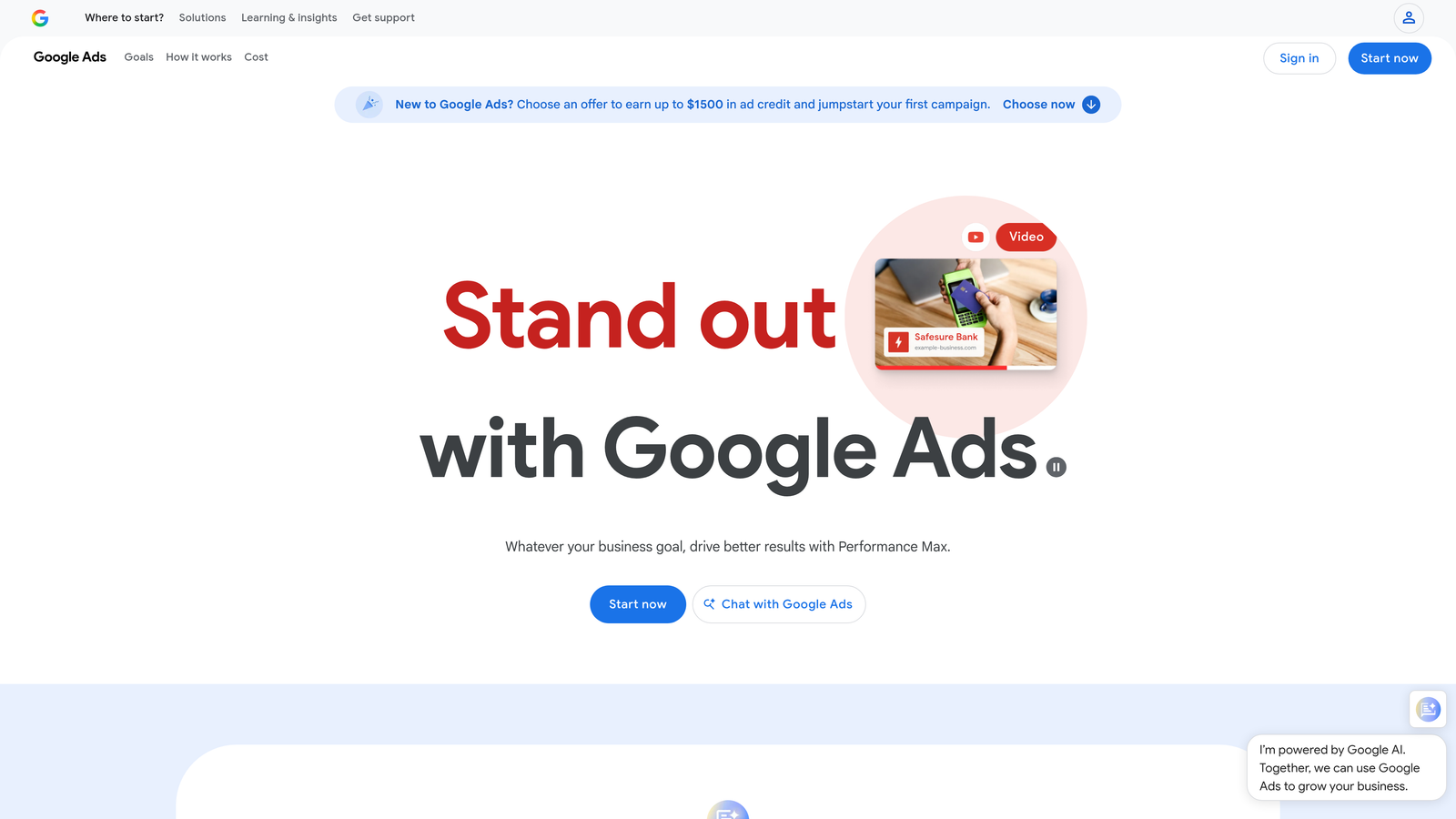
Google Ads includes built-in negative keyword management tools covering campaign-level negatives, ad group negatives, and shared negative keyword lists.
Where This Tool Shines
The native toolset is solid for foundational negative keyword management. Shared negative keyword lists are genuinely useful—you build a list once and apply it across multiple campaigns, which saves real time when you're managing a structured account.
The limitation is scale and speed. There's no automation, no smart filtering, and no bulk suggestion engine. You're manually reviewing terms and manually adding exclusions. For a small account with light traffic, that's manageable. For anything larger, it becomes a time sink fast.
Key Features
Shared Negative Keyword Lists: Build one list and apply it across multiple campaigns simultaneously.
Campaign and Ad Group Level Control: Apply negatives at the right level of specificity for your account structure.
Full Match Type Support: Broad, phrase, and exact match negatives are all supported natively.
No Additional Cost: Included with every Google Ads account at no extra charge.
Manual Review Required: No automation or intelligent suggestions—everything is done by hand.
Best For
New advertisers, small accounts with limited search term volume, or anyone who wants a free baseline before investing in dedicated tooling. Works well as a complement to more specialized tools rather than a standalone solution for high-volume accounts.
Pricing
Free. Included with all Google Ads accounts.
3. SEMrush PPC Keyword Tool
Best for: Teams who want to combine competitor research with negative keyword discovery inside a single platform.
SEMrush's PPC Keyword Tool is part of the broader SEMrush suite, helping advertisers organize keywords, identify negatives across ad groups, and use competitor data to build proactive exclusion lists.
Where This Tool Shines
What usually happens here is advertisers use SEMrush for SEO and then realize the PPC Keyword Tool is already available in their plan. The cross-channel data is genuinely useful: if a keyword drives organic traffic but converts poorly in paid, that's a strong signal it belongs on your negative list.
The competitor keyword data is the real differentiator. You can see what terms competitors are actively bidding on and use that context to inform your exclusions before you've even spent a dollar on bad traffic.
Key Features
Cross-Channel Keyword Data: Surface irrelevant terms by comparing organic and paid keyword performance in one view.
Negative Conflict Detection: Identify when negatives in one ad group might block traffic intended for another.
Competitor PPC Data: Use market intelligence to build proactive negative lists based on real competitor behavior.
Export-Ready Lists: Generate keyword lists formatted for direct upload into Google Ads.
Broader Suite Access: SEO, content, analytics, and PPC tools all under one subscription.
Best For
Marketing teams and agencies that already use SEMrush for SEO and want to extend that investment into PPC research. Less focused on ongoing search term cleanup and more useful in the planning and research phase.
Pricing
Included in SEMrush plans starting around $139.95/month. Verify current pricing at SEMrush.com before purchasing.
4. WordStream Advisor
Best for: SMBs and smaller agencies who want guided PPC optimization with minimal time investment per week.
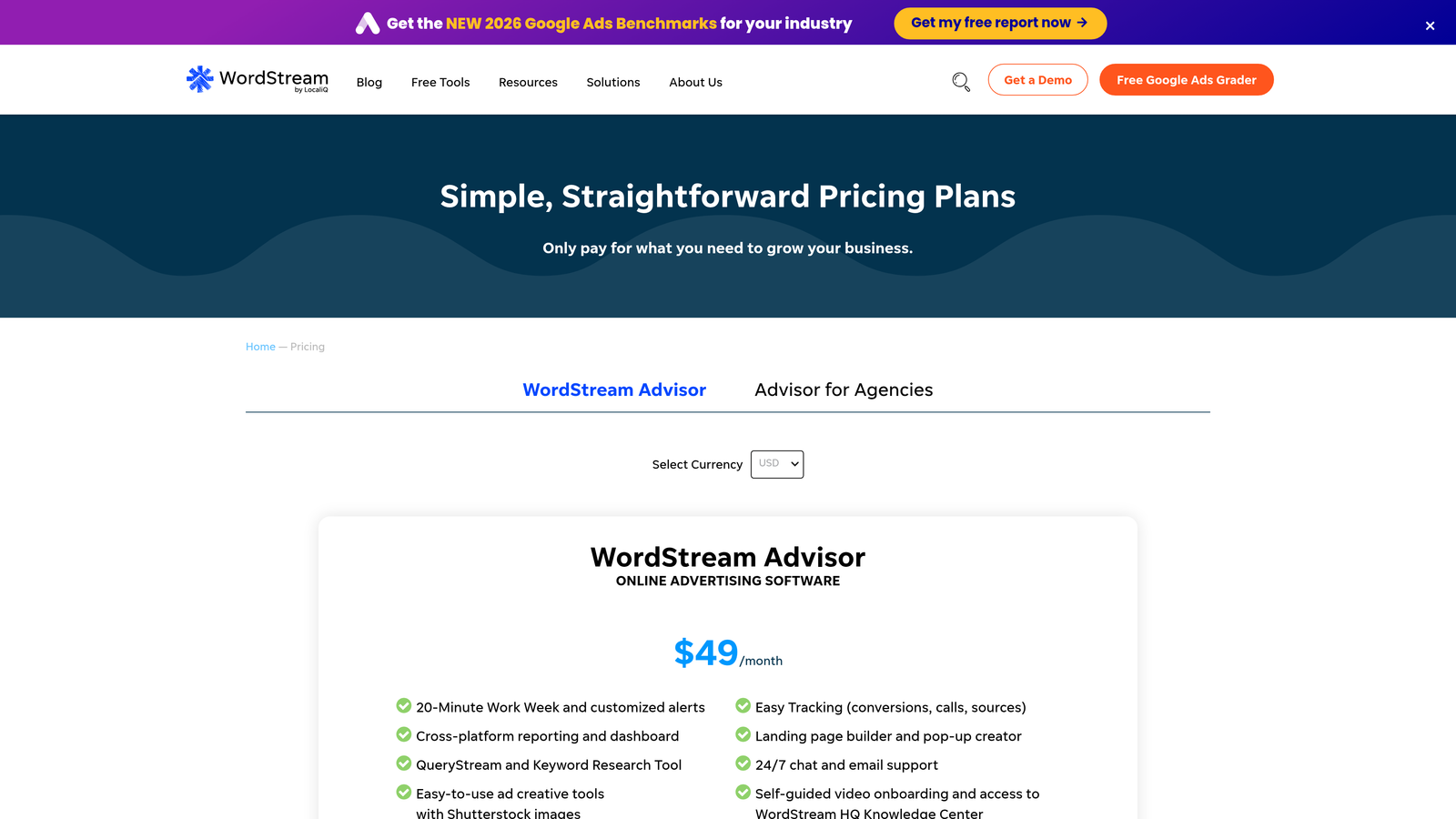
WordStream Advisor is a guided PPC management platform that surfaces negative keyword suggestions as part of a structured optimization workflow designed to reduce wasted spend efficiently.
Where This Tool Shines
WordStream built its reputation around the "20-minute work week" concept—a structured workflow that walks you through the most impactful account optimizations in a short session. Negative keyword recommendations are baked into that flow, which means you're not hunting for problems; the platform surfaces them for you.
The mistake most agencies make with WordStream is expecting it to match the granular control of enterprise platforms. It's designed for speed and simplicity, not deep configuration. If your clients are smaller accounts and you want a repeatable cleanup process without heavy setup, it delivers that well.
Key Features
Weekly Optimization Alerts: Receive negative keyword recommendations based on recent search term performance data.
Guided Workflow: Structured optimization sessions reduce the time needed to manage account health.
Performance Grader: Identifies areas of wasted spend including irrelevant search terms triggering your ads.
Negative Keyword Suggestions: Surfaces terms that are underperforming and flagged for exclusion.
SMB-Friendly Interface: Designed for users who don't want to spend hours inside complex dashboards.
Best For
Small business advertisers and smaller agency accounts where simplicity and guided recommendations matter more than advanced automation or granular control.
Pricing
Pricing varies by plan. Check WordStream.com for current rates as pricing has shifted over time.
5. Optmyzr
Best for: Enterprise PPC teams and agencies managing large, complex account structures who need rule-based automation.
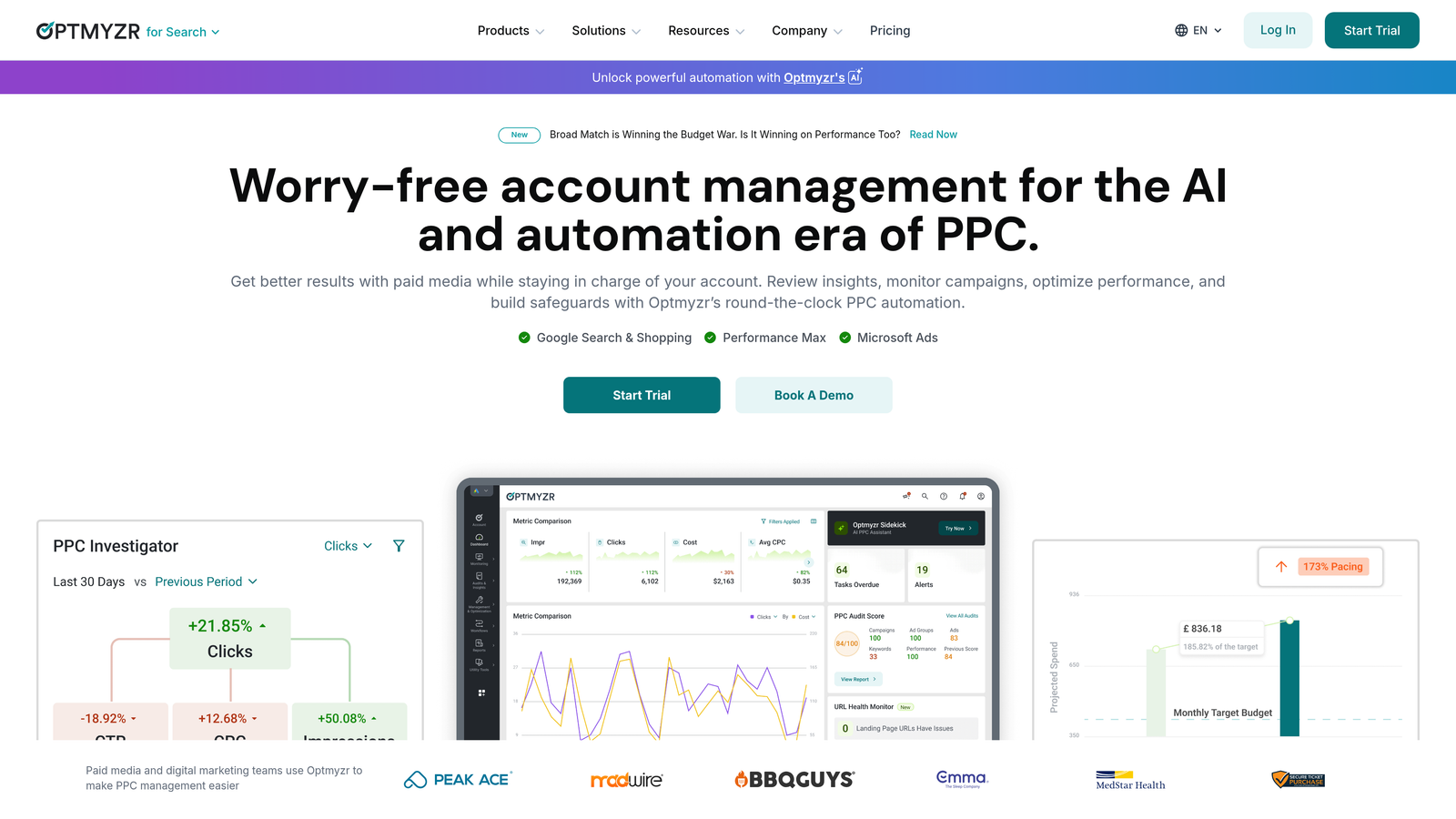
Optmyzr is an enterprise-grade PPC management platform with powerful rule-based automation for negative keyword management, including threshold-based auto-exclusions and complete audit trails.
Where This Tool Shines
The rule-based automation is where Optmyzr genuinely earns its price tag. You can set conditions like "if a search term generates more than 10 clicks with zero conversions, add it as a negative automatically." That kind of logic runs in the background, keeping accounts clean without requiring manual review of every term.
For agencies managing accounts with tens of thousands of search terms per month, this automation is the difference between staying on top of wasted spend and falling behind. The audit trail feature is also underrated—every automated action is logged, which matters when clients ask questions.
Key Features
Rule-Based Automation: Auto-add negatives when search terms hit custom performance thresholds you define.
One-Click Optimizations: Batch process recommendations with a complete log of every change made.
Search Term Analysis at Scale: Handle large, complex account structures without manual bottlenecks.
Custom Scripts and Alerts: Extend functionality with custom logic for advanced use cases.
Multi-Account Management: Built for agencies handling many clients with different account structures.
Best For
Agencies and in-house teams managing high-spend accounts where automation ROI is clear. Less cost-effective for small accounts or solo advertisers with lower search term volume.
Pricing
Plans start around $208/month and scale with ad spend. Verify current pricing at Optmyzr.com.
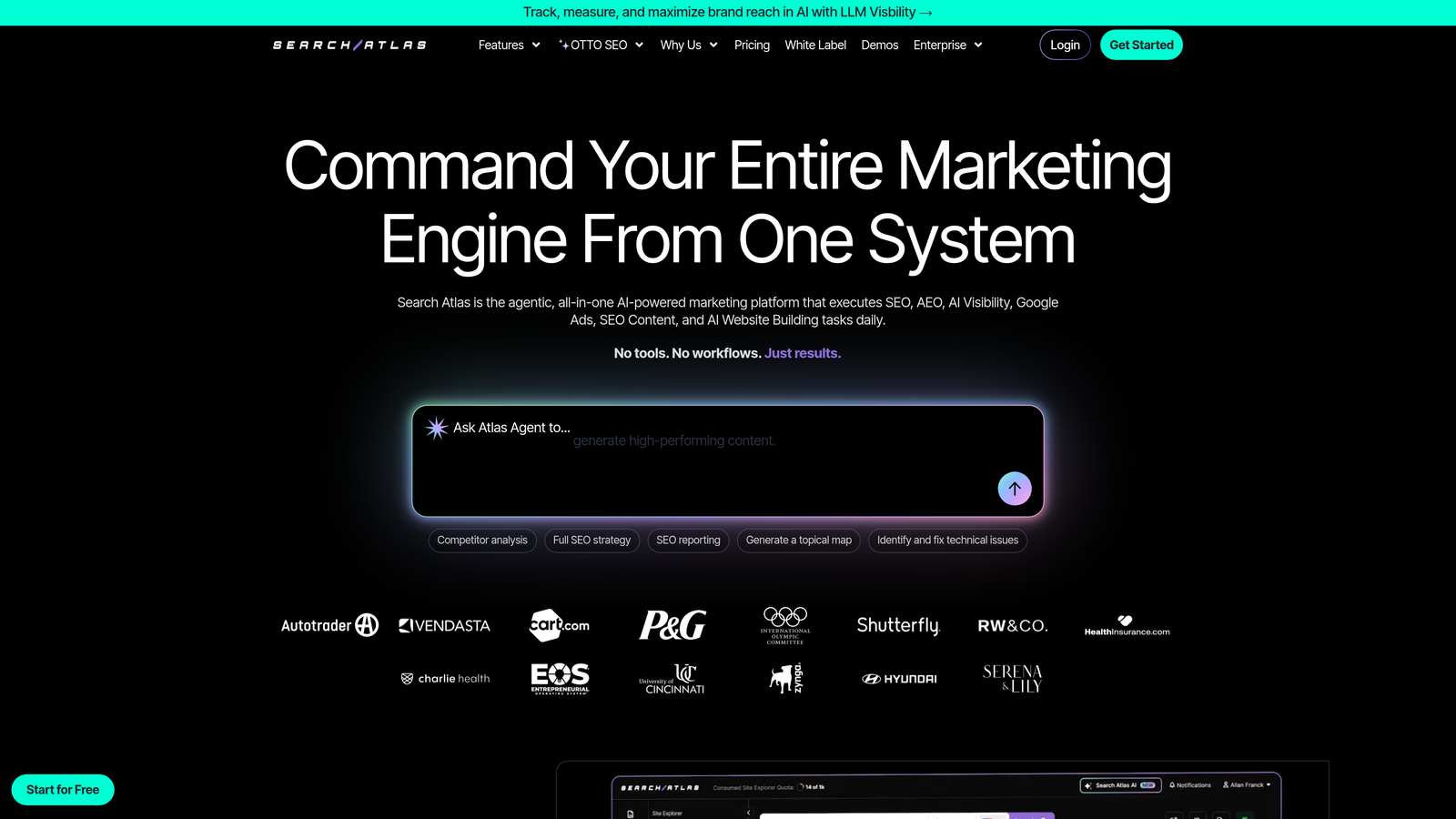
6. Search Atlas
Best for: Integrated SEO and PPC teams who want keyword intelligence and exclusion research in one platform.
Search Atlas is a unified SEO and PPC platform with keyword intelligence tools that help teams identify irrelevant terms and build smarter exclusion lists alongside their organic keyword strategy.
Where This Tool Shines
Search Atlas is strongest when your SEO and PPC teams are working from the same data. The AI-driven keyword clustering helps separate high-intent terms from noise, which directly informs what belongs on your negative list. It's less of a "manage negatives daily" tool and more of a "build smarter lists from the start" tool.
The platform is actively expanding its feature set, so it's worth checking their current capabilities before evaluating. Teams that already have a content and SEO workflow built here will find the PPC keyword tools a natural extension rather than a separate investment.
Key Features
AI-Driven Keyword Clustering: Automatically group keywords by intent to separate relevant from irrelevant terms.
Unified Organic and Paid Data: View organic and paid keyword performance together to surface exclusion candidates.
Keyword Gap Analysis: Identify irrelevant traffic sources useful for building initial negative lists.
Content and PPC Strategy Tools: Manage both channels without switching platforms.
Regular Feature Updates: Actively developed platform with expanding capabilities.
Best For
Teams running integrated SEO and PPC strategies who want research-phase support for negative keyword list building. Less specialized for ongoing daily search term cleanup.
Pricing
Plans vary. Check SearchAtlas.com for current pricing options.
7. Adalysis
Best for: Data-driven PPC managers who want automated search term analysis and conflict detection across Google and Microsoft Ads.
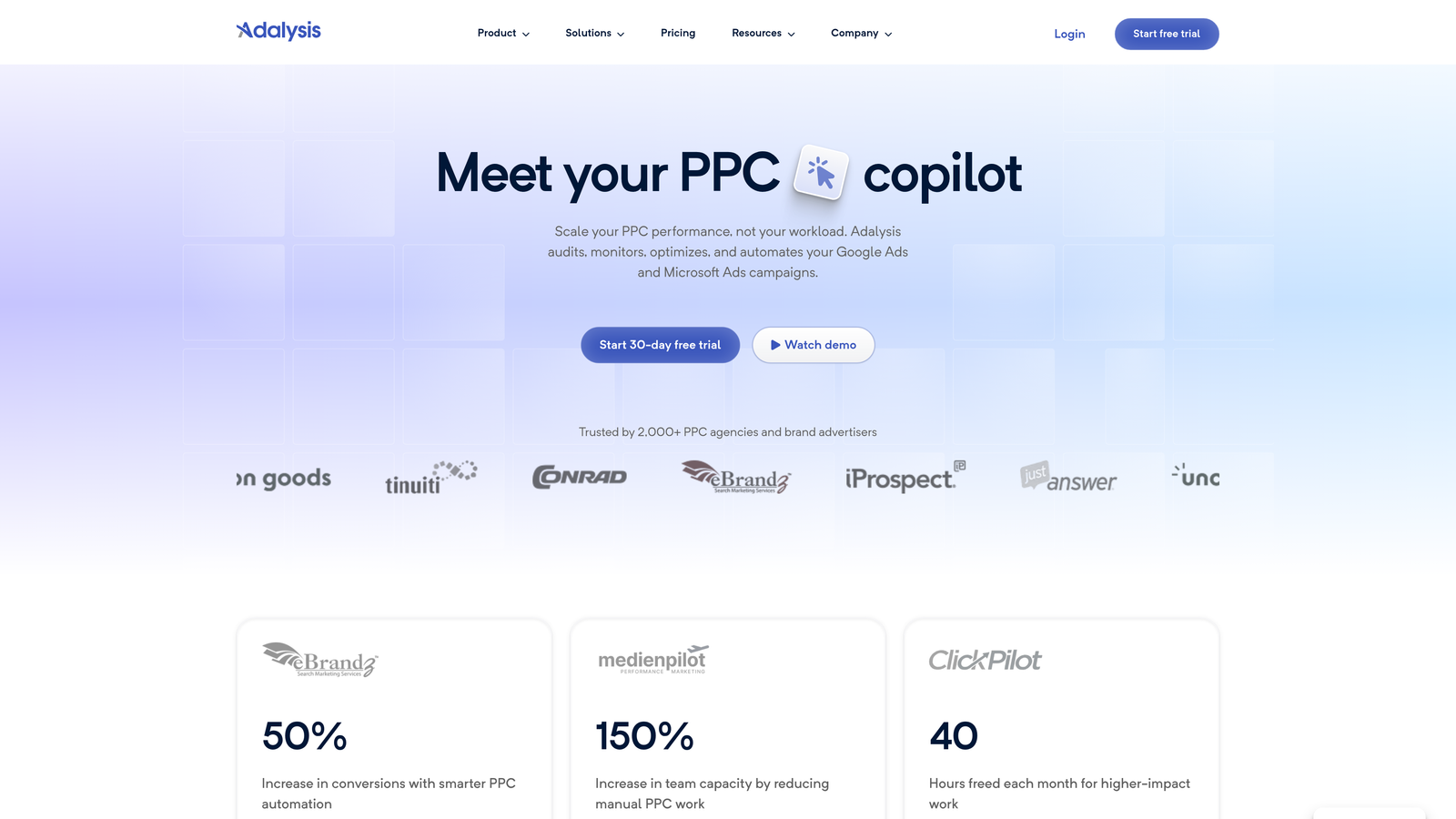
Adalysis is a Google Ads and Microsoft Ads analysis platform with automated search term reporting, negative keyword recommendations, and detection of search term conflicts across ad groups.
Where This Tool Shines
The search term conflict detection is genuinely useful and often overlooked. What usually happens in accounts that haven't been audited in a while is the same search term starts triggering multiple ad groups, causing internal competition and inflated CPCs. Adalysis surfaces these conflicts automatically, which makes it a strong auditing tool for inherited accounts.
The automated search term analysis saves time on the review side. Instead of manually sorting through hundreds of terms, Adalysis flags the ones worth acting on and suggests whether they should become negatives or new keywords.
Key Features
Automated Search Term Reports: Regular analysis with negative keyword recommendations surfaced automatically.
Search Term Conflict Detection: Identifies when the same term is triggering multiple ad groups unintentionally.
Account Audit Tools: Dig into historical data to find long-standing sources of wasted spend.
Ad Testing and Quality Score Monitoring: Negative keyword tools sit alongside broader account health features.
Google Ads and Microsoft Ads Support: Manage both platforms from a single dashboard.
Best For
PPC managers who inherit messy accounts, run regular audits, or manage campaigns across both Google and Microsoft Ads and want automated analysis to guide their cleanup process.
Pricing
Plans start around $99/month. Verify current pricing at Adalysis.com.
8. SpyFu
Best for: Freelancers and small teams who want affordable competitive intelligence to inform their negative keyword research.
SpyFu is a competitive intelligence tool that reveals which keywords competitors are bidding on—and which they're avoiding—making it useful for building initial negative keyword lists based on real market data.
Where This Tool Shines
SpyFu's value for negative keyword work is primarily in the research phase. If a competitor with a similar offer has been running ads for years and consistently avoids certain keyword patterns, that's a signal worth paying attention to. You can use their exclusion behavior as a starting point for your own negative lists before you've spent anything on bad traffic.
It's not a tool for ongoing search term cleanup—there's no direct integration with Google Ads for adding negatives. Think of it as intelligence gathering that feeds into your negative keyword strategy, especially when launching new campaigns.
Key Features
Competitor PPC Keyword Data: See which terms competitors are actively bidding on and which they appear to be excluding.
Keyword Gap Analysis: Identify irrelevant traffic sources based on market positioning data.
Historical Ad Data: Review long-term patterns to understand what consistently fails to convert in your space.
Affordable Entry Point: Accessible pricing makes it practical for freelancers and small teams.
Research-Phase Focus: Best used before or during campaign setup rather than for ongoing account maintenance.
Best For
Freelancers, consultants, and small teams launching new campaigns who want competitive context to build smarter initial negative lists without a large software budget.
Pricing
Plans start around $39/month. Verify current pricing at SpyFu.com.
9. Negative Keyword Pro
Best for: Advertisers who want a dedicated, focused negative keyword tool without the overhead of a full PPC management suite.
Negative Keyword Pro is a purpose-built tool dedicated entirely to negative keyword list management, offering industry-specific starter lists and a simple interface for advertisers who want focused functionality.
Where This Tool Shines
The industry-specific starter lists are the standout feature here. If you're running campaigns in legal, healthcare, or e-commerce, starting with a curated list of known irrelevant terms for your vertical saves meaningful setup time. You're not building from zero—you're refining from a solid baseline.
The simplicity is intentional. There's no complex dashboard to learn, no suite of features you'll never use. If negative keyword list management is the specific problem you're solving and you don't need the broader capabilities of a full PPC platform, this tool delivers a clean, focused experience at a lower cost.
Key Features
Industry-Specific Starter Lists: Pre-built negative keyword lists for verticals including legal, healthcare, and e-commerce.
Focused Interface: Built exclusively for negative keyword workflows without unrelated platform features.
Bulk List Building and Export: Build comprehensive negative keyword lists and export them for Google Ads upload.
Vertical-Specific Coverage: Starter lists reflect common irrelevant terms within specific industries, not just generic exclusions.
Lower Cost Entry Point: Priced below full-suite PPC management platforms.
Best For
Advertisers in specific verticals who want a quick-start negative keyword foundation without investing in a full platform. Also useful as a supplementary tool alongside Google Ads' native functionality.
Pricing
Check NegativeKeywordPro.com for current pricing.
Which Tool Is Right for Your Workflow?
The honest answer is that the best negative keyword software depends on where you spend your time and how much search term volume you're dealing with.
If you're already in Google Ads managing search terms regularly, Keywordme is the most efficient choice. It removes the export-edit-import loop entirely and works right where you're already looking. For a solo advertiser or an agency team running multiple client accounts, the time savings are immediate and the price point is low enough that the ROI is obvious.
For enterprise accounts with complex structures and high search term volume, Optmyzr's rule-based automation is the right investment. Set your thresholds, let the rules run, and review the audit trail rather than individual terms.
If you're in the research phase or launching new campaigns, SpyFu or SEMrush give you competitive context before you've spent a dollar on irrelevant traffic. And if you're in a specific vertical like legal or healthcare, Negative Keyword Pro's starter lists give you a solid foundation without starting from scratch.
For those just getting started with no budget for additional tools, Google Ads' native functionality is a reasonable starting point—especially shared negative keyword lists, which are underused by most advertisers.
The common thread across all the best tools in this category: they make the gap between identifying a junk term and excluding it as small as possible. The faster that loop closes, the less budget gets wasted on searches that will never convert.
If you want to start there, Start your free 7-day trial of Keywordme and see how much time you save in your first session—then it's just $12/month to keep going.
.svg)