
9 Best Keyword Optimization Tools for Smarter PPC Campaigns in 2026
Discover the best keyword optimization tools that help PPC managers in 2026 find high-intent keywords faster, eliminate wasted ad spend, and scale campaigns efficiently without manual spreadsheet work. This tested guide covers everything from lightweight Chrome extensions to AI-powered platforms that transform tedious keyword analysis into quick, data-driven decisions for Google Ads and multi-client campaign management.


If you're managing PPC campaigns in 2026, you already know the drill: profitable keywords are hiding in plain sight, junk search terms are burning your budget, and manually combing through spreadsheets is eating up hours you don't have. The right keyword optimization tool doesn't just speed things up—it fundamentally changes how you work, turning tedious analysis into quick, confident decisions.
Whether you're optimizing one Google Ads account or managing campaigns for dozens of clients, the tools in this guide can help you find high-intent keywords faster, eliminate wasted spend with a few clicks, and scale your campaigns without drowning in data. We've tested these with real campaigns and picked options that actually deliver—from lightweight Chrome extensions to full-suite platforms with AI-powered insights.
Here are the top keyword optimization tools worth your attention right now.
1. Keywordme
Best for: Google Ads users who want to optimize campaigns directly inside the native interface
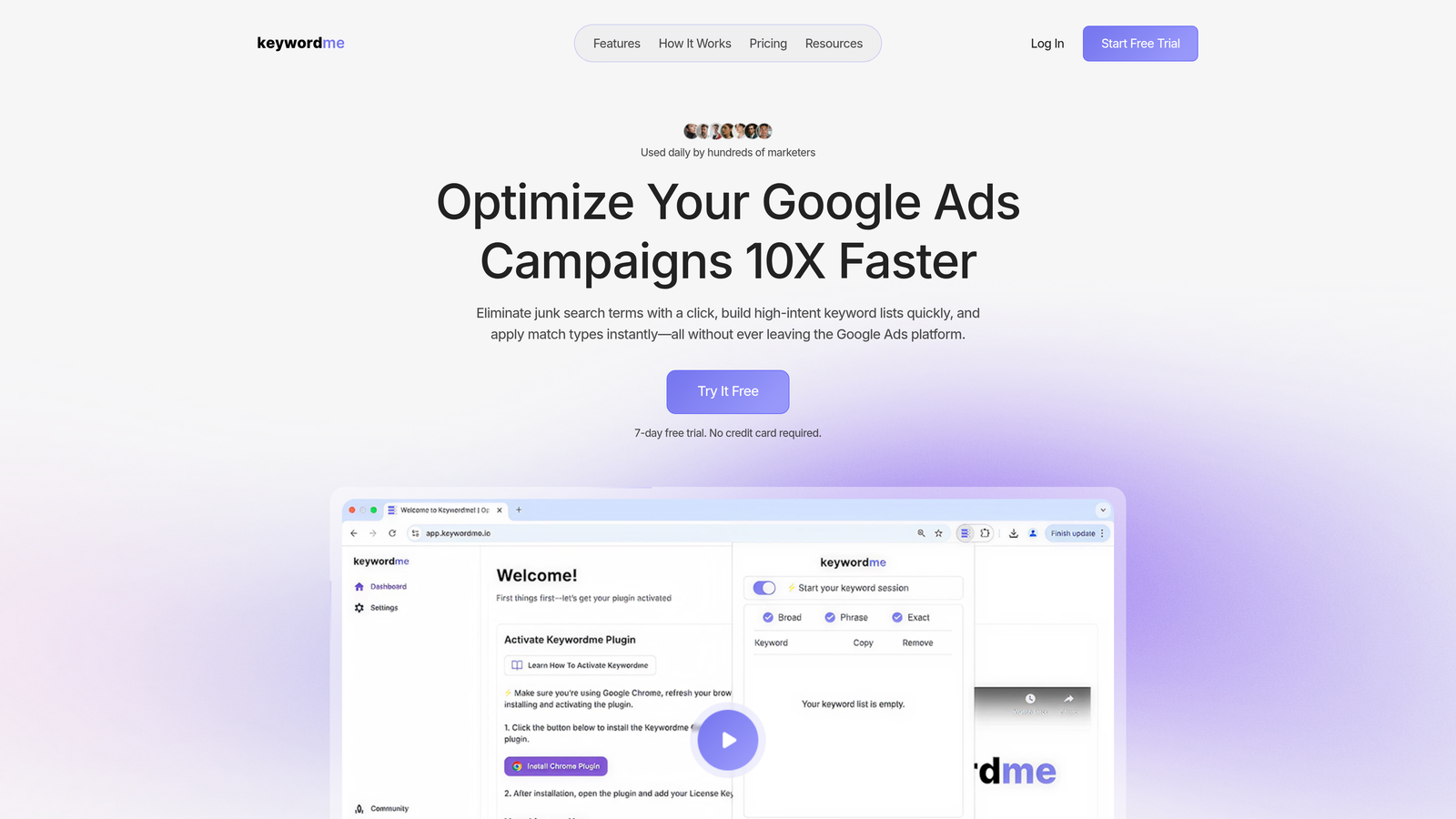
Keywordme is a Chrome extension that eliminates the spreadsheet shuffle by letting you optimize keywords right inside Google Ads' Search Terms Report.
Where This Tool Shines
Most keyword optimization tools force you to export data, analyze it somewhere else, then manually apply changes back in Google Ads. Keywordme cuts out all that friction by working exactly where you're already spending your time—inside the Google Ads interface itself.
The real power comes from speed. You can remove junk search terms with one click, add negatives instantly, apply match types without switching tabs, and build new keyword groups on the fly. For agencies managing multiple clients, the multi-account support and team collaboration features mean everyone stays on the same page without clunky handoffs.
Key Features
One-Click Negative Keywords: Flag and add negative keywords directly from the Search Terms Report without exporting to spreadsheets.
Instant Match Type Application: Apply broad, phrase, or exact match types to keywords without leaving Google Ads.
Keyword Clustering: Automatically group related keywords to streamline campaign structure and improve Quality Scores.
Bulk Editing: Make changes to multiple keywords at once, saving hours on repetitive tasks.
Multi-Account Support: Switch between client accounts seamlessly, perfect for agencies managing dozens of campaigns.
Best For
Solo advertisers who want to cut optimization time in half, and agencies that need a fast, scalable way to manage multiple Google Ads accounts without the overhead of complex platforms or endless spreadsheet exports.
Pricing
Flat rate of $12/month per user with a 7-day free trial. No hidden fees or ad spend-based pricing tiers.
2. SEMrush
Best for: Marketers who need comprehensive keyword research combined with competitive intelligence
SEMrush is an all-in-one marketing platform with a massive keyword database covering over 25 billion search terms across multiple countries.
Where This Tool Shines
SEMrush excels at showing you not just what keywords exist, but which ones your competitors are bidding on and how much they're spending. The Keyword Magic Tool lets you filter by intent, difficulty, and search volume to find opportunities that others might miss.
The competitive density scores help you understand how crowded the auction is for any given keyword, which is critical when deciding where to allocate budget. If you're juggling both SEO and PPC, SEMrush's unified approach means you can plan content and campaigns from the same data set.
Key Features
Keyword Magic Tool: Access 25+ billion keywords with advanced filtering by intent, difficulty, and search features.
Keyword Difficulty Scores: Understand how hard it will be to rank organically or compete in paid auctions.
PPC Keyword Research: Get CPC estimates and competitive density data to inform bid strategies.
Keyword Gap Analysis: Compare your keyword portfolio against competitors to find gaps and opportunities.
Ad History: See which keywords competitors have bid on historically and how their ad copy has evolved.
Best For
Marketing teams and agencies that need deep competitive insights alongside keyword research, especially those managing both organic and paid strategies across multiple channels.
Pricing
Starts at $139.95/month for the Pro plan, with higher tiers offering more projects, keywords, and team seats.
3. Ahrefs
Best for: SEO-focused marketers who want accurate traffic potential beyond raw search volume
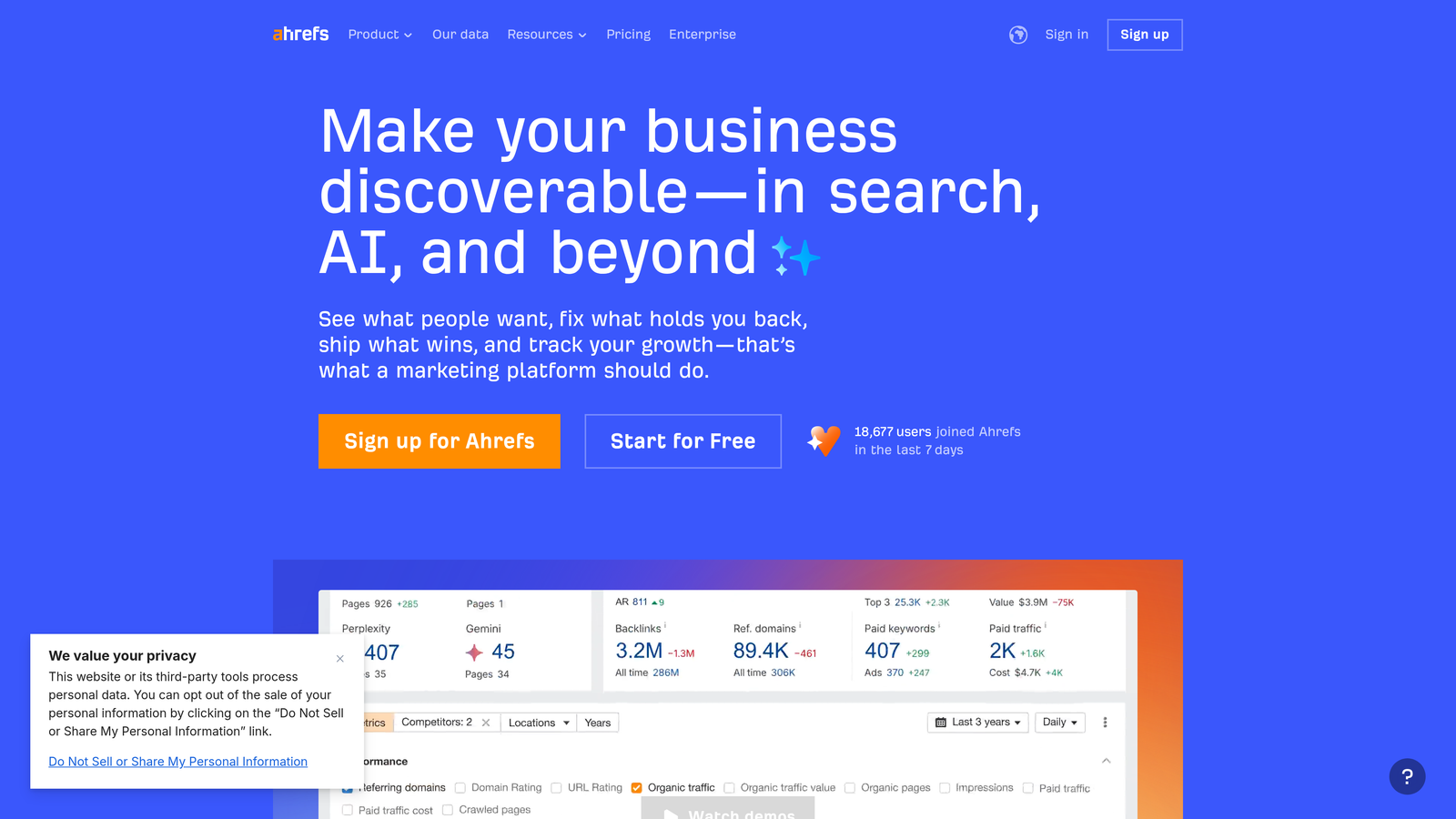
Ahrefs is a comprehensive SEO toolset with a keyword explorer that emphasizes real traffic potential over vanity metrics.
Where This Tool Shines
Ahrefs introduced the "clicks per search" metric, which tells you how many actual clicks a keyword generates—not just how many times it's searched. This matters because high-volume keywords often have low click-through rates due to featured snippets, ads, or zero-click searches.
The parent topic grouping is especially useful for PPC because it helps you understand which keywords can be captured with a single landing page versus which ones need dedicated campaigns. The SERP overview shows ranking history, so you can spot trends and understand seasonality before committing budget.
Key Features
Clicks Per Search Metric: See actual click potential, not just search volume, to prioritize keywords with real traffic value.
Parent Topic Grouping: Automatically group related keywords to streamline campaign and content planning.
SERP Overview: View ranking history and SERP features to understand competition and opportunity.
Keyword Lists: Save and organize keywords into portfolios for ongoing tracking and analysis.
Traffic Potential Estimates: Get realistic traffic projections based on actual click-through behavior.
Best For
SEO professionals and content marketers who also run PPC campaigns and want to base decisions on realistic traffic potential rather than inflated search volume numbers.
Pricing
Starts at $129/month for the Lite plan, with higher tiers offering more keywords, projects, and historical data.
4. Google Keyword Planner
Best for: Advertisers who want direct data from Google without paying for third-party tools
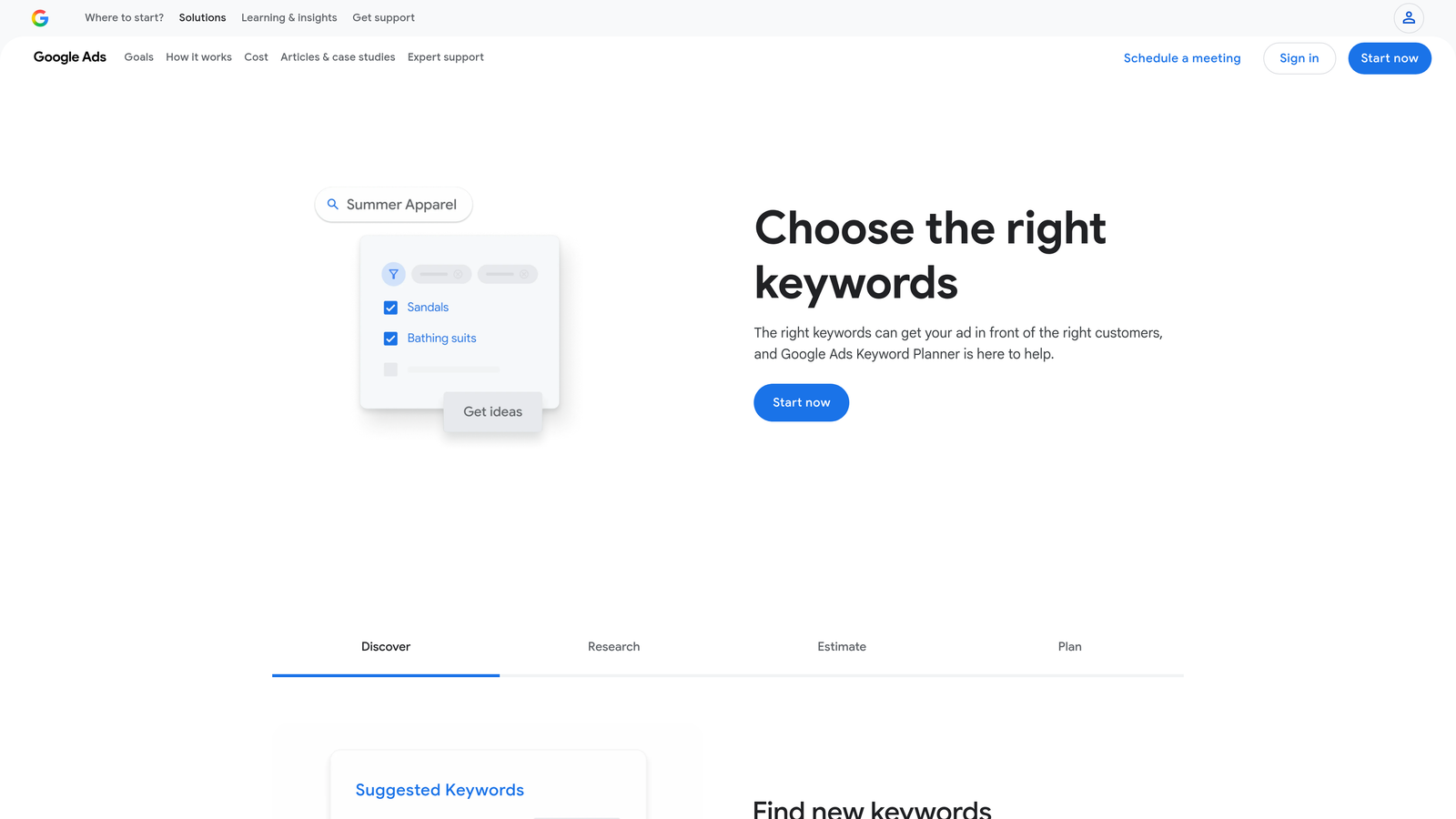
Google Keyword Planner is Google's free keyword research tool built directly into the Google Ads interface.
Where This Tool Shines
Google Keyword Planner gives you data straight from the source—no estimates, no guesses, just actual search volume and bid ranges from Google's own auction system. The competition level indicators help you understand how many other advertisers are bidding on each keyword.
The forecast tool is particularly valuable for budget planning. You can input a list of keywords and see projected clicks, impressions, and costs based on your bid strategy, which helps you set realistic expectations before launching campaigns.
Key Features
Direct Search Volume Data: Get actual search volume ranges from Google, not third-party estimates.
Competition Level Indicators: See how many advertisers are bidding on each keyword to gauge auction intensity.
Bid Estimates: View suggested bid ranges to help you plan budgets and set realistic expectations.
Keyword Ideas from URLs: Enter your landing page or a competitor's URL to generate relevant keyword suggestions.
Forecast Tool: Predict clicks, impressions, and costs based on your keyword list and bid strategy.
Best For
Advertisers on tight budgets who need reliable keyword data without monthly subscription fees, and anyone who wants Google's official data as a baseline for their research.
Pricing
Completely free with a Google Ads account. No credit card required to access keyword research features.
5. SpyFu
Best for: Competitive intelligence and reverse-engineering competitor PPC strategies
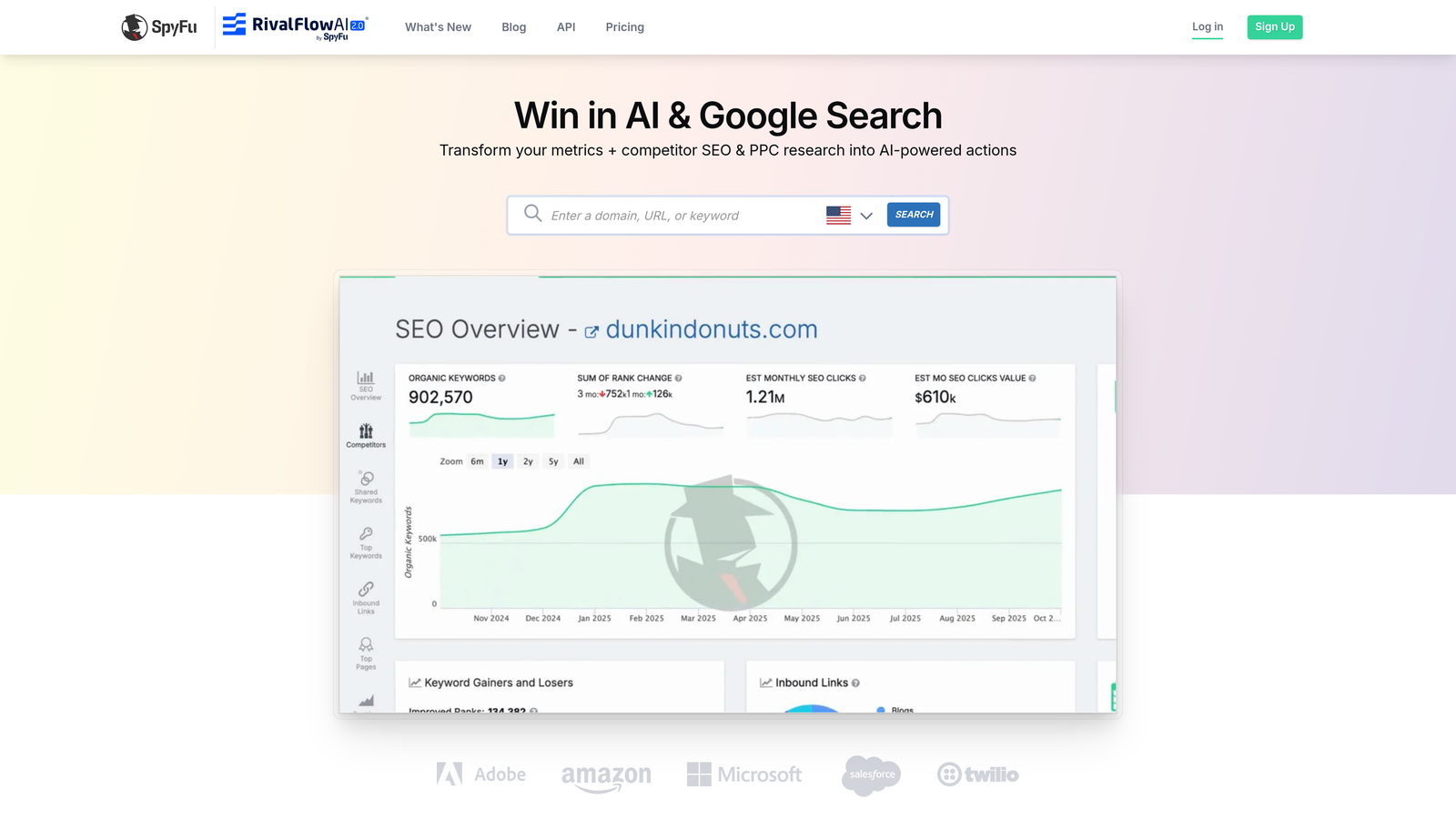
SpyFu specializes in showing you exactly what keywords your competitors are bidding on and how their strategies have evolved over time.
Where This Tool Shines
SpyFu's competitive intelligence goes deeper than most tools by showing years of ad history. You can see which keywords competitors have tested and abandoned, which ones they've stuck with, and how their ad copy has changed over time.
The "most profitable keywords" feature estimates which keywords are driving the most value for competitors based on their consistent bidding patterns. This helps you prioritize keywords that have proven ROI rather than chasing vanity metrics or unproven opportunities.
Key Features
Competitor Ad History: View years of ad data to understand long-term strategies and testing patterns.
Most Profitable Keywords: Identify which keywords competitors bid on consistently, indicating proven ROI.
Ad Copy Variations: See every version of competitors' ad copy to understand their messaging evolution.
Shared Keywords Analysis: Find keywords that multiple competitors are bidding on to spot market opportunities.
Keyword Overlap Reports: Compare your keyword portfolio against competitors to find gaps and overlaps.
Best For
Agencies and in-house marketers who need to understand competitive landscapes, justify keyword selections to stakeholders, and find opportunities competitors might be missing.
Pricing
Starts at $39/month for the Basic plan, with higher tiers offering more competitor tracking and historical data.
6. Optmyzr
Best for: PPC managers who want rule-based automation and advanced optimization scripts
Optmyzr is a PPC management platform that combines automation with manual control, letting you set rules for routine optimizations while maintaining oversight.

Where This Tool Shines
Optmyzr's strength is in automating repetitive tasks without completely handing over control. You can create custom rules for bid adjustments, budget pacing, and keyword management that run automatically but require your approval before changes go live.
The one-click optimizations surface opportunities based on your account data and let you apply changes instantly. For Shopping campaigns, Optmyzr offers specialized tools for product feed optimization and bid management that most general PPC platforms lack.
Key Features
One-Click Optimizations: Surface actionable recommendations based on your account data with instant application.
Custom Rule-Based Automation: Set conditions for bid changes, budget adjustments, and keyword management that run automatically.
Shopping Campaign Tools: Specialized features for product feed optimization and Shopping bid management.
Cross-Account Reporting: Manage and report on multiple accounts from a unified dashboard.
Script Library: Access pre-built scripts for advanced optimizations without writing code yourself.
Best For
Experienced PPC managers and agencies that want to automate routine tasks while maintaining control over strategic decisions, especially those managing Shopping campaigns alongside Search.
Pricing
Starts at $249/month, with pricing scaling based on ad spend and number of accounts managed.
7. WordStream
Best for: Small businesses and new advertisers who need guided optimization workflows
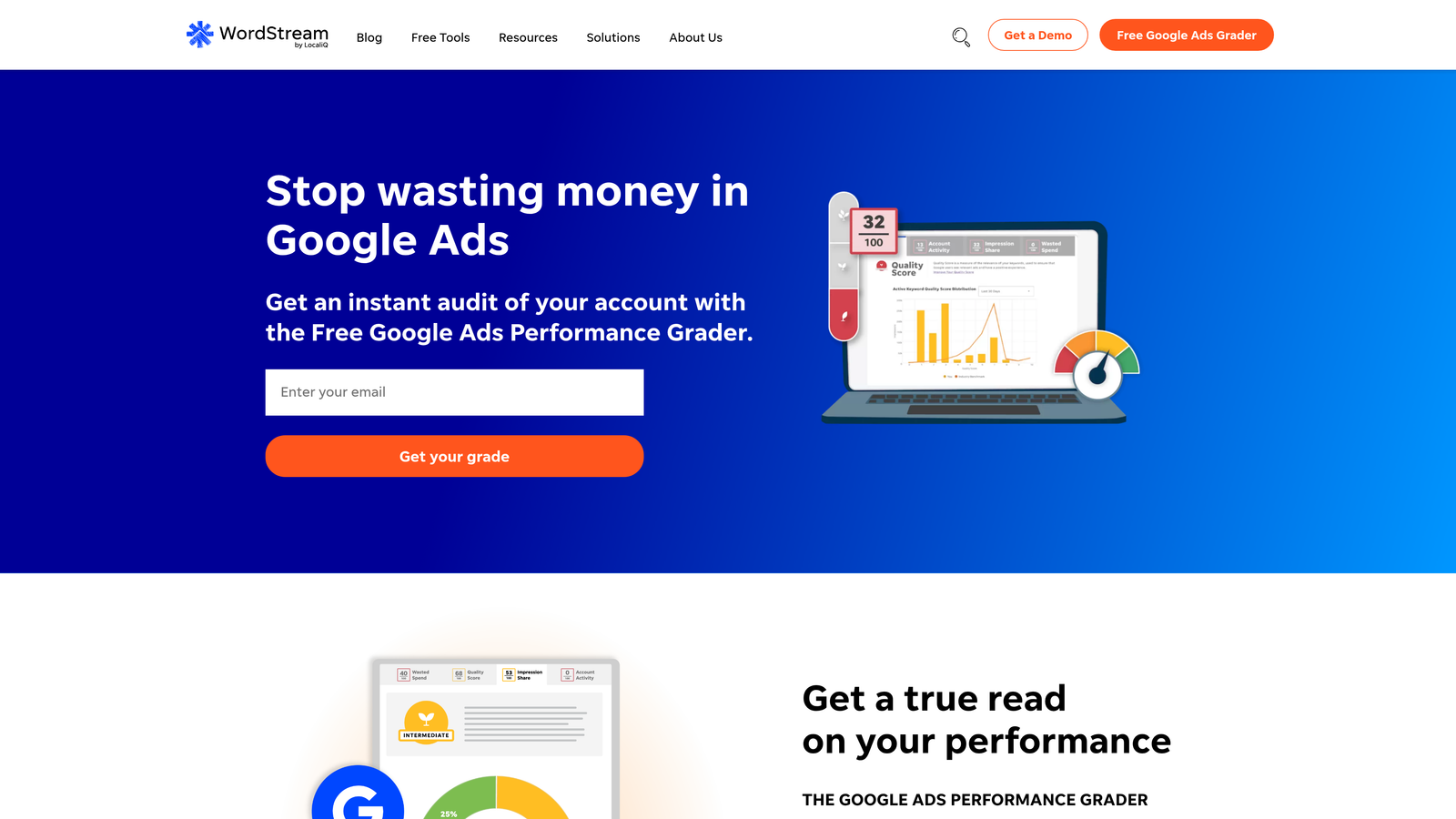
WordStream is a PPC software platform designed specifically for small businesses, with simplified workflows and educational resources built in.
Where This Tool Shines
WordStream's "20-Minute Work Week" approach breaks down optimization into manageable daily tasks that even beginners can handle. The platform prioritizes the highest-impact changes first, so you're not overwhelmed by hundreds of recommendations.
The free Google Ads Performance Grader is a standout feature that analyzes your account and provides a detailed report on what's working and what needs attention. For businesses managing ads across Google, Facebook, and Bing, WordStream's unified dashboard simplifies cross-platform management.
Key Features
20-Minute Work Week: Daily optimization alerts that prioritize high-impact changes you can make quickly.
Free Performance Grader: Comprehensive account analysis that identifies optimization opportunities and benchmarks performance.
Cross-Platform Management: Manage Google Ads, Facebook Ads, and Bing Ads from a single interface.
Smart Keyword Suggestions: Get keyword recommendations based on your account performance and industry trends.
Educational Resources: Built-in guides and tutorials help new advertisers learn PPC fundamentals while optimizing.
Best For
Small business owners and new advertisers who need a simplified, guided approach to PPC management without the complexity of enterprise platforms.
Pricing
Custom pricing based on your monthly ad spend, with a free Performance Grader available to anyone.
8. Moz Keyword Explorer
Best for: Keyword prioritization using combined metrics of volume, difficulty, and CTR
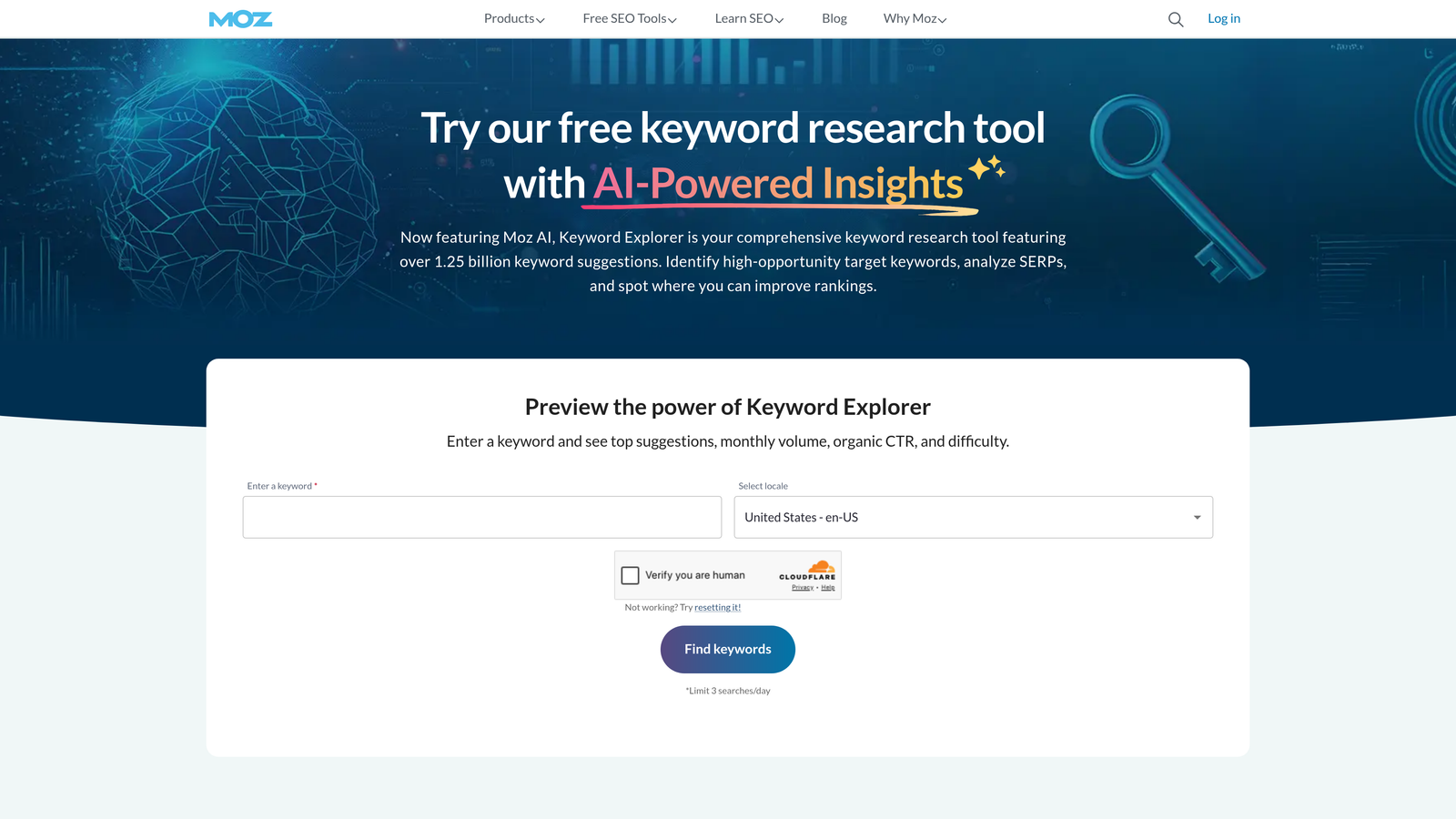
Moz Keyword Explorer focuses on helping you prioritize keywords by combining multiple factors into a single "Priority" score.
Where This Tool Shines
Moz's Priority score is genuinely useful because it balances search volume, ranking difficulty, and organic click-through rate into one metric. This helps you avoid chasing high-volume keywords that are either too competitive or have low actual click potential.
The organic CTR estimates are based on SERP feature analysis, so you can see how ads, featured snippets, and knowledge panels affect click distribution. The SERP analysis shows which ranking features are present for each keyword, helping you understand what you're competing against.
Key Features
Priority Score: Combined metric that balances volume, difficulty, and CTR to help you prioritize keyword targets.
Organic CTR Estimates: See how SERP features affect click distribution to understand real traffic potential.
SERP Analysis: View which ranking features are present for each keyword to understand competition.
Keyword Suggestions: Get related keywords and question-based variations to expand your targeting.
Keyword Lists: Organize and track keywords across campaigns with tags and notes.
Best For
Marketers who want a simplified decision-making process for keyword selection and need to quickly identify which keywords offer the best balance of opportunity and effort.
Pricing
Starts at $99/month for the Standard plan, with higher tiers offering more queries and tracked keywords.
9. Keyword Tool (keywordtool.io)
Best for: Long-tail keyword discovery across multiple platforms beyond just Google
Keyword Tool generates keyword ideas using autocomplete data from Google, YouTube, Amazon, Bing, and several other platforms.
Where This Tool Shines
Keyword Tool excels at finding long-tail variations and question-based keywords that other tools might miss. By pulling from autocomplete data across multiple platforms, you get insights into how people actually search—not just what shows up in traditional keyword databases.
The question-based keyword suggestions are particularly valuable for content planning and informational campaigns. The negative keyword suggestions help you proactively exclude irrelevant traffic before launching campaigns, which can save significant budget on the front end.
Key Features
Multi-Platform Keyword Generation: Pull keyword ideas from Google, YouTube, Amazon, Bing, and more in one place.
Question-Based Keywords: Find "how," "what," "why," and "where" variations to target informational intent.
Negative Keyword Suggestions: Get recommendations for terms to exclude based on your seed keywords.
Bulk Search Volume Analysis: Analyze search volume and trends for large keyword lists at once.
Autocomplete Data: Discover keywords based on real user search behavior from autocomplete suggestions.
Best For
Content marketers and advertisers who need long-tail keyword variations, question-based targeting ideas, and keyword research across platforms like YouTube and Amazon.
Pricing
Free basic version with limited features; Pro plans start at $89/month with full search volume data and additional platforms.
Making the Right Choice
The best keyword optimization tool depends on where you're spending most of your time and what's slowing you down. If you're constantly exporting search terms to spreadsheets and manually updating Google Ads, Keywordme eliminates that entire workflow by letting you optimize right inside the interface. For agencies juggling multiple clients, the multi-account support means you can move fast without losing track of changes.
If competitive intelligence is your priority, SpyFu and SEMrush give you the deepest insights into what competitors are bidding on and how their strategies have evolved. For teams managing both SEO and PPC, Ahrefs and SEMrush offer unified platforms where you can plan content and campaigns from the same data set.
Budget-conscious advertisers should start with Google Keyword Planner—it's free, accurate, and gives you official data straight from Google. Combine it with Keyword Tool's free version for long-tail ideas, and you've got a solid research stack without spending a dime.
For small businesses and new advertisers, WordStream's guided workflows and 20-Minute Work Week approach make PPC management less overwhelming. The built-in education means you're learning while you optimize, which pays off long-term.
Most successful advertisers use a combination of tools: one for research, another for optimization, and maybe a third for competitive analysis. The key is choosing tools that integrate with your workflow rather than creating more work.
Optimize Google Ads Campaigns 10X Faster—Without Leaving Your Account. Keywordme lets you remove junk search terms, build high-intent keyword groups, and apply match types instantly—right inside Google Ads. No spreadsheets, no switching tabs, just quick, seamless optimization.
Manage one campaign or hundreds and save hours while making smarter decisions. Start your free 7-day trial (then just $12/month) and take your Google Ads game to the next level.
.svg)