
12 Best Campaign Management Software Options for 2026
12 Best Campaign Management Software Options for 2026


Running digital marketing campaigns often feels like spinning a dozen plates at once. You're constantly hopping between Google Ads, social media platforms, analytics dashboards, and clunky spreadsheets, all while trying to keep budgets in check and performance on track. It's exhausting, inefficient, and a surefire way to let wasted ad spend slip through the cracks.
The right campaign management software isn't just a 'nice-to-have'. It's the secret weapon that separates stressed-out marketers from strategic, high-impact teams. It automates the grunt work, provides clear insights, and gives you back the time to focus on what really matters: strategy and growth. Smarter campaign software also helps centralize your efforts, allowing you to effectively master a multi-channel marketing approach without the chaos of juggling countless tabs.
In this guide, we're diving deep into the 12 best campaign management software solutions on the market. We'll cut through the marketing fluff to give you the real scoop on who each tool is for, what it does best, and where it might fall short. We've included screenshots and direct links for every option. Whether you're a freelance PPC specialist, part of a large agency, or an in-house marketer, this list will help you find the perfect platform to streamline your workflow and drive better results.
1. Keywordme
Keywordme isn't a massive, all-in-one suite. Instead, it’s a focused, productivity-first tool that excels at one of the most time-consuming parts of PPC: keyword management. It lives inside your browser as a Chrome plugin, integrating directly into the Google Ads interface to eliminate the tedious cycle of exporting data to spreadsheets, cleaning it up, and pasting it back. This smart integration makes it a standout choice for anyone who wants to dramatically cut down on manual grunt work.
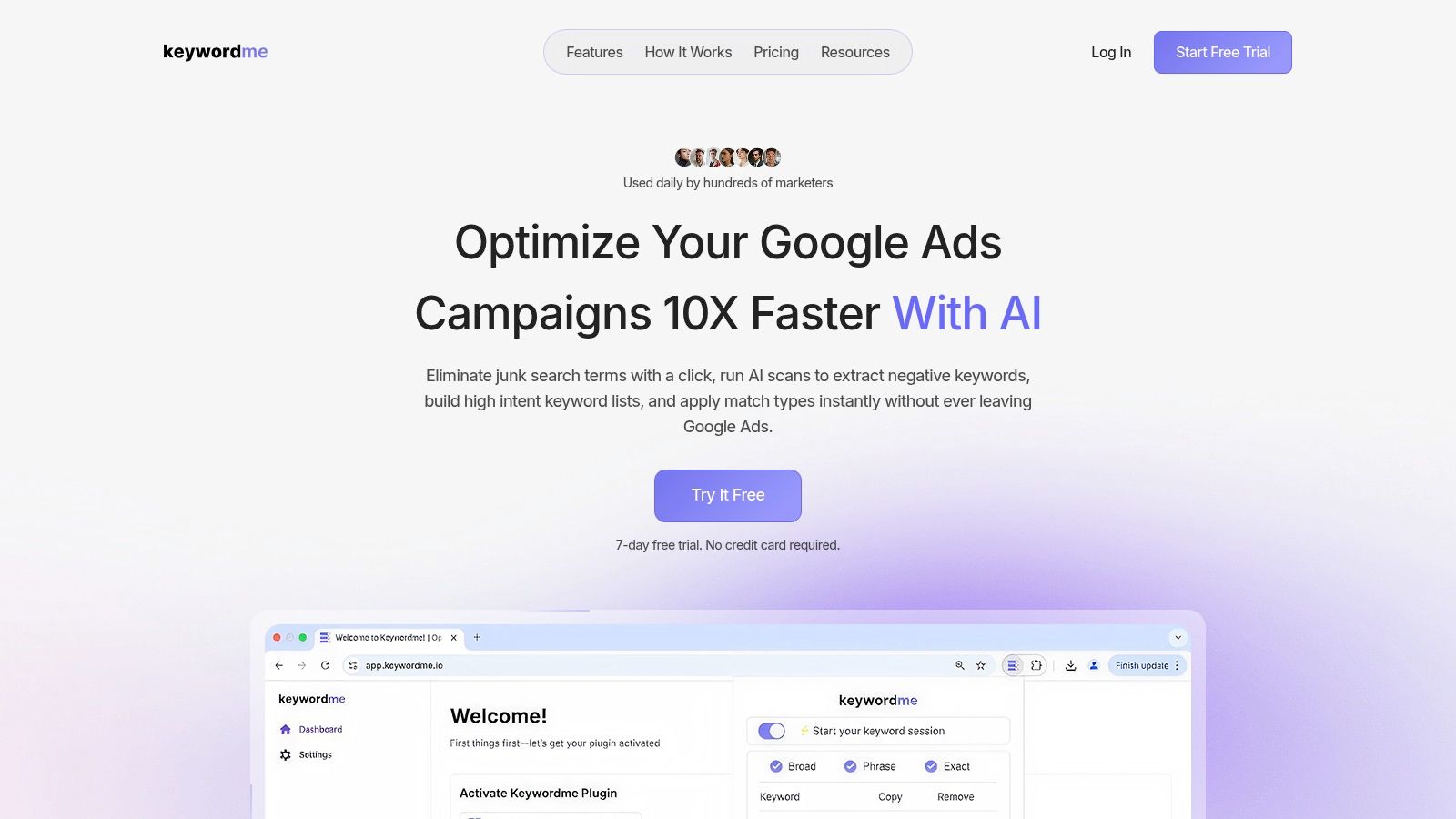
The platform’s core strength is its ability to speed up your entire keyword optimization workflow. With one-click actions, you can clean junk search terms, build negative keyword lists using AI, and apply correct match types (exact, phrase, broad) instantly. This approach not only saves an immense amount of time but also helps you quickly plug budget leaks by blocking irrelevant search queries that drain your ad spend. For freelancers, agencies, and in-house teams managing multiple accounts, these efficiency gains are a game-changer.
Key Takeaway: Keywordme’s genius is its simplicity and direct integration. By operating within Google Ads, it removes extra steps and makes keyword optimization up to 10x faster, making it one of the best campaign management software options for pure PPC efficiency.
Pros & Cons of Keywordme
Key Features and Pricing
- AI-Powered Negative Keyword Extraction: Identifies and groups irrelevant search terms to add as negatives in one click.
- Instant Match-Type Application: Apply exact, phrase, or broad match types to new keyword lists without manual formatting.
- Search Term-Based Ad Group Expansion: Use real user search data to build new, high-intent ad groups.
- Pricing: The Pro plan is $12 per seat/month and includes all features, plus access to a help center and live chat support. You can start with a 7-day free trial.
Find out more at Keywordme.io
2. Optmyzr
Optmyzr is a PPC pro's secret weapon, designed specifically to save time on the repetitive, yet critical, tasks of managing paid search and shopping campaigns. Think of it as a powerful layer on top of your Google, Microsoft, and Amazon Ads accounts that gives you more control and automates the grind, freeing you up for big-picture strategy. It's built for agencies and in-house teams who want to move faster without sacrificing granular oversight.
What really sets Optmyzr apart is its user-controlled automation. The Rule Engine lets you create custom "if this, then that" scenarios for everything from bid adjustments to pausing low-performing keywords. It's a fantastic middle-ground for those who don't want to rely on fully black-box AI but still need to scale their efforts. The one-click optimizations and account audits are also huge time-savers, instantly flagging issues like conflicting negative keywords or budget pacing problems.
Key Features & Use Cases
- Rule Engine & "AI Sidekick": Create your own automation recipes. For example, you can set a rule to increase bids by 15% on any keyword with a CPA under $20 and more than 10 conversions in the last 14 days.
- Budget Pacing & Alerts: Perfect for agencies managing multiple client budgets. It provides a clear dashboard to ensure you're on track to hit monthly spend targets without over- or under-spending.
- One-Click Optimizations: Quickly implement suggestions for ad copy, keyword additions, and account settings that you might otherwise miss.
Pricing
Optmyzr offers a few tiers aimed at different team sizes, starting around $249/month for the Lite plan. Pricing is based on your monthly ad spend, and they offer a 14-day free trial so you can test it with your own accounts.
Best For: PPC agencies, in-house paid media teams, and experienced freelancers looking for the best campaign management software to scale their paid search and shopping efforts efficiently.
3. Skai (formerly Kenshoo)
Skai is an enterprise-grade, omnichannel platform built for massive advertising operations that need a unified view across retail media, paid search, and paid social. It's designed for large advertisers and global agencies managing significant spend across more than 120 publishers. The platform offers a powerful combination of cross-channel intelligence, AI-driven optimization, and strict governance controls to manage complexity at scale.
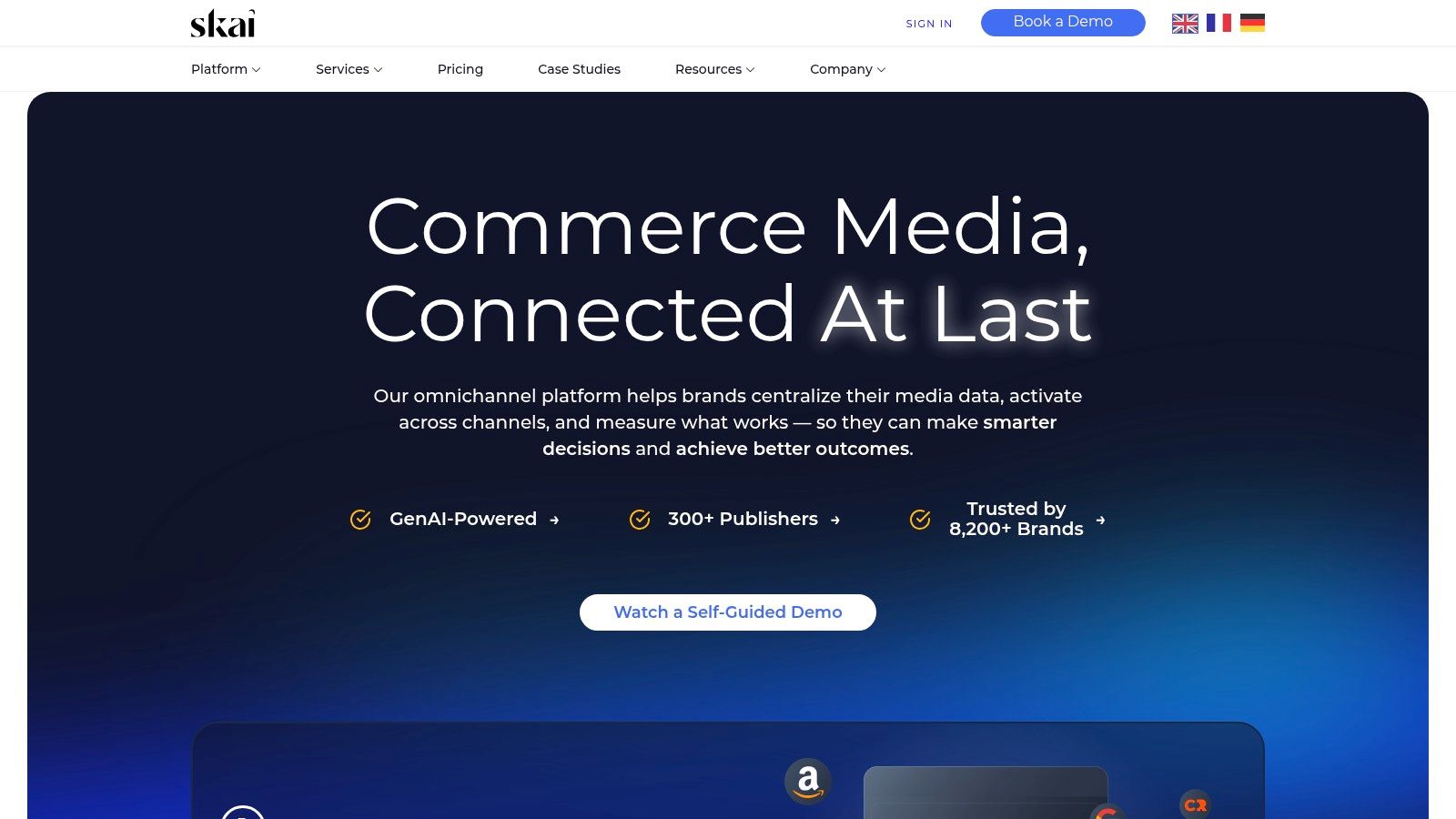
What truly makes Skai stand out is its deep integration with the retail media ecosystem, making it a go-to for brands heavily invested in platforms like Amazon Ads, Walmart Connect, and Target. Its GenAI assistant, Celeste, helps teams with creative ideation and audience building, while the platform's robust planning and budget management tools provide the cross-channel visibility that large organizations require. It's less a tool and more a strategic partner, complete with dedicated client success teams and training through Skai University.
Key Features & Use Cases
- Cross-Channel Planning & Activation: Plan budgets and launch campaigns across search, social, and a wide array of retail media networks from a single interface.
- AI-Assisted Optimization: Use its AI engine for predictive forecasting, automated bidding, and uncovering competitive insights to inform strategy across channels.
- Enterprise Governance: Implement custom quality assurance rules and audit trails to maintain brand safety and consistency across numerous accounts and teams.
Pricing
Skai uses a predictable flat-fee pricing model based on your annual ad spend. It's an enterprise solution, so expect pricing to reflect that. You'll need to contact their sales team for a custom quote, as there are no public-facing price tiers.
Best For: Global brands, large agencies, and enterprise advertisers looking for the best campaign management software to gain cross-channel intelligence and control over massive paid media budgets.
4. MarinOne (Marin Software)
MarinOne is an enterprise-grade platform built for managing large, complex advertising programs across multiple channels like paid search, social, and eCommerce. It acts as an independent layer on top of native ad platforms, offering a unified dashboard for reporting and automation. This is particularly useful for advertisers who need a single source of truth and want governance tools that operate outside of Google's or Meta's own systems.
What makes MarinOne stand out is its deep data extensibility and powerful customization. Its BI Connect feature allows you to pipe cleaned, unified data directly into tools like Looker Studio or Tableau, which is a massive win for data-driven teams. For the technically savvy, MarinOne Scripts lets you write custom Python automations, giving you almost unlimited control to create bidding models or alert systems specific to your business needs, a key differentiator from other types of pay-per-click management software.
Key Features & Use Cases
- MarinOne Scripts: Use Python to build highly custom automation rules. For instance, you could script a rule that analyzes weather API data and automatically adjusts bids on relevant product campaigns.
- BI Connect: Perfect for teams that rely on business intelligence tools. Export cross-channel performance data seamlessly for deeper analysis and dashboarding without manual CSV pulls.
- Retail & Marketplace Integrations: Manage campaigns on platforms like Walmart Connect, Instacart, and Amazon DSP alongside your search and social efforts, all from one place.
Pricing
MarinOne's pricing is not publicly listed and is typically geared toward enterprise clients with significant ad spend. You'll need to contact their sales team for a custom quote based on your needs.
Best For: Large enterprises and agencies managing multi-million dollar ad spends who need the best campaign management software for cross-channel unification, custom automation, and business intelligence integration.
5. Google Search Ads 360 (SA360)
Google Search Ads 360, or SA360, is the enterprise-level command center for massive search advertising portfolios. It sits on top of Google Ads, Microsoft Advertising, and other search engines, allowing large teams to manage complex, multi-engine campaigns from a single interface. This isn't just a management tool; it's a core piece of the Google Marketing Platform, built for advertisers who need deep integration, sophisticated bidding, and unified measurement across their entire digital footprint.
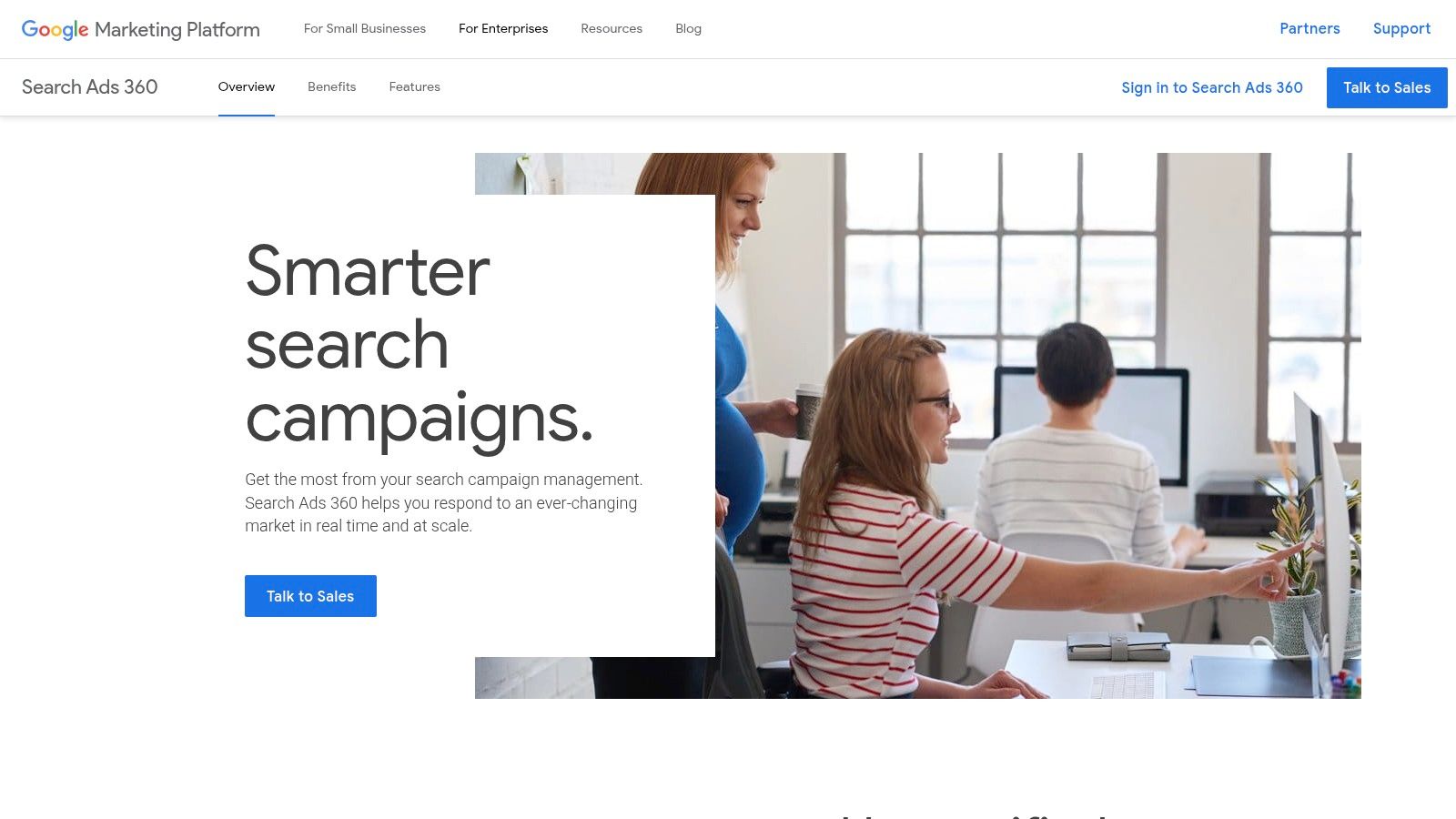
What makes SA360 stand out is its native integration with the broader Google ecosystem. By connecting directly with Campaign Manager 360 and Analytics 360, it uses Floodlight conversions to provide a deduplicated, cross-channel view of performance. This means you can create powerful bid strategies that optimize toward a single source of truth, including conversions that may have started on display or other channels. It is designed for scale, offering workflows and automation that simply aren't available in the standard ad interfaces.
Key Features & Use Cases
- Cross-Engine Bid Strategies: Create a single bid strategy that manages budgets and bids across both Google Ads and Microsoft Advertising, optimizing toward a unified CPA or ROAS goal.
- Floodlight Conversion Framework: Go beyond last-click attribution by using Floodlight tags to track conversions across search, display, and video, feeding a richer dataset into your automated bidding.
- Enterprise-Grade Reporting & Automation: Build complex rules and automated reports that span multiple ad accounts and engines, ideal for large agencies or brands managing diverse product lines.
Pricing
Pricing for SA360 is not public and is typically based on a percentage of ad spend. Access requires engagement with a Google sales representative or an authorized reseller. It is an enterprise-level investment and comes with a corresponding price tag.
Best For: Large enterprises and major advertising agencies looking for the best campaign management software to centralize control over high-spend, multi-engine search campaigns.
6. Smartly.io
Smartly.io is an absolute powerhouse for brands and agencies that live and breathe paid social and video. It's built from the ground up to tackle the biggest challenge in social advertising: creating and managing a massive volume of creative assets across platforms like Meta, TikTok, Snapchat, and Pinterest. It goes beyond simple campaign setup by automating the entire workflow, from creative production and testing to media buying and reporting, all within a single, unified platform.
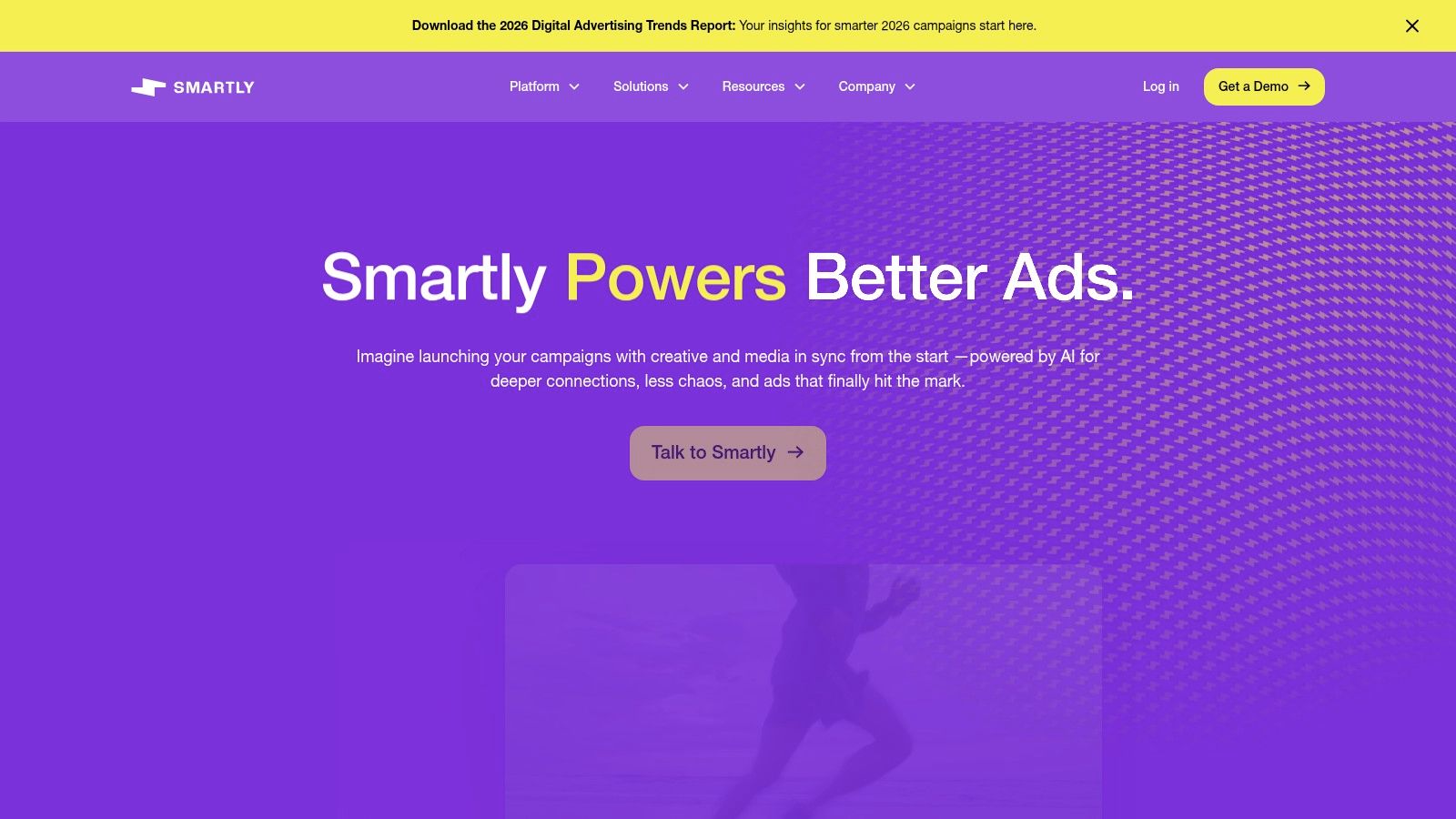
What makes Smartly.io a standout is its intense focus on creative automation. The modular templates and dynamic creative features are a game-changer for e-commerce and large advertisers. Imagine automatically generating hundreds of video and image ad variations from a single product catalog feed, each tailored with different copy, calls to action, or local pricing. It connects creative performance directly to media buying, allowing teams to scale what works and cut what doesn't with predictive budget optimization.
Key Features & Use Cases
- Modular Creative & Video Templates: Quickly build thousands of on-brand ad variations. This is perfect for A/B testing creative elements or running dynamic product ads (DPAs) for large catalogs.
- Centralized Campaign Creation: Manage workflows for Meta, TikTok, Snapchat, and Pinterest from one dashboard instead of jumping between native ad managers.
- Predictive Budget Optimization: The system allocates spend to the best-performing campaigns, ad sets, and creatives to maximize your return on ad spend (ROAS).
Pricing
Smartly.io is an enterprise-level solution, and its pricing reflects that. It's typically structured as a percentage of your monthly ad spend, often with significant monthly minimums. It is best suited for advertisers with large, multi-channel social budgets.
Best For: Enterprise-level e-commerce brands and large advertising agencies looking for the best campaign management software to scale creative production and media buying on paid social.
7. Sprinklr Marketing & Advertising
Sprinklr is built for the global enterprise that needs to bring its entire campaign process under one roof. This is a unified, AI-native platform designed to manage everything from initial planning and creative production to paid and organic execution, plus performance analysis. It’s created for large brands that operate across multiple markets and require strict governance, compliance checks, and seamless collaboration between distributed teams.
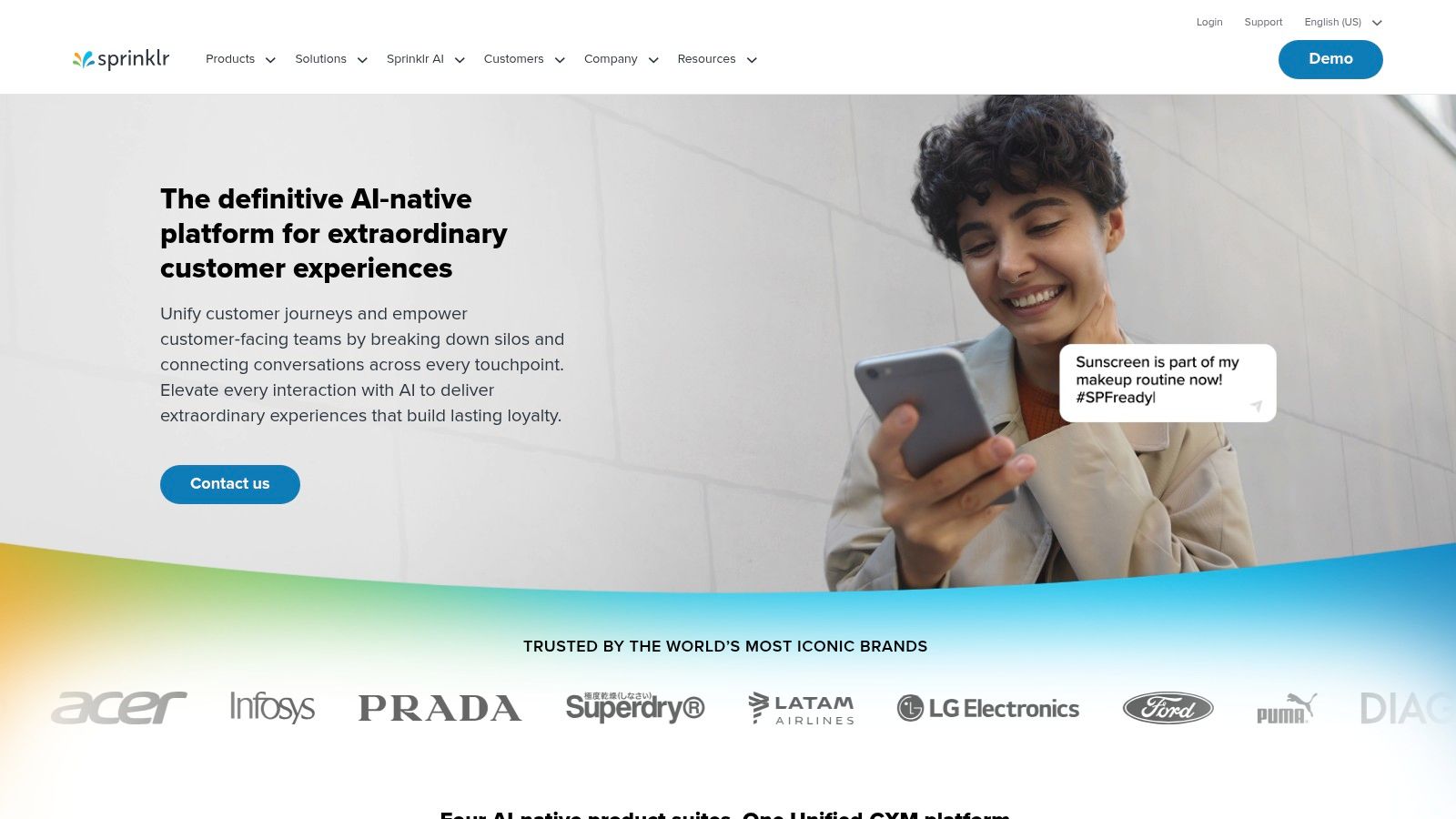
What makes Sprinklr stand out is its all-in-one approach to campaign orchestration. Instead of patching together different tools, it provides a single system where teams can plan, create, localize, publish, and measure campaigns. Its AI features are embedded throughout, helping with everything from generating creative briefs to flagging compliance issues and suggesting optimizations. For a global company, having this level of control and visibility is a game-changer.
Key Features & Use Cases
- End-to-End Campaign Management: Plan a global product launch, have regional teams adapt the creative, get legal approval, and schedule paid/organic posts across dozens of channels, all in one place.
- AI for Production & Governance: Use AI to draft campaign briefs, generate ad copy variations for A/B testing, and automatically check content for brand compliance before it goes live.
- Social Advertising at Scale: Manage large-budget social ad campaigns across Facebook, Instagram, LinkedIn, and more, with advanced targeting and optimization features designed for enterprise-level spend.
Pricing
Sprinklr uses custom pricing based on the specific modules and scale a business needs. It's an enterprise-level investment, so you'll need to contact their sales team for a demo and a tailored quote. There is no standard pricing or free trial available on their website.
Best For: Global enterprise brands, particularly those in regulated industries, looking for the best campaign management software to unify marketing and advertising operations across multiple teams and markets.
Visit Sprinklr Marketing & Advertising
8. Semrush Advertising Toolkit
While many know Semrush for its legendary SEO tools, its Advertising Toolkit is a powerful suite for planning, researching, and informing your paid campaigns before you even spend a dollar. It's less of a day-to-day management platform and more of a strategic intelligence tool that gives you a massive advantage in competitor research and campaign planning. It's built for marketers who want to base their PPC strategy on hard data, not guesswork.
What makes the Semrush toolkit so valuable is its ability to peek behind the curtain of your competitors' ad strategies. You can see their ad copy, estimate their budgets, uncover their top-performing keywords, and analyze their display and video creatives. This intel is gold for building a campaign that can compete from day one. It bridges the gap between research and execution, allowing you to build campaign plans directly within the platform.
Key Features & Use Cases
- PPC Keyword Tool & Competitive Ad Research: The foundation of the toolkit. You can gather keywords, group them, and then spy on competitors to see which terms they're bidding on and what ad copy they're running. This is a must before launching any new campaign. If you want to dive deeper, you can explore more about PPC keyword research to get the most from this tool.
- Creative & Spend Insights: See the actual display, video, and social ad creatives your competitors are using. Semrush even provides estimates on their ad spend, giving you a ballpark idea of what it takes to compete in a given market.
- Campaign Planning & Ad Copy Assistance: Use the Ad Builder to draft ad copy and structure campaigns before uploading them to Google Ads. It helps organize your thoughts and assets in one place.
Pricing
The Advertising Toolkit is part of the core Semrush subscription. Plans start around $129.95/month for the Pro plan, which includes access to these features. Higher-tier plans offer more extensive limits on reports and projects.
Best For: Digital marketers and agencies that need to ground their campaigns in solid competitor data, making it one of the best campaign management software options for strategic planning.
9. HubSpot Marketing Hub
HubSpot Marketing Hub is less of a specialized PPC tool and more of a complete marketing engine connected to a powerful CRM. This makes it ideal for teams who need to see the entire customer journey, from the first ad click to the final sale and beyond. It excels at orchestrating campaigns across multiple channels, including email, social media, and paid ads, by using its CRM data as the single source of truth for all marketing activities.

What really makes HubSpot stand out is its native integration between marketing actions and sales outcomes. You can build an audience for a Google Ads campaign using a list of contacts in your CRM who meet specific criteria, like "leads who downloaded an ebook but haven't been contacted." Then, you can track exactly how many of those contacts became customers and what the final ROI was. This closed-loop reporting is incredibly difficult to achieve with disconnected tools.
Key Features & Use Cases
- Omnichannel Automation: Use visual workflows to trigger actions based on user behavior. For instance, if a contact visits a pricing page, you can automatically add them to a retargeting audience and send a follow-up email sequence.
- Ads Audience Sync: Sync contact lists from your CRM directly to Google Ads, Facebook, and LinkedIn audiences. This ensures your ad targeting is always based on the most up-to-date customer data.
- Robust Reporting: Build dashboards that connect ad spend and campaign performance directly to CRM objects like deals and revenue, providing a clear picture of marketing's impact on the bottom line.
Pricing
HubSpot Marketing Hub uses a combination of seat-based pricing and contact tiers. The Starter plan begins around $20/month, but costs increase as you add more marketing contacts and move to Professional or Enterprise tiers with more advanced features. Add-ons like SMS are also available.
Best For: In-house marketing teams that want the best campaign management software to unify their CRM, email, and ad campaigns for a full-funnel view of performance.
10. Salesforce Marketing Cloud
For large enterprises already woven into the Salesforce ecosystem, Marketing Cloud is the logical, albeit massive, extension for campaign management. It's not just a tool; it's a complete platform designed to connect marketing with sales, service, and commerce. This suite excels at orchestrating complex, multi-channel customer journeys, pulling data directly from your CRM to create deeply personalized experiences across email, mobile, social, and advertising.
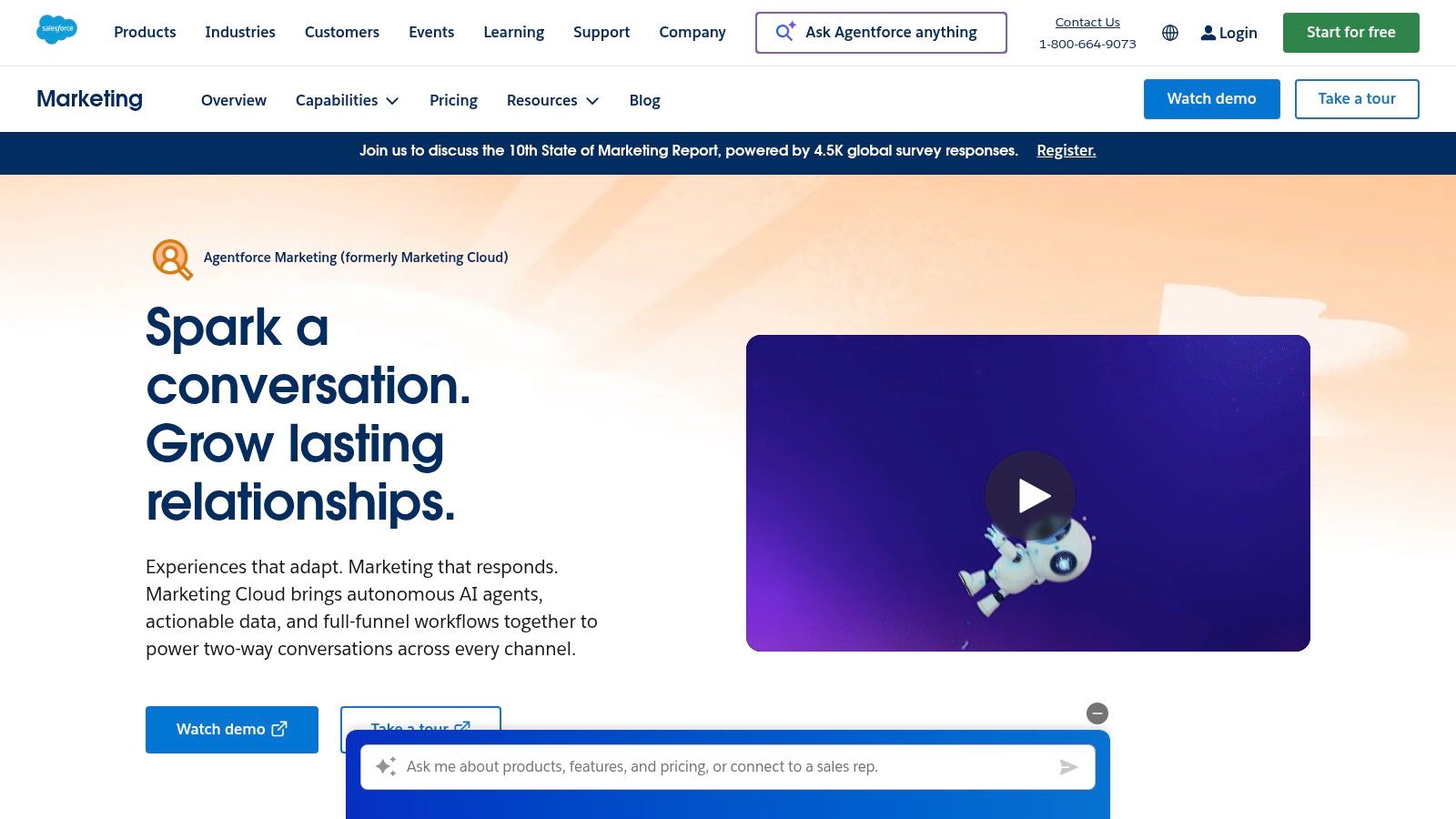
The real power here comes from its native integration with Salesforce CRM. This unified data source allows for incredible personalization and journey orchestration that standalone tools struggle to match. Imagine triggering an ad campaign on social media the moment a sales lead's status changes in your CRM, or sending a follow-up SMS after they interact with a service agent. That level of connected automation is where Marketing Cloud shines.
Key Features & Use Cases
- Journey Builder: Visually map and automate customer journeys across every touchpoint. This is ideal for complex onboarding sequences or multi-stage retention campaigns that react to customer behavior in real-time.
- Unified Salesforce Data: Use rich CRM data (like purchase history or service cases) to segment audiences and personalize campaign messaging with unparalleled accuracy.
- AI & Einstein: Incorporates AI for predictive scoring, send-time optimization, and content recommendations, helping you make smarter decisions within your campaigns.
Pricing
Salesforce pricing is famously complex and tailored to enterprise needs. It's offered in various editions with numerous add-ons, so you'll need to contact their sales team for a custom quote based on your specific requirements. Expect a significant investment.
Best For: Large enterprises that are heavily invested in the Salesforce CRM and need one of the best campaign management software solutions for creating unified, data-driven customer experiences at scale.
Visit Salesforce Marketing Cloud
11. Adobe Marketo Engage
Adobe Marketo Engage is an enterprise-grade powerhouse built for B2B marketers who need to manage complex, long-term customer relationships. It's less about quick PPC ad tweaks and more about orchestrating the entire lead lifecycle, from initial awareness to loyal customer. Think of it as the central nervous system for your demand generation engine, connecting sales and marketing teams through a shared view of customer behavior.
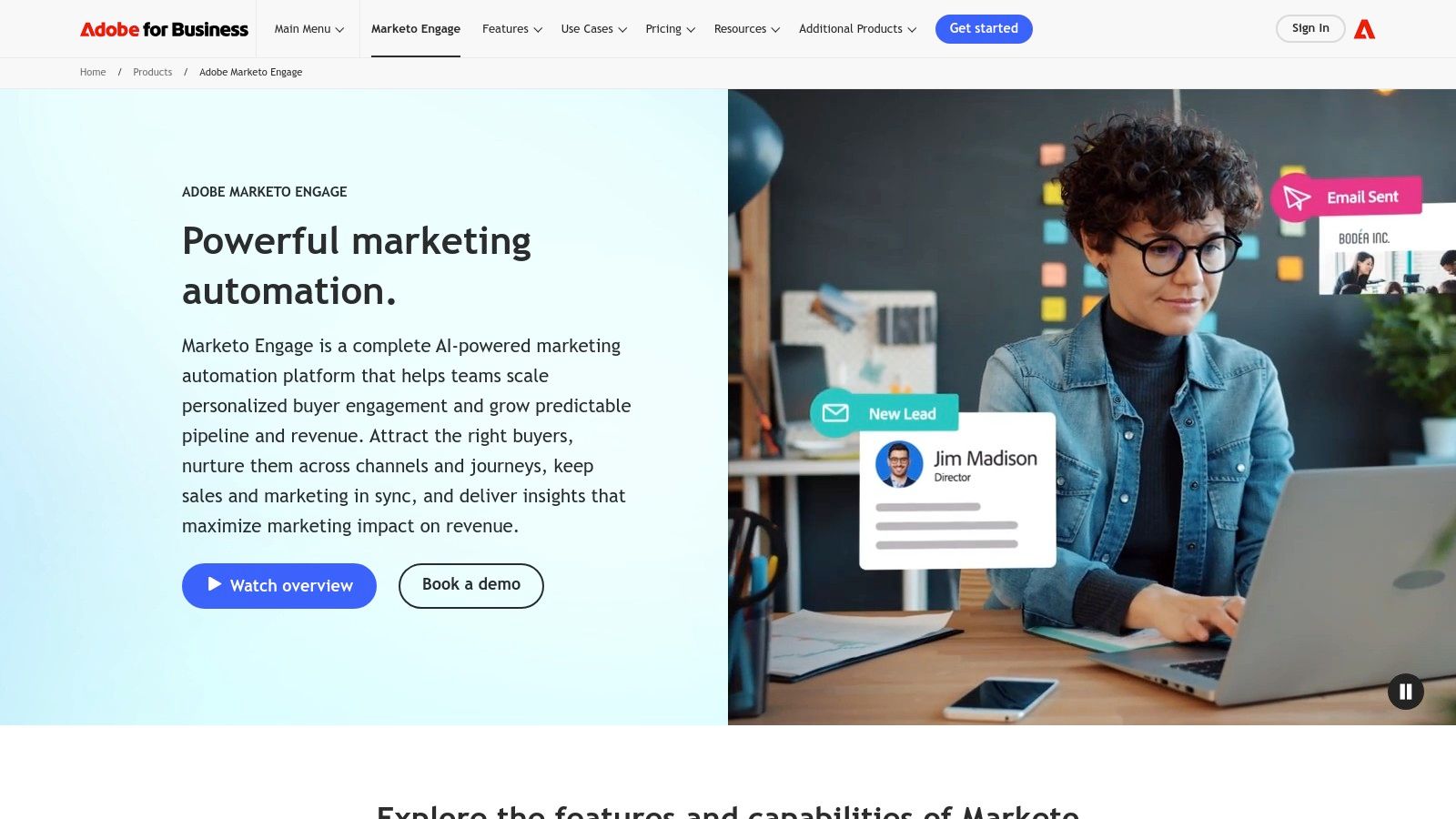
What makes Marketo a mainstay for large organizations is its depth in lead management and automation. It excels at building sophisticated nurture programs that guide prospects through the funnel with personalized content based on their actions, demographics, and engagement scores. Its native integrations with CRMs like Salesforce are exceptionally tight, ensuring that sales teams get high-quality, well-vetted leads exactly when they're ready to engage.
Key Features & Use Cases
- Advanced Nurture Programs & Lead Scoring: Create intricate workflows that automatically score leads based on website visits, email opens, and content downloads, then route them to the right sales rep or nurture track.
- Account-Based Marketing (ABM) Features: Identify and target high-value accounts. You can coordinate personalized marketing and sales activities across entire buying committees within your target companies.
- Rich Segmentation & Dynamic Content: Deliver highly relevant experiences by segmenting your audience on a granular level and dynamically changing email content, landing pages, and offers based on who is viewing them.
Pricing
Adobe does not list pricing publicly for Marketo Engage. It’s a premium, enterprise-level solution where pricing is customized based on your database size and feature requirements. Expect a significant investment reflective of its powerful capabilities.
Best For: Large B2B companies and enterprise marketing teams needing the best campaign management software for sophisticated lead nurturing, scoring, and account-based marketing.
Visit Adobe Marketo Engage
12. AdRoll
AdRoll is a self-serve ads platform built with direct-to-consumer brands and small businesses in mind. It excels at bringing powerful retargeting and prospecting capabilities to teams that don't have the bandwidth or budget for enterprise-level tools. The platform centralizes display, social, and even Connected TV (CTV) advertising, making it simple to follow potential customers across the web and bring them back to your site.

The real strength of AdRoll is its accessibility. It demystifies cross-channel retargeting, a strategy that can feel complex in larger ad managers. With straightforward audience segmentation and creative management tools built right in, you can launch dynamic ad campaigns that show shoppers the exact products they viewed. It’s an ideal entry point for anyone wanting to run sophisticated campaigns without a steep learning curve or needing a dedicated ads manager.
Key Features & Use Cases
- Dynamic Retargeting: Automatically show ads featuring products a user viewed or added to their cart. This is perfect for e-commerce stores looking to recover abandoned carts and re-engage interested shoppers.
- Cross-Channel Campaigns: Manage retargeting across web display networks, Facebook, Instagram, and even streaming TV services from one dashboard, ensuring a consistent message.
- Audience & Segmentation Tools: Build lookalike audiences to find new customers who resemble your existing best ones, or create segments based on on-site behavior like "viewed pricing page."
Pricing
AdRoll offers a free plan with basic features and a paid Growth plan starting at $36/month (billed annually) for more advanced capabilities. Media costs are separate and CPM-based, meaning you pay for impressions, and prices can fluctuate with market demand. They also provide ad credits to get you started.
Best For: E-commerce stores, small businesses, and in-house teams looking for the best campaign management software to easily run effective, multi-channel retargeting and prospecting campaigns.
Top 12 Campaign Management Software — Feature Comparison
How to Choose the Right Tool for Your Team
Whew, that was a lot to take in. We’ve walked through everything from hyper-focused PPC tools like Keywordme to massive, do-it-all marketing clouds like Salesforce and Adobe. Feeling a bit of analysis paralysis? That’s totally normal. The sheer number of options can be overwhelming, but the good news is there’s a perfect fit out there for your specific needs. The key is to ignore the noise and focus on what truly matters for your team.
Choosing the best campaign management software isn't about finding a single tool that does everything perfectly. It’s about identifying your biggest bottleneck and finding the tool that solves it most effectively. Don't get distracted by a platform that boasts 100 features when you’ll only ever use three of them.
A Practical Framework for Your Decision
Instead of getting lost in feature comparisons, let’s reframe the question. Start by answering these questions with your team:
- What’s Our Biggest Time Sink? Is your team spending hours every week manually adjusting bids, cleaning up search query reports, or building repetitive reports? If so, an automation-focused tool is your best bet. Platforms like Optmyzr and Keywordme are built specifically to give you that time back.
- Where Are We Wasting Money? Are you struggling with poor ad relevance, low Quality Scores, or wasted spend on irrelevant search terms? A tool with deep keyword and ad optimization features will deliver the highest ROI. This is where a specialized Google Ads tool really shines.
- What’s Our Budget Reality? Be honest about what you can afford. Enterprise solutions like Google Search Ads 360 or Skai come with powerful features but also a hefty price tag. For many agencies, freelancers, and in-house teams, a more affordable, focused tool provides 90% of the value for a fraction of the cost.
- How Big is Our Team and What's Our Scale? A solo freelancer has very different needs than a 20-person agency managing 50 accounts. Consider collaboration features, reporting capabilities, and the ability to scale across multiple channels and clients.
Matching the Tool to the Job
Let's put this into practice with a few scenarios we covered in the listicle:
- You're a Google Ads power user drowning in manual tasks. Your main goal is efficiency and better performance within Google Ads. Keywordme is your answer. It’s designed to automate the most tedious parts of campaign management, freeing you up for strategic work.
- You run a growing agency managing multiple clients on Google and Meta. You need robust automation, multi-account dashboards, and slick reporting. Optmyzr is a strong contender here, offering the tools to scale your operations efficiently.
- You're part of a large enterprise with a big budget. You need cross-channel visibility, advanced bidding, and integration with your broader marketing stack. This is the territory for giants like SA360, Skai, or MarinOne.
- Your primary focus is aligning marketing with a long sales cycle. You need to track leads from the first touchpoint to the final deal. A CRM-centric platform like HubSpot Marketing Hub or Salesforce Marketing Cloud is the logical choice.
Don't Forget the Future
As you make your choice, also consider the direction the industry is heading. Artificial intelligence is no longer a buzzword; it's a fundamental part of modern marketing. When selecting a campaign management platform, it's important to consider how it integrates with or complements other cutting-edge solutions, such as the 12 Best AI Search Visibility Tools to Master Generative Search. The right software won't just solve today's problems-it will set you up to succeed in tomorrow's search environment.
The final step is simple: try before you buy. Almost every tool on this list offers a free trial or a demo. Get your hands dirty. Run a real campaign. See if the workflow clicks with your team. The best campaign management software is ultimately the one your team adopts, uses consistently, and sees real results with. Now go find yours!
Tired of wasting hours on manual Google Ads tasks? Keywordme is the specialized campaign management software built to automate your most tedious workflows, like SQR cleaning and match type management, so you can focus on strategy. Try Keywordme for free and see how much time you can save.
.svg)